Short direct answer
A guinea pig diet chart is a simple daily feeding guide that shows how much hay, fresh vegetables, pellets, and vitamin C-rich foods your guinea pig needs to stay healthy. The ideal diet is mostly grass hay (about 70–80%), followed by fresh vegetables daily, a small portion of fortified pellets, and unlimited clean water. Fruits should be given only occasionally as treats. Because guinea pigs cannot produce vitamin C on their own, their diet must consistently include vitamin C sources like bell peppers and leafy greens.
Introduction
If you’ve recently adopted a guinea pig or you’re trying to improve your pet’s health you’ve probably realized something quickly: their diet is not as simple as it looks.
Many owners assume guinea pigs can eat “rabbit food” or random vegetables from the fridge. But in reality, their digestive system is extremely sensitive, and even small mistakes can lead to serious health issues like digestive upset, obesity, or vitamin C deficiency.
A proper guinea pig diet chart takes away the confusion. It gives you a clear daily structure so you don’t have to guess what, how much, or how often to feed.
In this guide, we’ll walk through everything in a practical, real-world way:
- What your guinea pig should eat every day
- Safe and unsafe foods explained simply
- Portion sizes that actually make sense
- A full feeding chart you can follow
- Common feeding mistakes most owners don’t realize
- When diet issues become a health concern
By the end, you’ll feel confident about feeding your guinea pig without second-guessing every bite.
Understanding a Healthy Guinea Pig Diet (The Basics)
Before jumping into the chart, it helps to understand how guinea pigs naturally eat.
In the wild, guinea pigs are constant grazers. They spend most of their day nibbling on grasses and plants. Their digestive system is designed for:
- High fiber intake
- Low fat foods
- Constant chewing
- Vitamin C-rich vegetation
That means their diet must stay simple, fibrous, and consistent.
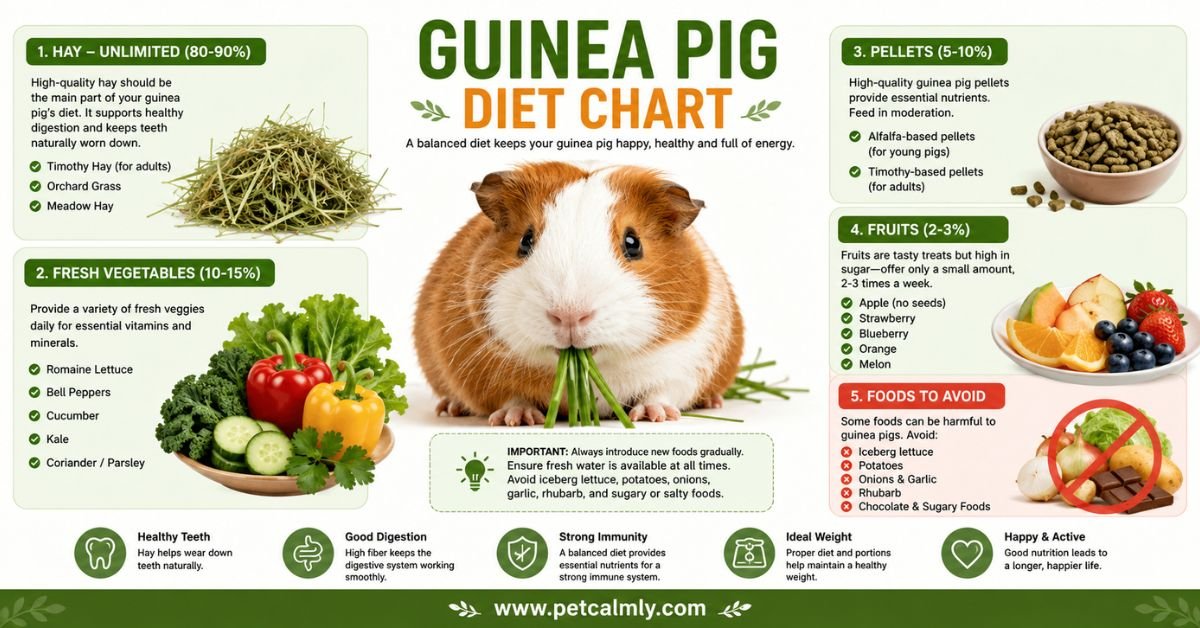
If we break it down, a healthy daily diet looks like this:
- 70–80% Hay (most important)
- 15–20% Vegetables
- 5–10% Pellets
- Occasional fruit treats (1–2 times per week)
Now let’s turn this into a practical feeding chart.
Guinea Pig Diet Chart (Daily Feeding Guide)
Here’s a simple, beginner-friendly guinea pig diet chart you can follow every day:
| Food Type | Daily Amount | Examples | Notes |
|---|---|---|---|
| Hay (Timothy, Orchard Grass) | Unlimited | Timothy hay, meadow hay | Must always be available |
| Fresh Vegetables | 1 cup per guinea pig | Bell peppers, cucumber, romaine lettuce | Rotate daily |
| Pellets (Fortified with Vitamin C) | 1/8 cup per guinea pig | Guinea pig pellets | Do not overfeed |
| Fresh Water | Unlimited | Clean filtered water | Change daily |
| Fruits (Treats only) | 1–2 times/week | Apple, strawberries | Small portions only |
This chart is the foundation of your guinea pig’s health. Everything else builds around it.
The Role of Hay (Why It’s the Most Important Food)
If there is one thing to remember, it’s this:
Hay is not optional it is the core of your guinea pig’s diet.
Hay supports:
- Healthy digestion
- Proper teeth wear (their teeth grow constantly)
- Gut movement
- Mental stimulation (chewing keeps them busy)
Best hay options:
- Timothy hay (most recommended)
- Orchard grass hay
- Meadow hay
What to avoid:
- Alfalfa hay for adult guinea pigs (too rich in calcium)
- Moldy or dusty hay
- Old, stale hay with no smell or freshness
A guinea pig without enough hay will quickly develop digestive and dental issues.
Vegetables: The Daily Vitamin Source
Fresh vegetables are where your guinea pig gets most of its nutrients—especially vitamin C.
Safe vegetables (rotate daily):
- Bell peppers (top vitamin C source)
- Romaine lettuce
- Cucumber
- Coriander (cilantro)
- Zucchini
- Carrot (small amounts only)
Best daily combination example:
- 1 slice bell pepper
- A handful of romaine lettuce
- A few cucumber slices
Important note:
Not all greens are safe. Avoid iceberg lettuce completely it has almost no nutrients and can upset digestion.
Vitamin C: The Most Critical Nutrient
Unlike many animals, guinea pigs cannot produce their own vitamin C.
This makes it one of the most important parts of your guinea pig diet chart.
Signs of vitamin C deficiency:
- Weakness or low energy
- Swollen joints
- Loss of appetite
- Rough coat
- Difficulty walking
Natural vitamin C sources:
- Red and yellow bell peppers
- Kale (moderate amounts)
- Parsley (small portions)
Some owners also use vitamin C tablets, but fresh vegetables are always preferred.
Pellets: Small But Important
Pellets are often misunderstood. Many owners overfeed them, thinking they are the main diet.
In reality:
- Pellets are a supplement, not a base food.
- Too many pellets cause obesity and digestive imbalance.
Feeding rule:
- 1/8 cup per adult guinea pig per day
- Always choose fortified guinea pig pellets (with vitamin C)
Avoid:
- Muesli-style mixes (they encourage selective eating)
- Seeds or colored pellets with artificial additives
Fruits: Treats, Not Daily Food
Guinea pigs love fruits but their bodies don’t need much sugar.
Safe fruits (small portions only):
- Apple (no seeds)
- Strawberries
- Blueberries
- Pear (rarely)
Feeding rule:
- 1–2 times per week only
- Very small portions (1–2 bites)
Too much fruit can cause:
- Diarrhea
- Weight gain
- Digestive imbalance
Foods You Should NEVER Feed
Some foods are dangerous even in small amounts.
Avoid completely:
- Chocolate
- Onion and garlic
- Potato (raw or cooked)
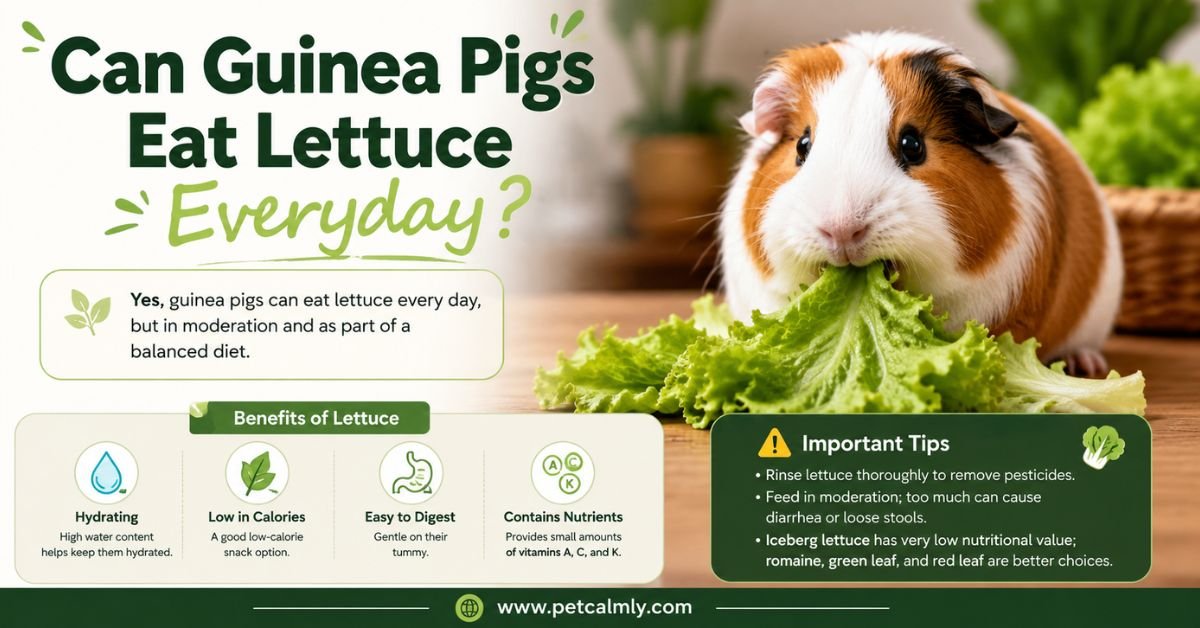
- Iceberg lettuce
- Dairy products
- Bread, pasta, or human snacks
- Nuts and seeds
These can cause serious digestive issues or toxicity.
5 Common Feeding Mistakes Guinea Pig Owners Make
Even caring owners sometimes get it wrong without realizing it.
1. Not providing enough hay
This is the most common mistake and leads to dental problems.
2. Overfeeding pellets
More pellets = more health problems, not better nutrition.
3. Ignoring vitamin C
Many owners assume vegetables are enough without checking variety.
4. Sudden diet changes
Guinea pigs have sensitive digestion—changes must be gradual.
5. Feeding unsafe greens
Not all leafy vegetables are safe for daily use.
Sample Weekly Guinea Pig Diet Plan
To make things even easier, here’s a realistic weekly rotation:
Daily base (every day):
- Unlimited hay
- Fresh water
- 1/8 cup pellets
Vegetable rotation:
Monday: Bell pepper + romaine lettuce
Tuesday: Cucumber + coriander
Wednesday: Zucchini + bell pepper
Thursday: Romaine + parsley (small amount)
Friday: Cucumber + bell pepper
Saturday: Mixed greens
Sunday: Light veggie day + fruit treat
When Should You Worry About Your Guinea Pig’s Diet?
Diet problems can show up slowly or suddenly. Watch for:
- Refusing food
- Reduced hay intake
- Diarrhea or very small droppings
- Weight loss
- Constant lethargy
- Drooling or difficulty chewing
These signs may indicate:
- Dental problems
- Digestive imbalance
- Vitamin deficiency
If symptoms last more than 24–48 hours, it’s best to consult a veterinarian experienced with small animals.
What Should Guinea Pig Owners Do Daily?
A simple daily routine makes a huge difference.
Morning:
- Refresh hay
- Add fresh vegetables
- Check water
Evening:
- Remove leftover veggies
- Add small pellet portion
- Observe appetite and behavior
Weekly:
- Clean cage thoroughly
- Rotate vegetable variety
- Check weight if possible
Consistency is more important than perfection.
Beginner-Friendly Feeding Checklist
Before you finish your daily routine, check:
- Hay available all day
- Fresh vegetables served
- Pellets measured correctly
- Clean water provided
- No unsafe foods given
- Pet eating normally
Conclusion
A proper guinea pig diet chart is not about complicated rules it’s about consistency, balance, and understanding your pet’s natural needs.
Once you get into a simple routine of hay, fresh vegetables, a small pellet portion, and occasional treats, your guinea pig’s health becomes much easier to maintain.
Most importantly, don’t stress about perfection. Guinea pigs thrive when their diet is stable, not constantly changing.
A well-fed guinea pig is active, curious, and responsive and that’s usually the best sign you’re doing things right.
More Information About Pets, Please Visit Our Website: What Is the Best Bedding for Guinea Pigs?
How to Take Care of Guinea Pigs for Beginners
Frequently Asked Questions
1. What is the best daily diet for a guinea pig?
A guinea pig should eat unlimited hay, fresh vegetables daily, a small amount of pellets, and constant fresh water. Hay is the most important part.
2. How often should I feed vegetables to my guinea pig?
Fresh vegetables should be given once daily. Rotate safe options like bell peppers, lettuce, and cucumber for balance.
3. Can guinea pigs eat fruits every day?
No, fruits should only be given 1–2 times per week because of their high sugar content. Small portions are enough.
4. What happens if a guinea pig doesn’t get enough vitamin C?
They may develop weakness, joint pain, appetite loss, and serious health issues. Vitamin C is essential for their survival.
5. Is pellets enough to feed a guinea pig?
No. Pellets are only a supplement. The main diet must be hay and vegetables.
6. What is the most important food for guinea pigs?
Hay is the most important food. It supports digestion, dental health, and overall well-being.