Short direct answer
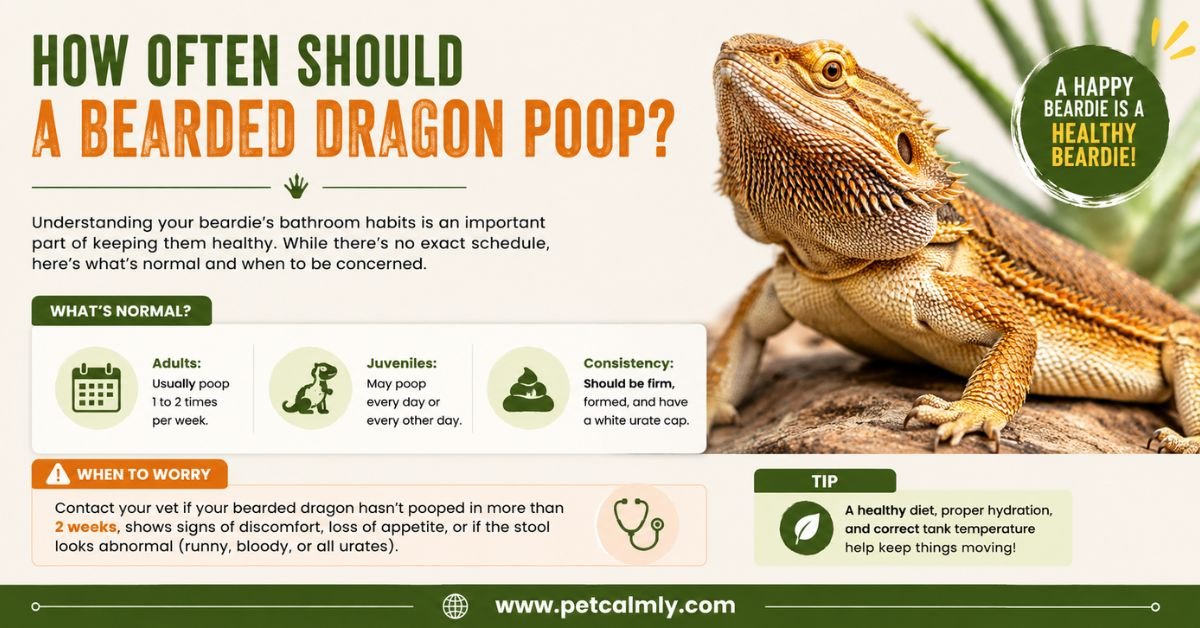
How often should a bearded dragon poop? Most healthy adult bearded dragons poop 1–7 times per week, while babies may poop once or even several times per day because they eat more frequently and have faster metabolisms. Juveniles typically fall somewhere in between.
However, there is no single “normal” schedule that fits every bearded dragon. Diet, age, hydration, temperature, activity level, and overall health all influence how often your dragon passes stool. What matters most is consistency and noticing changes from your pet’s usual routine.
Introduction
Few things surprise new bearded dragon owners more than how much attention they end up paying to poop.
It may sound funny, but stool frequency is actually one of the easiest ways to monitor your dragon’s health. A sudden change in bathroom habits can provide important clues about digestion, hydration, diet quality, enclosure conditions, and even illness.
If you’ve found yourself wondering:
- Is my bearded dragon pooping enough?
- Why hasn’t my dragon pooped in days?
- Can bearded dragons become constipated?
- How often should babies poop compared to adults?
You’re not alone.
Many owners become concerned when their dragon skips a few days or suddenly starts pooping more often than usual. The good news is that some variation is completely normal.
This guide explains what healthy bowel habits look like, what affects pooping frequency, warning signs to watch for, and what you can do if your dragon seems backed up.
What Is a Normal Bearded Dragon Pooping Schedule?
Quick Answer by Age
The age of your bearded dragon is one of the biggest factors affecting how often it poops.
| Age | Typical Pooping Frequency |
|---|---|
| Baby (0–6 months) | 1–3 times daily |
| Juvenile (6–18 months) | Every 1–2 days |
| Adult (18+ months) | 1–7 times weekly |
| Senior | Often less frequent than adults |
Babies consume large amounts of insects and grow rapidly. Their digestive systems process food quickly, leading to more frequent bowel movements.
Adults eat more vegetables and generally have slower metabolisms, so they often poop less often.
Some perfectly healthy adult dragons may poop every day. Others may only go once every several days.
What Does Healthy Bearded Dragon Poop Look Like?
Before focusing on frequency, it’s important to understand what healthy stool looks like.
A normal bearded dragon bowel movement usually contains two parts:
Brown Solid Portion
This is the actual feces.
Healthy feces should be:
- Brown
- Well-formed
- Easy to pick up
- Not excessively watery
White Portion (Urate)
The white part is called urate.
Unlike mammals, bearded dragons excrete uric acid rather than liquid urine.
Healthy urates should be:
- White or off-white
- Soft but formed
- Not extremely hard
Signs of Healthy Digestion
Healthy stool typically has:
- Mild odor
- Consistent appearance
- Proper shape
- Brown feces with white urate
- No blood
- No excessive mucus
Monitoring stool quality is often more useful than obsessing over exact frequency.
Why Pooping Frequency Varies So Much
Many owners compare their dragon’s habits to someone else’s and become worried unnecessarily.
The reality is that several factors affect digestion.
Age
Younger dragons digest food much faster.
A three-month-old dragon may poop multiple times daily.
A four-year-old dragon may poop every few days.
Both can be perfectly healthy.
Diet
Diet dramatically influences bowel movements.
High Insect Diet
Dragons eating large numbers of:
- Crickets
- Dubia roaches
- Black soldier fly larvae
often poop more frequently.
High Vegetable Diet
Adult dragons eating mostly:
- Collard greens
- Mustard greens
- Dandelion greens
- Squash
may poop less often.
This is completely normal.
Hydration
Proper hydration keeps digestion moving smoothly.
Dehydrated dragons may experience:
- Hard stools
- Infrequent bowel movements
- Constipation
Many dragons do not drink frequently from bowls, so hydration often comes from vegetables and occasional baths.
Temperature and Basking Conditions
The main reason is simple:
Bearded dragons rely on external heat to digest food.
If enclosure temperatures are too low:
- Digestion slows
- Appetite decreases
- Stool frequency drops
Without proper basking temperatures, food can sit in the digestive tract longer than normal.
Activity Level
Active dragons generally have healthier digestive movement.
A dragon that explores, climbs, and moves around frequently may poop more regularly than one that remains inactive most of the day.
How Often Should Baby Bearded Dragons Poop?
Babies Usually Poop the Most
Baby bearded dragons often surprise new owners because they can poop very frequently.
Most babies poop:
- Daily
- Multiple times daily
- Shortly after eating
This happens because:
- Growth is extremely rapid
- Food intake is high
- Metabolism is fast
A healthy baby dragon consuming insects several times daily typically produces regular bowel movements.
When to Be Concerned About a Baby Not Pooping
If a baby dragon has not pooped for several days, evaluate:
- Basking temperatures
- Hydration
- Diet
- Appetite
- Activity levels
Because babies digest quickly, extended constipation deserves attention sooner than it would in adults.
How Often Should Adult Bearded Dragons Poop?
Adult dragons have far more variation.
Healthy adults may poop:
- Daily
- Every other day
- Every 3–4 days
- Once weekly
Owners often become alarmed when their dragon skips a few days.
If the dragon is:
- Eating normally
- Active
- Maintaining weight
- Passing normal stools
then less frequent bowel movements may simply reflect its normal routine.
Brumation Changes Everything
A Common Source of Panic
Many owners think something is wrong when their dragon suddenly stops pooping during cooler months.
Often, the explanation is brumation.
Brumation is a natural reptile dormancy period similar to hibernation.
During brumation, dragons often:
- Sleep more
- Eat less
- Move less
- Poop less
Some may go weeks without producing normal bowel movements because food intake has dramatically decreased.
Never Force Feeding During Brumation
If your dragon is genuinely entering brumation and appears otherwise healthy, forcing food may create digestive issues.
If you’re unsure whether it’s brumation or illness, consult a reptile veterinarian.
Why Has My Bearded Dragon Stopped Pooping?
A missed bowel movement isn’t always a problem.
However, several common causes exist.
Constipation
Constipation is one of the most frequent reasons.
Possible causes include:
- Dehydration
- Low temperatures
- Improper diet
- Lack of exercise
Impaction
Impaction occurs when material blocks the digestive tract.
Common causes include:
- Loose substrate ingestion
- Gravel
- Sand consumption
- Large prey items
Impaction can become serious and may require veterinary treatment.
Stress
Stress can temporarily affect digestion.
Triggers include:
- New enclosure
- Relocation
- New pets
- Excessive handling
- Environmental changes
Many dragons return to normal once they settle.
Illness
Digestive infections, parasites, and other health issues can alter bowel habits.
If constipation accompanies other symptoms, veterinary evaluation is important.
Signs Your Bearded Dragon May Be Constipated
Watch for:
- Straining
- Swollen abdomen
- Reduced appetite
- Lethargy
- No stool for an unusually long period
- Visible discomfort
Some dragons may repeatedly attempt to poop without success.
This should not be ignored.
4 Common Owner Mistakes That Affect Digestion
Many digestive issues stem from husbandry mistakes rather than disease.
1: Incorrect Basking Temperatures
Without proper heat, digestion slows significantly.
Always verify temperatures using accurate thermometers.
2: Too Many Fatty Insects
Feeding excessive:
- Waxworms
- Superworms
- High-fat treats
can contribute to digestive irregularities.
3: Poor Hydration
Owners often assume a water dish alone prevents dehydration.
Many dragons require hydration from:
- Fresh vegetables
- Occasional baths
- Direct drinking opportunities
4: Inappropriate Substrates
Loose substrates increase the risk of accidental ingestion.
Young dragons are especially vulnerable.
How to Help a Bearded Dragon Poop
Step 1: Check Temperatures
Confirm basking temperatures meet recommended ranges for your dragon’s age.
Poor heat is a common culprit.
Step 2: Encourage Hydration
Offer:
- Fresh greens
- Water droplets
- Occasional warm baths
Hydration supports healthy digestion.
Step 3: Promote Gentle Exercise
Allow supervised exploration.
Movement can help stimulate bowel activity naturally.
Step 4: Review Diet
Ensure your dragon receives:
- Appropriate insects
- Quality greens
- Proper calcium supplementation
Balanced nutrition supports regular bowel movements.
Step 5: Monitor Closely
Track:
- Feeding
- Stool frequency
- Weight
- Behavior
Patterns often reveal the underlying issue.
Foods That Support Healthy Digestion
Some foods naturally support digestive health.
Good options include:
- Collard greens
- Mustard greens
- Dandelion greens
- Squash
- Bell peppers
These foods provide moisture and fiber.
Avoid overfeeding fruits, as excessive sugar can cause digestive upset.
What a Daily Health Check Should Include
A simple daily routine can help catch problems early.
Quick Checklist
✓ Eating normally
✓ Alert and responsive
✓ Proper basking behavior
✓ Normal stool appearance
✓ Healthy hydration
✓ No abdominal swelling
✓ Normal activity level
Small changes noticed early are often easier to address.
Bearded Dragon Poop Frequency Comparison Table
| Situation | Typical Frequency |
| Healthy baby | 1–3 times daily |
| Healthy juvenile | Every 1–2 days |
| Healthy adult | 1–7 times weekly |
| During brumation | Much less frequent |
| Mild dehydration | Less frequent |
| Constipation | Delayed or absent |
| Digestive illness | Variable |
This table provides general guidance, but individual variation is normal.
When Should You Worry?
Contact a Reptile Veterinarian If:
- No stool for an unusually long period compared to normal
- Visible straining
- Bloated abdomen
- Loss of appetite
- Sudden weight loss
- Lethargy
- Blood in stool
- Black or tar-like stool
- Persistent diarrhea
The combination of constipation plus other symptoms is often more concerning than constipation alone.
What Should Pet Owners Do?
If your bearded dragon hasn’t pooped as expected:
- Stay calm.
- Compare behavior to normal habits.
- Verify enclosure temperatures.
- Review recent diet changes.
- Encourage hydration.
- Allow exercise.
- Monitor appetite and energy levels.
- Seek veterinary advice if symptoms worsen or persist.
Avoid home remedies that have not been recommended by reptile professionals.
Myths About Bearded Dragon Poop
Myth: Healthy Dragons Must Poop Every Day
False.
Many healthy adults do not poop daily.
Myth: Baths Always Fix Constipation
Not always.
Warm baths may help some dragons, but they are not a cure for underlying problems.
Myth: Less Pooping Means Illness
Not necessarily.
Age, diet, and brumation can all reduce frequency naturally.
Myth: Bigger Meals Mean Better Digestion
Overfeeding can sometimes create digestive issues rather than improve them.
Frequently Asked Questions
1: How long can a bearded dragon go without pooping?
Healthy adults may occasionally go several days or even over a week, depending on diet and activity. A sudden change from their normal pattern deserves closer observation.
2: Is it normal for a baby bearded dragon to poop multiple times a day?
Yes. Babies grow rapidly and eat frequently, so daily or multiple daily bowel movements are common.
3: Can dehydration cause constipation in bearded dragons?
Absolutely. Dehydration is one of the most common contributors to hard stools and infrequent bowel movements.
4: Should I give my bearded dragon a bath if it hasn’t pooped?
A warm bath may encourage bowel movement in some dragons, but it should not replace proper husbandry or veterinary care when needed.
5: Why does my bearded dragon poop less in winter?
Many dragons experience seasonal slowing due to brumation, reduced appetite, and lower activity levels.
6: What does unhealthy bearded dragon poop look like?
Warning signs include blood, excessive mucus, persistent diarrhea, unusual discoloration, foul odor, or dramatic changes from your dragon’s normal stool.
More Information About Pets, Please Visit Our Website: How to Calm a Stressed Bearded Dragon
Conclusion
So, how often should a bearded dragon poop?
For most healthy dragons, the answer depends on age, diet, hydration, activity level, and season. Babies often poop daily or multiple times a day, while healthy adults may go anywhere from once a day to once a week.
Instead of focusing on an exact number, pay attention to your dragon’s overall pattern. A dragon that is eating well, active, maintaining weight, and producing healthy-looking stools is usually doing just fine.
When bowel habits change suddenly or are accompanied by lethargy, appetite loss, bloating, or discomfort—it’s worth investigating further and consulting a reptile veterinarian.
A little observation goes a long way. In many cases, your bearded dragon’s poop can tell you more about its health than you might expect.