Short direct answer
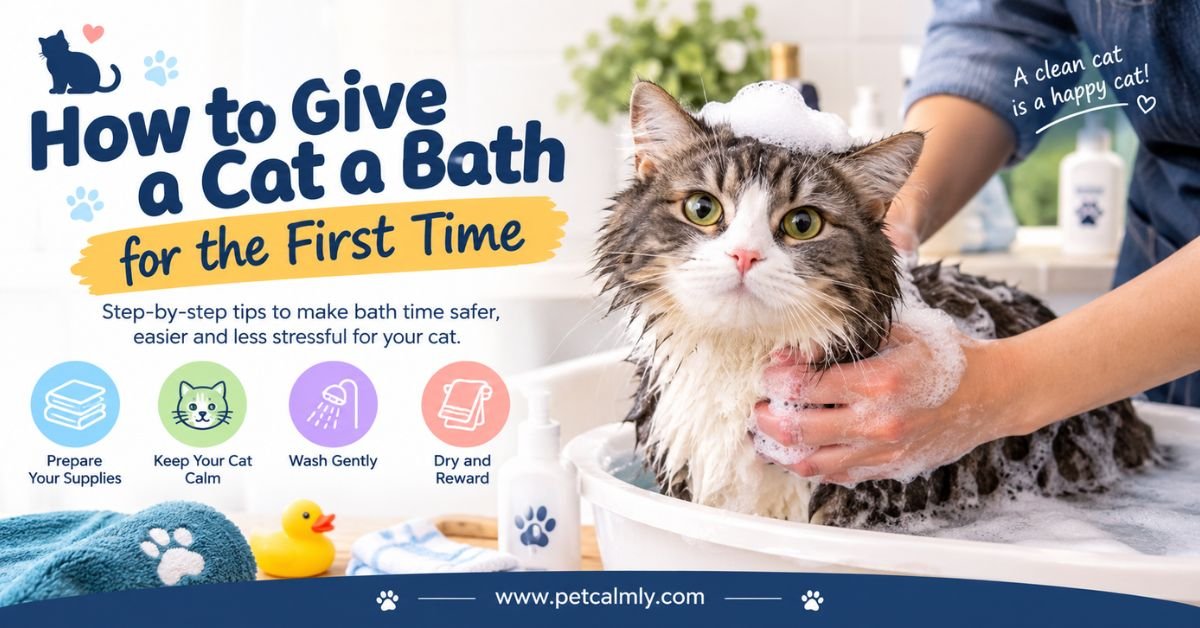
how to give a cat a bath for the first time, start with a calm cat, trimmed claws, and a quiet room. Fill a sink or tub with 3 to 4 inches of lukewarm water. Wet your cat gently from the neck down. Use a small amount of cat-safe shampoo, rinse until the water runs clear, and wrap your cat in a warm towel. Keep the whole bath under 10 to 15 minutes.
Most cats never need a full bath. Some do, though, and the first one feels intimidating for you and your cat. Maybe your cat rolled in something sticky. Maybe a vet told you to use a medicated shampoo. Maybe you adopted a long-haired cat whose coat has gone greasy.
Whatever brought you here, the good news is simple. A first bath can go smoothly with the right setup. This guide covers what to gather, how to prepare, and how to keep your cat calm. It also covers the mistakes to avoid and the signs that mean you should call your vet.
Do You Actually Need to Bathe Your Cat?
Before you fill the sink, ask whether a bath is truly necessary. Cats spend a large part of their day grooming themselves. Their tongues work like built-in combs, and most healthy cats keep themselves clean without help.
Situations Where a Bath Makes Sense
A bath is worth the effort in a few cases:
- Your cat got into something sticky, oily, or smelly.
- A veterinarian prescribed a medicated shampoo for a skin condition.
- Your cat is hairless or nearly hairless, such as a Sphynx. Skin oils build up with no fur to absorb them.
- Your cat is overweight, arthritic, or older and can no longer reach certain spots.
- Someone in your home has cat allergies and a vet or doctor suggested occasional bathing.
Situations Where You Should Skip It
Skip the bath if your cat is sick, very young, or recently vaccinated and seems tired. Skip it too if your cat is already stressed by a move or a new pet. Stress and cold water together can make a hard day worse.
If the problem is mild, such as a dusty coat or a little litter on the paws, try a damp washcloth first. You may not need a full bath at all.
What You Need Before You Start Your Cat’s First Bath
Gathering supplies first matters more than most people expect. Once your cat is wet, you cannot leave to find a towel. Set everything within arm’s reach.
Your First-Bath Checklist
- Cat-specific shampoo. Human shampoo and dog shampoo can irritate a cat’s skin. Cat skin is thinner and has a different pH than ours.
- Two or three towels. Microfiber towels absorb well and feel soft.
- A non-slip surface. A rubber bath mat or folded towel at the bottom of the sink keeps your cat from sliding.
- A plastic cup or handheld sprayer. Many cats hate a running faucet, so a cup of lukewarm water is gentler.
- A soft washcloth. Use it for the face. Never pour water over a cat’s head.
- Treats or lickable cat treats. These are useful distractions.
- A brush or comb. You will use it before and after the bath.
- Cotton balls. Some owners place them lightly at the ear openings. Keep them loose and never push them into the ear canal.
A Note on Choosing Shampoo
Look for a gentle, fragrance-light formula made for cats. Avoid anything with tea tree oil, essential oils, or strong perfumes. Many essential oils are toxic to cats, who cannot process them well. Flea shampoos and medicated products should only be used on your vet’s advice.
How to Prepare Your Cat for the First Bath
Preparation decides how the bath goes. Most bath disasters start before any water appears.
1: Pick a Calm Moment
Choose a time when your cat is relaxed, not wound up. After a meal and a play session is often ideal. A tired cat is usually easier to handle than a energetic one.
Avoid bathing right before a vet visit or during a loud household event. Close the bathroom door so there are no surprise escape routes. Keep other pets out of the room.
2: Brush and Trim First
Brush your cat thoroughly before the bath. Water turns loose fur and small tangles into tight mats, and mats are hard to remove once wet. If your cat has a stubborn mat, do not try to cut it near the skin. Cat skin tears easily, so ask a groomer or vet for help.
Trim the claws a day or two before. Be careful here. If your cat hates nail trims, do not combine two stressful events on one day. Trim a few nails at a time over several days instead.
3: Set Up the Space
Warm the room first, because wet cats lose heat quickly. Lay out your towels. Put the shampoo, cup, and treats where you can reach them. Place the mat in the sink or tub, then add the water before your cat enters the room.
Fill the basin with only 3 to 4 inches of lukewarm water. It should feel comfortable on the inside of your wrist. Water that is too hot can scald, and water that is too cold can chill your cat fast.
How to Give a Cat a Bath for the First Time: Step-by-Step
Here is the full process. Read through it once before you begin so nothing surprises you.
Steps 1 to 4: Getting Your Cat Wet
- Bring your cat in calmly. Speak softly and move slowly. Cats read body language and tone of voice closely.
- Lower your cat into the water. Support the chest and hind legs. Let the paws touch the mat first.
- Hold the scruff gently, if your cat accepts it. Some cats freeze when you hold the loose skin at the back of the neck. Others panic. If your cat panics, hold the shoulders instead.
- Wet the body slowly. Use the cup or sprayer to wet from the neck to the tail. Keep the water low and away from the ears, eyes, and nose.
Offer a treat or lickable snack here if your cat will take one. Eating helps some cats stay calm.
Steps 5 to 8: Shampoo and Rinse
- Apply a small amount of shampoo. A coin-sized amount is plenty for most cats. Work it into a light lather along the back, sides, belly, legs, and tail.
- Clean the face with a damp cloth. Never use shampoo near the eyes. Plain water on a washcloth is enough for the face.
- Rinse thoroughly. This step matters most. Leftover shampoo can irritate the skin, and your cat will lick it off later. Keep rinsing until the water runs clear and the coat no longer feels slippery.
- Squeeze out extra water. Run your hand gently down the fur, from the neck to the tail, to remove the excess.
Drying Your Cat Safely
Lift your cat out and wrap them in a warm towel right away. Pat and blot rather than rub, because rubbing can tangle fur. Swap in a dry towel once the first is soaked.
Some cats tolerate a hair dryer on the lowest, coolest setting. Many do not, because the noise and wind scare them. If your cat panics, skip the dryer and keep your cat in a warm, draft-free room until the coat is dry. Long-haired cats may need extra drying time and a gentle comb-through.
How to Keep a Nervous Cat Calm During the Bath
Most cats are not afraid of baths because of the water itself. They dislike feeling out of control. A wet coat feels heavy, slippery floors feel unsafe, and being held feels like being trapped. Once you understand that, it is easier to work with your cat.
Make the Bathroom Less Scary
Let your cat explore the dry, empty tub or sink for a few days before the bath. Place treats inside. This simple step turns an unfamiliar object into a normal part of the house.
You can also play soft, quiet music. Some owners use a pheromone diffuser in the room beforehand. Pheromone products help some cats, though results vary from cat to cat.
Read Your Cat’s Warning Signs
Pay attention to body language. Flattened ears, a thrashing tail, growling, wide dilated pupils, and hissing all mean your cat is overwhelmed. At that point, more restraint usually makes things worse.
If your cat reaches that level, stop. Rinse quickly if you must, then wrap your cat in a towel. A half-finished bath is better than an injury to either of you. You can try again another day, slowly and in shorter sessions.
A Realistic Example
Picture a first-time owner with a two-year-old tabby who got motor oil on her back legs. The owner fills the tub, but the cat panics at the sound of running water. The owner tries again. This time she fills the sink before bringing the cat in, uses a cup, and has a second person offering treats. The bath takes eight minutes, and nobody gets scratched. The difference was not skill. It was setup.
7 Common First-Time Cat Bath Mistakes
Almost every first bath has a few mistakes. Knowing them ahead of time helps you avoid most of them.
- Using water that is too deep. Deep water makes cats feel like they are drowning. Shallow water feels safer.
- Pouring water over the head. This can frighten your cat and push water into the ears and nose.
- Using human or dog shampoo. These products are not formulated for feline skin.
- Skipping the full rinse. Leftover soap is a common cause of itchy, flaky skin after a bath.
- Doing it alone when the cat is large or strong. A second person to hold treats or steady the cat makes things much safer.
- Letting your cat air-dry in a cold room. Wet fur drops body temperature quickly.
- Giving up the instant things get hard. Pushing through a panicking cat is also a mistake. Calm and quick wins.
If a bath goes badly, do not punish your cat. Cats do not connect scolding with the bath that happened minutes before. They only learn that you are scary.
How to Clean a Cat That Hates Water
Some cats simply cannot tolerate a full bath. If your cat falls into that group, you still have good options. Many vets and groomers suggest gentler alternatives for routine cleaning.
Waterless Options
- Cat-safe grooming wipes. These work well for paws, bellies, and the area under the tail.
- Waterless foam or spray shampoo. Choose a product labeled safe for cats, and watch that your cat does not lick large amounts off.
- A damp washcloth. Warm water and a soft cloth handle most small messes.
- A grooming mitt or soft brush. Regular brushing removes loose fur, dander, and dirt without any water.
When a Groomer Is the Better Choice
Professional cat groomers handle fearful cats every day. They know how to restrain safely, and they have tools that make drying easier. Choose a groomer who specializes in cats or offers a calm, cat-only environment.
A professional is also the safest choice for matted coats, for very large breeds like Maine Coons, and for any cat who has bitten or scratched during past grooming attempts.
How Often Should You Bathe a Cat?
For most healthy indoor cats, the honest answer is rarely, or never. Over-bathing can strip natural oils and dry out the skin. Here is a simple guide to common situations.
| Cat Type | Typical Bathing Frequency |
|---|---|
| Healthy short-haired indoor cat | Rarely, only when dirty |
| Healthy long-haired indoor cat | Occasionally, if the coat is greasy or matted |
| Hairless breeds (e.g., Sphynx) | Often every 1 to 4 weeks, depending on the cat and vet advice |
| Cat with a skin condition | As directed by your veterinarian |
| Senior or arthritic cat | As needed, with spot cleaning in between |
These are general guidelines, not strict rules. Your cat’s coat, lifestyle, and health all matter. If you are unsure, ask your vet what schedule suits your cat.
Bathing Kittens, Senior Cats, and Cats With Special Needs
Not every cat can handle a bath the same way. Age and health change the rules.
Kittens
Very young kittens cannot regulate their body temperature well. A full bath can chill them dangerously fast. If a young kitten gets dirty, spot clean with a warm, damp cloth and dry them right away.
Ask your vet before a full bath for any kitten, especially if the kitten has fleas. Some flea products are unsafe for young kittens, so professional advice matters here.
Senior Cats
Older cats often have stiff joints. Standing in a slippery tub can hurt. Use a thick non-slip mat, support the hindquarters, and keep the bath short. Warm the room well, because older cats lose heat faster.
Also pay attention to why your senior cat needs a bath. If a once-clean cat suddenly has a greasy or matted coat, that can signal pain, arthritis, dental problems, or illness. A vet check is smart.
Cats With Medical Conditions
Cats with heart disease, breathing problems, skin infections, or recent surgery need a vet’s guidance before any bath. Stress alone can strain a fragile cat. Never use medicated shampoo without instructions, since the wrong product or the wrong contact time can cause harm.
When Should You Worry After a Cat Bath?
Most cats are grumpy for an hour or so, then return to normal. A few signs, though, deserve attention.
Signs That Need Prompt Veterinary Care
Contact your vet if you notice any of these:
- Open-mouth breathing, wheezing, or labored breathing
- Shivering that does not stop after your cat is warm and dry
- Extreme lethargy or weakness
- Red, swollen, or broken skin
- Constant scratching or licking that gets worse
- Water in the ears, head shaking, or a tilted head
- Refusal to eat or drink for more than a day
Breathing trouble is an emergency. If your cat struggles to breathe at any point, call an emergency vet immediately.
Signs That Are Usually Normal
Some behaviors are less alarming. Your cat may hide for a while, groom intensely, or act offended. Cats often do this to restore their own scent. Give your cat space, a warm resting spot, and quiet. Normal behavior should return within a few hours.
What Should Pet Owners Do After the Bath?
The bath is not truly over when the water drains. How you handle the next hour affects whether your cat trusts you the next time.
Aftercare Steps
- Keep your cat warm. Use a heated room, a clean blanket, or a warm spot away from drafts.
- Offer a favorite treat or meal. This builds a positive link with the experience.
- Brush gently once dry. This removes loose fur and helps the coat settle.
- Check the skin. Look for redness, bumps, or leftover shampoo residue.
- Clean the tub and wash the towels. Remove loose fur so your drain stays clear.
- Give your cat quiet time. Let your cat decide when to come out and interact.
Making the Next Bath Easier
Keep notes on what worked. Maybe the cup was better than the faucet, or maybe a lick mat made a big difference. Cats thrive on routine, so repeating a calm process often makes future baths easier.
If the bath went badly, wait a few weeks before trying again. A cat needs time to relax and recover trust.
Frequently Asked Questions
1: Can I Use Dawn Dish Soap to Bathe My Cat?
Dish soap is not a good routine cat shampoo. It is designed to strip grease, so it can dry out and irritate cat skin. Some people use it in emergencies, such as after a toxic spill, but call your vet or a pet poison hotline first. For regular baths, use a shampoo formulated for cats.
2: How Long Does It Take to Bathe a Cat?
A calm bath usually takes 10 to 15 minutes from start to finish. Drying can take longer, especially for long-haired cats. If your cat is stressed, shorter is better. Quick and gentle always beats slow and thorough.
3: Is It Okay to Bathe a Cat Once a Week?
For most cats, weekly bathing is too frequent. Frequent baths can dry the skin and remove protective oils. Hairless breeds and cats with certain skin conditions may need more regular baths, but only follow a schedule your vet recommends.
4: Should I Bathe My Cat in the Sink or the Tub?
A kitchen or bathroom sink is easier for most owners. It keeps your cat at a comfortable height and reduces back strain. A tub works better for large cats. Either way, add a non-slip mat and keep the water shallow.
5: What Is the Best Way to Dry a Cat After a Bath?
Wrap your cat in a warm, absorbent towel and blot gently. Use a second towel once the first is wet. A hair dryer on its lowest, coolest setting can help if your cat tolerates the noise. Otherwise, keep your cat in a warm room until fully dry.
6: Can Two People Bathe a Cat Together?
Yes, and it often makes things safer and calmer. One person can hold and soothe the cat while the other washes and rinses. Just keep the roles clear and your voices soft. Too many hands can overwhelm a nervous cat.
More Information About Pets, Please Visit Our Website: Why Does My Cat Lick My Hair After a Shower?
How to Remove Fleas from Cats
Why Does My Cat Follow Me Everywhere?
How to Train Cat to Use Litter Box
Cat Drinking From Toilet?
How to Stop Cat From Spraying Everywhere
How to Bathe a Cat Safely at Home
Conclusion
Learning how to give a cat a bath for the first time takes patience more than skill. Gather your supplies, keep the water shallow and lukewarm, use cat-specific shampoo, rinse well, and dry your cat in a warm room. Stay alert to your cat’s body language, and stop if stress climbs too high.
Remember that most cats rarely need baths. Brushing, wipes, and spot cleaning handle a lot of messes. If a bath is truly needed, a calm setup makes all the difference. When something seems off, whether it is breathing trouble, skin changes, or a sudden shift in your cat’s grooming habits, call your vet.