Short direct answer
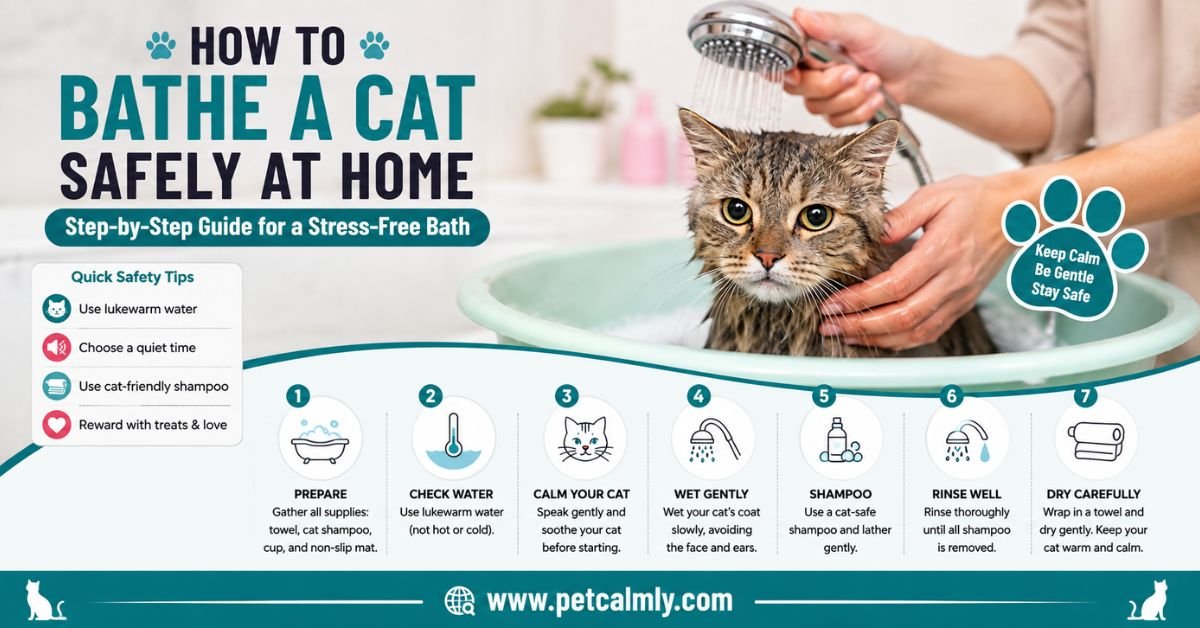
To bathe a cat safely at home, brush out loose fur first, use lukewarm water and a cat-specific shampoo, wet and wash your cat gently from the neck down while avoiding the face and ears, rinse thoroughly until the water runs clear, and dry your cat immediately with a warm towel in a draft-free room. Most healthy adult cats only need a bath a few times a year, since regular grooming and self-cleaning usually keep their coat in good shape.
If you’re standing in your bathroom right now wondering how you’re going to pull this off without losing a layer of skin, you’re not alone. Bathing a cat is one of those tasks that sounds simple until you actually try it. Cats didn’t evolve to enjoy standing water, and most of them will tell you exactly how they feel about it the moment their paws touch a wet surface.
The good news is that a cat bath doesn’t have to turn into a wrestling match. With the right setup, the right pace, and a bit of patience, most cats can be bathed calmly and safely even ones who aren’t thrilled about it. This guide walks through exactly how to do it, what to avoid, and how to tell the difference between a cat who’s just annoyed and one who’s genuinely stressed.
Do Cats Really Need Baths?
Most cats are excellent self-groomers. Their tongue, saliva enzymes, and flexible spine let them clean almost every part of their body on their own, which is part of why so many cats seem baffled or offended when a human tries to “help.”
That said, there are situations where a bath at home genuinely helps:
- Your cat got into something sticky, oily, or smelly (motor oil, paint, tree sap, garbage)
- Your cat has long hair that mats easily, especially around the belly and hindquarters
- Your cat is elderly, overweight, or arthritic and can’t groom certain areas anymore
- Your cat has a skin condition and your vet recommended a medicated shampoo
- Your cat had an accident related to litter box issues or illness
- You’re managing a flea infestation alongside vet-approved flea treatment
Outside of these situations, most healthy short-haired cats don’t need routine bathing. Brushing a few times a week does most of the work a bath would otherwise do, and it’s far less stressful for everyone involved.
What You’ll Need Before You Start
Rushing to grab supplies mid-bath is one of the fastest ways for a calm bath to turn chaotic. Set everything up within arm’s reach before you bring your cat anywhere near water.
- Cat-specific shampoo (never human shampoo more on why below)
- Two to three large, absorbent towels
- A non-slip mat for the sink or tub
- A cup or handheld sprayer with a gentle water flow
- Cotton balls (to gently protect ear canals from water)
- Treats for after
- A brush suited to your cat’s coat length
- An extra pair of hands, if possible
Having a helper isn’t essential, but it makes a real difference. One person can support and reassure the cat while the other washes and rinses.
Choosing the Right Shampoo for Your Cat
Not all cat shampoos are the same, and picking the right one can make the whole process easier on your cat’s skin. Here’s a quick breakdown of what’s commonly available:
| Shampoo Type | Best For | Notes |
|---|---|---|
| Gentle all-purpose feline shampoo | Routine baths, healthy skin | Look for a tear-free, soap-free formula |
| Moisturizing/oatmeal-based shampoo | Dry or flaky skin | Helps soothe mild irritation |
| Flea shampoo | Active flea infestations | Only use if recommended alongside your vet’s flea plan; not a substitute for veterinary flea treatment |
| Medicated shampoo | Diagnosed skin conditions | Should only be used under veterinary guidance |
| Waterless/dry shampoo | Cats who can’t tolerate a full bath | Useful for elderly or anxious cats, but doesn’t replace an occasional full bath if one is truly needed |
If you’re not sure which type fits your cat, a quick conversation with your vet during a routine visit is worth it especially if your cat has sensitive skin, allergies, or a history of skin issues.
Step-by-Step: How to Bathe a Cat Safely at Home
Step 1: Trim Nails and Brush Out Loose Fur First
Do this well before bath time ideally the day before, or at least an hour ahead, so your cat isn’t associating nail trimming and brushing with the stressful part of the routine.
Brushing removes loose fur and prevents matting from getting worse once it’s wet. Trimming nails reduces the odds of you ending up with visible reminders of bath day on your arms.
Step 2: Pick the Right Time and Place
Choose a moment when your cat is naturally calmer after a meal or a play session, rather than right after they wake up or when they’re already wound up. A tired cat is generally an easier cat.
A sink or a shallow tub both work. Place a non-slip mat on the bottom so your cat has something to grip; standing on a slick surface is often what turns a nervous cat into a panicked one.
Step 3: Protect the Ears and Get the Water Temperature Right
Gently place a small cotton ball just inside each ear opening to reduce water entering the ear canal. Fill the basin with two to three inches of lukewarm water test it on your wrist the way you would for a baby. Water that’s too hot or too cold is uncomfortable and can make your cat associate baths with something unpleasant.
Step 4: Wet Your Cat Gradually, Avoiding the Head
Using a cup or a low-pressure sprayer, wet your cat’s body starting at the neck and working backward. Keep water away from the face, ears, and eyes. Speak in a calm, steady voice throughout cats pick up on tone more than words, and a soothing voice can genuinely help lower their stress.
Step 5: Apply Cat Shampoo and Massage It In
Use a small amount of cat-safe shampoo and work it into the coat with your fingers, starting from the neck and moving down the back, sides, and legs. For the face, use a damp cloth instead of pouring water or shampoo directly — this keeps soap out of the eyes and ears while still cleaning any dirt around the chin or cheeks.
Step 6: Rinse Thoroughly
This step matters more than most owners realize. Leftover shampoo residue can irritate the skin and lead to itching or dryness days later. Rinse until the water runs completely clear, checking the belly, armpits, and base of the tail, which tend to hold onto suds longest.
Step 7: Dry Immediately and Keep Your Cat Warm
Wrap your cat in a towel right away and gently press don’t rub to absorb water. Cats lose body heat quickly when wet, so keep them in a warm, draft-free room until they’re fully dry. If your cat tolerates it, a second dry towel or a cat-safe low-heat blow dryer held well away from the body can speed things up, but never force this step if your cat is already stressed.
Common Mistakes That Make Cat Baths Harder Than They Need to Be
A lot of bad bath experiences come down to a handful of avoidable mistakes:
- Using human shampoo. Human skin and cat skin have a different pH balance, and human products can dry out or irritate a cat’s skin. Always use a shampoo formulated specifically for cats.
- Bathing on a whim, with no plan. Cats read your energy. If you’re scrambling for supplies mid-bath, that scattered energy transfers to them.
- Restraining too tightly. A firm, steady hold is different from gripping hard. Excessive restraint tends to escalate panic rather than prevent it.
- Pouring water directly on the face. This is one of the fastest ways to make a bath feel like an attack from your cat’s perspective.
- Rushing the drying step. A half-dried, cold cat is a miserable cat — and one more likely to fight you next time.
- Bathing too often “just in case.” Over-bathing can strip natural oils from the coat and skin, leading to dryness that didn’t exist before.
Understanding Why Cats Hate Water (Mostly)
It helps to understand the behavior, not just manage it. Most domestic cats descend from desert-dwelling ancestors that rarely encountered large bodies of water, so there was little evolutionary reason to develop comfort around it. On top of that, wet fur is heavy and slow to dry, which historically made a soaked cat more vulnerable to predators and temperature swings.
This isn’t universal some cats, particularly certain breeds like the Turkish Van, are known for tolerating or even enjoying water. But for the average house cat, wariness around water is instinctive rather than stubbornness, which is worth remembering when your cat seems dramatic about a little dampness.
A Realistic Example: What This Looks Like in Practice
Picture a fairly typical scenario: an indoor cat gets a bit of gravy-based wet food smeared into the fur under her chin and down her chest during a messy meal, and it’s started to mat. A quick bath is the simplest fix.
Rather than reaching straight for the sink, the smarter first move is a warm, damp washcloth wiped gently over the affected area. In a lot of cases, that alone loosens and lifts the mess without a full bath being necessary at all. It’s only when the mess is more widespread paws, belly, tail, multiple areas at once that a full bath actually becomes worth the stress it causes.
This is a useful habit to build in general: treat a full bath as the solution for a genuinely dirty or matted cat, not the default response to every small mess. It keeps bath time rare enough that your cat doesn’t start dreading the sight of the bathroom door.
How to Bathe a Nervous or Aggressive Cat
Some cats need a slower, more deliberate approach. If your cat has never been bathed, or has had a bad experience before, consider building up to it:
- Desensitize gradually. Over a few days, let your cat explore the empty tub or sink with treats and calm praise, with no water involved yet.
- Introduce running water separately. Turn on the faucet briefly while your cat is nearby but not being bathed, so the sound becomes familiar.
- Start with a damp cloth instead of full immersion. Wiping down the coat with a warm, damp cloth can address light dirt without needing a full bath.
- Keep first real baths short. A brief, successful bath builds more trust than a long, difficult one.
- End on a positive note every time. Treats, praise, and a warm towel immediately after help your cat associate bath time with something that ends well, even if the middle part wasn’t fun.
If your cat becomes extremely distressed excessive vocalizing, attempts to bite or scratch that go beyond normal squirming, or signs of panic like dilated pupils and flattened ears it’s reasonable to pause and try again another day, or to speak with your vet or a professional groomer about safer handling techniques for that specific cat.
When Should You Worry? Signs a Bath Needs Professional Help
Most bath-time stress is normal and manageable at home. But there are situations where it’s worth stepping back and getting help instead of pushing through.
| Situation | What to Do |
|---|---|
| Cat has severe matting close to the skin | See a groomer or vet — cutting mats yourself risks nicking the skin |
| Cat shows signs of a skin infection (redness, sores, foul odor, scabbing) | Contact your vet before bathing, as some conditions need medicated treatment |
| Cat is extremely aggressive or panicked despite a calm approach | Consider a professional groomer experienced with anxious cats |
| Cat is very young (under 8 weeks), elderly, or has a health condition | Ask your vet whether a bath is appropriate and how to do it safely |
| Cat was exposed to a toxic substance (chemicals, certain pesticides) | Contact your vet or an animal poison control line immediately — don’t rely on a home bath alone |
If in doubt, a quick call to your veterinarian is always a reasonable step. They can tell you whether a home bath is safe given your cat’s specific age, health status, or coat condition.
What Pet Owners Should Do After the Bath
The hour or two after a bath matters almost as much as the bath itself.
- Keep your cat indoors and away from drafts or open windows until fully dry
- Offer a treat and some calm affection to reinforce a positive association
- Check ears, paws, and skin folds to make sure they’re properly dried
- Watch for excessive scratching or redness over the next day, which can indicate leftover shampoo residue or a mild reaction
- Avoid another bath for at least several weeks unless your vet has advised more frequent bathing for a medical reason
How Often Should You Bathe a Cat?
For most healthy, short-haired indoor cats, a bath every few months or only when genuinely needed is plenty. Long-haired breeds like Persians may benefit from more frequent bathing, roughly every four to six weeks, since their coats mat more easily and trap more debris. Outdoor cats or cats with skin conditions may need a different schedule based on your vet’s recommendation.
Bathing more often than necessary can disrupt the natural oils that keep a cat’s skin and coat healthy, so “more often” isn’t automatically better.
Coat Type Matters More Than Most Owners Realize
A short-haired domestic cat and a long-haired Persian are essentially working with two different maintenance schedules, and treating them the same way tends to lead to problems.
- Short-haired cats: Self-grooming usually covers most of what’s needed. A bath is typically reserved for genuine mess or medical reasons.
- Long-haired cats (Persians, Maine Coons, Ragdolls): Denser undercoats trap dirt and oils more easily, and mats can form quickly around the belly, armpits, and behind the ears if brushing lapses even for a week or two. Regular bathing, paired with daily or near-daily brushing, tends to keep these coats manageable.
- Hairless breeds (Sphynx and similar): These cats don’t have fur to absorb the skin’s natural oils, so oil can build up on the skin itself. Many hairless cat owners find that more frequent, gentle bathing sometimes weekly actually works better for skin health, which is the opposite of what most other cats need.
Knowing which category your cat falls into helps you set a bathing rhythm that actually matches their needs, rather than guessing.
Drying Tools: What’s Actually Safe to Use
Towel-drying is always the safest starting point, but for long-haired cats or colder climates, extra drying help is sometimes useful.
- Microfiber towels absorb more water than standard cotton towels and cut down on drying time.
- Low-heat pet dryers (designed specifically for animals) are generally safer than human hair dryers, which run hotter and louder than most cats can comfortably tolerate.
- Standard human blow dryers, if used at all, should be on the lowest heat and speed setting, held at least a foot away, and stopped immediately if your cat shows signs of distress.
- Room-temperature air drying works fine for short-haired cats in warm weather, as long as they’re kept away from drafts.
Whatever method you choose, the priority is the same: get your cat dry enough, fast enough, that they don’t get cold — without adding more noise or stress than the bath itself already did.
Frequently Asked Questions
1: Can I use baby shampoo on my cat?
It’s best to avoid this. Baby shampoo is formulated for human skin, which has a different pH than a cat’s skin, and can leave their coat drier or more irritated than a cat-specific shampoo would.
2: How do I bathe a cat that hates water without getting scratched?
Move slowly, keep water levels low, avoid pouring water on the face, and consider wrapping your cat in a towel with just the area you’re washing exposed. If scratching risk feels high, wearing long sleeves and having a second person help can reduce the chance of injury.
3: Is it normal for a cat to shake and cry during a bath?
Mild vocalizing and shaking are common stress responses and usually settle once the bath ends. If the reaction seems extreme or your cat seems to be in pain rather than simply annoyed, stop and check with your vet.
4: Can kittens be bathed the same way as adult cats?
Kittens lose body heat much faster than adults, so baths should be shorter, water should be kept comfortably warm, and drying needs to happen immediately. Vets generally recommend waiting until a kitten is at least eight weeks old before a full bath.
5: Do indoor cats need baths at all?
Most indoor cats groom themselves well enough that baths aren’t a routine necessity. They’re more useful for specific situations sticky messes, skin conditions, or mobility issues that limit self-grooming.
6: What should I do if my cat won’t stop struggling during the bath?
If gentle restraint and a calm voice aren’t helping, it’s okay to stop, dry your cat off, and try again another day using a slower, more gradual approach. Forcing it through often makes the next bath harder, not easier.
More Information About Pets, Please Visit Our Website: Best Food for Persian Cats
Can Cats Drink Milk Safely Veterinary Advice
Best Homemade Food for Kittens
Cat Sleeping Positions Meaning
Why Is My Cat Drooling So Much?
Why Does My Cat Bite Me?
Why Does My Cat Bite Me Gently Out of Nowhere?
Conclusion
Bathing a cat at home isn’t about winning a battle it’s about working with your cat’s instincts instead of against them. A calm setup, a gentle pace, and realistic expectations go a long way toward making bath time manageable, even for cats who will never quite love it. And for most cats, the fact that they don’t need frequent baths is genuinely good news: a little brushing and the occasional targeted bath is usually all it takes to keep them clean and comfortable.