Short direct answer
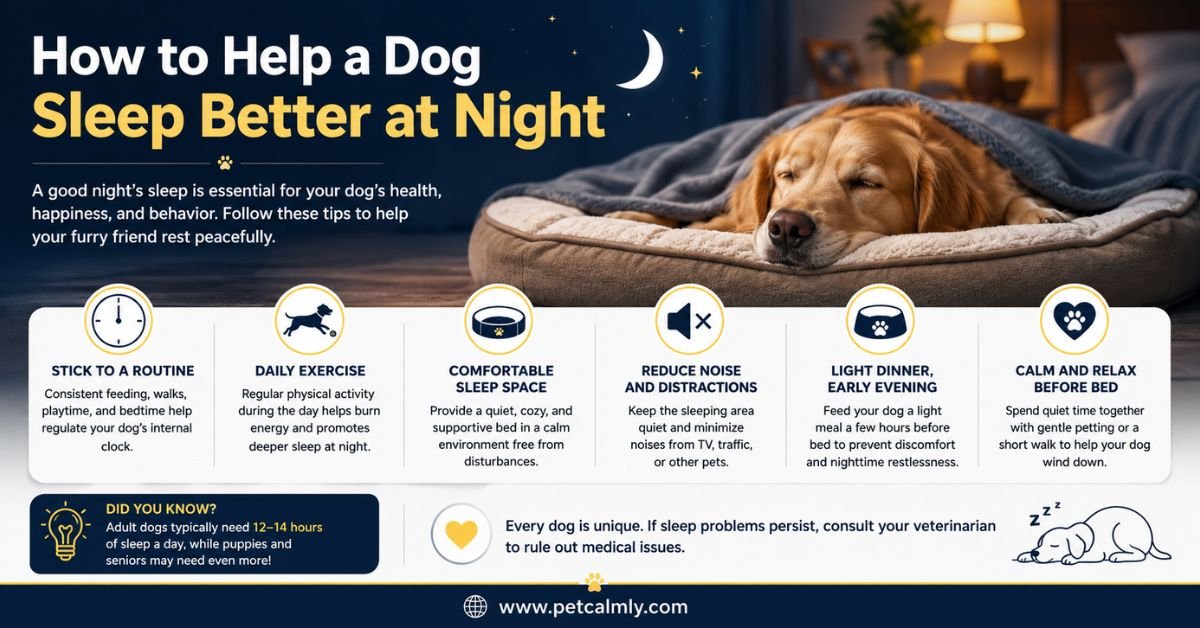
If you’re wondering how to help a dog sleep better at night, start by creating a consistent daily routine, providing enough physical exercise and mental stimulation, ensuring a comfortable sleeping environment, and addressing any underlying stress, anxiety, or health concerns. Most dogs sleep better when their physical, emotional, and environmental needs are met throughout the day. If nighttime restlessness appears suddenly or is accompanied by other symptoms, a veterinary checkup is important.
How to Help a Dog Sleep Better at Night
A restless dog can turn bedtime into a frustrating experience for everyone in the house.
Maybe your dog paces the hallway at midnight. Perhaps they wake up repeatedly, bark at small sounds, scratch at doors, or seem unable to settle down. Some dogs even wander from room to room while their owners desperately try to get a full night’s sleep.
The good news is that most sleep problems have identifiable causes and practical solutions.
Dogs, like people, need quality sleep for healthy brain function, emotional balance, physical recovery, and overall well-being. Poor sleep can affect mood, behavior, training progress, and even long-term health.
In this guide, you’ll learn:
- Why some dogs struggle to sleep at night
- Common causes of nighttime restlessness
- Simple changes that improve sleep quality
- Age-related sleep issues in puppies and senior dogs
- Mistakes many owners accidentally make
- When a sleep problem may require veterinary attention
Let’s start by understanding why dogs wake up at night in the first place.
Why Is My Dog Not Sleeping Well at Night?
Quick Answer
Dogs may struggle to sleep due to insufficient exercise, anxiety, environmental disturbances, inconsistent routines, medical conditions, age-related changes, or unmet bathroom needs.
The main reason is often surprisingly simple: the dog’s daily routine does not match its natural physical and mental needs.
Just because a dog appears calm during the day doesn’t necessarily mean they are getting enough stimulation. Many dogs spend hours resting while owners work, only to become active when the household settles down for the evening.
Common causes include:
- Lack of physical exercise
- Boredom and excess energy
- Separation anxiety
- Changes in routine
- Noise disturbances
- Digestive discomfort
- Pain or arthritis
- Senior dog cognitive changes
- Inadequate bathroom opportunities
- Excessive daytime napping
Understanding the cause helps you choose the right solution rather than guessing.
How Much Sleep Do Dogs Actually Need?
Many owners are surprised to learn how much dogs sleep.
| Dog Type | Average Sleep Per Day |
|---|---|
| Puppies | 18–20 hours |
| Adult Dogs | 12–14 hours |
| Senior Dogs | 14–18 hours |
| Large Breeds | Often 14–18 hours |
Sleep requirements vary based on:
- Age
- Breed
- Activity level
- Health status
- Environment
A working Border Collie may have different sleep patterns than a laid-back Bulldog.
The goal isn’t necessarily getting your dog to sleep more. It’s helping them sleep more comfortably and consistently at appropriate times.
Signs Your Dog Isn’t Sleeping Well
Sleep problems aren’t always obvious.
Watch for these signs:
- Frequent nighttime waking
- Pacing around the house
- Barking during the night
- Restlessness before bedtime
- Constant position changes
- Excessive daytime sleepiness
- Irritability
- Reduced focus during training
- Increased clinginess
- Nighttime whining
Some owners notice behavioral changes long before they realize sleep quality is the underlying issue.
The Most Effective Ways to Help a Dog Sleep Better at Night
1. Increase Physical Exercise During the Day
One of the most effective sleep aids for dogs isn’t a product it’s movement.
Dogs naturally sleep better when they’ve used their bodies throughout the day.
Depending on age and breed, this may include:
- Walks
- Hiking
- Fetch
- Swimming
- Running
- Agility activities
- Structured play sessions
A young Labrador Retriever often requires significantly more exercise than a senior Shih Tzu.
What to Avoid
Avoid intense exercise immediately before bedtime.
Very stimulating activities late at night can leave some dogs energized rather than relaxed.
Instead:
- Schedule vigorous activity earlier
- Use calming activities during the evening
2. Provide Mental Stimulation
Physical exercise alone isn’t always enough.
Many intelligent dogs become restless because their minds are underworked.
Mental enrichment can tire a dog without exhausting their body.
Good options include:
- Food puzzles
- Snuffle mats
- Training sessions
- Nose work games
- Interactive toys
- Hide-and-seek games
Even ten to fifteen minutes of focused problem-solving can significantly improve nighttime relaxation.
3. Create a Consistent Bedtime Routine
Dogs thrive on predictability.
When bedtime happens at different times every night, some dogs struggle to settle.
A simple routine might look like this:
- Evening walk
- Bathroom break
- Calm family time
- Fresh water available
- Lights dimmed
- Bedtime cue
- Sleep area preparation
Over time, these repeated signals teach the dog that sleep is approaching.
Many owners notice improvements within a few weeks.
4. Make the Sleeping Area More Comfortable
Sometimes the solution is environmental.
Ask yourself:
- Is the room too hot?
- Is the room too cold?
- Is the bed supportive?
- Are household noises disturbing sleep?
- Is the area drafty?
Dogs often sleep better when they have:
- A comfortable orthopedic bed
- Quiet surroundings
- Consistent temperatures
- A designated sleeping space
Older dogs especially benefit from supportive bedding that reduces pressure on joints.
5. Address Nighttime Anxiety
Anxiety is a common cause of poor sleep.
An anxious dog may:
- Pace
- Pant
- Whine
- Follow owners constantly
- Refuse to settle
Common anxiety triggers include:
- Thunderstorms
- Fireworks
- Household changes
- New pets
- New homes
- Separation-related stress
Helpful Calming Strategies
- White noise machines
- Calming music
- Predictable routines
- Safe sleeping spaces
- Positive reinforcement training
- Anxiety-reduction plans developed with professionals
For severe anxiety, consult your veterinarian or a qualified behavior professional.
6. Schedule a Final Bathroom Break
Some nighttime waking is surprisingly simple.
Your dog may just need to go outside.
This is especially common in:
- Puppies
- Senior dogs
- Small breeds
- Dogs drinking heavily before bed
A final potty break shortly before bedtime often reduces overnight interruptions.
7. Watch Feeding Times
Meal timing can influence sleep quality.
Large meals immediately before bed may contribute to:
- Digestive discomfort
- Increased thirst
- Restlessness
Many dogs do best when dinner is served several hours before bedtime.
If your dog wakes hungry, discuss feeding schedules with your veterinarian.
Puppy Sleep Problems: What Owners Should Expect
Puppies rarely sleep through the night immediately.
Their bodies and bladders are still developing.
Common puppy sleep challenges include:
- Frequent bathroom needs
- Separation distress
- Teething discomfort
- Excess energy
- New-home adjustment stress
How to Help a Puppy Sleep Better
- Establish routines early
- Use a properly sized crate if crate training
- Provide safe chew toys
- Allow bathroom breaks
- Keep nighttime interactions calm
Most puppies gradually develop better nighttime habits as they mature.
Patience matters.
Helping Senior Dogs Sleep Better
Older dogs often experience unique sleep challenges.
Common age-related causes include:
- Arthritis
- Joint pain
- Vision decline
- Hearing loss
- Cognitive dysfunction
- Increased bathroom needs
You may notice:
- Nighttime wandering
- Confusion
- Restlessness
- Altered sleep cycles
Ways to Support Senior Dogs
- Orthopedic beds
- Non-slip flooring
- Easy nighttime bathroom access
- Veterinary pain management
- Consistent routines
- Reduced household obstacles
A senior dog suddenly developing sleep problems should always be evaluated by a veterinarian.
5 Common Mistakes That Can Make Sleep Worse
Sometimes owners unintentionally reinforce nighttime wakefulness.
Mistake 1: Encouraging Play at Midnight
If a dog wakes and receives exciting attention, they may repeat the behavior.
Mistake 2: Inconsistent Schedules
Frequent changes confuse sleep expectations.
Mistake 3: Ignoring Exercise Needs
Many sleep issues stem from unmet energy requirements.
Mistake 4: Assuming Every Problem Is Behavioral
Pain and illness can look like behavioral issues.
Mistake 5: Too Much Daytime Stimulation
Constant excitement without downtime can make relaxation difficult.
A Simple Evening Routine That Helps Many Dogs Sleep Better
Here’s a practical schedule.
3–4 Hours Before Bed
- Main exercise session
- Walk, play, or training
2 Hours Before Bed
- Dinner
- Water available
1 Hour Before Bed
- Calm family interaction
- Gentle enrichment activity
15 Minutes Before Bed
- Final bathroom break
- Quiet settling period
Bedtime
- Consistent sleep location
- Minimal stimulation
- Lights lowered
Small adjustments like these often produce surprisingly noticeable results.
Products That May Support Better Sleep
Products are not magic solutions, but some can help.
Examples include:
- Orthopedic dog beds
- White noise machines
- Cooling mats
- Heated beds for cold climates
- Crate covers
- Calming enrichment toys
When researching products, focus on comfort, safety, durability, and your dog’s specific needs rather than marketing claims.
You may also find it helpful to explore related PetCalmly guides on dog anxiety, calming products, and nighttime behavior management.
What Not to Do
Avoid these approaches:
- Punishing nighttime restlessness
- Using unapproved sleep medications
- Ignoring signs of pain
- Restricting water excessively
- Forcing a frightened dog into isolation
- Expecting immediate results
Improving sleep is often a process rather than a one-night fix.
When Should You Worry?
Most importantly:
Contact your veterinarian if sleep problems appear suddenly or are accompanied by other concerning symptoms.
Warning signs include:
- Sudden nighttime pacing
- Persistent panting
- Crying in pain
- Difficulty standing
- Loss of appetite
- Increased thirst
- Frequent urination
- Disorientation
- Seizure activity
- Breathing difficulties
These symptoms may indicate a medical issue rather than a simple behavioral problem.
Emergency care may be necessary if your dog shows severe distress, collapse, breathing problems, or neurological symptoms.
What Should Pet Owners Do?
If your dog isn’t sleeping well at night, focus on a step-by-step approach.
Start Here
Increase daily exercise
Add mental enrichment
Create a consistent bedtime routine
Improve sleeping comfort
Provide a final potty break
Monitor feeding schedules
Reduce evening overstimulation
Track sleep patterns
Then Evaluate
Ask:
- Has the problem improved after two to four weeks?
- Is anxiety involved?
- Could pain be a factor?
- Has anything changed recently?
If concerns remain, seek veterinary guidance.
Frequently Asked Questions
1: Why does my dog wake up every night at the same time?
Dogs often wake at predictable times due to habits, bathroom needs, environmental noises, hunger, anxiety, or learned routines. Tracking patterns can help identify the trigger.
2: Can dogs have insomnia?
Yes. While uncommon, dogs can experience sleep disturbances caused by stress, anxiety, pain, illness, medications, or age-related cognitive changes.
3: Should I let my dog sleep in my bedroom?
Many dogs sleep well near their owners. The best choice depends on your dog’s comfort level, household preferences, and whether co-sleeping improves or disrupts sleep quality.
4: Do calming treats help dogs sleep better?
Some calming products may help mildly anxious dogs relax. However, they are usually most effective when combined with behavioral management and routine improvements.
5: Why is my dog restless at night but sleepy during the day?
This may result from boredom, insufficient daytime activity, disrupted sleep cycles, anxiety, or age-related changes. Observing daily habits often reveals the cause.
6: How long does it take to improve a dog’s sleep schedule?
Many dogs show improvement within a few days to several weeks after routine adjustments. Consistency is usually more important than making dramatic changes.
More Information About Pets, Please Visit Our Website: Why Is My Dog Pacing at Night All of a Sudden?
Conclusion
Helping a dog sleep better at night isn’t about finding a quick fix. In most cases, it’s about understanding what your dog needs physically, mentally, and emotionally.
A dog that receives appropriate exercise, enrichment, comfort, routine, and veterinary care when needed is far more likely to settle peacefully at bedtime.
If you’ve been dealing with nighttime pacing, whining, or repeated wake-ups, start with small changes rather than trying everything at once. Track what works, stay consistent, and give your dog time to adjust.
Many sleep issues improve significantly when owners address the root cause instead of focusing only on the symptoms.
A well-rested dog is usually a happier, healthier companion and a better night’s sleep for both of you is often closer than it seems.