Short direct answer
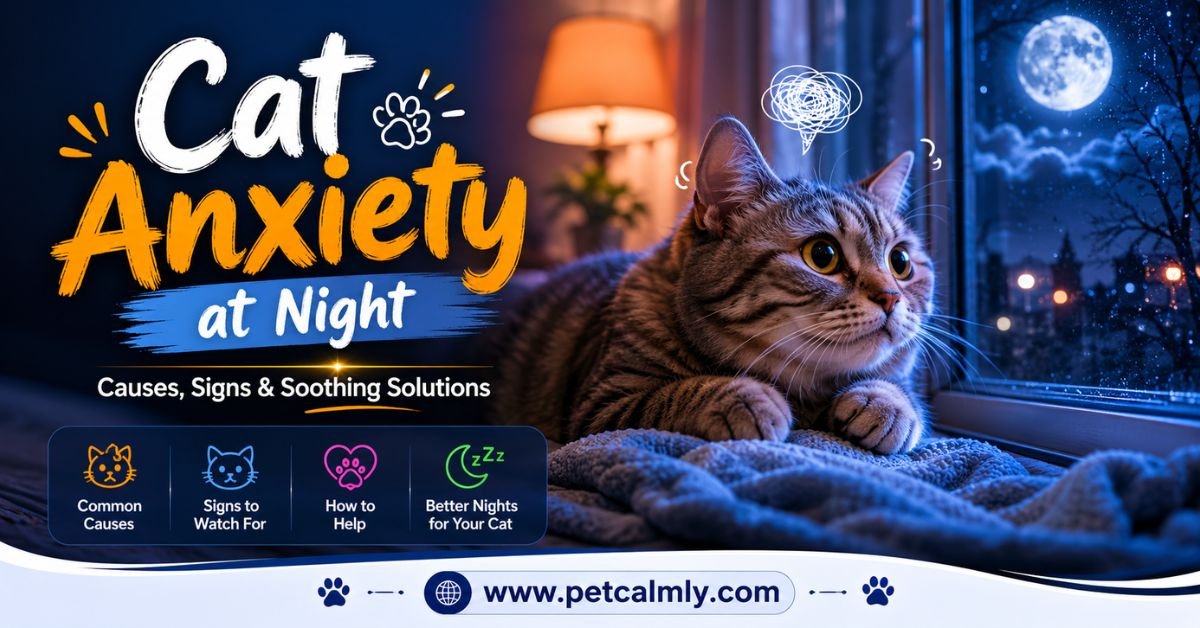
Cat anxiety at night often happens because a cat feels stressed, insecure, overstimulated, under-stimulated, or uncomfortable when the household becomes quiet. Common triggers include changes in routine, separation from family members, boredom, medical issues, aging-related cognitive changes, and environmental stressors. Helping an anxious cat usually involves creating a predictable evening routine, increasing daytime enrichment, providing safe resting spaces, and addressing any underlying health concerns with a veterinarian.
If your cat suddenly becomes anxious at night, especially if the behavior is new or severe, a veterinary examination is important to rule out pain, illness, or age-related conditions.
Why Nighttime Anxiety in Cats Can Be So Distressing
Many cat owners know the feeling.
You finally settle into bed, turn off the lights, and expect a quiet night. Instead, your cat starts pacing through the hallway, meowing repeatedly, scratching at doors, hiding under furniture, or acting unusually restless.
Nighttime anxiety can be frustrating for owners, but it can also signal that a cat is struggling emotionally or physically.
The challenge is that cats don’t express stress the way humans do. A cat experiencing anxiety may appear vocal, clingy, destructive, withdrawn, hyperactive, or unusually alert. Some cats seem completely normal during the day and only show signs of distress after sunset.
Understanding why your cat becomes anxious at night is the first step toward helping them feel safer, calmer, and more comfortable.
What Is Cat Anxiety at Night?
In simple terms, cat anxiety at night refers to stress, fear, nervousness, or emotional discomfort that becomes more noticeable during evening and overnight hours.
Cats are naturally crepuscular animals, meaning they tend to be most active during dawn and dusk. However, anxiety goes beyond normal activity.
An anxious cat may struggle to relax, settle down, or feel secure when the environment changes at night.
Common signs include:
- Excessive nighttime meowing
- Pacing around the house
- Following owners constantly
- Hiding more than usual
- Restlessness
- Scratching doors or walls
- Refusing to settle in favorite sleeping areas
- Startling easily at noises
- Overgrooming
- Aggressive behavior when disturbed
The behavior often reflects an emotional need rather than simple attention-seeking.
Why Is My Cat Anxious at Night?
The Main Reason
The main reason many cats appear more anxious at night is that there are fewer distractions.
During the day, household activity, sunlight, people moving around, and routine events occupy your cat’s attention. When the house becomes quiet, underlying stressors may become more noticeable.
Several different causes can contribute.
1. Changes in Routine
Cats thrive on predictability.
Even small disruptions can create stress, including:
- New work schedules
- Moving homes
- Rearranged furniture
- Guests staying over
- Changes in feeding times
- New pets
- New family members
A cat that feels uncertain about its environment may become especially unsettled during nighttime hours.
Example
A cat whose owner recently started working evening shifts may begin crying at night because the familiar routine has changed.
2. Separation Anxiety
Some cats form extremely strong bonds with their owners.
When bedtime arrives and access to a favorite person becomes limited, anxiety can emerge.
Cats with separation-related stress may:
- Meow outside bedroom doors
- Follow owners constantly before bedtime
- Become distressed when left alone
- Show clingy behavior
This is particularly common in cats that spend most of the day with one person.
3. Lack of Mental and Physical Stimulation
A surprisingly common cause of nighttime anxiety is boredom.
Indoor cats often spend long periods resting during the day.
Without enough enrichment, they may have excess energy after dark.
Signs include:
- Running through the house
- Vocalizing repeatedly
- Knocking items over
- Seeking constant attention
- Restless wandering
Sometimes what appears to be anxiety is actually a combination of boredom and frustration.
4. Environmental Stress
Cats are highly sensitive to their surroundings.
Nighttime stressors may include:
- Outdoor cats visible through windows
- Loud neighbors
- Traffic sounds
- Construction noise
- New scents
- Household conflicts
- Changes in lighting
Because cats possess exceptional hearing, noises humans barely notice can trigger anxiety.
5. Multi-Cat Household Tension
Not all cats living together are close friends.
Subtle conflicts may occur without owners realizing it.
Signs of hidden tension include:
- Blocking access to resources
- Staring contests
- Chasing
- Guarding litter boxes
- Competition for sleeping spaces
These issues often become more apparent when the home quiets down at night.
6. Medical Conditions
Physical discomfort frequently contributes to nighttime anxiety.
Potential causes include:
- Arthritis
- Dental pain
- Urinary problems
- Hyperthyroidism
- High blood pressure
- Digestive discomfort
- Neurological conditions
A cat experiencing pain may seem restless, vocal, or unable to settle comfortably.
This is one reason sudden behavior changes should never be ignored.
7. Senior Cat Cognitive Changes
Older cats sometimes develop cognitive dysfunction, which is similar to age-related cognitive decline seen in humans.
Common signs include:
- Wandering at night
- Disorientation
- Increased vocalization
- Confusion
- Altered sleep patterns
Many owners notice symptoms becoming worse after dark.
Signs Your Cat’s Nighttime Behavior May Be Anxiety
Not every active cat is anxious.
Cats naturally become energetic during evening hours.
The following signs are more suggestive of anxiety.
Emotional Signs
- Excessive clinginess
- Nervous behavior
- Hiding
- Fearful reactions
- Hypervigilance
Physical Signs
- Dilated pupils
- Trembling
- Rapid breathing
- Excessive grooming
- Reduced appetite
Behavioral Signs
- Constant meowing
- Pacing
- Scratching doors
- Destructive behavior
- Difficulty settling down
When several signs appear together, anxiety becomes more likely.
Cat Anxiety vs Normal Night Activity
| Behavior | Normal Cat Activity | Possible Anxiety |
|---|---|---|
| Evening zoomies | Common | Usually brief |
| Occasional meow | Normal | Frequent repetitive vocalization |
| Exploring rooms | Normal | Constant pacing |
| Playing at dusk | Normal | Appears restless and unable to relax |
| Seeking attention | Normal | Appears distressed when ignored |
| Short bursts of activity | Normal | Ongoing agitation |
A key difference is whether the cat can eventually relax.
An anxious cat often struggles to settle even after activity.
How to Calm an Anxious Cat at Night
In Short
Most cats benefit from a combination of predictable routines, enrichment, safe resting spaces, and reduced environmental stress.
Consistency matters more than dramatic changes.
Create a Predictable Evening Routine
Cats feel safer when they know what to expect.
A simple evening schedule might include:
- Interactive play session
- Dinner feeding
- Quiet family time
- Access to sleeping areas
- Consistent bedtime
Repeating the same sequence each evening helps many cats relax.
Increase Daytime Enrichment
Mental stimulation can significantly improve nighttime behavior.
Ideas include:
- Puzzle feeders
- Climbing trees
- Window perches
- Interactive toys
- Food hunts
- Training sessions
A mentally engaged cat is often more prepared for restful sleep.
Schedule Active Play Before Bed
One of the most effective techniques is mimicking the natural hunt-catch-eat-sleep cycle.
Try:
- Feather wand games
- Chase toys
- Interactive prey-style play
Aim for 15–20 minutes of active play before dinner.
Many owners notice improved nighttime behavior within a few weeks.
Provide Safe Sleeping Areas
Cats feel more secure when they have dedicated resting spots.
Helpful options include:
- Covered cat beds
- Elevated shelves
- Quiet spare rooms
- Soft blankets
- Enclosed hideaways
Some anxious cats prefer sleeping near family members, while others feel safer in secluded areas.
Reduce Nighttime Triggers
Take note of patterns.
Ask yourself:
- Does the behavior start after certain noises?
- Is another cat involved?
- Are outdoor animals visible?
- Does the behavior happen only in specific rooms?
Identifying triggers often reveals surprisingly simple solutions.
Consider Window Management
Outdoor cats frequently trigger stress.
At night, some cats become highly alert to movement outside.
Possible solutions:
- Close blinds
- Use privacy film
- Block visual access during peak activity hours
Reducing visual stress can dramatically improve some cats’ comfort levels.
Daily Checklist for Reducing Cat Anxiety at Night
Use this simple checklist:
Every Day
Feed on a consistent schedule
Provide interactive play
Offer mental enrichment
Clean litter boxes
Maintain routine
Provide quiet resting areas
Monitor behavior changes
Ensure access to fresh water
Small daily habits often make a significant difference over time.
5 Common Mistakes Cat Owners Make
Mistake 1: Punishing Vocalization
Punishment does not address the underlying cause of anxiety.
Instead, it can increase fear and confusion.
Mistake 2: Ignoring Sudden Behavior Changes
A sudden onset of nighttime anxiety should never automatically be blamed on behavior.
Medical problems are common contributors.
Mistake 3: Inconsistent Routines
Frequent schedule changes can increase stress.
Cats generally prefer predictability.
Mistake 4: Too Little Daytime Activity
Many indoor cats need more engagement than owners realize.
A bored cat may struggle to settle at night.
Mistake 5: Assuming Every Cat Wants Constant Attention
Some anxious cats need more interaction.
Others need more personal space.
Observing individual preferences is important.
Helpful Products That May Support Anxious Cats
No product works for every cat, but some owners find support through:
- Cat trees
- Puzzle feeders
- Interactive toys
- Heated beds
- Covered resting areas
- Calming pheromone diffusers
Products should complement behavioral management rather than replace it.
For more guidance, PetCalmly readers may also benefit from related articles on calming techniques, anxiety triggers, and enrichment activities.
When Should You Worry?
Most Importantly
Seek veterinary advice if anxiety is sudden, severe, worsening, or accompanied by physical symptoms.
Warning signs include:
- Loss of appetite
- Weight loss
- Vomiting
- Increased thirst
- Litter box changes
- Aggression
- Disorientation
- Signs of pain
- Difficulty walking
These symptoms may indicate a medical condition rather than purely behavioral anxiety.
Emergency Situations
Contact a veterinarian promptly if your cat:
- Cannot urinate
- Appears unable to breathe normally
- Collapses
- Experiences seizures
- Shows severe pain
- Becomes suddenly disoriented
Behavioral changes can sometimes signal urgent health issues.
What Should Pet Owners Do?
If your cat experiences anxiety at night:
- Observe specific behaviors.
- Look for patterns and triggers.
- Increase daytime enrichment.
- Establish a predictable routine.
- Provide safe sleeping spaces.
- Schedule active play before bedtime.
- Rule out medical causes.
- Seek professional guidance if symptoms continue.
Avoid expecting immediate results.
Behavioral improvement often occurs gradually over several weeks.
How Long Does It Take for an Anxious Cat to Improve?
The timeline varies.
Some cats respond within days when a simple trigger is removed.
Others require weeks or months of routine adjustments.
Factors that affect recovery include:
- Age
- Health status
- Severity of anxiety
- Environmental stability
- Consistency of management
Patience is often one of the most important tools.
A Realistic Example
Imagine an indoor cat that spends most of the day sleeping while its owner works from home.
Every night around midnight, the cat begins meowing loudly and pacing through the house.
The owner assumes the cat is anxious.
After adding two daily play sessions, a puzzle feeder, and a structured bedtime routine, the behavior gradually decreases.
In this situation, boredom and unmet activity needs were likely major contributors.
Cases like this illustrate why identifying the root cause matters.
Frequently Asked Questions
1: Why does my cat get anxious only at night?
Nighttime removes many daytime distractions. Stress, boredom, separation concerns, environmental triggers, or underlying medical conditions may become more noticeable after dark.
2: Can cats have panic attacks at night?
Cats can experience intense fear responses that resemble panic. They may hide, vocalize, tremble, or appear highly distressed. A veterinary evaluation can help identify possible causes.
3: Is it normal for senior cats to cry at night?
It can happen, especially in older cats experiencing cognitive changes, sensory decline, discomfort, or medical issues. Persistent vocalization should be discussed with a veterinarian.
4: Should I ignore my cat when it cries at night?
That depends on the cause. If anxiety, pain, illness, or fear is involved, ignoring the behavior alone will not solve the problem. First identify the underlying trigger.
5: What is the best bedtime routine for an anxious cat?
A consistent routine that includes active play, feeding, calm interaction, and access to comfortable sleeping areas often works well for many cats.
6: Can boredom cause nighttime anxiety in cats?
Yes. Cats that lack sufficient physical activity and mental stimulation during the day may appear restless, vocal, and unsettled during nighttime hours.
More Information About Pets, Please Visit Our Website: What Helps Anxiety in Cats Naturally?
Conclusion
Cat anxiety at night can be exhausting for both cats and their owners, but it is often manageable once the underlying cause is understood.
Sometimes the issue stems from boredom or routine changes. Other times, stress, aging, environmental triggers, or health concerns play a role. The key is observing your cat carefully rather than assuming all nighttime behaviors have the same cause.
A predictable routine, meaningful enrichment, safe resting spaces, and attention to your cat’s emotional needs can go a long way toward creating calmer nights.
Most importantly, if your cat’s nighttime anxiety is sudden, severe, or accompanied by other symptoms, involve your veterinarian. Behavioral changes are often your cat’s way of communicating that something needs attention.
With patience and a thoughtful approach, many cats can regain their sense of security and enjoy more peaceful nights—and so can their owners.