

Short direct answer
Stop puppy hand-biting by teaching bite inhibition: immediately redirect with a chew toy, give a clear “ouch” or yelp when bitten, then pause play for 20–30 seconds. Reward gentle mouths, be consistent, provide chew toys and exercise, and socialize your puppy. Repeat daily most puppies learn within weeks with consistent practice.
Why this matters
Puppy biting is normal, but left unwatched it can hurt family members, damage relationships, or become a real safety problem. Teaching your puppy not to bite hands keeps children, visitors, and the puppy safe. It also builds trust and makes future training easier.
How biting fits into normal puppy behavior
Why puppies bite hands
Puppies bite because they are exploring, playing, teething, or practicing social skills. Biting your hand often feels like play your hand moves like prey, and teeth hurt less to them than to human skin.
Typical ages and stages
- 6–12 weeks: heavy mouthing learning from littermates.
- 3–6 months: teething increases chewing and nipping.
- 6–12 months: many puppies calm down, but habits need shaping.
Types of mouthy behavior (what it looks like)
- Light mouthing: soft contact, no pain.
- Hard nipping: quick painful bites often during excited play.
- Mouthing with growl: possible fear or resource issue watch closely.
- Biting that produces skin breakage: not normal requires fast action.
The basic, proven method (step-by-step)
These steps are practical and easy to use during daily life.
Step: 1 Prevent hands-as-toys
Always have a chew toy ready. If your hand moves and the puppy gets excited, offer the toy instead. Teach kids: hands are not playthings.
Step: 2 Use an immediate, consistent feedback signal
When the puppy bites too hard:
- Say a firm “Ouch!” or high-pitched yelp for one second.
- Stop all play and attention for 20–30 seconds (stand up, turn away).
- After the short pause, resume calm play or give a toy.
This mimics how littermates signal pain and helps the puppy learn bite pressure control.
Step: 3 Redirect to appropriate chewing
After the yelp/pause, hand your puppy an approved chew (knot toy, rubber toy, frozen wet washcloth for teething). Praise when they chew the toy, not your hand.
Step: 4 Reward gentle behavior
When the puppy licks or mouths softly, give a treat and praise calmly. Reinforcing gentle mouths teaches the puppy the behavior you want.
Step: 5 Use time-outs correctly
If a puppy repeatedly bites after warnings:
- Briefly (30–60 seconds) remove them from the situation or place them in a safe, puppy-proof area.
- Don’t scold loudly or hit that increases fear or aggression.
Practical training session plan (daily)
- Morning (5–10 minutes): handling practice touch paws, ears, mouth gently; reward calmness.
- Midday (10–15 minutes): short play sessions using toys; practice yelp + pause when needed.
- Evening (10 minutes): calm games and obedience practice (sit, down) to reduce arousal.
Repeat several short sessions instead of one long session.
Tools that help
- Chew toys (rubber, Kong, Nylabone).
- Treats for reinforcement.
- Puppy-safe rope toys for supervised tug (teach release).
- Crate for calm breaks (not punishment).
Soft-mouth skills and bite inhibition explained (practical)
Puppies learn bite inhibition by feeling limits from littermates and humans. When you yelp and stop play, you teach the puppy how much pressure hurts. Over time they learn to use a soft mouth.
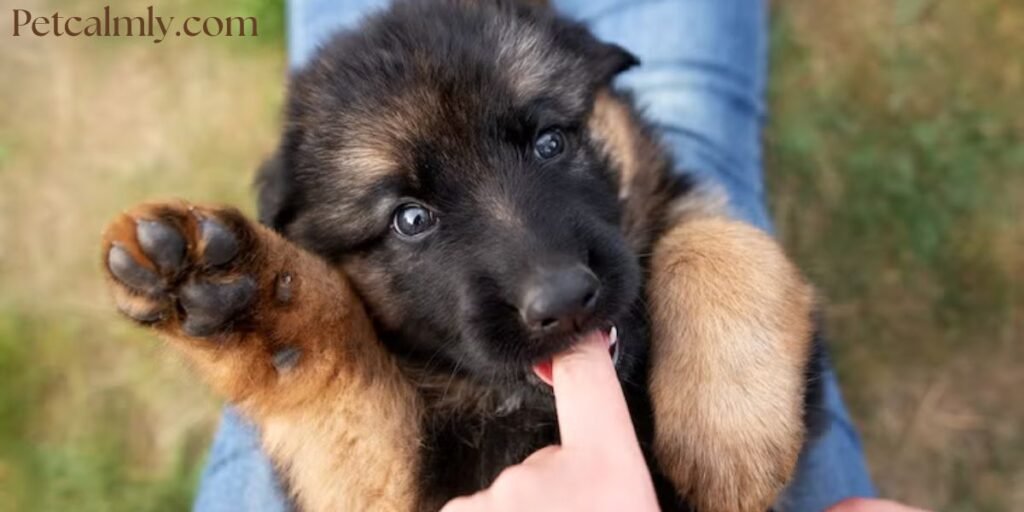
Practical tip: Play gently and reward soft mouthing immediately. If the puppy bites during fetch or tug, pause the game they’ll begin to associate gentle play with fun staying on.
Common mistakes to avoid
- Using your hands as toys. This confuses the puppy.
- Yelling or physical punishment. This causes fear and may increase serious biting.
- Inconsistent rules between family members. Everyone must follow the same responses.
- Long, frustrating sessions puppies learn faster with short, positive repetitions.
When Should You Be Concerned?
Be concerned and consult a veterinarian or certified behaviorist if you see any of these:
- Bites break skin, draw blood, or leave visible injury.
- Puppy clamps down and won’t release.
- Growling, lunging, or snapping that escalates.
- Fearful or defensive body language (pinning ears, cowering, showing teeth) with biting.
- No improvement after consistent, correct training for several weeks.
Immediate first aid for human bites: wash the wound with soap and water, apply pressure if bleeding, cover with a clean bandage, and seek medical care for deep wounds. Children should always see a doctor after a dog bite. If the puppy’s vaccination history is unknown, check rabies status with your vet.
What Should Pet Owners Do? (Actionable steps)
Follow this clear checklist:
1 : Start now, be consistent
Use the yelp + pause method every single time a hard bite happens. Consistency is more important than intensity.
2 : Manage the environment
Keep temptations away: pick up socks, hands out of face, supervise child–puppy interactions. Rotate chew toys to keep them interesting.
3 : Increase exercise and mental work
Tired puppies bite less. Daily walks, fetch, and puzzle toys reduce excess energy and mouthing.
4 : Teach calm alternatives
Train “sit,” “leave it,” “drop,” and “gentle.” Reward these behaviors lavishly so the puppy learns they lead to rewards.
5 : Socialize safely
Introduce your puppy to well-mannered dogs and people in controlled settings. Puppy classes teach bite inhibition through play with other puppies and professional guidance.
6 : Use chews and teething aids during teething
Frozen Kong with peanut butter (xylitol-free) or cooled chew toys ease teething pain and reduce biting of hands.
7 : Seek help when needed
If biting is aggressive, or your family is unsafe, call a certified behaviorist. Many vets can point you to local trainers who use positive methods.
Troubleshooting: What if the puppy doesn’t improve?
- Re-check consistency: are all family members using the same method?
- Increase training frequency: short sessions multiple times daily.
- Replace attention with a concrete consequence: short time-out away from people.
- If the puppy escalates (harder bites, fear), stop home training and get professional help — early intervention is cheaper and safer.
Special situations
Children and puppies
Teach children to be calm, not chase the puppy, and to let adults handle corrections. Supervise all interactions. A rule: no rough play or hugging that the puppy finds scary.
Large-breed puppies
Same training applies, but be stricter with management and quicker to consult a trainer because an adult bite of a large dog does more harm.
Rescue puppies with unknown history
Go slowly. Use management and consistent training, and consider vet check for pain or medical causes that might make a puppy bite.
More Information About Pets, Please Visit Our Website: How Long Do Dogs Stay Stuck Together After Mating
Why Does My Dog Bark At Strangers On Walks: Top 4 Reason
Conclusion
Training a puppy not to bite your hands is doable with short, consistent actions: yelp to mark pain, immediately stop play, redirect to a chew toy, and reward gentle mouths. Combine exercise, safe management, and basic obedience. Most puppies learn quickly when the whole household follows the same method. If biting is severe or doesn’t improve, contact your veterinarian or a certified trainer for guidance.
Frequently Asked Questions
1. Is puppy biting normal?
Yes. Puppies explore with their mouths and learn social rules through mouthing. Normal biting becomes a problem without guidance or consistency.
2. How long will it take to stop my puppy from biting my hands?
With consistent training, many puppies show major improvement in 2–6 weeks. Full maturity varies by dog; continue reinforcing good habits.
3. Can I spray water or hit my puppy to stop biting?
No. Physical punishment or unpredictable corrections increase fear and may cause aggression. Use positive redirection, time-outs, and rewards.
4. Should I let my puppy chew on my hands sometimes to bond?
No. Letting a puppy treat your hands as toys teaches the wrong lesson. Use supervised gentle handling and offer toys for bonding instead.
5. When is teething over and biting less frequent?
Teething usually peaks between 3–6 months. Many puppies calm down after 6–9 months, but training during this window is crucial to prevent lasting habits.
6. When should I see a professional about biting?
See a vet or certified behaviorist if bites break skin, the puppy won’t release, growling accompanies biting, or there’s no improvement after consistent training.