
Short direct answer
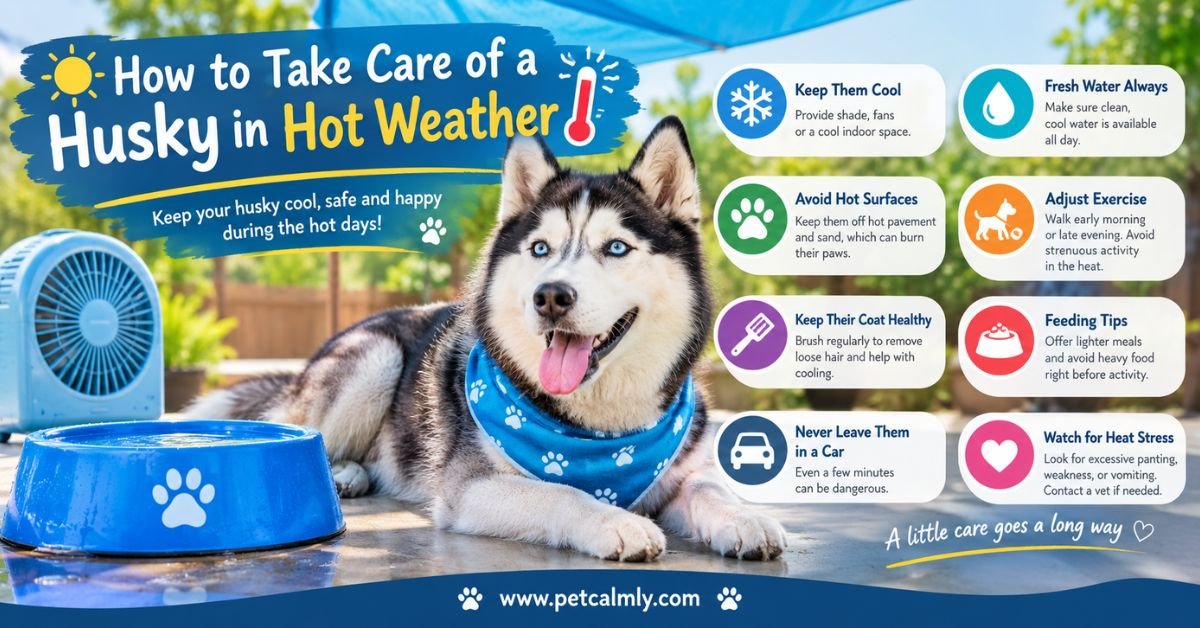
Huskies need extra care in warm climates because they’re bred for cold environments and overheat quickly. The essentials include constant access to fresh water, keeping them in cool spaces during peak heat hours, limiting exercise during the day, regular grooming to manage their thick coat, and recognizing signs of heat stress like excessive panting or lethargy. Most importantly, never leave a husky in a car or direct sunlight, as they can develop heat stroke within minutes.
Introduction
If you’ve ever watched a husky lie flat on your kitchen tile floor in summer, completely sprawled out like they’re melting, you understand the first rule of husky ownership: these dogs were not designed for hot weather.
Huskies evolved in the Arctic tundra. Their thick double coats, stocky build, and natural metabolism are perfectly calibrated for temperatures we’d consider dangerously cold. When the thermometer climbs into the 80s and beyond, you’re asking their body to do something it’s fundamentally not built to handle.
Here’s what makes this tricky: huskies don’t always show obvious signs of distress until they’re actually in trouble. A husky might seem fine one moment and collapse into heat exhaustion the next. This isn’t because they’re fragile it’s because their breed-specific physiology makes them less equipped to cool themselves down efficiently than most other dogs.
The good news? You don’t need to move to Alaska to keep your husky happy and safe in warm weather. It takes understanding, planning, and some adjusted routines. This guide walks you through everything you need to know, from daily heat management to recognizing when your husky needs immediate veterinary attention.
Understanding Why Huskies Struggle in Heat
How Huskies Cool Themselves (Or Don’t)
Dogs can’t sweat. They cool themselves primarily through panting and releasing heat through their paws and nose. Huskies can also cool off by lying on cool surfaces but they have a built-in disadvantage that makes this harder for them than for other breeds.
Their double coat traps heat close to the skin. What keeps them warm at minus 20 degrees becomes insulation that prevents efficient heat release when it’s 90 degrees outside. Even when a husky pants heavily, they struggle to dissipate heat quickly enough, especially if they’ve been active.
Additionally, huskies have a higher metabolic rate than many dog breeds. Their bodies generate more internal heat naturally. Combine this with their thick coat and slightly reduced panting efficiency, and you’ve got a breed that can slip into heat stress faster than a Golden Retriever or Labrador in the same conditions.
Temperature Sensitivity: When Things Get Dangerous
Below 50°F: Huskies are in their comfort zone.
50–70°F: They’re fine but may start seeking shade.
70–80°F: Now you need to be intentional about management. Heat stress can develop if they’re exercising.
80°F and above: Active heat management becomes essential. This is when heat stroke risk climbs significantly.
Above 90°F: Only early morning or late evening outdoor time; most of the day should be indoors.
Keep in mind that the temperature on pavement or in direct sunlight can be 10–20 degrees higher than the air temperature. A sunny 80-degree day can mean 100+ degrees where your husky’s paws touch the ground.
The Biggest Mistake Husky Owners Make in Summer
Most people assume that shaving a husky’s coat in summer will help them cool down. It won’t and it can actually make things worse.
A husky’s double coat serves like a natural insulation system that works both ways. Yes, it keeps them warm in winter. But it also creates a thin layer of air between the coat and skin that actually helps with temperature regulation. When you shave a husky:
- You remove UV protection, exposing skin to sunburn
- You eliminate that insulating air layer, making them more vulnerable to heat absorption
- The regrowth process disrupts their coat quality for months
- The exposed skin becomes more prone to irritation and infection
Instead of shaving, proper grooming regular brushing to remove undercoat and maintain coat health is what helps huskies stay cooler. We’ll cover this in detail below.
The second biggest mistake? Assuming your husky will regulate their own exercise. Many huskies have such a high prey drive and energy level that they’ll chase a squirrel or play fetch until they collapse. As the owner, you need to be the one who sets limits on activity during hot months.
Daily Hydration: More Than Just Water
Proper hydration is your first line of defense against heat stress, but it’s not as simple as leaving a bowl of water outside.
Fresh Water Strategy
- Multiple water stations: Place water bowls in several areas of your home, especially where your husky spends the most time. They’re more likely to drink regularly if water is convenient.
- Check water constantly: In summer, refill water bowls every 2–3 hours, especially during the hottest parts of the day. Warm or stale water discourages drinking.
- Cool water matters: Some huskies prefer drinking cooler water. Using a water fountain can make drinking more appealing and keep water moving and fresh.
- Outdoors: If your husky spends any time outside, have water available in shade. Never leave them in a yard without easy access to fresh water.
Signs of Dehydration
Watch for excessive panting that doesn’t settle down with water, dry gums (the gums should be moist and pink), or decreased interest in playing. A dehydrated husky may have a sunken appearance to their eyes. If you notice any of these signs, contact your veterinarian.
Water Supplements (Sometimes)
On very hot days or after exercise, some owners add a small amount of low-sodium broth to water to make it more appealing. This can help with both hydration and electrolyte replacement. Always ensure it’s low-sodium, as regular broth contains too much salt.
Creating a Cool Environment Inside Your Home
Your house becomes your husky’s safe zone during hot weather. Setting up the right indoor environment is critical.
Temperature Control
Ideally, keep your home between 68–75°F when your husky is inside. Air conditioning is valuable for more than human comfort—it’s part of responsible husky ownership in warm climates. If you don’t have AC or can’t keep it running constantly, consider:
- Closing blinds and curtains during the day to block direct sunlight
- Using fans to improve air circulation (though fans alone don’t cool effectively when it’s above 85°F)
- Opening windows early morning and evening when outdoor temps are cooler
If heat is a chronic issue in your area and you don’t have AC, a portable air conditioning unit in your husky’s primary living space is worth the investment.
Cool Flooring Zones
Huskies naturally seek out cool surfaces. Tile, hardwood, or laminate floors stay cooler than carpet. Create a designated cool zone perhaps a bathroom, kitchen, or mudroom where your husky can retreat when they feel warm. Some owners set up a designated “cool spot” with a tile floor and a water bowl nearby.
The Water Bed Solution
A few owners of warm-climate huskies use dog cooling beds or even kiddie pools filled with shallow water (supervised) for self-cooling. Not every husky will use these, but those who do often appreciate the option on extremely hot days.
Bedding Choices
In summer, swap heavy, insulating dog beds for lightweight, breathable options. Cotton cooling pads or even just a thin blanket on a tile floor works better than plush orthopedic beds designed for winter warmth.
Rethinking Exercise in Warm Weather
Huskies are working dogs bred for hours of outdoor activity in cold temperatures. Summer changes the equation dramatically.
Timing Is Everything
Early morning walks (before 8 AM) and late evening walks (after 7 PM) are your safest windows for outdoor activity. During these times, the pavement is cooler, the sun isn’t intense, and your husky can actually enjoy their walk.
The peak heat hours roughly 10 AM to 6 PM should be quiet time indoors. This isn’t the time for long walks or yard play, no matter how eager your husky seems.
Adjust Expectations
A husky that might happily run for two hours in winter should be limited to 20–30 minutes of activity during peak summer months. This isn’t failing as an owner; it’s protecting your dog’s health.
Many husky owners report that their dogs are naturally less interested in exercise during extreme heat anyway. Your husky might be perfectly content napping most of the day in summer. Trust that instinct.
Mental Enrichment Indoors
Since physical exercise is limited, increase mental stimulation:
- Puzzle feeders and slow feeders extend mealtime and engage their problem-solving skills
- Hide and seek with treats or toys inside the house
- Training sessions in short bursts (10 minutes at a time) in a cool environment
- Sniff games where you hide treats around a room
- Chew items like bully sticks or safe chews (kept in a cool area)
A mentally stimulated but under-exercised husky often does better than a physically tired, mentally bored one. This adjustment actually prevents some behavioral problems.
Water-Based Cool-Down
If your husky enjoys water, a shallow kiddie pool in the shade (with your supervision) can provide both cooling and entertainment. Some huskies love this; others are indifferent. Never force a dog into water.
Grooming and Coat Management for Summer
Proper grooming is where many husky owners actually make a real difference in their comfort level.
The Brushing Routine That Matters
During summer, brush your husky 2–3 times per week. Here’s the specific approach:
- Use an undercoat rake or deshedding tool (not just a regular brush). These tools remove the dense undercoat where heat gets trapped.
- Brush all the way to the skin, not just the outer guard hairs. You want to remove that thick undercoat.
- Focus on areas that mat or felt easily: behind the ears, inside the legs, the rear end, and under the tail.
- Expect a lot of hair. A properly groomed husky sheds what seems like an impossible amount of coat. This is normal and healthy.
After a thorough brushing session, your husky’s remaining coat will feel noticeably lighter. This allows air to circulate closer to the skin and actually improves heat dissipation.
Professional Grooming Option
Many husky owners use a professional groomer during summer, particularly a groomer experienced with double-coated breeds. A full deshedding treatment (sometimes called a “high-velocity dry” or “undercoat blowout”) removes an enormous amount of dead undercoat. This is different from shaving and is actually beneficial for summer comfort.
Cost: typically $75–150 depending on your dog’s size and your location.
Frequency: Once at the start of summer, then monthly or as-needed if your husky still seems uncomfortable.
Why NOT to Shave
We touched on this before, but it’s important enough to emphasize: never shave a husky’s double coat. If a groomer suggests this, find a different groomer. Shaving:
- Removes UV protection, leading to sunburn
- Can damage the hair follicles permanently, affecting coat regrowth
- Actually makes your husky hotter because it removes the insulating air layer
- Can cause dermatitis and skin infection
- Is recommended only in very specific cases (like severe matting) as a last resort
A husky’s coat should be deshed, not shaved.
Grooming Around Heat Pads
Your husky’s paws and nose are key heat-release points. Some owners trim the hair between toe pads slightly (not down to the skin, just tidying up) to make it easier for heat to release from the feet. This is optional but can help slightly.
Recognizing Heat Stress and Heat Stroke
Understanding the progression from “warm” to “dangerous” helps you catch problems early.
Early Signs of Heat Stress
These are your warning signs that your husky is starting to struggle:
- Excessive panting that continues even after the dog stops activity and moves to a cool area
- Drooling more than usual
- Lethargy or reluctance to move, even to greet you
- Red or pale gums
- Seeking cool surfaces obsessively, unable to settle
- Lack of appetite, especially unusual for a husky
- Vomiting
If you notice any of these, immediately move your husky to a cool area, offer water, and monitor closely. Most dogs recover quickly once they’re cooled down and rested.
Heat Stroke: Requiring Immediate Veterinary Care
Heat stroke is a medical emergency. Signs include:
- Severe panting and difficulty breathing
- Collapse or inability to stand
- Glazed or unresponsive eyes
- Loss of consciousness
- Bloody vomit or stool
- Gums that are very red or very pale (white)
- Temperature above 104°F (if you have a way to check)
If you suspect heat stroke, don’t wait. Call your veterinarian or emergency vet clinic immediately. While you’re heading there or waiting for emergency services:
- Move your dog to a cool area
- Use cool (not ice-cold) water to wet their coat
- Place them near a fan if possible
- Offer small amounts of cool water if they’re conscious
- Do NOT submerge them in ice water, which can cause shock
Heat stroke is life-threatening and requires professional veterinary care. Even if your husky seems to recover, they should be examined by a vet to ensure there’s no internal damage.
Car Safety and Outdoor Rules
This deserves its own section because it’s genuinely a life-or-death issue.
The Car Rule: Simple and Non-Negotiable
Never leave your husky in a parked car in warm weather. Not for five minutes. Not with the windows down. Not with the engine running. Not to quickly run into a store.
The temperature inside a parked car can climb 20+ degrees above the outside temperature in just 10 minutes. On an 85-degree day, a car can reach 104 degrees in 15 minutes. Huskies can develop heat stroke quickly in these conditions.
If you’re running errands, leave your husky at home in air conditioning. If you’re going somewhere that requires your dog to wait in the car, skip that outing.
Outdoor Time Rules
- Shade is essential: If your husky is outdoors, they must have access to shade that lasts throughout the day (as the sun moves, so does your shade).
- Pavement burns: Check pavement with your hand before walking on it. If it’s too hot for your hand, it’s too hot for paws. Consider paw protection or sticking to grass.
- Sunny yards without shade: Don’t leave your husky unattended in a sunny yard, even for short periods. They can overheat quickly.
- Avoid peak hours: Keep outdoor time to early morning and late evening during summer.
Special Considerations for Husky-Specific Situations
Multi-Dog Households
If you have multiple huskies or a husky living with other dogs, they may play together in heat in ways that raise both their temperatures. Monitor group play sessions carefully during warm weather and keep them indoors or in cool conditions.
Husky Puppies
Puppies have less developed temperature regulation and can overheat even faster than adult huskies. Puppies under six months should have very limited outdoor time in heat and should never be pushed to exercise during warm weather.
Senior Huskies
Older huskies (8+) are often less tolerant of heat. They may overheat more easily and recover more slowly. Senior huskies should have even more conservative heat management and should be monitored closely during warm months.
Overweight Huskies
An overweight husky has a harder time cooling themselves. If your husky is overweight, heat becomes an additional health concern beyond standard weight-related issues. Discuss a diet and exercise plan with your vet.
When to Contact Your Veterinarian
Contact your vet if your husky:
- Shows signs of heat stress that don’t resolve within 30 minutes of cooling down
- Refuses to eat or drink for more than a few hours
- Has diarrhea or vomiting that lasts beyond a few episodes
- Seems unusually lethargic and disoriented
- Has any difficulty breathing or wheezing
- Shows signs of collapsed paw pads or limping after being in heat
If you suspect heat stroke, call immediately—don’t wait and see.
Before summer arrives, it’s worth having a conversation with your vet about heat management specific to your husky’s age and health status. Some huskies with underlying cardiac or respiratory conditions need extra careful heat management.
Summer Routine: A Practical Daily Schedule
Here’s what a hot-weather day might look like for a husky owner:
6–7 AM: Early morning walk (20–30 minutes max). Your husky gets to move and explore while it’s cool.
8 AM–6 PM: Indoors in air conditioning. Mid-day mental enrichment (puzzle games, training, chew toys), multiple water bowl checks, a brush session 2–3 times per week.
Late afternoon/early evening: Indoor rest. This is often nap time. Keep the house cool.
7–8 PM: Evening walk or yard time. Another 20–30 minutes of activity as temperatures drop.
8 PM onward: Evening routine, bedtime. Your husky is likely ready for sleep by now.
This schedule might look boring compared to winter, but it’s genuinely what keeps huskies healthy and happy during hot months.
Frequently Asked Questions
1: How can I tell if my husky is too hot but not yet in heat stroke?
If your husky is panting heavily and won’t settle down even in a cool area, if their gums look pale, or if they seem confused or uncoordinated, they’re experiencing heat stress. Move them to a cool space, offer water, and monitor. If they don’t recover within 30 minutes or seem to get worse, contact your vet.
2: Is it okay to use a cooling vest for my husky?
Some husky owners swear by cooling vests for outdoor activities in moderate heat. They’re not necessary for most situations but can be helpful during early morning walks on an 85-degree day. Choose a lightweight, breathable vest designed for dogs. It’s an optional tool, not a solution that replaces shade, water, and limited exercise.
3: My husky loves to play. How do I tell them “no” without feeling guilty?
Remember that protecting your husky’s health during summer is an act of love, not restriction. Your husky’s desire to play doesn’t mean it’s safe for them to be active in 95-degree heat. Setting boundaries is part of good ownership. Many husky owners find that their dogs seem genuinely relieved to rest indoors during the hottest parts of the day.
4: Can huskies live in hot climates long-term?
Yes, with dedicated management. Many huskies thrive in warm areas when owners commit to proper heat management. It requires air conditioning, careful timing of outdoor activity, regular grooming, and constant water access. If your climate is extremely hot (100°F+ regularly), it requires even more intensive management and frequent vet check-ins.
5: What’s the difference between heat stress and heat stroke?
Heat stress is the early warning stage heavy panting, mild lethargy, seeking cool areas. A dog usually recovers within 30 minutes of cooling down. Heat stroke is a medical emergency where the body’s temperature regulation system is failing. A dog in heat stroke may collapse, lose consciousness, or vomit. Heat stroke requires immediate veterinary care and is potentially fatal.
6: Should I give my husky a haircut before summer?
A grooming that focuses on deshedding (removing the dense undercoat) helps significantly. A trim of excessive hair around the ears, between the toes, or in matted areas is fine. But a full “summer haircut” that shortens the main coat isn’t necessary and doesn’t help. Focus on deshedding, not shortening.
More Information About Pets, Please Visit Our Website: Dog Coat Care Products
Pet Care Guide for Cold Climate Areas
How to Care for Dogs in Hot Weather
Why Does My Dog Pace at Night?
Conclusion
Caring for a husky in hot weather requires a mindset shift from winter expectations. Your husky won’t want to run for hours. They’ll spend a lot of time napping indoors. This isn’t a personality change; it’s their body adjusting to an environment they’re not naturally built for.
The good news: once you understand your husky’s heat limitations and set up a summer routine that works, most huskies do genuinely well. They develop a rhythm of early morning activity, all-day indoor rest, and evening relaxation. Many owners find their huskies are calmer in summer than winter.
The investment whether in air conditioning, professional grooming, or time spent managing their environment—is an investment in their health and longevity. Huskies can live long, happy lives in warm climates when their owners take heat seriously.
Start now, before the hottest part of summer arrives. Set up your cool zones, plan your walk schedule, and establish relationships with local veterinarians who understand husky-specific health concerns. Your husky will thank you, in their own laid-out-on-the-tile-floor kind of way.