A trip to the vet can be stressful for any pet, but birds, reptiles and small mammals often face challenges that owners may not anticipate. Being removed from a familiar enclosure, placed in a carrier and taken into an unfamiliar environment can be frightening, even when the journey is short.
For some exotic pets, the most difficult part happens before they even reach the veterinary clinic. A parrot that has never entered a travel carrier may panic when its owner tries to catch it. A reptile may become too cold during transport, while a guinea pig may be frightened by unfamiliar sounds, movement or the presence of other animals.
Fortunately, there are ways to make veterinary visits easier. Much of it comes down to preparation, understanding how your pet responds to unfamiliar situations and taking a few practical steps to make the journey safer.
Start With the Transport Carrier
One of the simplest ways to reduce stress is to introduce the carrier before it is needed.
Many owners only bring out the transport carrier when their pet has a veterinary appointment. Over time, the animal may learn to associate it with being caught, restrained or taken somewhere unfamiliar. This can make each subsequent visit more difficult.
For birds, try placing the carrier somewhere the animal can see it without feeling threatened. Once the bird appears comfortable, encourage it to approach using familiar food rewards or gentle training. Gradually work towards entering the carrier voluntarily rather than forcing the process.
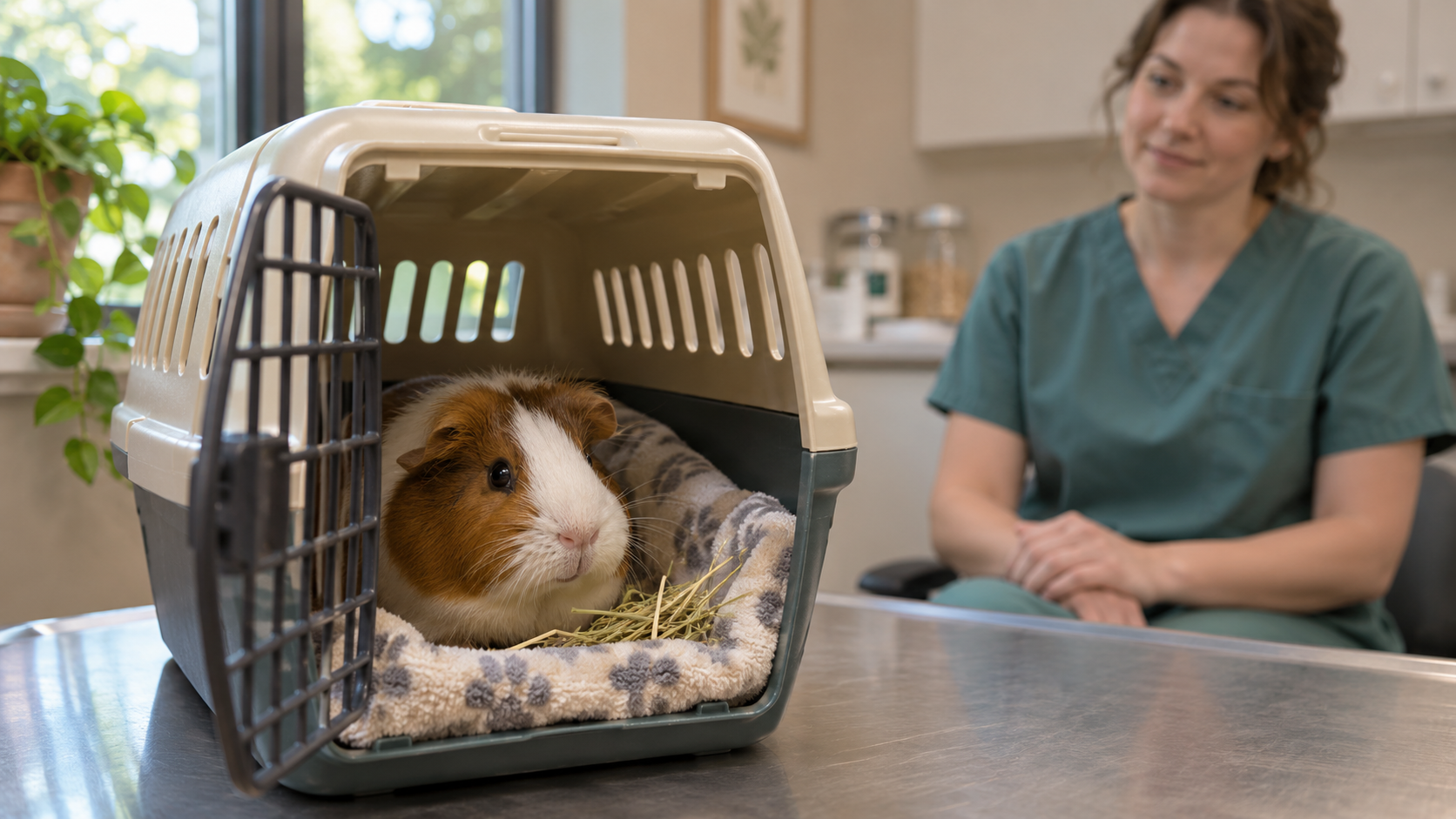
Small mammals such as guinea pigs and rabbits may benefit from having a carrier available to explore, with familiar bedding, hay or a suitable hiding place inside.
Reptiles may not respond to carrier training in quite the same way, but owners can still reduce unnecessary disturbance by preparing the transport container beforehand and becoming familiar with safe handling techniques.
Even a few short, positive experiences with the carrier can make a difference when appointment day arrives.
Choose a Carrier That Suits the Species
Different exotic pets have very different transport requirements. A carrier suitable for a guinea pig may be inappropriate for a snake or parrot.
Whatever the species, the container should be secure, appropriately sized, adequately ventilated and designed to prevent injury during travel.
Birds generally travel better in a dedicated bird carrier or suitably adapted small pet carrier than in a large household cage. Swinging toys, unsecured food bowls and unsuitable perches can become dangerous when a vehicle stops or turns suddenly.
Reptiles need secure containment, with adequate ventilation and protection from excessive movement. Some species may require additional containment inside an outer transport box. The arrangement should be appropriate for the animal’s size, behaviour and temperature requirements.
Guinea pigs, rabbits and other small mammals need sturdy carriers with secure footing and enough room to maintain a comfortable position.
Owners preparing for an appointment may find it helpful to review guidance on transporting exotic pets safely, particularly when choosing carriers and planning for temperature changes during travel.
Helping Pet Birds Feel More Secure
Birds are highly aware of their surroundings, and their response to travel varies considerably.
Some companion parrots become accustomed to short car journeys and may remain relatively relaxed. Others become frightened by unfamiliar movement, traffic noise or changes in light.
Keep the carrier stable and secured so it cannot slide or tip during the journey. Avoid placing it where direct sunlight could cause overheating.
Some birds settle better when part of the carrier is covered with a lightweight cloth, provided ventilation remains adequate. Others may prefer to see their surroundings. There is no single arrangement that suits every bird.
Avoid opening the carrier during the journey, even if the bird appears unsettled. A frightened bird escaping inside a vehicle creates a serious safety risk.
Air quality is another consideration. Birds have sensitive respiratory systems, so they should never be exposed to cigarette smoke, strong fragrances, aerosols or other potentially harmful fumes during transport.
If a bird becomes severely distressed, struggles to breathe or shows signs of collapse, seek urgent veterinary advice.
Reptiles Need Careful Temperature Management
Temperature control is particularly important when transporting reptiles.
Unlike mammals, reptiles depend on external heat sources to regulate their body temperature. A reptile that normally moves between warm basking areas and cooler hiding places cannot make those same choices inside a small transport container.
A short journey in mild weather may be relatively straightforward, but very hot or cold conditions require more planning.
Never leave a reptile unattended in a parked vehicle. Temperatures inside cars can rise rapidly, even when the weather does not feel particularly hot.
Cold weather also creates risks. Heat packs and other portable warming devices may be useful in some circumstances, but they can cause burns if placed incorrectly or allowed to contact the animal directly.
Owners should speak with an experienced reptile veterinarian about appropriate temperature management if they are unsure. Different species have different requirements, and the safest approach depends on the animal and the conditions.
Making Travel Easier for Guinea Pigs and Other Small Mammals
Guinea pigs, rabbits and many rodents are prey animals. They can be frightened by sudden movement, unfamiliar sounds and the sight or smell of potential predators.
A familiar carrier with suitable bedding can help. Guinea pigs and rabbits should also have access to appropriate food, such as hay, during the journey and while waiting for their appointment.
Where safe and suitable, a lightweight hiding area may help an animal feel more secure. Avoid placing heavy objects inside the carrier that could move suddenly and cause injury.
Bonded animals sometimes settle better when travelling together. However, owners should check with the veterinary clinic before bringing a companion, particularly if one animal is unwell or may require a procedure.
Feeding is especially important. Guinea pigs and rabbits should not be routinely fasted before veterinary appointments unless a veterinarian has provided specific instructions.
If a guinea pig or rabbit has already stopped eating, this may indicate a serious health problem and should not be dismissed as ordinary travel anxiety.
Keep the Journey Quiet and Predictable
Once the animal is safely inside its carrier, try to keep the journey as straightforward as possible.
Avoid loud music, sudden temperature changes and unnecessary stops. Secure the carrier so it cannot slide or tip, and make sure it is positioned away from direct sunlight and air vents blowing excessively hot or cold air.
Allow enough time to reach the appointment without rushing. Last-minute attempts to catch an animal followed by hurried handling and travel can create avoidable stress.
If your pet has previously become severely distressed during transport, contact the veterinary clinic before the appointment. The team may be able to suggest ways to make the journey easier or arrange a quieter arrival.
Avoid using human sedatives, unapproved calming products or essential oils in an attempt to relax an exotic pet. Products marketed as natural are not necessarily safe for birds, reptiles or small mammals.
Any medication intended to reduce travel-related distress should only be used under veterinary direction.
Bring Information About Your Pet’s Normal Routine
Exotic pets often hide signs of illness, and many health problems are closely connected with diet, housing and environmental conditions.
This makes information about the animal’s everyday routine particularly useful during a consultation.
Before the appointment, make a note of any changes in appetite, activity, behaviour, droppings, weight or handling tolerance. Include when the changes began and whether they have become more noticeable.
For reptiles, photographs of the enclosure can help the veterinary team assess the setup. Information about heating equipment, temperature measurements, humidity, UVB lighting, diet and supplements may also be useful.
Bird owners may be asked about sleep patterns, cage placement, nutrition, social interaction and exposure to household hazards.
For guinea pigs and rabbits, details about hay consumption, fresh food, droppings and recent weight changes can provide valuable clues.
Short videos of unusual behaviour can also help, particularly if the animal behaves differently once it reaches the clinic.
Make the Waiting Room Less Intimidating
Veterinary waiting rooms can be unsettling for exotic animals, especially when dogs and cats are nearby.
Even when those animals are behaving calmly, their presence may frighten a bird, reptile or small mammal.
Keep your pet securely inside its carrier and avoid allowing unfamiliar animals to approach. Resist the temptation to remove your pet simply to offer reassurance.
If the waiting room is particularly busy, ask whether there is somewhere quieter to wait. Some clinics may be able to arrange direct access to a consulting room or allow owners to remain outside until the veterinary team is ready.
These small adjustments can make a significant difference for nervous animals.
Give Your Pet Time to Settle Afterwards
Returning home does not necessarily mean the stressful part is over.
Some exotic pets return to normal behaviour almost immediately. Others may need time to settle back into familiar surroundings.
Once home, place the animal back in its usual enclosure and check that heating, lighting, food, water and hiding areas are suitable.
Unless your veterinarian has advised otherwise, avoid unnecessary handling while the animal settles.
Continue monitoring appetite, droppings, activity and general behaviour.
If your pet has received sedation, anaesthesia or medical treatment, follow the veterinary team’s discharge instructions carefully. Recovery requirements can vary significantly between species and procedures.
Contact the clinic if your pet remains unusually quiet, refuses food, develops breathing difficulties or shows other concerning changes.
Know When a Veterinary Visit Cannot Wait
Preparation is useful for routine appointments, but it should never delay urgent treatment.
Birds showing difficulty breathing, marked weakness, collapse or severe changes in posture require prompt veterinary attention. Reptiles with serious injuries, respiratory problems or sudden deterioration also need assessment.
Guinea pigs and rabbits that stop eating or producing droppings may be experiencing a serious medical problem and should be assessed urgently.
If your exotic pet appears seriously unwell, contact a veterinary clinic immediately for advice about safe transport.
A Little Preparation Can Make a Big Difference
Veterinary visits will not always be completely stress-free for exotic pets. Unfamiliar surroundings, handling and examinations can be unsettling, even when everything is done carefully.
However, owners can often make the experience easier by choosing suitable carriers, introducing them gradually, managing temperature, keeping journeys quiet and communicating clearly with the veterinary team.
These habits are useful beyond routine health checks. They also help owners respond more confidently when an unexpected illness or injury makes veterinary care necessary.
Every animal responds differently to travel. Understanding your pet’s particular needs, recognising what makes it uncomfortable and preparing accordingly can make the journey safer and less stressful for everyone involved.