Short direct answer
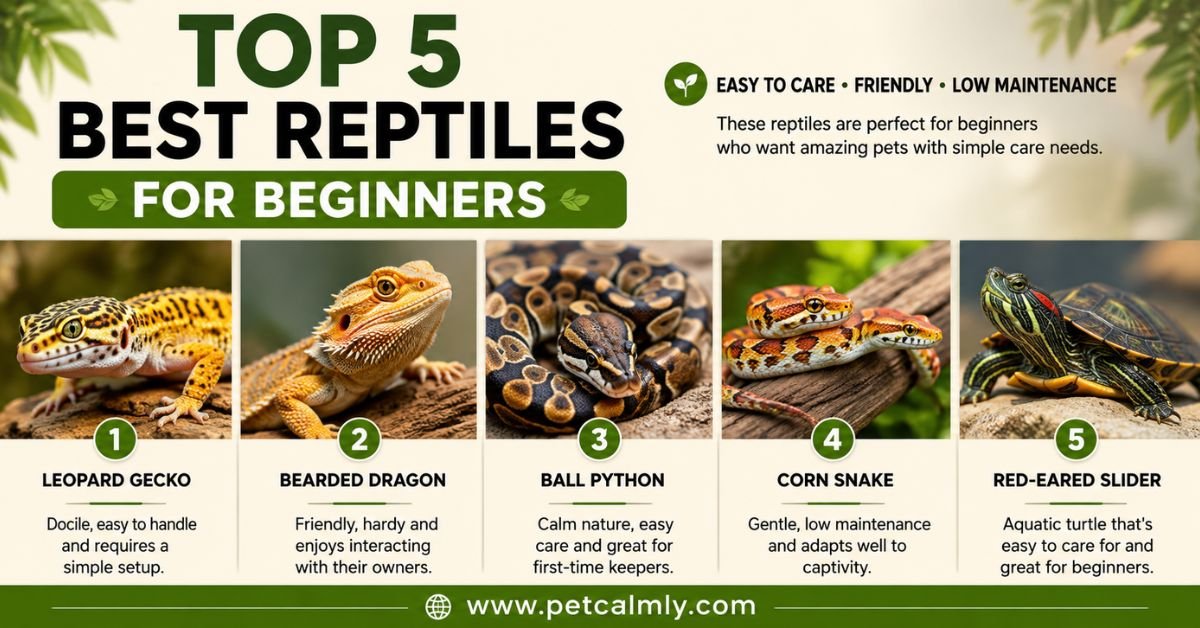
The top 5 best reptiles for beginners are the leopard gecko, bearded dragon, crested gecko, corn snake, and ball python. These species are popular first-time picks because they stay calm when handled, tolerate small mistakes in care, don’t need overly complicated enclosures, and have well-documented husbandry needs that make troubleshooting easy. Each one suits a slightly different lifestyle, so the “best” choice really depends on how much handling, space, and daily interaction you’re hoping for.
Why These Five Reptiles Keep Showing Up on Every Beginner’s List
If you’ve spent any time researching your first reptile, you’ve probably noticed the same names appearing again and again. That’s not an accident, and it’s not just marketing from pet stores either.
These five species have survived decades of trial and error by first-time owners. Breeders have refined their captive care to the point where common mistakes rarely become life-threatening. Their temperaments have also been shaped, generation after generation, toward calmer, more handleable animals which matters a lot when you’re still learning to read reptile body language.
That said, “beginner-friendly” doesn’t mean “no effort required.” Every reptile on this list still needs the right temperature gradient, humidity level, diet, and enclosure size to actually thrive. The difference is that these five are more forgiving while you’re still figuring things out.
1. Leopard Gecko: The Low-Maintenance Starter Reptile
Leopard geckos are often the first recommendation for a reason. They’re small, don’t require UVB lighting to survive (though many keepers now provide low-level UVB for long-term health), and their calm, ground-dwelling nature makes them easy to observe and handle.
Why they work well for beginners:
- Comfortable in a 20-gallon long enclosure as an adult
- Nocturnal and low-energy, so they don’t need a huge amount of enrichment to stay content
- Eat a simple diet of gut-loaded crickets or dubia roaches, dusted with calcium
- Rarely bite, and even when they do, it’s more of a pinch than an injury
What people underestimate: Leopard geckos still need a proper thermal gradient a warm side around 88–92°F and a cooler side in the mid-70s using an under-tank heater or heat mat rather than just a heat lamp. Without this gradient, they can struggle to digest food properly, which is one of the most common beginner mistakes.
2. Bearded Dragon: The Most Social and Expressive Beginner Reptile
If you want a reptile that seems to genuinely notice you’re there, a bearded dragon is probably your best bet. They’re diurnal (active during the day), curious, and known for behaviors like “arm waving” and head-bobbing that make them feel far more interactive than most reptiles.
Why they work well for beginners:
- Generally tolerate and often seem to enjoy regular handling
- Active during the day, so you actually get to see them living their life
- Omnivorous diet makes feeding intuitive: leafy greens, vegetables, and appropriately sized insects
What people underestimate: Bearded dragons need strong UVB lighting and basking temperatures around 95–110°F to properly metabolize calcium. Skipping or under-powering UVB is one of the leading causes of metabolic bone disease in pet reptiles, according to the Merck Veterinary Manual. They also need more space than most beginners expect — a 40-gallon breeder tank minimum for an adult, with many keepers now recommending larger.
3. Crested Gecko: The Best Choice for Apartment Living and Busy Schedules
Crested geckos have become one of the most popular beginner reptiles over the last decade, largely because they’re forgiving of small temperature fluctuations and don’t need supplemental heating in most homes kept at normal room temperature (72–78°F).
Why they work well for beginners:
- No heat lamp required in most climates
- Commercial powdered diets (like Repashy or Pangea) remove the guesswork from feeding
- Comfortable being handled gently, though they can jump if startled
- Do well in vertically oriented, naturalistic enclosures that look great in a living room
What people underestimate: Crested geckos can drop their tail if stressed or grabbed incorrectly, and unlike some lizards, it doesn’t grow back. This isn’t dangerous to the gecko’s health, but it’s a good reminder that “beginner-friendly” still means learning proper handling technique before diving in.
4. Corn Snake: The Most Beginner-Friendly Snake
Corn snakes are consistently recommended as the best first snake, and it’s easy to see why once you understand their temperament. They’re naturally curious rather than defensive, don’t get particularly large, and their care requirements are refreshingly straightforward.
Why they work well for beginners:
- Adults typically stay in the 3–5 foot range, manageable in a 40-gallon enclosure
- Eat pre-killed, appropriately sized frozen-thawed mice no live prey needed
- Docile temperament that tends to hold up well even with a nervous first-time handler
- Available in dozens of color morphs, so there’s visual variety without behavioral differences
What people underestimate: Snakes are escape artists. A secure, lockable enclosure lid isn’t optional — it’s essential. Corn snakes are also surprisingly strong for their size, and new owners are sometimes caught off guard by how much a snake can push against a loose-fitting lid.
5. Ball Python: The Calmest Choice for Snake Lovers Who Want Minimal Drama
Ball pythons have a reputation for being one of the calmest snake species in the pet trade. Their instinct when startled is usually to curl into a tight ball (hence the name) rather than strike, which makes them a common recommendation for people who are a little nervous about handling a snake for the first time.
Why they work well for beginners:
- Generally slow-moving and tolerant of gentle handling
- Long lifespan (often 20–30 years) means a genuine long-term companion
- Predictable feeding schedule once established typically every 1–2 weeks for adults
What people underestimate: Ball pythons are notorious for being picky eaters, especially as babies, and it’s common for a healthy ball python to refuse a meal occasionally without anything being wrong. New owners sometimes panic over a single skipped feeding when, in most cases, it’s completely normal reptile behavior. They also need higher humidity (50–60%) than corn snakes, which requires a bit more attention to enclosure setup.
Comparing the Top 5 Beginner Reptiles at a Glance
| Reptile | Handling Tolerance | Enclosure Size (Adult) | Diet | Lifespan |
|---|---|---|---|---|
| Leopard Gecko | High | 20-gallon long | Insects (crickets, dubia roaches) | 15–20 years |
| Bearded Dragon | Very High | 40-gallon+ | Insects + vegetables | 8–12 years |
| Crested Gecko | Moderate–High | 18x18x24 inch vertical | Powdered fruit/insect diet | 15–20 years |
| Corn Snake | High | 40-gallon | Frozen-thawed mice | 15–20 years |
| Ball Python | Moderate–High | 40-gallon+ | Frozen-thawed rats/mice | 20–30 years |
A Practical Guide to Choosing the Right One for Your Lifestyle
Instead of picking based on looks alone, it helps to think through a few honest questions first.
How much do you want to handle your reptile? If daily interaction matters to you, a bearded dragon or leopard gecko will likely feel more rewarding than a snake, which tends to be more of a “quiet companion” than an interactive pet.
How much space do you actually have? Crested geckos are the most space-efficient option, especially for apartments, since their vertical enclosures take up less floor space than a 40-gallon tank.
Are you comfortable feeding insects, or would you prefer a simpler diet? If the idea of maintaining a colony of feeder insects sounds unappealing, a crested gecko’s powdered diet or a corn snake’s frozen mice might suit you better than an insectivore.
Do you want a pet you’ll have for 8 years, or 25? Ball pythons and geckos are long-term commitments. Make sure you’re choosing a reptile you’ll still be excited about (and able to care for) a decade from now.
When Should You Worry? Signs That Need Veterinary Attention
General pet-care advice can only take you so far. It’s important to know the difference between normal reptile behavior and something that needs a reptile-experienced veterinarian.
Contact a vet if you notice:
- Refusal to eat for an extended period (more than a few weeks for snakes, or any prolonged appetite loss in lizards)
- Lethargy combined with a sunken or closed appearance to the eyes
- Difficulty shedding, with retained skin around the toes, tail, or eyes after multiple attempts
- Swelling, especially around the jaw, limbs, or cloaca
- Labored breathing, clicking sounds, or mucus around the mouth or nose
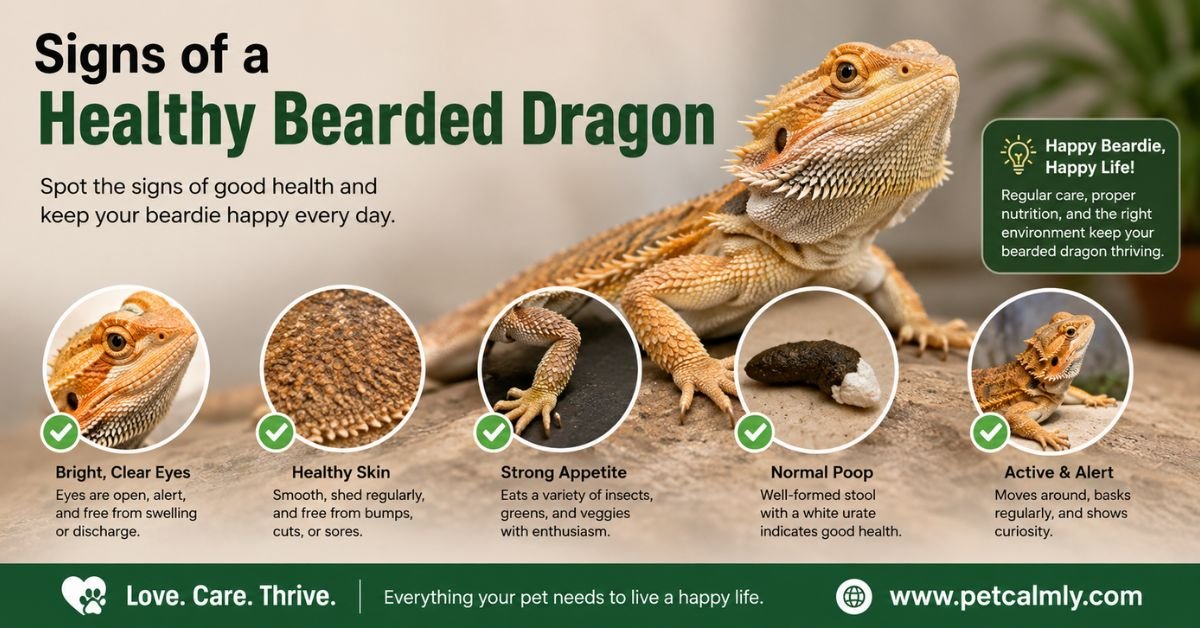
- Soft or misshapen bones, especially in bearded dragons, which can indicate metabolic bone disease
According to the VCA Animal Hospitals and Cornell University College of Veterinary Medicine, many reptile illnesses progress slowly and quietly before becoming visible, which is why routine observation matters more with reptiles than with more expressive pets like dogs or cats. If something feels “off,” it’s always reasonable to have a reptile-savvy vet take a look rather than waiting to see if it resolves on its own.
What Should Pet Owners Do Before Bringing a Reptile Home?
A little preparation goes a long way toward a smooth first few months.
Before bringing your reptile home:
- Set up the full enclosure including heating, lighting, and hides at least 48 hours in advance so you can confirm temperatures are stable.
- Buy a reliable digital thermometer and hygrometer rather than relying on the dial gauges often included with starter kits, which are frequently inaccurate.
- Research a reptile-experienced veterinarian in your area before you need one, not after.
- Prepare an appropriately sized first meal and know your species’ feeding schedule in advance.
- Wash your hands thoroughly before and after handling reptiles can carry Salmonella, and the AVMA recommends this as a standard precaution for all reptile owners, especially in households with young children or immunocompromised individuals.
Taking these steps before your reptile even arrives removes a lot of the guesswork and stress from the first few weeks.
5 Common Beginner Mistakes Worth Avoiding
A few small oversights tend to cause the majority of first-time reptile problems.
- Guessing enclosure temperatures instead of measuring them. A tank that “feels warm enough” to your hand is not the same as one that’s actually at the correct temperature for your species.
- Handling too much, too soon. New reptiles need time to settle into their environment. Handling within the first week can add unnecessary stress.
- Choosing an enclosure sized for a baby, not an adult. It’s tempting to save money with a smaller starter tank, but most beginner reptiles quickly outgrow them.
- Skipping UVB for species that need it. Even if a reptile appears fine short-term, inadequate UVB exposure often causes health issues that show up months or years later.
- Feeding prey that’s too large. As a general rule, prey should be no wider than the widest part of the reptile’s body.
Conclusion
There isn’t a single “best” reptile for every beginner there’s a best reptile for your specific lifestyle, space, and comfort level. A leopard gecko rewards a hands-off, low-maintenance approach. A bearded dragon rewards daily engagement. A crested gecko suits small spaces. Corn snakes and ball pythons suit people drawn to quieter, more observational companionship.
Whichever one you choose, the animals on this list share one important trait: they’re forgiving enough to let you learn as you go, without punishing small mistakes the way more sensitive species might. Take the time to set up their environment correctly, watch for the warning signs above, and you’ll likely find that your first reptile is far more rewarding and far less intimidating than you expected.
More Information About Pets, Please Visit Our Website: Best UVB Light for Bearded Dragon 40 Gallon Tank
Pet Lizard Care Requirements
120 Gallon Bearded Dragon Tank
Bearded Dragon Tank Setup Guide
How to Care for Pet Iguana at Home
Frequently Asked Questions
1: What is the easiest reptile to take care of for a beginner?
Leopard geckos are generally considered the easiest overall, since they don’t require UVB lighting to survive, eat a simple insect-based diet, and tolerate minor husbandry mistakes better than most species.
2: What reptile is best for someone who wants to hold their pet often?
Bearded dragons are typically the most tolerant of frequent handling and often seem to actively enjoy human interaction more than other beginner reptiles.
3: Is a snake or a lizard better for a first-time reptile owner?
Neither is objectively better it depends on your goals. Lizards like bearded dragons and leopard geckos tend to be more interactive, while corn snakes and ball pythons are lower-maintenance day-to-day but offer less physical interaction.
4: Do beginner reptiles need a heat lamp?
Most do, with the notable exception of crested geckos, which usually thrive at normal room temperature without supplemental heating. Species like bearded dragons and leopard geckos need a proper heat source and gradient to digest food and stay healthy.
5: How much does it cost to set up a beginner reptile enclosure?
Initial setup costs typically range from $150–$400 depending on the species, including the enclosure, heating and lighting equipment, substrate, and hides. Ongoing costs are usually modest, mainly food and occasional equipment replacement.
6: Can kids take care of a beginner reptile on their own?
Younger children can help with feeding and observation, but adult supervision is recommended for full care responsibilities, temperature monitoring, and handling partly due to the Salmonella risk associated with all reptiles.