Short direct answer
The safest soap for kittens is a mild kitten-specific shampoo or a fragrance-free pet shampoo formulated for cats. If you are in an emergency and do not have kitten shampoo, a small amount of unscented baby shampoo may sometimes be used temporarily, but it should not become a regular bathing product.
Avoid human soaps, dish soaps, antibacterial soaps, scented products, essential oil-based soaps, and medicated shampoos unless specifically recommended by a veterinarian. A kitten’s skin is delicate and can become irritated very easily.
Introduction
Bringing home a kitten is exciting, but it also comes with plenty of questions especially when your tiny furball manages to get into something messy.
Many new cat owners find themselves standing in front of a sink wondering:
“What kind of soap is actually safe for kittens?”
It’s a reasonable concern. Kittens are much more sensitive than adult cats. Their skin is thinner, their bodies are smaller, and they spend a large part of the day grooming themselves. Anything left on their fur can end up being swallowed during cleaning.
The wrong soap can cause dry skin, irritation, digestive upset, or even more serious problems if harmful ingredients are ingested.
This guide explains exactly which soaps are safe, what products to avoid, how to bathe a kitten correctly, and when a bath may not be the best option at all.
Do Kittens Really Need Soap?
Quick Answer
Most healthy kittens rarely need soap or full baths.
Cats are naturally excellent groomers. Even young kittens begin learning grooming behaviors from their mothers at an early age.
Bathing becomes necessary only when a kitten:
- Gets covered in dirt or mud
- Has feces stuck to its fur
- Encounters a non-toxic sticky substance
- Has flea infestations requiring treatment
- Is unable to groom itself properly
- Has been rescued from unsanitary conditions
In many situations, warm water and a soft cloth are enough.
Understanding a Kitten’s Sensitive Skin
A kitten’s skin differs significantly from adult human skin.
Why this matters
Kitten skin:
- Has a more delicate protective barrier
- Loses moisture more quickly
- Is prone to irritation
- Can react strongly to fragrances and chemicals
- Absorbs some substances more easily
This is why products designed for humans often cause problems.
Something that feels gentle on your hands may be too harsh for a kitten.
What Kind of Soap Is Safe for Kittens?
The Best Options
1. Kitten-Specific Shampoo
This is the safest choice.
Products designed specifically for kittens are formulated to:
- Match feline skin pH needs
- Minimize irritation
- Rinse cleanly
- Avoid harsh detergents
- Reduce grooming-related risks
Look for labels that specifically mention:
- Safe for kittens
- Tear-free formula
- Gentle cleansing
- Fragrance-free or lightly scented
2. Cat Shampoo Approved for Young Kittens
Some cat shampoos are suitable for both adult cats and kittens.
Always check:
- Age recommendations
- Ingredients
- Veterinary guidance
If the label does not specify kitten safety, contact the manufacturer or choose another product.
3. Unscented Baby Shampoo (Emergency Use Only)
Many veterinarians consider fragrance-free baby shampoo a temporary option when kitten shampoo is unavailable.
However:
- It is not specifically formulated for cats
- It should not be used frequently
- It may still dry the skin with repeated use
Think of it as a backup plan rather than the ideal solution.
Soaps and Products You Should Never Use on Kittens
Some products seem harmless but can create serious problems.
Avoid These Completely
Human Body Wash
Human skin has a different pH balance than feline skin.
Using body wash may lead to:
- Dry skin
- Flaking
- Itching
- Irritation
Hand Soap
Hand soaps often contain:
- Fragrances
- Antibacterial ingredients
- Strong detergents
These ingredients can irritate sensitive kitten skin.
Dish Soap
Many people have heard that dish soap is used on wildlife after oil spills.
This leads some owners to believe it is safe for pets.
The reality is different.
Dish soap can:
- Strip natural oils
- Dry the skin
- Cause irritation
- Leave the coat brittle
It should only be used under specific veterinary or rescue guidance.
Antibacterial Soap
Antibacterial products may contain chemicals unsuitable for kittens.
Some ingredients can become problematic when ingested through grooming.
Essential Oil Soaps
Cats process many essential oils poorly.
Products containing:
- Tea tree oil
- Eucalyptus
- Peppermint
- Citrus oils
- Wintergreen
can be dangerous.
Strong Scented Products
Heavy fragrances often cause:
- Skin irritation
- Sneezing
- Respiratory discomfort
Fragrance-free products are usually the safer choice.
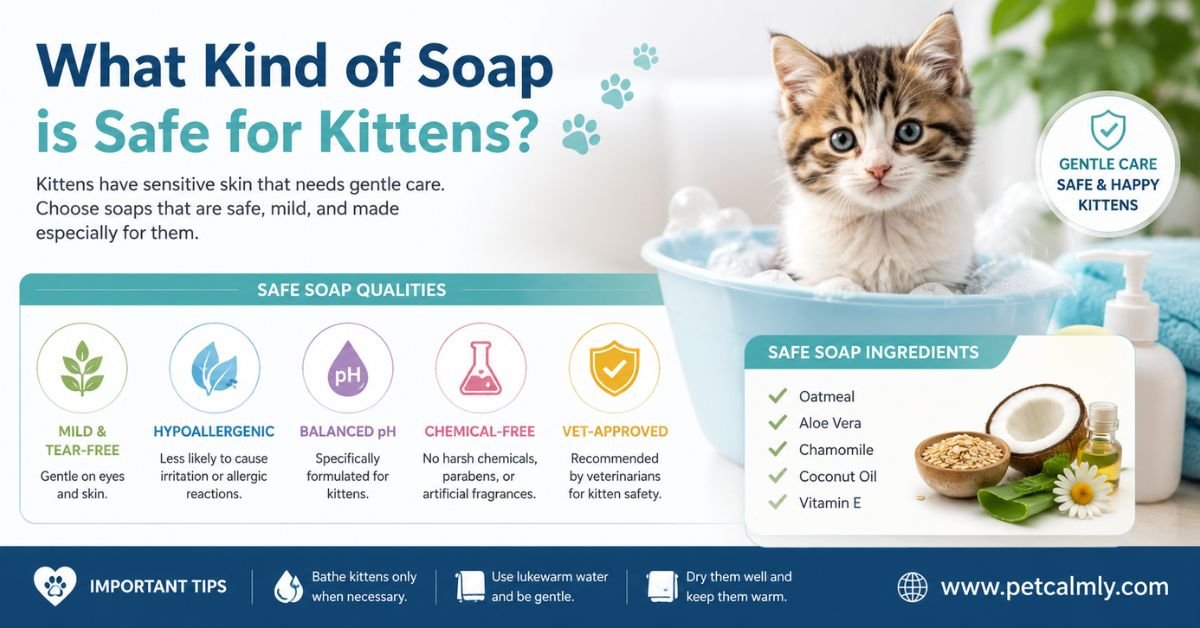
Ingredients to Look for in Safe Kitten Soap
When reading labels, look for gentle ingredients such as:
- Aloe vera
- Oatmeal
- Coconut-derived cleansers
- Mild moisturizing agents
- Plant-based cleansers formulated for pets
These ingredients can help support skin health while cleaning effectively.
Ingredients That Raise Red Flags
Be cautious when you see:
- Artificial fragrances
- Alcohol-heavy formulas
- Essential oils
- Harsh detergents
- Phenol-containing compounds
- Strong antibacterial chemicals
The simpler the ingredient list, the better.
Can You Bathe a Newborn Kitten?
Usually No
Newborn kittens should generally not receive traditional baths.
Very young kittens:
- Cannot regulate body temperature well
- Lose heat quickly
- Can become chilled dangerously fast
If a newborn kitten becomes dirty:
- Use a warm damp cloth.
- Spot-clean only.
- Dry thoroughly.
- Keep the kitten warm afterward.
Always consult a veterinarian or rescue professional for orphaned neonatal kittens.
At What Age Can Kittens Be Bathed?
Most healthy kittens can tolerate gentle bathing once they are several weeks old and strong enough to regulate body temperature.
Even then:
- Baths should be brief
- Water should be warm
- Drying should be thorough
The younger the kitten, the more cautious you should be.
How to Bathe a Kitten Safely
Step 1: Gather Supplies First
Before starting, prepare:
- Kitten shampoo
- Towels
- Warm water
- Soft washcloth
- Non-slip mat
- Brush
Having everything ready reduces stress.
Step 2: Use Warm Water
The water should feel comfortably warm—not hot.
Cold water can chill a kitten quickly.
Step 3: Wet the Body Gently
Avoid spraying directly at the face.
Instead:
- Use your hand
- Use a cup
- Use a soft cloth
Move slowly and calmly.
Step 4: Apply a Small Amount of Shampoo
A little goes a long way.
Massage gently into:
- Neck
- Back
- Belly
- Legs
Avoid:
- Eyes
- Nose
- Mouth
- Ears
Step 5: Rinse Thoroughly
This step matters more than many owners realize.
Leftover soap can cause:
- Itching
- Dryness
- Excess grooming
Continue rinsing until no residue remains.
Step 6: Dry Immediately
Wrap your kitten in a soft towel.
Pat dry rather than rubbing aggressively.
Some kittens tolerate low-heat pet dryers, but many become frightened.
For most kittens, towel drying is safest.
Signs a Soap Is Not Agreeing With Your Kitten
After bathing, monitor your kitten carefully.
Watch for:
- Excessive scratching
- Redness
- Flaky skin
- Hair loss
- Increased grooming
- Skin bumps
- Irritated eyes
These signs may indicate irritation or sensitivity.
Stop using the product and consult a veterinarian if symptoms persist.
Common Bathing Mistakes New Cat Owners Make
Using Too Much Soap
More soap does not mean a cleaner kitten.
Extra product often leads to:
- Difficult rinsing
- Skin irritation
Bathing Too Often
Overbathing removes protective oils.
This can result in:
- Dry skin
- Dull fur
- Increased itching
Most kittens do not need frequent baths.
Using Human Products
This is among the most common mistakes.
Products designed for people are not automatically safe for pets.
Forgetting to Dry Thoroughly
Damp fur can make kittens uncomfortable and chilled.
Always dry them completely.
Washing the Face With Soap
The face should usually be cleaned with a damp cloth rather than shampoo.
What If Your Kitten Has Fleas?
Flea situations deserve special consideration.
Many flea shampoos are not safe for young kittens.
Age restrictions vary widely.
Never assume a flea treatment is appropriate simply because it is marketed for cats.
If your kitten has fleas:
- Check age requirements carefully
- Use veterinarian-approved products
- Ask your veterinarian for guidance
Young kittens often require different flea-management strategies than adults.
Alternatives to Bathing
Sometimes a full bath is unnecessary.
Pet Wipes
Kitten-safe wipes can remove:
- Dust
- Light dirt
- Food residue
without stressing your pet.
Damp Cloth Cleaning
A warm washcloth often solves minor messes.
This method is ideal for:
- Small accidents
- Food stains
- Dirty paws
Brushing
Regular brushing helps:
- Remove debris
- Spread natural oils
- Reduce tangles
- Support coat health
Long-haired kittens benefit especially from consistent grooming.
Safe Soap Options vs Unsafe Soap Options
| Product Type | Safe for Kittens? | Notes |
|---|---|---|
| Kitten shampoo | Yes | Best choice |
| Cat shampoo labeled for kittens | Yes | Check age recommendations |
| Unscented baby shampoo | Sometimes | Emergency use only |
| Human body wash | No | Too harsh |
| Hand soap | No | Often irritating |
| Dish soap | Usually no | Can dry skin |
| Antibacterial soap | No | May contain problematic ingredients |
| Essential oil soap | No | Potentially toxic |
| Strongly scented soap | No | Irritating for many kittens |
A Real-Life Example
Imagine an eight-week-old kitten that accidentally steps into a litter box mess and tracks it across its fur.
A worried owner might reach for the nearest hand soap.
A better approach would be:
- Use warm water first.
- Assess whether soap is even necessary.
- Choose a kitten-safe shampoo if cleaning is needed.
- Rinse thoroughly.
- Dry completely.
This simple change greatly reduces the risk of skin irritation.
When Should You Worry?
Most bathing issues are minor, but some situations deserve prompt veterinary attention.
Contact a veterinarian if your kitten:
- Develops severe redness
- Shows swelling
- Has trouble breathing
- Vomits after grooming
- Appears lethargic
- Experiences significant hair loss
- Has chemical exposure
- Gets soap in the eyes and symptoms persist
The younger the kitten, the lower the threshold for seeking professional help.
What Should Pet Owners Do?
If you’re unsure what soap is safe for your kitten, follow this simple plan:
Do This
✔ Choose a kitten-specific shampoo
✔ Read ingredient labels carefully
✔ Use warm water
✔ Rinse thoroughly
✔ Dry completely
✔ Monitor for irritation
✔ Consult your veterinarian when uncertain
Avoid This
✘ Human body wash
✘ Hand soap
✘ Essential oil products
✘ Strong fragrances
✘ Frequent bathing
✘ Medicated products without guidance
Building a Healthy Grooming Routine
A healthy kitten usually benefits more from routine grooming than frequent bathing.
Weekly habits may include:
- Brushing
- Checking ears
- Trimming nails when needed
- Inspecting skin and coat
- Cleaning minor messes promptly
Many owners discover that regular grooming dramatically reduces the need for baths.
This is also a great opportunity to build trust and help kittens become comfortable with handling.
For additional wellness content, consider linking to related articles on kitten grooming, cat anxiety, flea prevention, healthy coat care, and kitten nutrition.
Conclusion
So, what kind of soap is safe for kittens?
The safest choice is a kitten-specific shampoo or a gentle cat shampoo clearly labeled as safe for young kittens. These products are designed with feline skin sensitivity in mind and minimize the risk of irritation.
In most cases, kittens do not need frequent baths at all. A warm cloth, pet-safe wipe, or simple spot cleaning often works just as well.
When a bath is necessary, keep it brief, use the right product, rinse thoroughly, and dry your kitten completely afterward. A little extra caution goes a long way when caring for a young cat.
The good news is that once you understand what products are safe and what to avoid, keeping your kitten clean becomes much less stressful and much safer.
More Information About Pets, Please Visit Our Website: Best Pet Hygiene Products Expert Reviews
Frequently Asked Questions
1: Can I use Dawn dish soap on a kitten?
Generally, no. Dish soap can strip natural oils from the skin and cause dryness or irritation. Use a kitten-safe shampoo whenever possible.
2: Is baby shampoo safe for kittens?
Unscented baby shampoo may be used occasionally in emergencies, but it is not ideal for regular use. A kitten-specific shampoo remains the better option.
4: Can I wash my kitten with just water?
Yes. For many small messes, warm water alone is enough. Spot cleaning often works well without needing soap.
5: How often should kittens be bathed?
Most kittens only need baths when they become genuinely dirty. Frequent bathing can dry the skin and damage the coat’s natural protective oils.
6: What happens if my kitten licks soap after a bath?
A small amount of properly rinsed kitten shampoo is usually not a problem. If your kitten ingests significant amounts of soap or shows symptoms such as vomiting or lethargy, contact a veterinarian.
7: Are scented shampoos safe for kittens?
Mild pet-specific fragrances may be tolerated, but fragrance-free products are generally the safest choice for sensitive kittens and young cats.