Short direct answer
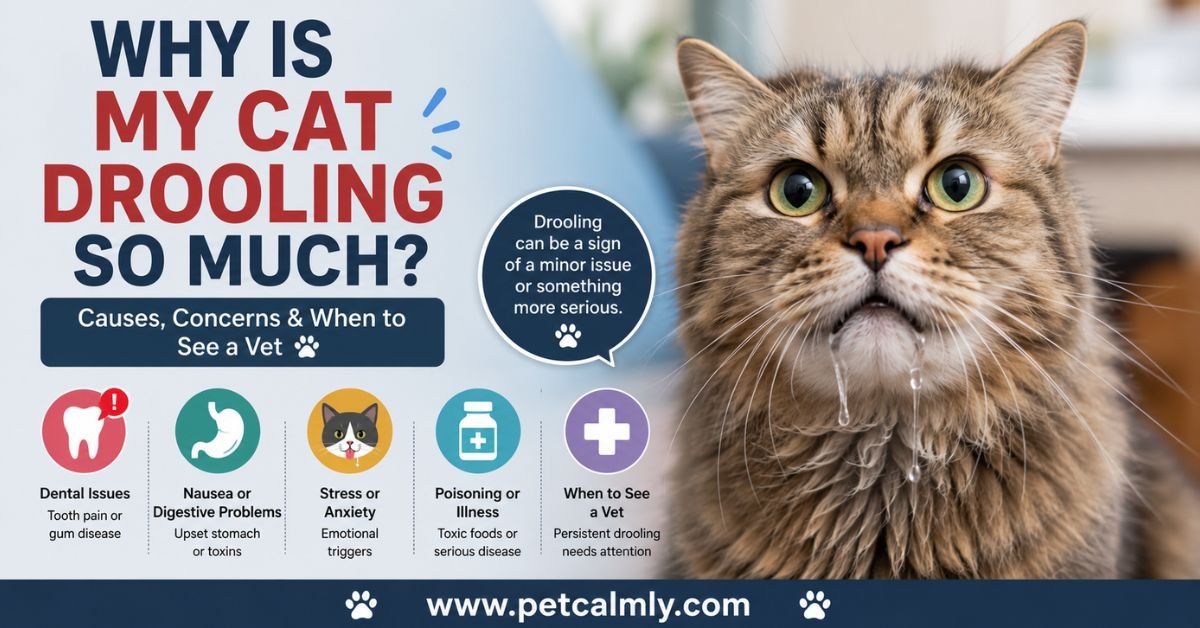
Cats normally drool very little, so noticeable drooling is usually a sign that something specific is going on. The most common causes are dental pain, nausea, motion sickness, stress, oral injuries, or exposure to something irritating like a toxic plant or chemical. Occasional light drooling during petting or purring can be normal for some cats. But if the drooling is sudden, heavy, foul-smelling, or paired with symptoms like drooping of the mouth, refusal to eat, or lethargy, it’s time to call your vet rather than wait it out.
Why Trust This Guide
Excess drooling in cats is one of those symptoms that quietly worries a lot of owners because cats aren’t supposed to drool the way dogs do. If you’ve caught your cat leaving wet patches on the couch, or you’ve noticed their chin staying damp throughout the day, you’re not imagining things and you’re right to want a real answer instead of a generic list.
This guide walks through the actual reasons cats drool, how to tell the difference between “keep an eye on it” and “call the vet today,” and what you can do at home in the meantime. Health information here reflects widely accepted veterinary guidance from sources like the Cornell Feline Health Center, VCA Animal Hospitals, and the Merck Veterinary Manual, which are linked at the end of this article.
Is Some Drooling in Cats Actually Normal?
Yes, in small amounts. Some cats drool a little when they’re deeply relaxed during a good chin scratch, while kneading a blanket, or right before falling asleep. This is often linked to a calm, almost trance-like state, similar to how some cats knead with their paws when they feel safe.
The key difference is context and volume. A few drops while your cat is purring on your lap is very different from a wet chin first thing in the morning, damp fur on the front paws (from wiping at their mouth), or drool showing up when your cat is stressed, eating, or resting alone. If drooling only happens during affection and stops the moment your cat gets up, it’s less concerning. If it happens randomly throughout the day, that pattern deserves attention.
8 Common Reasons Cats Drool More Than Usual
1. Dental Disease and Mouth Pain
Dental problems are one of the leading reasons adult and senior cats drool. Gum inflammation, tartar buildup, broken teeth, and a painful condition called tooth resorption (where the tooth structure breaks down at the root) can all cause excess saliva production as the mouth tries to protect irritated tissue.
You might also notice bad breath, pawing at the face, dropping food while eating, or chewing on one side of the mouth only. Cats are experts at hiding pain, so drooling is sometimes the first outward clue that something hurts.
2. Nausea or an Upset Stomach
Just like people salivate before feeling sick, cats often drool when they’re nauseous. This can come from something as simple as eating too fast, a mild stomach bug, or motion sickness during car rides. It can also point to something more serious, like ingesting a foreign object, kidney disease, or a reaction to medication.
Watch for accompanying signs: lip-smacking, repeated swallowing, loss of appetite, or vomiting. If drooling shows up specifically during travel and disappears once the car stops, motion sickness is the likely culprit, and it’s very manageable with vet-guided planning for future trips.
3. Oral Injuries or Foreign Objects
Cats explore with their mouths, and that curiosity sometimes leads to trouble. A string caught around the base of the tongue, a splinter from a bone or wood, a burn from chewing an electrical cord, or a plant fragment stuck in the gums can all trigger sudden, heavy drooling.
This type of drooling tends to appear out of nowhere and is often paired with pawing at the mouth, gagging, or refusing to close the jaw normally. If you suspect something is lodged in your cat’s mouth, avoid trying to remove it yourself unless it’s clearly visible and easy to grasp pulling on an embedded object can cause more damage.
4. Exposure to Toxic Plants, Foods, or Chemicals
Certain household items are genuinely dangerous for cats and drooling is often the body’s first defense response. Lilies (highly toxic to cats, even in small amounts), certain essential oils, cleaning products, human medications, and some houseplants can all cause a strong salivation response as saliva tries to flush the irritant away.
If your cat has access to lilies, diffusers, or unattended cleaning supplies and suddenly starts drooling heavily, treat it as an emergency rather than a “wait and see” situation.
5. Stress, Fear, or Anxiety
Vet visits, car rides, thunderstorms, new pets in the home, or a chaotic moving day can all trigger stress-related drooling in sensitive cats. This is the body’s fight-or-flight response kicking in, and it usually resolves once the stressful event ends.
If your cat only drools in specific, identifiable stressful situations and acts completely normal otherwise this is likely the explanation. Cats who are naturally more anxious or were under-socialized as kittens tend to be more prone to this pattern.
6. Heatstroke or Overheating
Cats don’t tolerate heat well, and while they don’t pant as visibly as dogs, excessive drooling combined with rapid breathing, restlessness, or lethargy on a hot day can be an early sign of heat stress. This is more common in cats left in warm cars, sunrooms, or poorly ventilated spaces during summer months.
7. Oral Tumors or Growths
Less commonly, persistent one-sided drooling, especially in senior cats, can be linked to a mass or growth in the mouth. This is far less frequent than dental disease but is important to rule out, particularly if drooling has developed gradually over weeks rather than suddenly.
8. Upper Respiratory Infections
Cats with a cold-like respiratory infection sometimes drool because congestion and mouth breathing dry out the mouth, or because ulcers form on the tongue or gums as part of the illness (common with feline herpesvirus or calicivirus). Sneezing, nasal discharge, and watery eyes usually appear alongside the drooling in these cases.
How to Tell What’s Causing Your Cat’s Drooling
| Pattern You Notice | Most Likely Cause |
|---|---|
| Only during petting or relaxation | Normal contentment drooling |
| Bad breath + pawing at face | Dental disease |
| Started suddenly + gagging or pawing at mouth | Foreign object or oral injury |
| During or right after car rides | Motion sickness or anxiety |
| Access to lilies, chemicals, or plants | Possible poisoning — treat urgently |
| Only in specific stressful situations | Stress or fear response |
| One-sided, gradual, older cat | Possible oral mass — vet exam needed |
| Sneezing, nasal discharge, watery eyes | Upper respiratory infection |
This table isn’t a diagnosis tool, but it can help you describe the pattern clearly when you speak to your veterinarian, which speeds up getting the right answer.
Mistakes Cat Owners Commonly Make With Drooling
- Assuming it’s “just a weird habit.” Sudden drooling in a cat that never used to drool is a change worth noting, not ignoring.
- Waiting for other symptoms before acting. Some causes, like foreign objects or toxin exposure, can worsen quickly. Heavy, sudden drooling on its own is enough reason to call your vet.
- Trying to check the mouth without care. Cats in pain may bite defensively. If you need to look inside your cat’s mouth, do it gently, in good lighting, and stop if your cat becomes distressed.
- Giving human medication for nausea. Many over-the-counter human medications are unsafe for cats. Never medicate without veterinary guidance.
- Ignoring gradual bad breath. Owners often normalize bad breath as “just a cat thing,” when it’s frequently an early dental disease signal that also explains the drooling.
When Should You Worry? Warning Signs That Need a Vet
Occasional, mild drooling tied to a clear cause (like affection or a bumpy car ride) usually isn’t an emergency. But certain signs mean you should contact your veterinarian promptly:
- Sudden, heavy drooling with no obvious trigger
- Drooling combined with pawing at the mouth or face
- Bad breath alongside visible gum redness or bleeding
- Refusal to eat or drop food from the mouth
- Lethargy, hiding, or unusual quietness
- Known or suspected exposure to lilies, chemicals, or medications
- Difficulty closing the mouth or asymmetrical jaw position
- Drooling paired with vomiting, diarrhea, or rapid breathing
- Drooling that has lasted more than a day without explanation
If you’re ever unsure whether a symptom is urgent, a same-day call to your vet clinic (or an emergency animal hospital if it’s after hours) is always the safer choice. Trust your instincts here — you know your cat’s normal behavior better than anyone.
What Should Pet Owners Do Right Now?
If your cat is drooling and you’re trying to decide on next steps, here’s a simple checklist:
- Check the environment first. Look for lilies, spilled cleaning products, chewed cords, or dropped medication nearby.
- Observe without forcing an exam. Watch how your cat is eating, moving, and behaving over the next hour rather than immediately restraining them.
- Smell their breath. Strong, unpleasant odor often points toward dental disease.
- Note the timing. Is it tied to petting, car rides, feeding time, or random moments?
- Call your vet if anything feels off. Describing the pattern (using the table above) helps them guide you accurately, even over the phone.
- Avoid home remedies for nausea or pain. Cats process medications very differently from humans and dogs, and even small doses of the wrong substance can be dangerous.
Preventing Future Drooling Episodes
- Schedule regular dental checkups, since most dental disease is manageable when caught early
- Keep toxic plants like lilies completely out of the home, not just out of reach
- Store cleaning products and medications behind closed cabinet doors
- Reduce car-ride stress with gradual carrier training and short practice trips
- Provide a calm, predictable environment during high-stress events like moving or houseguests
- Keep an eye on senior cats for gradual changes in eating habits or breath odor
Real-World Example: What This Can Look Like at Home
A cat owner once noticed her ten-year-old cat drooling only from one side of his mouth over the course of a week, with no other symptoms. It would have been easy to dismiss as “just getting older,” but a vet exam revealed a resorptive tooth lesion that was causing quiet, ongoing pain. Once treated, the drooling stopped completely within days.
This is a good example of why gradual, seemingly small changes are still worth mentioning at your cat’s next visit even if your cat is still eating and acting mostly normal.
Conclusion
Cats aren’t naturally big droolers, so noticing wet fur, damp spots, or a persistently moist chin is worth paying attention to. Most causes dental pain, mild stress, nausea, or a passing irritant are manageable once identified. The goal isn’t to panic at the first sign of drool, but to observe the pattern, rule out anything dangerous in the environment, and involve your veterinarian when the drooling is sudden, heavy, or paired with other symptoms.
Your cat can’t tell you what’s wrong in words, but changes like this are often their way of showing you something needs attention.
More Information About Pets, Please Visit Our Website: Why Does My Cat Bite Me?
Why Does My Cat Bite Me Gently Out of Nowhere?
Frequently Asked Questions
1: Why does my cat drool when I pet them?
This is usually a sign of relaxation and contentment, similar to purring or kneading. It’s most common in cats who feel very secure with their owner and typically stops once the petting session ends.
2: Why is my cat drooling and not eating?
This combination often points to dental pain, nausea, or an oral injury making it uncomfortable to chew. Since appetite loss can affect a cat’s health quickly, this pairing of symptoms is one you shouldn’t wait out — contact your vet the same day if possible.
3: Can stress really cause a cat to drool?
Yes. Stressful situations like vet visits, car travel, or loud environments can trigger a fight-or-flight response that includes excess salivation. It typically resolves once the stressful trigger is removed.
4: Is cat drooling a sign of poisoning?
It can be. Sudden, heavy drooling after potential exposure to toxic plants (like lilies), household chemicals, or certain medications should be treated as an emergency and reported to your vet or an animal poison control line immediately.
5: Should I be worried if my cat only drools a little bit sometimes?
Not necessarily. Light, occasional drooling tied to clear triggers like petting or naps is common and usually harmless. The concern grows when drooling becomes frequent, heavy, or unexplained.
6: How do vets figure out why a cat is drooling?
Vets typically start with a physical exam, including a close look at the teeth, gums, and mouth, along with questions about when the drooling started and any other symptoms. Bloodwork or imaging may follow if a dental cause isn’t obvious, especially to check for underlying issues like kidney disease.