Short direct answer
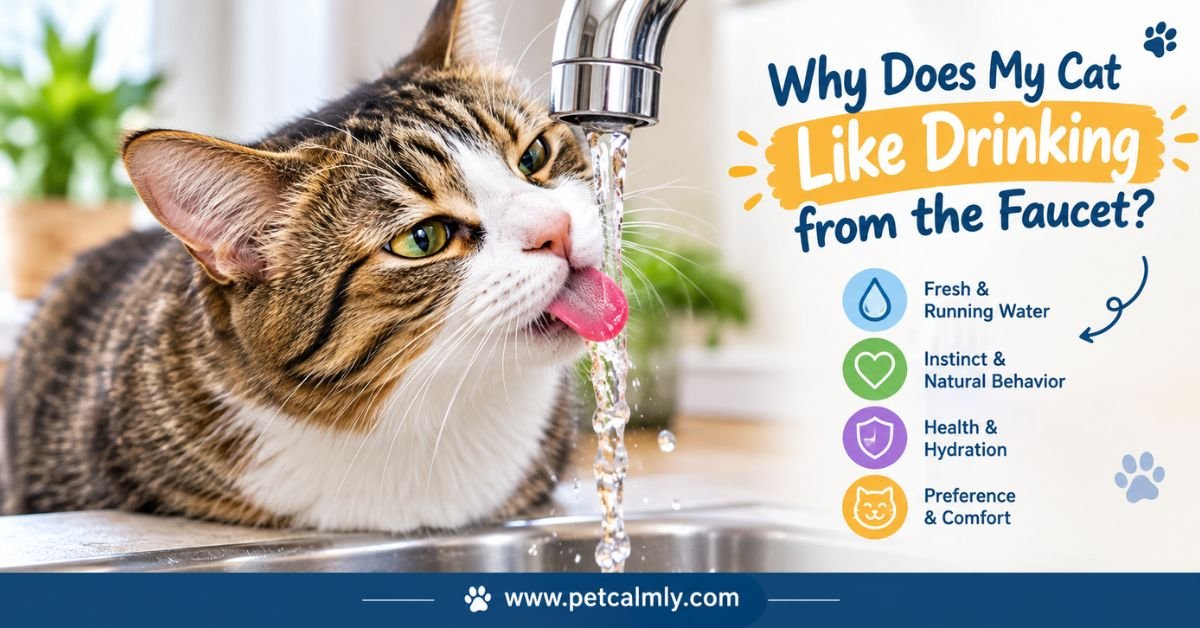
Why does my cat like drinking from the faucet? Most cats prefer moving water because it seems fresher, cooler, and more interesting than a still bowl. Running water is also fun to watch, easy to reach on a bathroom counter, and often comes with your attention. In most cases it’s normal and harmless. If your cat suddenly drinks far more than usual, though, it can point to a health problem worth checking.
The Bowl Is Full, but Your Cat Wants the Tap
You fill the water bowl every morning. You even wash it. Then you walk into the bathroom or kitchen and find your cat perched by the sink, staring at the faucet like it’s about to perform.
Maybe your cat meows until you turn it on. Maybe they paw at the handle, or lap at a thin trickle for several minutes while ignoring the perfectly good bowl on the floor. It’s funny, a little puzzling, and sometimes a bit worrying. Is the bowl not good enough? Is your cat thirsty all the time? Is this safe?
This guide answers those questions in plain language. You’ll learn the most common reasons behind the habit, how to tell normal faucet love from a warning sign, and how to keep your cat safe around the sink. You’ll also find practical ways to make water more appealing everywhere in your home, because a cat that drinks well is a healthier cat.
Why Does My Cat Like Drinking From the Faucet? The Main Reasons
Cats rarely do anything for just one reason. Your cat may be enjoying several of these benefits at once, so read through them all before deciding which fits best.
1: Moving Water Seems Fresher and Safer
This is the reason behaviorists mention most often. Cats’ wild ancestors lived in dry regions, and animals in the wild often face risk from still, stagnant water, which can hold bacteria and parasites. Moving water is more likely to be clean.
Your cat doesn’t sit there thinking about bacteria, of course. But the preference for water that looks and sounds fresh seems to have stuck around. A steady trickle signals “this is good to drink” in a way a bowl that has sat for twelve hours simply doesn’t.
Many owners also notice their cats ignoring a bowl that looks clean to us. Cats have a sharp sense of smell, and they may pick up on dust, a faint plastic odor, or leftover dish soap that we can’t detect.
2: Cats Are Drawn to Movement and Sound
Cats are hunters at heart. Their eyes and ears are tuned to small movements and small noises, and a thin stream of water offers both. The drip, the ripple, the glint of light on the surface: it’s all engaging.
Think of it as the feline version of a lava lamp. Some cats drink, some bat at the stream, and some just sit and watch. If your cat treats the faucet as entertainment as much as hydration, that’s perfectly normal.
3: The Water Is Cooler
Tap water, especially from a cold line that’s been running for a few seconds, tends to be cooler than a bowl sitting in a warm room. Many cats like a cool drink, particularly in summer.
If your cat only starts asking for the faucet in hot weather, temperature is likely the main driver. Try adding a few ice cubes to the bowl and see if the interest changes.
4: The Bowl Itself May Be the Problem
Sometimes it isn’t that the faucet is amazing. It’s that the bowl is mildly annoying. Common bowl issues include:
- Plastic odor or scratches. Plastic can hold smells and tiny scratches can harbor residue.
- A deep, narrow shape. Some cats seem reluctant to push their face into a tight space. Veterinary and feline behavior sources commonly discuss this as a possible issue, though cats vary a lot.
- Dirty rims. A thin film often builds up before you can see it.
- A bad location. Bowls next to the food dish, the litter box, or a noisy appliance are less appealing.
International Cat Care and other feline welfare groups generally suggest keeping water separate from food. The idea is that in nature, cats don’t usually drink right where they’ve made a kill, since the water could be contaminated.
5: It Gets Your Attention
Cats learn fast. If you’ve ever turned on the tap because your cat was meowing at it, you’ve taught them something: sit by the sink, and the human comes. That kind of habit builds quickly.
For some cats, the faucet routine is as much social as it is about thirst. You show up, the water starts, you talk to them, and maybe you give a scratch. It’s a nice little ritual, and there’s nothing wrong with enjoying it as long as it’s safe.
6: It’s Easy to Reach and Fun to Do
A bathroom or kitchen counter gives a cat height, a good view, and a sense of being “in the middle of things.” Add running water and you’ve got a pretty appealing spot.
If your cat sleeps or lounges in the sink too, you may like our guide on why your cat sleeps in the sink. Sink and faucet habits often go hand in hand.
7: Your Cat Might Just Be Curious or Playful
Young cats and kittens in particular explore everything with their paws. Pawing at the stream, dipping a foot in, or splashing around is a normal way to investigate. Some adult cats never grow out of it.
Playful faucet behavior is common in healthy, active cats. It tends to look bouncy and curious rather than urgent.
8: Your Cat May Need More Water
Cats generally have a modest thirst drive. Cornell’s Feline Health Center and other veterinary sources note that cats evolved from desert-dwelling ancestors and are built to get a lot of their water from prey. Cats eating mostly dry food take in much less moisture from their meals, so they have to make up the difference by drinking.
For many cats, the faucet is simply a better way to get that water. It may be the thing that finally convinces them to drink enough. That’s actually a good sign, as long as the amount isn’t excessive. We’ll cover that shortly.
How to Tell What’s Behind Your Cat’s Faucet Habit
A few simple observations can narrow it down quickly. Notice when your cat asks for the faucet, how they drink, and what else has changed.
| What you notice | Likely reason |
|---|---|
| Prefers running water but ignores the bowl completely | Preference for fresh, moving water |
| Watches or paws at the stream more than drinking | Curiosity and play |
| Only does it in hot weather | Wants cooler water |
| Meows until you turn it on | Learned attention habit |
| Bowl is plastic, deep, or beside the food | Bowl or placement issue |
| Drinks a lot, very often, and the habit is new | Possible health issue worth checking |
Questions Worth Asking Yourself
Take a few days to watch and think through these:
- Has the faucet habit always been there, or did it start recently?
- Does your cat actually drink, or mostly play with the water?
- Is your cat drinking more often or for longer than before?
- Is the water bowl clean, fresh, and away from food?
- Has anything changed at home, such as a new pet, new food, or a new routine?
A cat who has loved the faucet since kittenhood is very different from one who suddenly can’t stay away from it. Timing is one of the most useful clues you have.
Why Does My Cat Like Drinking From the Faucet More Than Its Water Bowl?
This is one of the most common frustrations. You’ve bought a nice bowl. You change the water. Yet the tap wins every time.
Here are the likeliest explanations, in order of how often they come up.
The water in the bowl is “old” to your cat. Even a bowl that’s a few hours old can seem stale to a sensitive nose. Running water is always brand new.
The bowl’s material or smell is off-putting. Plastic tends to pick up odors and film more easily than ceramic, glass, or stainless steel.
The location feels wrong. Cats often prefer water that’s not beside food. A bowl tucked in a loud kitchen corner may feel uncomfortable too.
The shape bothers them. Some cats seem to like wide, shallow dishes where they can drink without their whiskers touching the sides. The research on this isn’t settled, but many vets and behaviorists mention it as worth trying.
They’ve formed a habit. If the faucet has been rewarded with attention for months, the bowl just can’t compete.
The fix usually isn’t to remove the faucet option. It’s to make the other options as good as, or better than, the tap. You’ll find those steps further down.
How Cats Actually Drink (and Why It Matters Here)
Cats don’t scoop water like dogs do. They curl the tip of their tongue backward and flick it quickly against the water’s surface, pulling up a small column of liquid, then close their mouth to catch it. It’s fast and neat, which is why you rarely see cats make a mess at the bowl.
That matters for faucets because a thin, steady stream is easy for this technique to catch. A cat can lap at it without needing to put their face down into a container.
It also explains why your cat might paw at the water first. They’re often testing it, moving it, or trying to get it to the right spot.
Is It Safe for My Cat to Drink From the Faucet?
For most homes, yes, with a few sensible precautions. Tap water that’s safe for you is generally safe for your cat. The bigger concerns are around the faucet and sink environment rather than the water itself.
Possible Risks to Know About
Hot water. This is the big one. A cat who nudges the handle or gets in the way when someone turns on the hot tap could be scalded. Never leave water running unattended, and be careful with lever-style faucets that cats can knock on.
Cleaning product residue. Sinks and countertops are often cleaned with sprays, bleach, or disinfectants. Cats lick surfaces and groom their paws, so residue can end up in their mouth. Rinse thoroughly after cleaning and let surfaces dry.
Faucet cleanliness. Faucet spouts and aerators can build up grime over time. Wipe the spout regularly, and clean the aerator as the manufacturer suggests.
Water quality concerns. If you have old plumbing or your local water authority has issued a warning about the water supply, talk to your vet about whether your cat should drink it. In that case, filtered or bottled water may be a better choice. Your water utility can tell you what’s in your supply.
Slippery surfaces and falls. Wet counters are slick. A cat jumping up to the sink, particularly an older one, can slip.
Flooding and waste. A cat that turns on the tap by themselves can flood a sink or run up the water bill. Lever handles are the usual culprits.
A Quick Faucet Safety Checklist
- Never leave the tap running while you’re out
- Keep hot water use to a minimum when your cat is nearby
- Rinse and dry the sink after cleaning products
- Wipe the faucet spout regularly
- Add a non-slip mat near the sink
- Think about child-safe handle locks if your cat flips levers on
- Check that the sink and counter are dry before your cat jumps up
Can a Cat Drinking From the Faucet Mean Something Medical?
Most of the time, no. A cat who loves the faucet but has normal appetite, energy, and bathroom habits is almost always just a cat with preferences.
The thing to watch for is a real change in how much your cat drinks. Drinking noticeably more than usual is called polydipsia, and it’s something vets take seriously because it can accompany several conditions, including kidney disease, diabetes, and hyperthyroidism. These conditions are more common in middle-aged and senior cats, according to veterinary sources like Cornell’s Feline Health Center and the Merck Veterinary Manual.
That doesn’t mean your faucet-loving cat has any of them. It means that new, persistent, and excessive thirst is a reason to call the vet.
How to Tell Normal Faucet Love From Excess Thirst
It can be genuinely hard to tell, because a cat who drinks from the tap is harder to measure than one who drinks from a bowl. Here are some practical clues.
Signs it’s probably just preference:
- Your cat has done this for years
- They drink for a short while, then leave
- Appetite, weight, and energy are stable
- Litter box habits haven’t changed
Signs worth watching more closely:
- The habit started recently and is intense
- Your cat visits the faucet or bowl many times a day
- You’re refilling the bowl much more often
- Litter clumps are bigger or more frequent
- Your cat seems restless around water
A Simple Way to Measure Water Intake at Home
If you’re unsure, measure for a few days. It takes about a minute a day and gives your vet useful information.
- Fill the water bowl with a measured amount, such as 500 ml or 2 cups.
- Check how much is left 24 hours later.
- Record the difference, and note any time your cat drank from the faucet or elsewhere.
- Repeat for three to five days.
- Note your cat’s weight, food type, and the weather, since these affect intake.
Because cats on wet food drink less from the bowl, intake numbers can vary a lot. That’s normal. What matters is a consistent upward change from your cat’s usual pattern, and your vet can help interpret it.
When Should You Worry About a Cat Drinking From the Faucet?
A cat who likes running water is not a reason for alarm. But there are signs that change the picture. Contact your veterinarian if the faucet habit comes with any of these.
Call Your Vet if You Notice
- Drinking noticeably more than usual, for several days
- Peeing more often, or producing much larger clumps
- Weight loss despite eating normally
- Reduced appetite or refusing food
- Vomiting or diarrhea
- Low energy, hiding, or changes in behavior
- Bad breath, drooling, or reluctance to chew (dental issues can change how cats drink)
- A dull or unkempt coat
- Straining or crying in the litter box
Cats are very good at hiding illness, so subtle changes matter. If something just feels off, trust that feeling and get it checked.
Signs of Dehydration in Cats
Dehydration can happen when a cat isn’t drinking enough or is losing fluids. Possible signs include:
- Dry or tacky gums
- Sunken eyes
- Lethargy
- Reduced appetite
- Skin that is slow to return to place after a gentle pinch (this is a rough check only, and not reliable in every cat)
Dehydration can become serious quickly, especially in kittens and seniors. If you suspect it, don’t wait for it to pass.
Get Urgent Help If You See
- A male cat straining to pee with little or nothing coming out
- Collapse or inability to stand
- Repeated vomiting
- Pale, blue-tinged, or very dry gums
- Open-mouth breathing
These situations are emergencies, whether or not water is involved.
What Pet Owners Can Do: Make Water More Appealing Everywhere
If your cat prefers the faucet, there’s a good chance they’d like a better water setup in general. Better hydration is good for urinary health and overall wellbeing, so this effort tends to pay off.
Step-by-Step: Upgrade Your Cat’s Water Setup
- Choose the right bowl. Ceramic, glass, or stainless steel are generally easier to keep clean than plastic. A wide, shallow shape suits many cats.
- Move the bowl. Place it away from the food dish and well away from the litter box. A calm spot with a view often works best.
- Use more than one station. Put bowls in different rooms, particularly where your cat likes to spend time. Cats often drink where they happen to be.
- Refresh the water daily, at least. Wash the bowl with mild soap, rinse thoroughly, and dry it.
- Try a pet water fountain. Many cats who love the faucet take to a fountain. We cover that next.
- Add moisture through food. Wet food contains much more water than dry kibble. Ask your vet whether adding some to your cat’s diet makes sense.
- Make the bowl a pleasant spot. Keep the area quiet and free from other pets guarding or crowding the space.
Do Pet Water Fountains Actually Help?
For many cats, yes. A fountain offers moving water without the safety issues of a tap. It isn’t magic for every cat, but plenty of owners find their cat’s interest rises quickly.
Tips for choosing and using one:
- Pick ceramic or stainless steel when possible, since they’re easier to clean than plastic.
- Pick a quiet model. A noisy pump can put cats off.
- Clean it weekly or more often. Fountains build up film in the pump and tubing, and cats notice.
- Replace filters on schedule. Old filters can smell.
- Be patient. Some cats sniff around it for days before trying it.
- Keep the old bowl out too for a week or two, so your cat isn’t forced to choose.
If your cat still prefers the faucet, that’s okay. You can keep both options.
Letting Your Cat Drink From the Faucet Safely
If you’re happy to keep the ritual going, you can make it safer and more predictable.
- Turn on a thin stream of cold water only
- Stay with your cat while the water runs
- Turn it off when they’re done
- Wipe the spout and basin regularly
- Don’t use the hot tap while your cat is nearby
- Keep the counter dry and clear of hazards
A short routine, like “morning faucet time,” can be a pleasant bonding moment. Just don’t let it become the only place your cat drinks. If you’re unavailable, your cat still needs a good alternative.
8 Common Mistakes Owners Make
Some well-meaning habits backfire. Try to avoid these.
- Leaving the tap running all day. It wastes water, adds a flooding or scalding risk, and teaches your cat to depend on you.
- Punishing the behavior. Yelling or spraying a cat away from the sink adds stress and doesn’t address the reason.
- Using only one water source. Cats need options, especially if one becomes unavailable.
- Ignoring a sudden change. New, intense interest in water in a mature cat deserves attention.
- Letting the fountain get dirty. A neglected fountain can be worse than a bowl.
- Placing water next to food or litter. Many cats dislike this arrangement.
- Adding flavorings without asking. Some “treats in the water” ideas include ingredients like salt, onion, or garlic, which aren’t safe for cats. Check with your vet first.
- Assuming dry food is enough. If your cat eats only dry food, they need to drink more to compensate, so water availability matters even more.
Real-Life Examples: What Faucet Love Often Looks Like
These are typical patterns owners describe. They’re illustrations, not specific cases.
The morning ritual. A healthy adult cat meets their owner at the bathroom sink every morning and waits for a thin stream. They drink for under a minute and leave. Appetite and energy are normal, and they drink from the bowl too. This is a preference and a bonding habit. A fountain or a fresher bowl might reduce the begging, but nothing needs fixing.
The bowl boycott. A cat who used to drink from a plastic bowl starts lapping at the tap and ignoring the dish. Swapping to a wide ceramic bowl in a quieter spot, away from the feeding area, brings them back to drinking from it within a few days. Odor and placement were likely the issue.
The sudden thirst. An 11-year-old cat who never cared about the faucet now camps by the sink and drinks repeatedly. The owner is refilling the bowl more often and noticing bigger litter clumps. This is the pattern vets want to hear about promptly, since it can accompany several treatable conditions in older cats.
The playful kitten. A young cat paws the stream, flicks water around, and ends up with a wet face. They drink a little, play a lot, and are otherwise energetic. It’s a normal exploratory phase and usually settles with age.
Faucet Habits in Kittens, Adults, and Senior Cats
Age shapes how you should read the behavior.
Kittens
Kittens are curious and clumsy. Water play is normal, and a shallow bowl or fountain gives them a safer outlet. Supervise sink time to prevent falls and keep them away from hot water.
Adult Cats
Healthy adults usually have settled preferences. A long-standing love of the faucet is rarely a concern. Changes are more telling than the habit itself.
Senior Cats
Older cats are more prone to kidney disease, hyperthyroidism, and diabetes, according to veterinary sources, so a new or growing interest in water deserves more attention. They may also struggle to jump onto counters, so consider a low, easy-to-reach water source. Regular check-ups, often recommended every six months for seniors, can catch problems early.
Multi-Cat Homes: Why the Faucet May Be the Quiet Spot
If you have more than one cat, the faucet can become a sort of neutral zone. Some cats avoid the bowl because another cat guards it, or because it sits in a high-traffic area. The bathroom or a sink can feel safer.
If that sounds familiar:
- Put several water stations in different rooms
- Place them where cats can see their surroundings and escape easily
- Avoid putting all bowls side by side
- Watch for tension around water, such as staring, blocking, or chasing
Cats living together often need more resources than owners expect, and water is one of the easiest to improve.
A Quick Checklist for Cat Owners
Use this as a simple starting point:
- Notice when and how your cat drinks from the faucet
- Check that bowls are clean, fresh, and made of a suitable material
- Place water away from food and litter
- Offer more than one water station
- Think about a quiet pet fountain
- Keep the faucet area safe, dry, and clean
- Watch for changes in thirst, urination, appetite, or weight
- Call your vet if something shifts
Conclusion
So why does your cat like drinking from the faucet? In most cases, it’s a mix of instinct, curiosity, and comfort. Running water seems fresher, feels cooler, and looks more interesting. Add a bit of attention from you, and the tap becomes hard to beat.
For most cats, that’s all there is to it. The best response is calm and practical: make the water setup better, keep the sink area safe, and enjoy the quirk. What deserves your attention is change, especially sudden, intense thirst, or any shift in appetite, weight, or litter box habits.
You know your cat better than anyone. If something feels different, a quick vet visit can bring peace of mind. And if everything is normal, you’ve just got a cat with strong opinions about their drinking water. That’s about as cat as it gets.
More Information About Pets, Please Visit Our Website: Why Is My Cat Sleeping in the Sink?
How to Give a Cat a Bath for the First Time
Cat Drinking From Toilet?
What Are the Signs of Dehydration in Cats
How to Bathe a Cat Safely at Home
Can Cats Drink Milk Safely Veterinary Advice
What is the best cat litter for odor control
Frequently Asked Questions
1: Why does my cat meow at the faucet?
Your cat has probably learned that meowing near the sink gets you to turn on the water. Cats are quick to pick up routines that work. It may be a drinking request, a play request, or a mix of both. Check that other water sources are clean and appealing, and rule out any sudden increase in thirst.
2: Is it bad if my cat prefers running water?
No. Many healthy cats prefer moving water, and it can actually encourage better hydration. The main thing is making sure the setup is safe and that your cat has other fresh options. A pet fountain can give you the same benefit without the tap.
3: Why does my cat paw at the water before drinking?
Pawing is usually a way of testing or moving the water. It may help your cat judge depth, create ripples, or satisfy curiosity. Some cats also do it out of habit or playfulness. It’s normal unless it comes with other changes in behavior or health.
4: How much water should my cat drink every day?
It depends on weight, diet, activity, and weather. Cats eating wet food drink less from the bowl because their food already contains a lot of water. If you’re unsure whether your cat drinks enough or too much, measure bowl intake for several days and share the results with your vet.
5: Can I let my cat drink tap water?
Generally yes, if your local tap water is safe for people. If you have concerns about your plumbing or water quality, check with your water utility or vet, and consider filtered water. Never allow your cat near hot water.
6: How do I know if my cat is drinking too much water?
Signs include refilling the bowl much more often, bigger or more frequent litter clumps, and constant visits to the sink or bowl. Look at the pattern over several days rather than a single moment. If the change is persistent, call your vet, since excessive thirst can be linked to treatable medical conditions.