Short direct answer
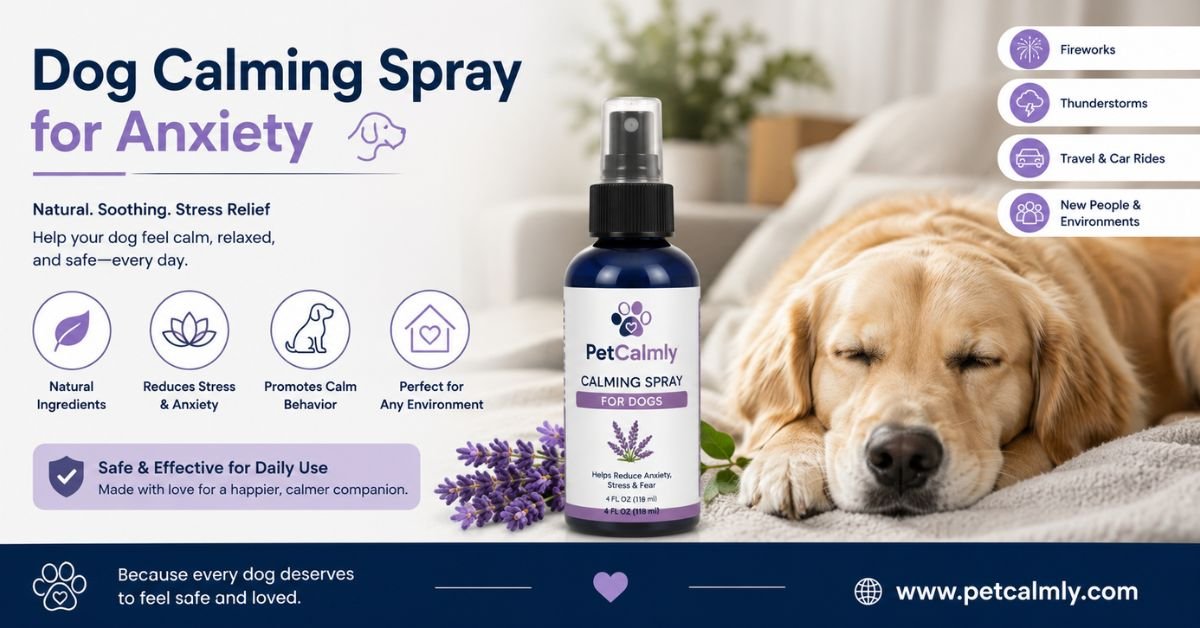
A dog calming spray for anxiety is a behavior-support product designed to help dogs feel more relaxed in stressful situations such as separation, travel, thunderstorms, or vet visits. These sprays usually contain soothing ingredients like pheromones (synthetic versions of natural calming signals), lavender, or chamomile. When sprayed on bedding, crates, or in the car, they may help reduce restlessness, barking, pacing, or hiding behaviors.
Most importantly, calming sprays are not a cure for anxiety. They are best used as part of a broader calming routine that includes training, environmental support, and emotional reassurance.
Introduction
If you’ve ever watched your dog tremble during a thunderstorm, refuse to settle when you leave the house, or pace nervously around the room for no clear reason, you already know how stressful dog anxiety can be for both of you.
Many pet owners search for a quick solution, and that’s where products like a dog calming spray for anxiety come in. It feels comforting to think there’s something simple you can spray and instantly help your dog relax.
The reality is a bit more nuanced.
Some dogs do respond positively to calming sprays, especially when anxiety is mild or situational. Others need more structured behavioral support alongside it. And in some cases, anxiety can signal an underlying issue that needs veterinary attention.
In this guide, we’ll walk through everything you need to know in a grounded, practical way:
- What calming sprays actually do (and don’t do)
- When they help the most
- What causes anxiety in dogs
- How to use calming sprays correctly
- Mistakes owners often make
- Safe alternatives and supportive strategies
- When anxiety becomes a serious concern
By the end, you’ll have a clear, realistic understanding of whether a calming spray fits your dog’s situation—and how to support them beyond just a single product.
What Is a Dog Calming Spray for Anxiety?
A dog calming spray for anxiety is a topical or environmental spray designed to help reduce stress-related behaviors in dogs. Instead of sedating your dog, it works by influencing their emotional state through scent-based signals.
Most calming sprays fall into one of these categories:
1. Pheromone-Based Sprays
These mimic natural “calming signals” that mother dogs produce to reassure puppies. Dogs don’t consciously recognize them, but they may feel more secure in the environment.
Common use areas:
- Dog beds
- Crates
- Blankets
- Car seats
- Travel carriers
2. Herbal or Aromatherapy Sprays
These use plant-based ingredients such as:
- Lavender
- Chamomile
- Valerian root (in some blends)
These are designed to create a soothing environment through scent association.
3. Combined Formulas
Some products mix pheromones with herbal extracts to create a broader calming effect.
What a Calming Spray Does NOT Do
It’s important to be realistic here:
A calming spray does not:
- “Fix” separation anxiety
- Replace training
- Sedate your dog
- Work instantly in severe panic cases
- Address root behavioral causes
Think of it more like:
A supportive background tool—not the main solution.
Why Dogs Develop Anxiety in the First Place
Before using any calming product, it helps to understand what you’re actually dealing with. Anxiety in dogs is not random—it usually comes from a combination of emotional learning, environment, and temperament.
Common Causes of Dog Anxiety
1. Separation from Owner
One of the most common triggers. Dogs are social animals, and some struggle when left alone.
Signs include:
- Barking or whining when you leave
- Destructive chewing near exits
- Following you everywhere before departure
2. Loud Noises
Thunderstorms, fireworks, construction noise—these can trigger intense fear responses.
3. Lack of Early Socialization
Dogs that weren’t exposed to different environments early in life may react fearfully to new experiences.
4. Past Trauma or Shelter History
Rescue dogs often carry emotional memories that influence behavior.
5. Changes in Routine
Dogs thrive on predictability. Even small changes like a new schedule or home environment can trigger stress.
6. Medical Discomfort
Sometimes anxiety-like behavior is actually pain or illness.
Emotional Reality: What Anxiety Feels Like for Dogs
From a behavioral perspective, anxious dogs often experience:
- A sense of unpredictability in their environment
- Heightened alertness (always “on edge”)
- Difficulty settling even when nothing is happening
- Strong attachment to their owner as a safety anchor
Understanding this helps shift the mindset from “bad behavior” to “emotional distress.”
Signs Your Dog Might Benefit From a Calming Spray
Not every stressed dog needs intervention but calming sprays are often considered for mild to moderate anxiety.
Common Signs:
- Pacing or restlessness
- Mild whining when left alone
- Hiding during loud noises
- Excessive licking or chewing
- Clinginess before stressful events
- Trouble settling in new environments
Situations Where Sprays Are Commonly Used:
- Travel or car rides
- Vet visits
- Grooming appointments
- Boarding kennels
- Moving to a new home
- First nights in a crate
How Dog Calming Sprays Work (Simple Explanation)
Let’s break it down in practical terms.
When you spray a calming product:
- The scent disperses in the environment
- Your dog detects it through their highly sensitive nose
- It may trigger a sense of familiarity or comfort
- This can reduce mild stress responses
But here’s the key point:
The effect depends heavily on the dog’s individual sensitivity and the severity of anxiety.
Some dogs respond quickly. Others show little change.
How to Use Dog Calming Spray Properly
Using it incorrectly is one of the most common reasons owners think “it doesn’t work.”
Step-by-Step Use Guide
1. Spray in Advance
Don’t wait until your dog is already panicking. Apply:
- 10–15 minutes before exposure to stress
- Or before leaving the house
2. Target Key Areas
Spray lightly on:
- Bedding
- Crate corners
- Car seat covers
- Travel blankets
3. Avoid Direct Spraying on Dog
Unless the product explicitly says it is safe for fur, avoid spraying directly.
4. Do Not Overuse
More spray ≠ better results. Overuse can overwhelm your dog’s senses.
4 Common Mistakes Dog Owners Make
Mistake 1: Expecting Instant Behavior Change
Calming sprays support relaxation—not instant obedience or silence.
Mistake 2: Using It Alone for Severe Anxiety
Dogs with strong separation anxiety need training support too.
Mistake 3: Applying During Peak Panic
If your dog is already in full panic mode, sprays usually have limited effect.
Mistake 4: Ignoring the Root Cause
The spray helps symptoms, not emotional learning patterns.
Do Calming Sprays Actually Work?
This is the question every dog owner asks.
The honest answer:
They work for some dogs, in some situations, especially mild anxiety cases.
You may notice:
- Slight reduction in pacing
- Easier settling in crate
- Less vocalization during mild stress
- Faster recovery after trigger events
But:
- Not all dogs respond
- Severe anxiety requires behavioral intervention
- Results vary widely
Think of it like emotional support—not treatment.
Best Situations to Use Dog Calming Spray for Anxiety
These are the scenarios where they are most useful:
1. Short-Term Stress Events
- Grooming
- Vet visits
- Travel
2. Environmental Changes
- Moving house
- New furniture or layout
- Guests staying over
3. Routine Transitions
- First crate training sessions
- Alone-time practice sessions
4. Mild Separation Stress
- Brief absences from home
What to Combine With Calming Spray (Very Important)
If you want better results, don’t rely on spray alone.
1. Crate Training or Safe Space Training
Dogs relax better when they have a predictable safe zone.
2. Exercise Before Stress Events
A tired dog is often a calmer dog.
3. Background Noise
Soft music or white noise can reduce environmental triggers.
4. Desensitization Training
Gradually teaching your dog that alone time is safe.
5. Consistent Routine
Predictability lowers anxiety over time.
Comparison Table: Calming Spray vs Other Anxiety Solutions
| Method | Speed | Effectiveness | Best For |
|---|---|---|---|
| Calming Spray | Fast | Mild | Situational stress |
| Training | Slow | High | Long-term anxiety |
| Pheromone Diffusers | Medium | Moderate | Home environment |
| Exercise | Fast | Moderate | General stress |
| Vet-prescribed meds | Fast | High | Severe anxiety |
When Should You Be Concerned?
Calming sprays are not enough when anxiety becomes severe.
Warning Signs:
- Self-injury (biting, excessive licking)
- Destructive behavior when alone
- Refusal to eat due to stress
- Panic reactions lasting long periods
- Aggression triggered by fear
- No improvement despite training efforts
In these cases, it’s important to consult a veterinarian or a certified behaviorist.
What Dog Owners Should Do (Practical Plan)
If your dog is anxious and you’re considering a calming spray, here’s a simple approach:
Step 1: Identify Trigger
Noise, separation, travel, etc.
Step 2: Start With Environment Changes
Safe space, routine, comfort items.
Step 3: Introduce Calming Spray
Use during controlled exposure, not peak panic.
Step 4: Combine With Training
Short, consistent sessions.
Step 5: Monitor Behavior
Look for small improvements, not instant transformation.
Realistic Expectations Matter
One of the most important things to understand is this:
Dog anxiety is rarely solved by a single product.
A calming spray can:
- Help soften stress responses
- Make transitions easier
- Support training progress
But it cannot replace emotional learning, consistency, and time.
Conclusion
A dog calming spray for anxiety can be a useful support tool when used correctly and in the right situations. It works best for mild stress, transitional moments, and environmental comfort. However, it should always be paired with training, routine stability, and understanding your dog’s emotional needs.
The most important thing to remember is that anxiety in dogs is not “bad behavior” it’s communication. When you approach it with patience and the right tools, including calming sprays when appropriate, you give your dog a better chance to feel safe and secure in their world.
More Information About Pets, Please Visit Our Website: What are the best toys for large dogs
Frequently Asked Questions
1. Do dog calming sprays really work for anxiety?
They can help mild anxiety by creating a soothing environment, but results vary depending on the dog and situation.
2. How long does calming spray take to work?
Most sprays start working within 10–15 minutes, but effects are subtle and not always immediate.
3. Can I use calming spray every day?
Yes, but only as directed. Overuse does not improve results and may overwhelm your dog’s senses.
4. Is calming spray safe for puppies?
Most are safe for puppies, but always check the label and avoid direct spraying on young dogs.
5. Can calming spray stop barking?
It may reduce stress-related barking, but it won’t stop training-related or attention-seeking barking.
6. What is better than calming spray for dog anxiety?
Behavioral training, exercise, routine stability, and in severe cases, veterinary guidance are more effective long-term solutions.