Short direct answer
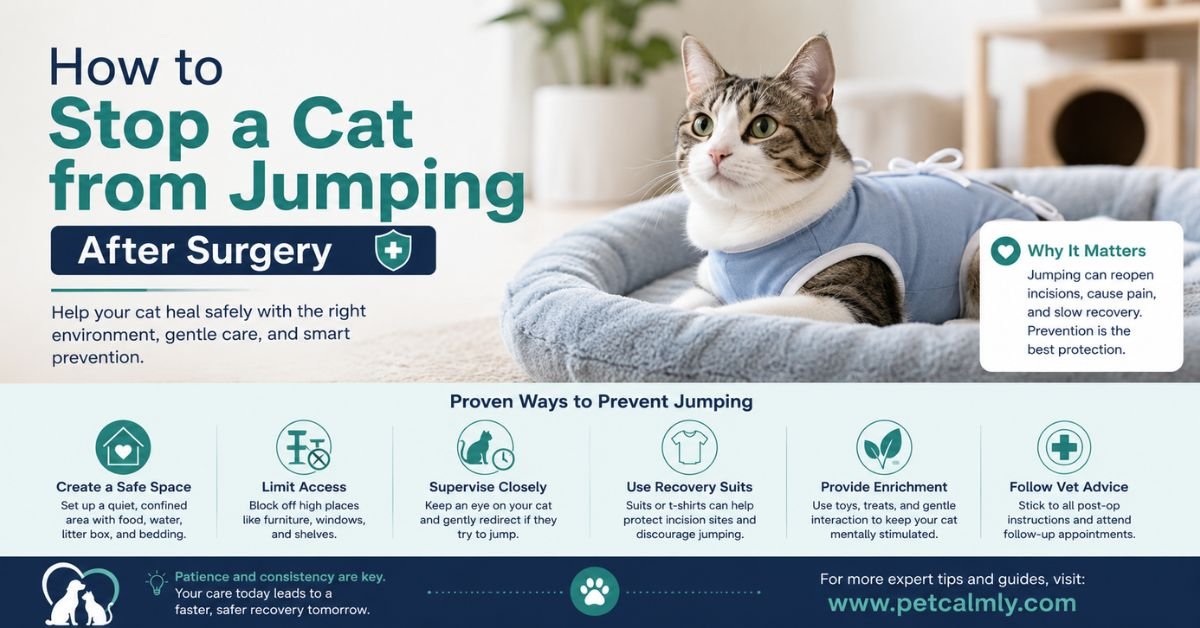
The most effective way to stop a cat from jumping after surgery is to strictly limit movement and control their environment, not just “tell them no.” Cats don’t understand they’re injured, so jumping must be physically prevented. This is usually done by keeping them in a small recovery space, removing high surfaces, using ramps or blocked furniture, and sometimes using a properly fitted recovery collar or soft confinement like a crate or pen.
In short, prevention works better than correction. Your goal is to reduce access to heights until the surgical site has healed usually 10–14 days depending on the procedure. Always follow your vet’s post-op instructions first.
Introduction
If your cat has just had surgery, you’re probably already watching them closely then suddenly they leap onto a chair, bed, or shelf as if nothing happened. It can feel alarming, even terrifying.
This is one of the most common struggles pet owners face during recovery. Cats don’t behave “carefully” after surgery because they don’t understand pain the way humans do in a preventative sense. Even if they feel discomfort, curiosity, habit, or anxiety often wins.
The challenge isn’t just stopping jumping it’s protecting stitches, preventing internal strain, and avoiding a setback in healing.
In this guide, you’ll learn:
- Why cats jump after surgery even when they shouldn’t
- Practical ways to prevent jumping safely at home
- Mistakes owners often make during recovery
- How long restriction is actually needed
- When jumping becomes dangerous
- What recovery setup works best in real homes
Let’s go step by step so you can keep your cat safe without constant stress or guilt.
Understanding Why Cats Jump After Surgery
Before solving the behavior, it helps to understand what’s really going on.
1. Instinct overrides discomfort
Cats are natural climbers. Jumping is not just play it’s instinctive movement tied to safety, exploration, and comfort. Even after surgery, this instinct doesn’t disappear.
2. Anesthesia “confidence phase”
In the first 24–48 hours after surgery, some cats feel oddly alert or restless as anesthesia wears off. This can lead to sudden bursts of energy and unpredictable movement.
3. Stress and confinement frustration
Cats don’t like restrictions. If they feel confined or bored, they may attempt to escape or explore vertical spaces.
4. Pain masking behavior
Some cats actually move more when they’re uncomfortable—not less. It can be a distraction response or a way to reposition themselves.
5. Habit and memory
If your cat regularly jumps on furniture or counters, those patterns don’t disappear just because they had surgery.
Why Jumping After Surgery Is Risky
Even a small jump can cause problems depending on the type of surgery.
Possible risks include:
- Opening or stressing surgical stitches
- Internal bleeding (in abdominal surgeries)
- Delayed healing
- Increased swelling or inflammation
- Pain spikes that slow recovery
For example:
- A cat recovering from spay/neuter surgery may seem fine after jumping once—but swelling or internal strain can show up hours later.
- Orthopedic surgeries are even more sensitive, where one jump can undo progress.
Setting Up a Safe Recovery Space (Most Important Step)
If you only do one thing from this article, do this correctly.
Best recovery setup options:
- A large dog crate (with soft bedding)
- A small quiet room (bathroom, spare room)
- A playpen-style enclosure for cats
What the space should include:
- Non-slip bedding (not high cushions they can climb)
- Food and water within easy reach
- Low litter tray with easy access
- No furniture they can climb
What to remove:
- Chairs, tables, shelves
- Window access points
- High scratching posts
- Anything “launchable”
Think of it as creating a horizontal-only environment.
How to Physically Prevent Jumping (Without Stressing Your Cat)
You cannot train a cat out of jumping immediately after surgery—but you can prevent the opportunity.
1. Block access to furniture
- Turn chairs upside down
- Close bedroom doors
- Remove stepping points (like stools)
2. Use low barriers
Baby gates or temporary barriers help reduce roaming.
3. Keep lighting calm and low activity
Less stimulation = fewer sudden bursts of movement.
4. Supervised time outside recovery area
Only allow short, controlled movement periods.
5. Use gentle confinement if needed
Some cats do best in a crate or enclosed pen during the first few days.
5 Common Mistakes Cat Owners Make After Surgery
These mistakes often increase jumping behavior instead of preventing it.
Mistake 1: Letting the cat “rest freely” in the house
It sounds kind, but open access = uncontrolled jumping.
Mistake 2: Using punishment or shouting
This increases stress and can worsen restlessness.
Mistake 3: Allowing high resting spots “just this once”
One jump often leads to more jumps.
Mistake 4: Ignoring pain medication timing
Pain can make cats restless or confused if not properly managed.
Mistake 5: Not preparing the home before surgery
Recovery becomes harder if the environment isn’t pre-arranged.
Step-by-Step: First 72 Hours After Surgery
This is the most important recovery window.
Day 1 (First 24 hours)
- Keep cat in one confined space
- Minimal interaction
- Monitor for grogginess or imbalance
- No jumping allowed at all
Day 2
- Slight increase in alertness possible
- Continue strict confinement
- Short supervised movement breaks only
Day 3
- Appetite and energy may improve
- Still restrict climbing and jumping
- Begin observing behavior patterns
How Long Should You Stop a Cat from Jumping?
This depends on surgery type:
| Surgery Type | Recommended Restriction |
|---|---|
| Spay/Neuter | 10–14 days |
| Soft tissue surgery | 10–21 days |
| Orthopedic surgery | 3–8 weeks |
| Dental surgery | 5–10 days |
Most importantly, even if your cat “feels fine,” internal healing is still happening.
Signs Your Cat Is Trying to Jump Too Soon
Watch for these early warning behaviors:
- Standing on hind legs repeatedly
- Staring at high furniture
- Sudden bursts of running
- Restlessness in confined space
- Pawing at barriers or doors
These are not “bad behavior”—they are signs your setup needs adjustment.
Making Recovery Easier for an Active Cat
Some cats are naturally energetic and struggle with confinement.
Helpful strategies:
- Rotate toys at ground level
- Use puzzle feeders on the floor
- Sit with them calmly in the same room
- Provide soft, low resting spots
- Use calming pheromone diffusers if recommended by your vet
The goal is not to “tire them out,” but to reduce climbing motivation.
What NOT to Do (Very Important)
Avoid these completely during recovery:
- Do not encourage jumping “just a little”
- Do not assume pain will stop movement
- Do not let the cat sleep on beds or sofas
- Do not remove cones or recovery collars early without vet approval
- Do not rely on verbal commands alone
Cats don’t associate surgery with “don’t jump.” Environment control is essential.
When Should You Worry?
Contact your vet if you notice:
- Bleeding or fluid from incision
- Swelling that increases suddenly
- Limping or abnormal posture
- Lethargy lasting more than expected
- Repeated jumping attempts despite confinement
- Crying or signs of severe discomfort
If a jump happens and you’re unsure, it’s always safer to check.
What Pet Owners Should Do (Practical Action Plan)
If you’re dealing with a post-surgery cat right now, follow this simple plan:
Step 1: Create a recovery zone immediately
Choose one small room or crate setup.
Step 2: Remove climbing opportunities
Block furniture, windows, and shelves.
Step 3: Stick to medication schedule
Pain control reduces restlessness.
Step 4: Observe behavior closely
Not just wound—watch movement patterns.
Step 5: Be consistent
Even one “allowed jump” resets progress.
Recovery Reality: What to Expect Emotionally
Many owners feel guilty confining their cat, especially when the cat seems restless or vocal.
But recovery is temporary. Most cats adjust within a few days once routine is stable. The first 2–3 days are usually the hardest emotionally—for both pet and owner.
After that, most cats settle into slower, calmer behavior if the environment supports it.
Conclusion
Stopping a cat from jumping after surgery isn’t about discipline—it’s about smart environmental control and calm consistency. Cats recover best when they are safely restricted, not when they are constantly corrected.
The key takeaway is simple: don’t wait for your cat to “decide” not to jump. Instead, remove the chance to jump in the first place. With a proper recovery space, supervision, and a little patience, most cats heal smoothly and return to normal activity without complications.
Your cat’s instinct will always push them to move—but your setup can keep them safe while their body does the important healing work.
More Information About Pets, Please Visit Our Website: Bernese Mountain Dog Health Issues
Why Is My Dog Pacing at Night All of a Sudden
Frequently Asked Questions
1. Why does my cat keep trying to jump after surgery?
Even after surgery, cats rely on instinct. Jumping is natural behavior, and they don’t understand they need rest.
2. Can one jump damage stitches?
Yes, depending on the surgery. Even a single jump can strain stitches or internal healing areas, so prevention is important.
3. How do I stop my cat from jumping on the bed?
Close bedroom doors, block access with barriers, and keep the cat in a recovery room until fully healed.
4. Is it normal for cats to be restless after surgery?
Yes, mild restlessness is common due to anesthesia wear-off, stress, or discomfort.
5. Should I confine my cat in a crate after surgery?
Many vets recommend crate or small-room confinement, especially for active cats or complex surgeries.
6. When can my cat return to normal jumping?
Usually after 10–14 days for minor surgeries, but always follow your vet’s specific instructions.