Short direct answer
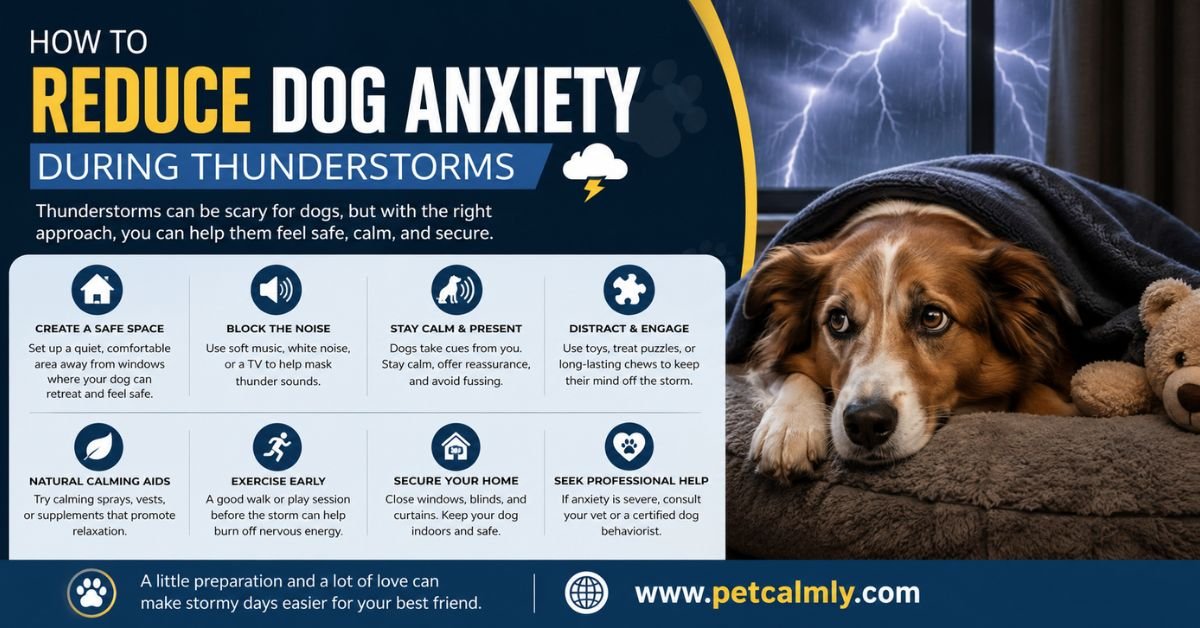
If you’re wondering how to reduce dog anxiety during thunderstorms, start by moving your dog to a quiet, secure room before the storm arrives. Close curtains to block lightning, play calming background noise, offer a Favourite toy or long-lasting chew, and stay calm yourself. Never force your dog to “face their fears.” Instead, create positive associations with storms through gentle training over time. If your dog’s fear is severe, causes self-injury, or doesn’t improve with home strategies, consult your veterinarian or a qualified veterinary behavior professional for a personalized treatment plan.
How to Reduce Dog Anxiety During Thunderstorms: A Complete Guide to Keeping Your Dog Calm and Safe
Few things are harder for dog owners than watching a beloved pet panic during a thunderstorm. Some dogs pace nonstop, others hide under beds, shake uncontrollably, bark for hours, or even try to escape through doors and windows.
Thunderstorm anxiety is more than simple nervousness. For many dogs, it’s an intense fear response triggered by loud thunder, flashes of lightning, changes in air pressure, strong winds, heavy rain, or even static electricity in the air. Every dog reacts differently, which is why one may sleep through a storm while another experiences overwhelming panic.
The good news is that thunderstorm anxiety can often be managed and in many cases significantly improved with the right combination of preparation, training, environmental changes, and, when needed, veterinary support.
In this guide, you’ll learn:
- Why thunderstorms frighten some dogs
- Common signs of storm anxiety
- What to do before, during, and after a storm
- Safe ways to comfort your dog
- Common mistakes to avoid
- When professional help is the best option
Whether your dog is mildly uneasy or severely frightened, these practical strategies can help both of you feel more prepared when storm season arrives.
Why Are Dogs Afraid of Thunderstorms?
Many owners assume dogs are only afraid of loud thunder, but storms involve several frightening sensations happening at once.
Some dogs may react before humans even realize a storm is approaching. That’s because dogs notice subtle environmental changes long before we do.
Common storm triggers include:
- Loud thunderclaps
- Bright flashes of lightning
- Sudden changes in barometric pressure
- Strong wind noises
- Heavy rain hitting windows or roofs
- Static electricity building in their fur
- Unfamiliar smells carried by changing weather
- Your own anxious behavior
Instead of reacting to one frightening event, your dog may experience multiple stress triggers simultaneously.
Why Some Dogs Develop Thunderstorm Anxiety
Not every dog fears storms. Several factors may increase the likelihood.
Genetics
Some breeds naturally have more sensitive temperaments, making them more prone to anxiety.
Previous Negative Experiences
A frightening storm during puppyhood or a traumatic event associated with loud noises can create lasting fear.
Lack of Early Socialization
Dogs that weren’t gently exposed to different sounds while young may struggle more with unexpected noises later.
Age
Senior dogs sometimes become more sensitive to loud sounds because of cognitive changes or declining vision, even if they weren’t fearful when younger.
Existing Anxiety Disorders
Dogs already dealing with separation anxiety or generalized anxiety often react more strongly to thunderstorms.
Common Signs of Dog Anxiety During Thunderstorms
Recognizing anxiety early allows you to intervene before fear escalates.
Some signs are subtle, while others indicate severe distress.
Mild Signs
Your dog may:
- Watch windows closely
- Follow you constantly
- Yawn repeatedly
- Lick their lips
- Tremble slightly
- Pin their ears back
- Keep their tail tucked
- Become unusually clingy
These early warning signs are easy to miss but often appear before panic begins.
Moderate Signs
As anxiety increases, you may notice:
- Constant pacing
- Heavy panting
- Excessive drooling
- Barking or whining
- Restlessness
- Refusing treats
- Hiding behind furniture
- Attempting to climb onto you
Severe Signs
Some dogs experience overwhelming panic.
Warning signs include:
- Trying to escape the house
- Scratching at doors or windows
- Digging into walls or flooring
- Destructive chewing
- Running blindly around the home
- Urinating or defecating indoors
- Self-injury while attempting to escape
- Ignoring familiar commands
If your dog reaches this level of distress, they need more than simple reassurance. A veterinary evaluation is strongly recommended to discuss behavior management and treatment options.
How to Reduce Dog Anxiety During Thunderstorms Immediately
When thunder begins, your goal isn’t to eliminate fear instantly. Instead, focus on helping your dog feel safer while preventing panic from becoming worse.
Small actions taken early often make a big difference.
Create a Safe, Quiet Space Before the Storm Starts
Many dogs naturally look for enclosed areas because they feel protected.
Good options include:
- An interior bedroom
- A walk-in closet
- A covered crate (if your dog already enjoys using one)
- A quiet laundry room
- A basement, if available
Add comforting items like:
- Familiar blankets
- Favorite toys
- Water bowl
- Comfortable bedding
- A long-lasting chew
- A food puzzle
Never force your dog into their safe area. Allow them to choose it willingly.
Close Curtains and Reduce Outside Stimuli
Lightning flashes can increase fear.
Before storms arrive:
- Close blinds
- Shut curtains
- Reduce outside visibility
- Dim indoor lights if appropriate
Removing visual triggers helps many anxious dogs remain calmer.
Play Calming Background Noise
Gentle sounds help mask thunder.
Many owners find success with:
- Soft classical music
- White noise machines
- Fans
- Television
- Dog-specific calming playlists
The goal isn’t to completely drown out thunder but to soften sudden loud noises.
Stay Calm Yourself
Dogs pay close attention to human emotions.
If you appear frightened or frustrated, your dog may interpret your behavior as confirmation that something dangerous is happening.
Instead:
- Speak softly
- Move normally around the house
- Avoid sudden reactions to thunder
- Keep your routine as consistent as possible
Remaining calm creates a more predictable environment for your dog.
Offer High-Value Rewards
If your dog is still willing to eat, storms provide an excellent opportunity to build positive associations.
Try offering:
- Small pieces of cooked chicken
- Peanut butter in a food toy (xylitol-free)
- Freeze-dried treats
- Cheese in moderation
- Stuffed enrichment toys
If your dog refuses food entirely, don’t force it. Severe anxiety often suppresses appetite.
Should You Comfort Your Dog During a Thunderstorm?
One of the most common myths is that comforting your dog “rewards fear.”
Modern animal behavior experts generally agree that fear itself isn’t something you reinforce by offering comfort. If your dog seeks reassurance, gentle petting, a calm voice, or simply sitting nearby can help them feel more secure.
Pay attention to your dog’s preferences:
- Some dogs lean into gentle touch.
- Others prefer lying quietly nearby.
- Some want to hide alone in their safe space.
Respect what helps your individual dog feel safest rather than forcing interaction.
Build a Thunderstorm Safe Zone Your Dog Will Love
Preparing a dedicated comfort area before storm season can make a noticeable difference.
An effective safe space should feel:
- Quiet
- Familiar
- Comfortable
- Predictable
- Easy to access
Include These Items
| Item | Why It Helps |
|---|---|
| Comfortable bed | Provides physical comfort and familiarity |
| Favorite blanket | Familiar scent can be reassuring |
| Long-lasting chew | Encourages calming chewing behavior |
| Puzzle feeder | Redirects attention if your dog will eat |
| Water bowl | Prevents dehydration during prolonged stress |
| White noise source | Softens sudden thunder sounds |
Should You Use a Crate?
If your dog already sees their crate as a safe retreat, it can be an excellent shelter during storms.
To make it more comforting:
- Cover three sides with a breathable blanket.
- Place soft bedding inside.
- Keep the door open unless your dog is already comfortable being closed inside.
- Never use the crate as punishment.
For dogs that dislike crates, introducing one during a thunderstorm is unlikely to help and may increase stress.
Quick Storm Anxiety Checklist
When a storm is approaching:
- ✔ Bring your dog indoors early.
- ✔ Walk them before heavy rain begins.
- ✔ Close curtains and blinds.
- ✔ Prepare a quiet room.
- ✔ Turn on calming background noise.
- ✔ Offer a favorite chew or enrichment toy.
- ✔ Stay relaxed and keep your routine normal.
- ✔ Allow your dog to choose where they feel safest.
- ✔ Monitor for signs of escalating fear.
- ✔ Avoid punishment or scolding.
These simple steps can reduce stress and help prevent mild anxiety from escalating into full panic.
Long-Term Ways to Reduce Dog Anxiety During Thunderstorms
Helping your dog through a single storm is important, but lasting improvement usually comes from preparing between storms. Dogs learn through repeated experiences, so the weeks and months when the weather is calm are the best time to build confidence.
The goal isn’t to teach your dog to love thunderstorms. It’s to help them feel safe enough that they can cope without overwhelming fear.
Use Gradual Desensitization to Build Confidence
One of the most effective long-term strategies is desensitization, which means exposing your dog to storm-related sounds at a level that doesn’t trigger panic.
Instead of waiting for real thunderstorms, use high-quality recordings of thunder.
How to Practice
- Play thunder sounds at a very low volume.
- Offer treats, praise, or a favorite game while the sounds play.
- Keep sessions short about 5 to 10 minutes.
- Repeat several times each week.
- Slowly increase the volume only if your dog stays relaxed.
If your dog starts panting, hiding, pacing, or refusing treats, the volume is too high. Lower it and progress more slowly.
Patience is essential. Rushing can make the fear worse rather than better.
Pair Storm Sounds with Positive Experiences
This training method, known as counterconditioning, changes your dog’s emotional response.
Instead of thinking:
“Thunder means something scary is happening.”
Your dog gradually learns:
“Thunder means something good is about to happen.”
You can pair thunder recordings with:
- Favorite treats
- Special toys only used during training
- Gentle play sessions
- Puzzle feeders
- Short obedience games
- Relaxation exercises
Over time, many dogs begin anticipating rewards instead of immediately becoming fearful.
Teach Your Dog a Relaxation Routine
Dogs don’t automatically know how to calm themselves. Teaching a relaxation routine before storm season can make it easier for them to settle during stressful events.
Practice in a quiet environment first.
A Simple Relaxation Exercise
- Ask your dog to lie on a comfortable bed or mat.
- Reward calm behavior with small treats.
- Speak softly and avoid exciting movements.
- Gradually increase the amount of time they remain relaxed.
- End the session before your dog becomes restless.
After your dog understands the routine, you can use it when storms are forecast.
Exercise Before the Storm Arrives
A dog with excess energy may find it even harder to cope with stress.
Whenever possible, give your dog physical and mental exercise before bad weather begins.
Ideas include:
- A brisk walk
- Fetch in the yard
- Nose work games
- Short training sessions
- Interactive food puzzles
- Snuffle mats
- Hide-and-seek with treats
Exercise won’t eliminate thunderstorm anxiety, but it may help your dog settle more easily afterward.
Avoid intense exercise if a storm is already overhead, as some dogs become too anxious to enjoy it.
Mental Enrichment Can Reduce Overall Anxiety
A mentally stimulated dog often handles stressful situations better than one who is bored.
Try rotating enrichment activities throughout the week.
Examples include:
- Food-dispensing toys
- Frozen stuffed treats
- Scent games
- Beginner agility exercises
- Trick training
- Safe chew items
- Puzzle feeders
These activities don’t specifically treat thunderstorm anxiety, but they help build confidence and reduce chronic stress.
Consider Calming Products for Additional Support
Some dogs benefit from calming aids when used alongside training and environmental management.
Remember that no product works for every dog, and most are most effective as part of a broader anxiety-management plan.
Anxiety Wraps
Pressure wraps apply gentle, even pressure around the dog’s body, similar to swaddling.
Some dogs appear noticeably calmer while wearing them, although others show little difference.
For best results:
- Introduce the wrap on calm days.
- Pair it with treats and positive experiences.
- Never force your dog to wear it if they seem uncomfortable.
Pheromone Diffusers
Dog-appeasing pheromone products release synthetic versions of calming pheromones produced by nursing mother dogs.
They may help some dogs feel more secure, especially when used consistently.
These products are generally considered low risk but should not replace behavioral training if anxiety is severe.
Calming Supplements
Some owners use supplements containing ingredients such as:
- L-theanine
- Alpha-casozepine
- Chamomile
- Melatonin (only under veterinary guidance)
- Certain probiotics formulated for stress support
While some dogs appear to benefit, results vary.
Always speak with your veterinarian before introducing supplements, especially if your dog:
- Takes medication
- Has liver or kidney disease
- Is pregnant or nursing
- Has chronic medical conditions
Comfortable Bedding and Familiar Scents
Sometimes the simplest solutions are surprisingly effective.
A familiar blanket carrying your scent can provide reassurance.
Soft orthopedic beds can also help older dogs relax more comfortably during stressful weather.
Should You Ignore a Frightened Dog?
No.
Ignoring genuine fear doesn’t teach confidence.
Instead:
- Stay nearby if your dog seeks you out.
- Speak in a calm, relaxed voice.
- Allow hiding if your dog prefers it.
- Avoid dramatic reactions.
- Reward calm behavior naturally.
Think of yourself as a steady, reassuring presence rather than someone trying to “fix” the fear immediately.
Common Mistakes That Can Make Thunderstorm Anxiety Worse
Even caring owners sometimes unintentionally increase their dog’s stress.
Avoid these common mistakes.
Waiting Until the Storm Begins
Preparation is far easier than reacting during a panic episode.
Keep your safe room ready before storm season starts.
Punishing Fearful Behavior
Never punish:
- Barking from fear
- Trembling
- Hiding
- Accidents caused by panic
- Escape attempts
Fear is an emotional response, not disobedience.
Punishment may increase anxiety and damage your dog’s trust.
Forcing Your Dog Outside
Some owners insist on finishing a walk during a storm.
If thunder has already started, keep bathroom breaks brief and return indoors quickly.
Many anxious dogs simply cannot focus outside during severe weather.
Flooding Your Dog with Loud Thunder Sounds
Playing thunder recordings at full volume in hopes they’ll “get used to it” often backfires.
This approach, called flooding, can intensify fear and create lasting setbacks.
Always progress gradually.
Constantly Reassuring in a Panicked Voice
Your tone matters.
Repeatedly saying, “It’s okay! Don’t be scared!” in a worried voice may communicate that something truly is wrong.
Instead:
- Speak normally.
- Use relaxed body language.
- Continue gentle routines.
Leaving an Extremely Fearful Dog Alone
If possible, avoid leaving a severely anxious dog home alone during thunderstorms.
Some dogs:
- Injure themselves trying to escape
- Damage doors or windows
- Panic for hours without support
If storms are expected while you’re away, consider asking a trusted friend, family member, or pet sitter to stay with your dog.
What to Do Before, During, and After a Thunderstorm
Having a simple plan can reduce stress for both you and your dog.
| Time | What to Do |
|---|---|
| Before the storm | Check the weather forecast, exercise your dog, prepare the safe room, close curtains, and have treats and enrichment toys ready. |
| During the storm | Stay calm, offer reassurance if your dog wants it, use white noise, provide a chew or puzzle toy, and avoid forcing interactions. |
| After the storm | Return to your normal routine, praise calm behavior, offer another bathroom break if needed, and note what strategies worked best. |
Create a Personalized Storm Comfort Kit
Keeping supplies together makes it easier to respond quickly when storms develop.
A storm kit might include:
- Favorite treats
- Long-lasting chews
- Puzzle feeders
- Soft blanket
- White noise machine
- Anxiety wrap (if your dog likes it)
- Water bowl
- Flashlight for power outages
- Extra leash and ID tags
- Emergency contact information for your veterinarian
Store everything in one place so you’re not searching for supplies while your dog is already anxious.
Every Dog Responds Differently
One of the biggest lessons experienced dog owners learn is that there isn’t a single solution that works for every pet.
For example:
- One dog may relax with calming music.
- Another prefers hiding in a closet.
- Some respond well to pressure wraps.
- Others only improve with behavior training.
- A few require prescription medication in addition to environmental changes.
Pay attention to your dog’s individual preferences. Keeping a simple journal after each storm can help you identify patterns, such as which strategies were most effective and what seemed to increase their stress.
When Should You Worry About Thunderstorm Anxiety?
Most dogs become calmer once the storm passes. However, for some, thunderstorm anxiety is so intense that it affects their health, safety, and quality of life.
If your dog’s fear is becoming more severe over time or interfering with daily activities, it’s time to seek professional guidance.
Watch for these warning signs:
- Panic starts hours before rain arrives.
- Your dog stops eating during storm season.
- They injure themselves trying to escape.
- Anxiety continues long after the storm ends.
- They become destructive every time bad weather is forecast.
- They experience repeated accidents indoors despite being house-trained.
- They refuse to leave their hiding place for long periods.
- Their fear is spreading to fireworks, loud vehicles, or other noises.
Early intervention is often more successful than waiting until the behavior becomes deeply ingrained.
When to Contact Your Veterinarian
Home management strategies are helpful for many dogs, but severe anxiety deserves medical attention.
Schedule a veterinary appointment if your dog:
- Has panic attacks during storms
- Tries to jump through windows or doors
- Causes self-inflicted injuries
- Stops eating or drinking during stressful weather
- Has underlying medical conditions that may worsen anxiety
- Shows sudden fear despite never reacting before
A veterinarian will first rule out medical problems that could contribute to behavioral changes, such as pain, hearing changes, or age-related cognitive decline.
Depending on your dog’s needs, they may recommend:
- A personalized behavior modification plan
- Referral to a qualified veterinary behavior professional
- Short-term anxiety medication
- Long-term anxiety management
- Appropriate calming supplements when suitable
Seeking professional help isn’t a sign of failure it’s part of responsible pet care.
Can Medication Help Dogs with Thunderstorm Anxiety?
For dogs with severe storm phobias, medication can be an important part of treatment.
It’s important to understand that medication doesn’t “cure” anxiety. Instead, it lowers the intensity of fear so your dog is better able to cope and learn through behavior training.
Your veterinarian may recommend medication when:
- Fear is extreme
- Your dog is at risk of injury
- Home strategies haven’t helped enough
- Anxiety is affecting overall well-being
Never give your dog human anti-anxiety medication unless your veterinarian specifically prescribes it. Many human medications can be dangerous or even life-threatening for dogs.
Medication works best when combined with:
- Environmental management
- Positive reinforcement training
- Desensitization
- Counterconditioning
- Consistent daily routines
Can Puppies Develop Thunderstorm Anxiety?
Yes. Puppies can become frightened by thunderstorms, especially if they haven’t had positive experiences with different sounds during their early socialization period.
The good news is that puppies are often more adaptable than adult dogs when training starts early.
To build confidence:
- Introduce everyday sounds gradually.
- Pair new experiences with treats and play.
- Avoid forcing your puppy into scary situations.
- Create positive associations with gentle thunder recordings.
- Keep training sessions short and fun.
If your puppy shows intense fear despite gradual exposure, speak with your veterinarian before the problem becomes more established.
Helping Senior Dogs During Thunderstorms
Older dogs sometimes become more sensitive to storms, even if they were calm for years.
Possible reasons include:
- Reduced vision
- Hearing changes
- Joint pain
- Cognitive decline
- Increased overall anxiety
Simple adjustments can make a big difference.
Consider:
- Orthopedic bedding
- Easy access to a quiet room
- Night lights if vision is poor
- Shorter walks before storms
- Maintaining familiar routines
- Veterinary checkups to address underlying health issues
Never assume that new anxiety is “just old age.” A health evaluation can identify treatable problems.
Preparing for Storm Season
If thunderstorms are common where you live, preparation is one of the most effective ways to reduce stress.
Storm Season Checklist
✔ Check weather forecasts regularly.
✔ Exercise your dog before storms arrive.
✔ Refresh identification tags and microchip information.
✔ Keep windows and doors securely closed.
✔ Prepare your dog’s safe room.
✔ Stock favorite treats and enrichment toys.
✔ Test your white noise machine or calming music playlist.
✔ Practice relaxation exercises throughout the year.
✔ Review your emergency veterinary contact information.
Small preparations often prevent stressful last-minute decisions.
Frequently Asked Questions
1. What is the fastest way to calm a dog during a thunderstorm?
Move your dog to a quiet, secure area, close curtains, play calming background noise, and offer a favorite chew or toy if they’re willing to engage. Stay calm and let your dog choose whether they want comfort or space. While these steps may not eliminate fear immediately, they often help reduce its intensity.
2. Should I cuddle my dog during a thunderstorm?
If your dog seeks comfort, gentle petting or sitting quietly together is generally fine. Fear isn’t something you “reward” by offering reassurance. Pay attention to your dog’s preferences—some want close contact, while others feel safer resting alone in their hiding place.
3. Why does my dog know a storm is coming before I do?
Dogs have remarkably sensitive hearing and smell. They may notice distant thunder, changes in barometric pressure, shifting winds, static electricity, or scents carried by approaching weather long before people recognize that a storm is on the way.
4. Do calming treats really work for thunderstorm anxiety?
Some dogs benefit from calming treats or supplements, while others show little change. These products are generally most effective for mild to moderate anxiety and should be used alongside training and environmental management—not as a standalone solution. Always check with your veterinarian before introducing new supplements.
5. Will my dog’s thunderstorm anxiety go away on its own?
Usually not. In many cases, untreated fear becomes stronger over time because each frightening experience reinforces the emotional response. Early training, thoughtful management, and veterinary support when needed give your dog the best chance of improvement.
6. Can thunderstorm anxiety be completely cured?
Some dogs overcome their fear almost entirely, while others continue to need ongoing support during storms. Even if complete recovery isn’t possible, many dogs experience significant improvement with consistent training, environmental changes, and, in some cases, medication prescribed by a veterinarian.
Common Myths About Thunderstorm Anxiety
Many misconceptions can make caring for an anxious dog more difficult. Understanding the facts helps you make informed decisions.
| Myth | Reality |
|---|---|
| “My dog is just being stubborn.” | Fear is an involuntary emotional response, not disobedience. |
| “Comforting my dog will make the fear worse.” | Calm reassurance does not reinforce fear. Many dogs benefit from gentle support. |
| “Dogs eventually grow out of thunderstorm anxiety.” | Without treatment, anxiety often stays the same or becomes more severe. |
| “One calming product works for every dog.” | Every dog responds differently, and many benefit from a combination of strategies. |
| “Only rescue dogs develop storm anxiety.” | Any dog, regardless of breed or background, can become fearful of thunderstorms. |
Practical Takeaways for Pet Owners
If you remember only a few things from this guide, make them these:
- Prepare before storms whenever possible.
- Create a quiet, comfortable safe space.
- Stay calm and avoid punishing fearful behavior.
- Use positive reinforcement to build confidence.
- Practice desensitization between storms not during them.
- Keep your dog’s identification current in case they escape.
- Seek veterinary advice if anxiety is severe or worsening.
Consistent, patient care often leads to steady progress, even if improvement happens gradually.
More Information About Pets, Please Visit Our Website: Best Calming Supplements for Dogs
Most Effective Calming Chews for Dogs
Conclusion
Learning how to reduce dog anxiety during thunderstorms takes patience, observation, and a willingness to adapt to your dog’s individual needs. While no single strategy works for every pet, most dogs benefit from a combination of preparation, a safe environment, positive reinforcement, and gradual behavior training.
Remember that progress is rarely immediate. One dog may improve after a few weeks of consistent practice, while another may need months of careful training or additional support from a veterinarian. Celebrate small victories—whether it’s choosing to stay on their bed instead of hiding, accepting treats during distant thunder, or recovering more quickly after a storm.
Above all, avoid punishment or forcing your dog to confront their fear. Your calm presence, thoughtful preparation, and consistent routines can make thunderstorms feel less overwhelming over time.
With compassion, realistic expectations, and the right support, many dogs learn to cope more confidently with stormy weather, allowing both you and your canine companion to face the next forecast with greater peace of mind.