Short direct answer
The best toys for large dogs are durable, safe, and designed for powerful chewing and high energy levels. In most cases, heavy-duty chew toys, tug toys, and interactive puzzle toys work best. Brands like KONG, Chuckit!, Nylabone, and Benebone are commonly recommended because they create toys designed specifically for strong jaws.
The most important thing is not just choosing “strong toys,” but selecting toys that match your dog’s chewing style, energy level, and mental stimulation needs. A large dog without proper outlets often becomes destructive, so the right toy can genuinely improve behavior and emotional balance.
Why This Question Matters More Than Most Owners Realize
If you own a large dog whether it’s a German Shepherd, Labrador Retriever, Rottweiler, Golden Retriever, Cane Corso, or any strong mixed breed you’ve probably already experienced this:
A toy that looked “indestructible” lasted less than a day.
It’s frustrating, but also a bit worrying. Many owners start thinking their dog is “too aggressive” or “too destructive,” when in reality, the problem is usually much simpler: the toy just wasn’t built for that level of strength and drive.
Large dogs don’t just play they engage physically and mentally. They chew harder, pull stronger, and get bored faster than smaller breeds. Without proper outlets, they may turn to furniture, shoes, or anything that feels satisfying to bite.
In this guide, we’ll go beyond generic toy lists. You’ll learn:
- What makes a toy truly safe and durable for large dogs
- Which toy types work best for different behaviors
- How to avoid common (and expensive) mistakes
- How to match toys to your dog’s personality, not just size
- When playtime is actually a behavioral tool, not just entertainment
By the end, you’ll know exactly what to choose and why.
Understanding Large Dog Play Behavior (The Hidden Reason Toys Fail)
Before picking toys, it helps to understand how large dogs actually interact with objects.
Large breeds typically show three core play patterns:
1. Strong chewing instinct
Many large breeds were originally bred for guarding, hunting, or working roles. Chewing helps them:
- Release stress
- Relieve boredom
- Self-soothe
But their bite force is significantly higher than small dogs, which means soft toys rarely survive.
2. High-energy engagement
Large dogs don’t just “play lightly.” They:
- Shake toys aggressively
- Tug with full body strength
- Chase with explosive speed
This means toys must handle impact, not just chewing.
3. Mental stimulation needs
A large dog often gets bored faster than expected. When mental stimulation is missing, behavior problems start:
- Excessive chewing
- Digging
- Barking
- Restlessness
So toys are not just physical tools they are mental outlets.
What Makes a Toy “Good” for Large Dogs?
Not all durable toys are actually safe or effective. A good large-dog toy should meet these criteria:
Key qualities:
- Made from non-toxic, heavy-duty rubber or nylon
- Flexible enough to prevent tooth damage
- Size-appropriate (too small = choking risk)
- Engaging (texture, scent, or movement)
- Designed for interactive use, not just chewing
What to avoid:
- Cheap plastic toys
- Small tennis balls (can be swallowed or cause dental wear)
- Plush toys without reinforcement
- Toys that splinter easily
A surprising truth: “indestructible” toys don’t exist. Even the strongest toy will eventually wear out if your dog is powerful enough. The goal is slow wear, not permanent survival.
Best Types of Toys for Large Dogs (Expert Breakdown)
Let’s go deeper into the categories that actually work in real homes.
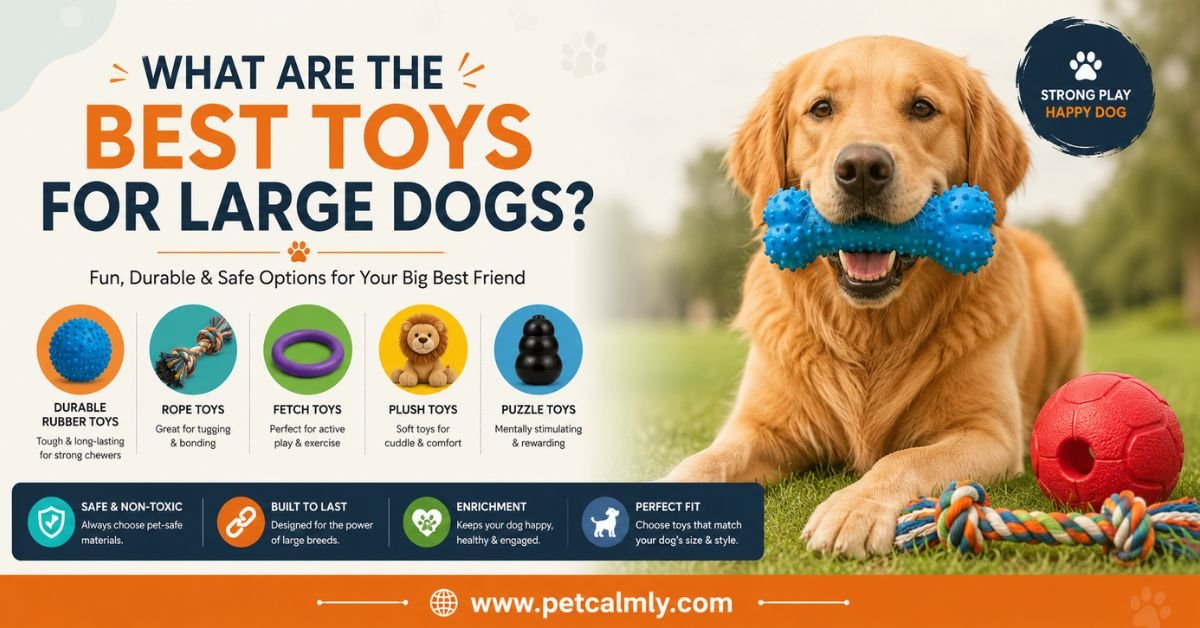
1: Heavy-Duty Chew Toys (Must-Have for Every Large Dog)
Chew toys are the foundation of any large dog toy collection.
These help with:
- Stress relief
- Dental health
- Boredom reduction
Best options:
- Rubber-based chew toys
- Nylon bone-style chews
- Treat-dispensing chew toys
The most trusted category is durable rubber toys like those from KONG. These are designed to withstand strong chewing while keeping dogs engaged through treat stuffing.
Why they work:
They turn chewing into a rewarding activity instead of destructive behavior.
2: Tug Toys (For Strength and Bonding)
Tug-of-war is not just play it’s communication and bonding.
Large dogs love tug toys because:
- It satisfies natural pulling instincts
- It builds connection with owners
- It burns physical energy quickly
Best features of tug toys:
- Thick braided rope
- Reinforced handles
- Tear-resistant stitching
Important note: Tug toys should always be used under supervision to prevent accidental injury or overexcitement.
3: Fetch Toys (For High-Energy Release)
If your dog has endless stamina, fetch toys are essential.
The best fetch toys:
- Are easy to throw far
- Bounce unpredictably
- Are soft enough to protect teeth
- Are highly visible outdoors
A popular category is rubber balls and launch toys from Chuckit!, designed specifically for high-energy retrieval games.
Why fetch matters:
It helps reduce hyperactivity and supports cardiovascular health.
4: Puzzle Toys (For Mental Stimulation)
This is where many large dog owners underestimate importance.
Puzzle toys:
- Slow down fast eaters
- Reduce boredom
- Prevent destructive behavior
- Build problem-solving skills
Examples include:
- Treat mazes
- Sliding compartment puzzles
- Food-dispensing balls
Dogs that are mentally tired are calmer and less destructive even more than physically tired dogs.
5: Durable Nylon Chews (For Serious Chewers)
Some dogs are “power chewers.” They destroy rubber toys quickly.
For them, nylon-based chew toys are often better.
Brands like Nylabone and Benebone focus on:
- Long-lasting texture
- Dental scraping benefits
- Flavor-infused chewing surfaces
These are ideal for dogs that need constant chewing stimulation.
6: Interactive Toys (For Anxiety and Boredom Relief)
Interactive toys are especially helpful for:
- Dogs left alone during work hours
- Dogs with separation anxiety tendencies
- Puppies growing into large breeds
These toys keep dogs engaged even without human presence.
Common types:
- Motion toys
- Treat-release toys
- Sound-activated toys
How to Choose the Right Toy for YOUR Dog (Not Just “Large Dogs”)
Two dogs of the same size can have completely different toy needs.
Here’s a simple breakdown:
If your dog is a POWER CHEWER:
Look for:
- Thick rubber toys
- Nylon bones
- Minimal seams or weak points
Avoid:
- Plush toys
- Thin rope toys
If your dog is HIGH ENERGY:
Look for:
- Fetch toys
- Tug toys
- Outdoor-focused toys
If your dog is ANXIOUS:
Look for:
- Food-dispensing toys
- Soft but durable chew toys
- Slow-feeding puzzle toys
If your dog is BORED easily:
Look for:
- Rotating toy sets
- Puzzle toys
- Interactive treat toys
Common Mistakes Owners Make (This Causes Most Toy Failures)
Many toy problems aren’t about the dog they’re about selection mistakes.
Mistake 1: Choosing toys based only on size
Large dog automatically aggressive chewer.
Mistake 2: Giving all toys at once
Dogs lose interest quickly if everything is available.
Mistake 3: Ignoring supervision
Even strong toys can break into dangerous pieces.
Mistake 4: Not rotating toys
Dogs get bored when stimulation is repetitive.
Mistake 5: Using unsafe household items
Old shoes, socks, or plastic bottles often lead to bad chewing habits.
Safety Guidelines Every Large Dog Owner Should Know
Even the best toys need responsible use.
Always:
- Check toys weekly for damage
- Replace cracked or broken toys
- Choose size-appropriate toys
- Supervise new toys initially
Never:
- Let dogs swallow broken pieces
- Use toys smaller than their mouth
- Ignore chewing patterns changing suddenly
If your dog suddenly destroys toys faster than usual, it may indicate stress, anxiety, or increased energy levels that need attention.
Real-Life Example: Why the Right Toy Changes Behavior
Many owners notice this pattern:
A large dog left alone without stimulation becomes destructive chewing furniture, digging, or pacing.
After introducing:
- A chew toy in the morning
- A puzzle feeder in the afternoon
- A fetch session in the evening
The behavior changes significantly.
Not because the dog “learned discipline overnight,” but because their natural needs finally had an outlet.
When Should You Worry About Toy-Related Behavior?
Some behaviors may need extra attention:
- Constant destruction of even durable toys
- Swallowing toy pieces
- Aggressive chewing with anxiety signs
- Refusal to engage with any toy
- Excessive restlessness even after play
If these occur frequently, it may be worth consulting a veterinarian or professional trainer to rule out anxiety or behavioral issues.
What Should Pet Owners Do? (Simple Action Plan)
If you’re unsure where to start, use this practical routine:
Step 1: Start with 3 toy types
- One chew toy
- One fetch toy
- One puzzle toy
Step 2: Observe behavior
Watch which toy your dog prefers most.
Step 3: Rotate weekly
Keep interest high by changing availability.
Step 4: Replace worn toys early
Don’t wait until they fully break.
Step 5: Add structured playtime
10–20 minutes twice daily is often enough for noticeable improvement.
Conclusion
Choosing the best toys for large dogs isn’t about buying the strongest-looking product it’s about understanding your dog’s natural instincts.
When you match toys to chewing strength, energy level, and emotional needs, you’re not just preventing destruction. You’re improving behavior, reducing anxiety, and building a healthier daily routine for your dog.
A well-stimulated large dog is calmer, more balanced, and far more connected to its environment and owner.
And sometimes, the simplest change a better toy can quietly transform everything.
More Information About Pets, Please Visit Our Website: Best Calming Products for Dog Anxiety
Frequently Asked Questions
1. What toys are safest for large aggressive chewers?
Durable rubber and nylon chew toys are safest because they resist breaking into sharp pieces and last longer under pressure.
2. Are rope toys good for large dogs?
Yes, but only high-quality, thick rope toys. Always supervise, as fraying can become a choking risk over time.
3. How often should I replace my dog’s toys?
Inspect weekly and replace when cracks, tears, or missing pieces appear. Heavy chewers may need replacements more often.
4. Do large dogs get bored of toys quickly?
Yes, especially intelligent breeds. Rotating toys every few days helps maintain interest and prevents destructive boredom.
5. Are puzzle toys really necessary for large dogs?
Yes. Mental stimulation is just as important as physical exercise and can significantly reduce behavioral issues.
6. What is the best overall toy brand for large dogs?
There is no single “best,” but brands like KONG, Chuckit!, and Nylabone are widely trusted for durability and safety.