Short Direct Answer
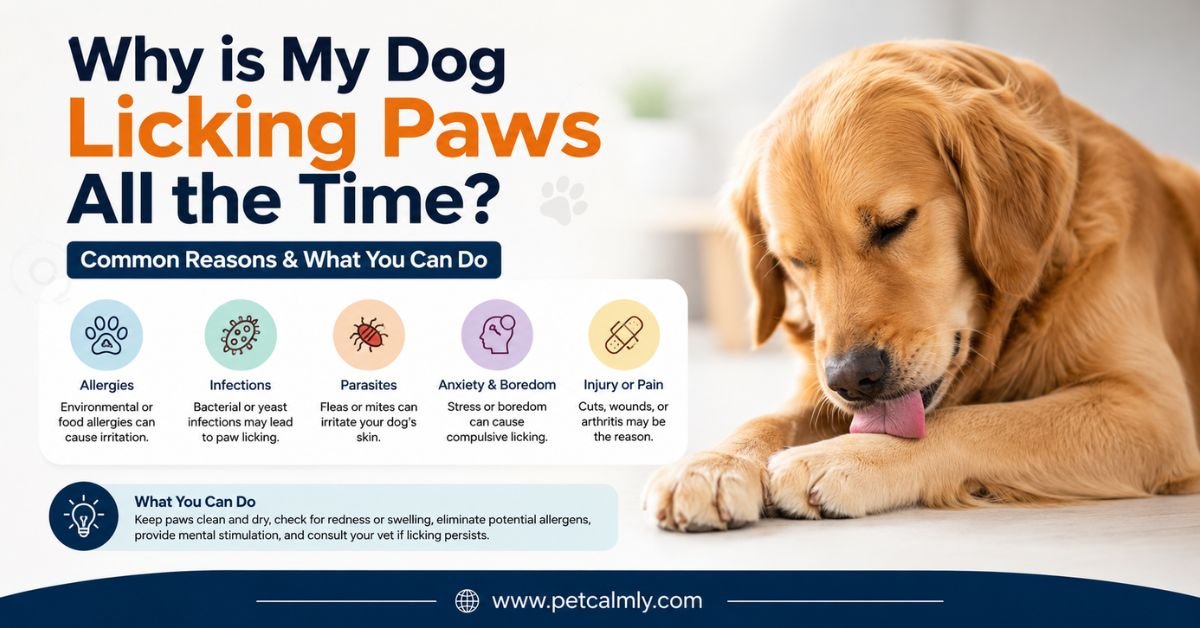
If you’re wondering “why is my dog licking paws all the time?”, the most common causes are allergies, skin irritation, anxiety, boredom, injuries, parasites, or pain. Occasional paw licking is normal grooming behavior, but frequent, obsessive licking usually signals that something is bothering your dog physically or emotionally.
The key is to look for accompanying signs such as redness, swelling, odor, limping, hair loss, or changes in behavior. Identifying the underlying cause is the first step toward helping your dog feel comfortable again.
Introduction
Many dog owners notice their dog quietly licking their paws during the day and don’t think much of it at first.
Then it becomes more frequent.
You hear licking sounds throughout the night. Your dog stops playing to chew at their feet. The fur between the toes starts turning brown or reddish. Suddenly you’re asking yourself:
“Why won’t my dog stop licking their paws?”
It’s a common concern, and in many cases, excessive paw licking is your dog’s way of telling you something isn’t right.
Sometimes the issue is as simple as dry skin or something stuck between the toes. Other times, allergies, infections, pain, or anxiety may be involved.
This guide explains the most common reasons dogs lick their paws excessively, how to tell the difference between normal and problematic licking, what you can do at home, and when it’s time to contact your veterinarian.
Is Paw Licking Ever Normal?
Yes.
Dogs naturally lick their paws as part of their grooming routine. A healthy dog may briefly lick their feet after a walk, after eating, or before settling down to sleep.
Normal paw licking is usually:
- Short-lived
- Occasional
- Not intense
- Not causing redness or hair loss
- Not interfering with daily activities
The concern starts when licking becomes repetitive, obsessive, or causes damage to the skin.
10 Common Reasons Dogs Lick Their Paws Constantly
1. Allergies Are the Most Common Cause
Quick answer:
Environmental and food allergies frequently cause itchy paws.
When dogs develop allergies, the feet often become one of the first areas affected.
Common allergy triggers include:
- Grass
- Pollen
- Mold spores
- Dust mites
- Certain foods
- Cleaning products
- Lawn treatments
Many dogs with allergies will:
- Lick all four paws
- Rub their face
- Scratch their ears
- Develop recurrent ear infections
- Experience seasonal flare-ups
A dog that suddenly starts licking paws every spring or summer may be reacting to environmental allergens.
Signs of allergy-related paw licking
- Red skin between toes
- Excessive chewing
- Recurrent ear problems
- Itchy belly
- Frequent scratching
- Brown saliva stains on paws
2. Something Is Stuck in the Paw
Dogs explore the world through their feet.
Small objects can become trapped between the toes, including:
- Grass seeds
- Splinters
- Thorns
- Pebbles
- Burrs
- Sand
Even tiny debris can create significant irritation.
A dog may suddenly begin licking one specific paw obsessively after a walk.
What to check
Look closely between the toes and paw pads for:
- Foreign objects
- Cuts
- Swelling
- Bleeding
- Redness
If your dog resists examination or appears painful, veterinary assistance may be needed.
3. Dry or Irritated Paw Pads
Dry skin can be surprisingly uncomfortable.
Hot sidewalks, cold weather, snow, ice melt products, and rough terrain can all damage paw pads.
Symptoms often include:
- Cracked pads
- Rough texture
- Mild redness
- Frequent licking after walks
Dogs may lick repeatedly because the paws feel irritated or tight.
4. Bacterial or Yeast Infections
Persistent moisture from licking creates the perfect environment for infections.
Unfortunately, licking often becomes a cycle:
- Paw becomes itchy.
- Dog licks.
- Skin becomes damaged.
- Infection develops.
- Infection causes more itching.
- Dog licks even more.
Signs of infection
- Strong odor
- Greasy skin
- Redness between toes
- Swelling
- Discharge
- Darkened skin
Yeast infections often produce a musty or corn chip-like smell.
5. Anxiety and Stress
Not all paw licking starts with a physical problem.
Dogs sometimes lick their paws as a self-soothing behavior.
Much like humans bite their nails or fidget when stressed, dogs may lick when anxious.
Common emotional triggers include:
- Separation anxiety
- Household changes
- New pets
- Loud noises
- Lack of routine
- Insufficient mental stimulation
Behavioral clues
Stress-related licking often occurs:
- During quiet periods
- At bedtime
- When left alone
- After stressful events
The paws may initially look normal.
6. Boredom and Lack of Stimulation
Some dogs simply don’t have enough to do.
High-energy breeds especially need:
- Exercise
- Mental challenges
- Interactive play
- Training sessions
Without appropriate outlets, repetitive behaviors may develop.
These can include:
- Paw licking
- Tail chasing
- Excessive barking
- Furniture chewing
Breeds commonly affected include:
- Border Collies
- Australian Shepherds
- Belgian Malinois
- German Shepherds
- Labrador Retrievers
7. Pain Elsewhere in the Body
This surprises many owners.
A dog may lick a paw because pain is originating somewhere else.
Joint problems, arthritis, spinal discomfort, or muscle injuries can lead to excessive licking of nearby areas.
Older dogs may especially develop this behavior.
Watch for:
- Stiffness
- Difficulty standing
- Reluctance to jump
- Limping
- Slower movement
8. Parasites
Parasites don’t always affect the whole body.
Localized irritation can occur from:
- Fleas
- Mites
- Ticks
Even one flea bite can trigger intense itching in sensitive dogs.
Dogs with flea allergy dermatitis may obsessively lick and chew their paws.
9. Burns and Environmental Injuries
Paws encounter harsh surfaces daily.
Potential hazards include:
- Hot pavement
- Ice
- Road salt
- Chemicals
- Rough concrete
Dogs may begin licking shortly after outdoor activity.
Signs
- Blisters
- Cracks
- Redness
- Limping
- Sensitivity
10. Nail Problems
Toenail injuries are painful and often overlooked.
Issues may include:
- Broken nails
- Torn nails
- Ingrown nails
- Overgrown nails
Dogs frequently lick the affected foot repeatedly.
Inspect the nails carefully if licking appears isolated to one paw.
How to Tell What’s Causing the Paw Licking
The pattern of licking often provides useful clues.
| Symptom | Possible Cause |
|---|---|
| All four paws affected | Allergies |
| One paw only | Injury or foreign object |
| Red skin between toes | Allergies or infection |
| Strong odor | Yeast infection |
| Seasonal pattern | Environmental allergies |
| Mostly when alone | Anxiety |
| After walks | Irritation or debris |
| Older dog with stiffness | Pain or arthritis |
This isn’t a diagnosis, but it can help narrow possibilities.
What Happens If Excessive Paw Licking Is Ignored?
Constant licking can create secondary problems.
Over time you may see:
- Hair loss
- Skin thickening
- Open sores
- Chronic infections
- Swelling
- Bleeding
- Increased discomfort
Some dogs eventually develop “lick granulomas,” which are stubborn skin lesions caused by repetitive licking.
The earlier the underlying issue is addressed, the easier recovery tends to be.
A Simple At-Home Paw Check Routine
Before assuming the worst, perform a careful inspection.
Step 1: Examine the Paw Pads
Look for:
- Cracks
- Burns
- Cuts
- Dry areas
Step 2: Check Between Toes
Search for:
- Debris
- Splinters
- Grass seeds
- Swelling
Step 3: Smell the Feet
An unusual odor can suggest infection.
Step 4: Inspect Nails
Check for:
- Breaks
- Cracks
- Bleeding
- Overgrowth
Step 5: Compare All Four Paws
Notice whether the issue affects:
- One paw
- Two paws
- All four paws
Patterns matter.
What Should Pet Owners Do?
If your dog is constantly licking paws, start with these practical steps.
Keep the Paws Clean
After walks:
- Rinse paws with lukewarm water
- Remove dirt and allergens
- Dry thoroughly
This simple habit helps many dogs with environmental sensitivities.
Increase Mental Enrichment
For boredom-related licking, try:
- Food puzzles
- Snuffle mats
- Training games
- Scent work activities
- Interactive toys
Mental exercise can be just as important as physical exercise.
Review Potential Allergens
Ask yourself:
- Has food recently changed?
- Is allergy season starting?
- Have cleaning products changed?
- Has your dog been spending more time outside?
Identifying patterns can be valuable.
Prevent Excessive Self-Trauma
If licking is causing skin damage:
- Use an e-collar if advised by your veterinarian
- Distract with enrichment activities
- Address the underlying cause promptly
Stopping the behavior alone rarely solves the problem.
Daily Paw Care Checklist
Use this simple checklist:
✓ Check paws after walks
✓ Remove debris
✓ Dry wet paws thoroughly
✓ Keep nails trimmed
✓ Watch for redness
✓ Monitor seasonal changes
✓ Maintain parasite prevention
✓ Provide daily exercise
✓ Offer mental stimulation
✓ Address new symptoms quickly
4 Common Mistakes Owners Make
1: Assuming It’s Just a Habit
Many dogs start licking because of a genuine physical issue.
The behavior may look behavioral when it actually began with discomfort.
2: Ignoring Mild Redness
Small skin changes can become larger problems over time.
Early intervention often prevents infections.
3: Overwashing the Paws
Cleaning is helpful.
Overcleaning can dry the skin and worsen irritation.
Stick with gentle paw care.
4: Changing Multiple Things at Once
If allergies are suspected, changing food, shampoos, treats, and cleaning products simultaneously can make it harder to identify the trigger.
Paw Licking and Anxiety: A Closer Look
Many owners are surprised to learn that emotional health can affect paw licking.
Stress-related licking tends to:
- Occur during downtime
- Increase during life changes
- Become repetitive
- Seem difficult to interrupt
Dogs experiencing anxiety may also:
- Pace
- Pant excessively
- Follow owners constantly
- Vocalize when alone
If emotional triggers seem likely, behavior-focused support can help.
This may be a good opportunity to explore related resources about dog anxiety, confidence-building exercises, and calming routines.
Certain Breeds May Be More Prone to Paw Problems
Some breeds appear more susceptible to allergies and skin irritation.
Examples include:
- Golden Retrievers
- Labrador Retrievers
- French Bulldogs
- Bulldogs
- Boxers
- West Highland White Terriers
- Cocker Spaniels
This doesn’t mean every dog of these breeds will develop paw issues, but owners should be aware of the tendency.
When Should You Worry?
Most importantly:
Seek veterinary advice if excessive paw licking is accompanied by:
- Bleeding
- Swelling
- Pus
- Severe redness
- Limping
- Persistent odor
- Open wounds
- Sudden behavior changes
- Loss of appetite
- Signs of pain
These symptoms suggest something more than routine grooming.
Emergency Situations
Contact a veterinarian promptly if:
- Your dog cannot bear weight on a paw
- A foreign object is deeply embedded
- The paw is rapidly swelling
- There is significant bleeding
- Signs of severe infection appear
Prompt treatment can prevent complications.
How Long Does It Take to Stop Excessive Paw Licking?
Recovery depends entirely on the cause.
| Cause | Typical Improvement Timeline |
|---|---|
| Foreign object removal | Hours to days |
| Mild irritation | Several days |
| Allergies | Weeks with proper management |
| Infection | Often 1–3 weeks |
| Anxiety-related licking | Variable |
| Chronic skin issues | Long-term management may be needed |
Patience is important. Some causes require ongoing management rather than a one-time fix.
Frequently Asked Questions
1: Why is my dog licking his paws at night?
Many dogs become more aware of itchiness or discomfort when resting. Allergies, anxiety, boredom, or minor irritation may become more noticeable during quiet nighttime hours.
2: Can allergies make dogs lick their paws constantly?
Yes. Allergies are one of the most common reasons for excessive paw licking. Environmental triggers such as pollen, grass, and dust mites frequently affect the feet.
3: Should I stop my dog from licking their paws?
Occasional licking is normal. Persistent licking that causes redness, hair loss, or skin damage should be addressed because it often indicates an underlying problem.
4: Why are my dog’s paws red from licking?
The redness may result from irritation, allergies, infection, or inflammation. Continuous licking itself can also worsen redness and skin damage.
5: Can anxiety cause paw licking in dogs?
Yes. Some dogs lick their paws as a self-soothing behavior when stressed, anxious, bored, or experiencing changes in their environment.
6: Why does my dog lick only one paw?
Licking one paw usually points toward a localized issue such as an injury, splinter, insect sting, torn nail, or foreign object lodged between the toes.
More Information About Pets, Please Visit Our Website: What Are the Best Dental Products for Dogs?
Conclusion
If you’ve been asking, “why is my dog licking paws all the time?”, the behavior is usually a sign that your dog is trying to cope with discomfort, irritation, or stress.
Sometimes the solution is simple a pebble between the toes, dry skin, or muddy paws after a walk. Other times, allergies, infections, pain, or anxiety may be involved.
Pay attention to patterns, inspect the paws carefully, and don’t ignore persistent licking. Early action often prevents minor irritation from becoming a much bigger problem.
Most importantly, remember that excessive paw licking is communication. Your dog isn’t being stubborn or developing a strange habit for no reason. They’re trying to tell you something feels uncomfortable, and with a little investigation and the right care, you can help them feel much better.