Short Direct Answer
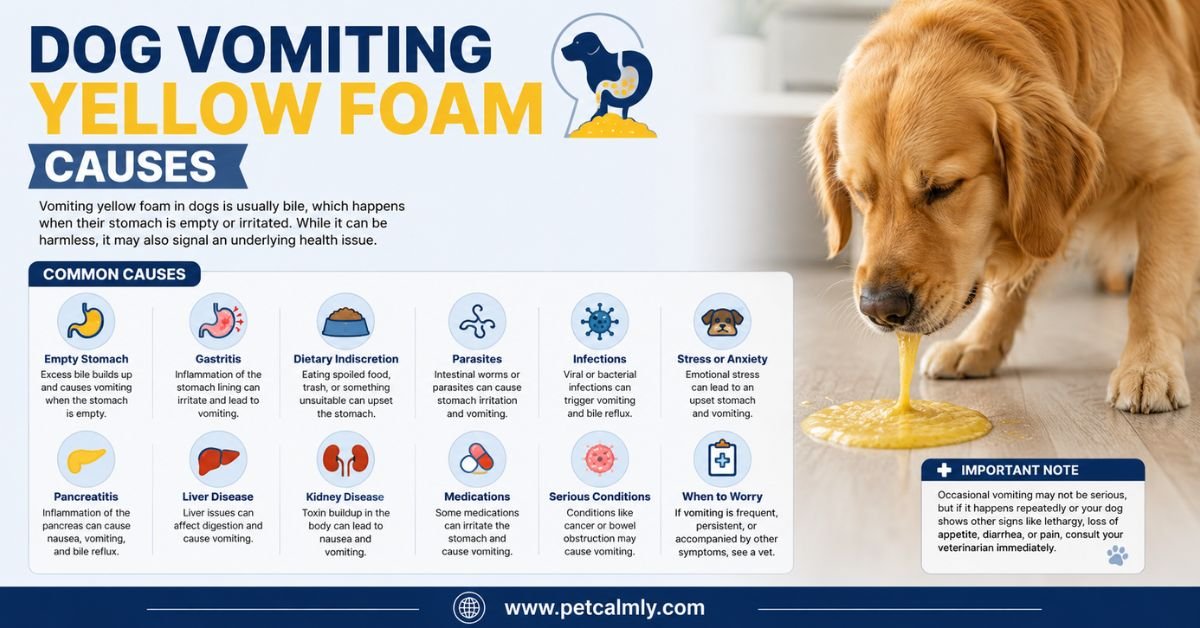
If your dog is vomiting yellow foam causes the most common cause is an empty stomach. The yellow substance is usually bile, a digestive fluid produced by the liver and stored in the gallbladder. Dogs may throw up bile when they go too long without eating, experience mild stomach irritation, eat something unusual, or have digestive issues.
While occasional yellow foam vomiting is often not an emergency, repeated vomiting, lethargy, abdominal pain, diarrhea, blood in vomit, or refusal to eat should be evaluated by a veterinarian as soon as possible.
Why Seeing Yellow Foam Vomit Can Be So Alarming
Few things make dog owners panic faster than hearing that familiar retching sound and finding a puddle of bright yellow foam on the floor.
Many people immediately wonder:
- Is my dog poisoned?
- Is this a blockage?
- Could my dog have a serious illness?
- Should I rush to the emergency vet?
The good news is that yellow foam vomit is often linked to relatively common digestive issues. However, it’s also a symptom that can occasionally signal something more serious.
Understanding why it happens helps you respond calmly and make better decisions for your dog’s health.
In this guide, you’ll learn the most common dog vomiting yellow foam causes, what symptoms to watch for, when veterinary care is necessary, and what you can do to help your dog recover safely.
What Is the Yellow Foam Dogs Vomit?
Quick Answer
The yellow liquid or foam is usually bile.
Bile is a digestive fluid that helps break down fats in food. It is produced by the liver and released into the small intestine during digestion.
When a dog’s stomach is empty or irritated, bile can flow backward into the stomach. This often causes nausea and vomiting, producing the yellow, foamy material many owners see.
The foam develops when bile mixes with stomach fluids, air, and mucus during vomiting.
The Most Common Dog Vomiting Yellow Foam Causes
1. Empty Stomach Syndrome (Bilious Vomiting Syndrome)
This is one of the most common explanations.
When dogs go many hours without eating, bile can accumulate and irritate the stomach lining. The irritation triggers nausea and vomiting.
Common signs
- Vomiting yellow foam early in the morning
- Vomiting before meals
- Acting normal afterward
- Good appetite after vomiting
Many dogs with bilious vomiting syndrome otherwise appear healthy.
Why it happens
Dogs that eat only once daily or have long overnight fasting periods are more likely to experience this issue.
What often helps
- Smaller meals throughout the day
- A small bedtime snack
- Consistent feeding schedules
Many owners notice dramatic improvement after adjusting meal timing.
2. Dietary Indiscretion (“Eating Something They Shouldn’t”)
Dogs are famous for eating questionable things.
Common examples include:
- Trash
- Table scraps
- Grass
- Rotten food
- Animal feces
- Excess treats
- Human snacks
These items can irritate the digestive tract and trigger vomiting.
Real-life observation
Many owners report their dog vomiting yellow foam after a day at the park, a family barbecue, or after getting into the garbage.
Often the stomach empties first, leaving only bile to be vomited later.
3. Sudden Diet Changes
A dog’s digestive system prefers consistency.
Abruptly switching foods can upset the stomach and lead to:
- Vomiting
- Gas
- Loose stools
- Nausea
- Yellow bile vomiting
Prevention tip
Transition foods gradually over 7–10 days by mixing increasing amounts of the new food with the old food.
4. Mild Gastritis
Gastritis simply means inflammation of the stomach lining.
Common causes
- Eating irritating foods
- Stress
- Infections
- Certain medications
- Food intolerance
When the stomach becomes inflamed, dogs may vomit bile repeatedly, especially after their stomach empties.
5. Eating Grass
Many dogs eat grass occasionally.
While experts still debate exactly why dogs do this, grass consumption sometimes irritates the stomach and triggers vomiting.
A dog may:
- Eat grass.
- Become nauseated.
- Vomit yellow foam mixed with plant material.
Occasional grass-related vomiting is generally not concerning if your dog otherwise seems healthy.
6. Food Intolerance or Sensitivity
Some dogs react poorly to specific ingredients.
Potential triggers include:
- Chicken
- Beef
- Dairy
- Wheat
- Soy
- Certain additives
Digestive irritation may develop gradually and contribute to recurring episodes of yellow foam vomiting.
Other clues
- Itchy skin
- Ear infections
- Chronic loose stools
- Excessive licking
7. Intestinal Parasites
Worms and other parasites can irritate the digestive tract.
Young puppies are especially vulnerable.
Potential symptoms include:
- Vomiting
- Weight loss
- Pot-bellied appearance
- Diarrhea
- Poor growth
Routine veterinary exams and parasite prevention play an important role in avoiding these issues.
8. Stress and Anxiety
Dogs can experience physical digestive symptoms from emotional stress.
Common triggers include:
- Moving homes
- Boarding facilities
- New pets
- Loud storms
- Separation anxiety
- Household changes
Stress can increase stomach acid production and disrupt normal digestion.
Some anxious dogs may vomit yellow foam during or after stressful events.
More Serious Causes of Yellow Foam Vomiting
While many cases are mild, some deserve immediate attention.
Intestinal Blockage
Dogs sometimes swallow objects that become stuck in the digestive tract.
Examples include:
- Socks
- Toys
- Corn cobs
- Bones
- Fabric
- Rocks
Warning signs
- Repeated vomiting
- Loss of appetite
- Abdominal pain
- Weakness
- Inability to keep water down
A blockage is a medical emergency.
Pancreatitis
Pancreatitis is inflammation of the pancreas.
It commonly develops after consuming high-fat foods.
Symptoms
- Yellow foam vomiting
- Severe nausea
- Painful abdomen
- Hunched posture
- Diarrhea
- Lethargy
This condition requires veterinary treatment.
Liver Disease
Because bile originates from the liver, liver disorders may contribute to vomiting.
Possible accompanying symptoms include:
- Weight loss
- Reduced appetite
- Increased thirst
- Yellowing of the eyes or gums
- Lethargy
Kidney Disease
Kidney dysfunction can cause nausea and vomiting due to toxin buildup in the bloodstream.
Additional signs may include:
- Increased drinking
- Increased urination
- Weight loss
- Bad breath
- Fatigue
Inflammatory Bowel Disease (IBD)
Chronic digestive inflammation can cause recurring episodes of vomiting bile.
Dogs with IBD often experience:
- Intermittent vomiting
- Chronic diarrhea
- Weight loss
- Appetite changes
Diagnosis usually requires veterinary testing.
Stomach Ulcers
Ulcers may develop from:
- Certain medications
- Chronic disease
- Severe stress
- Toxins
Vomiting may include yellow foam, mucus, or blood.
What Does It Mean If My Dog Vomits Yellow Foam but Acts Fine?
In Short
If your dog vomits yellow foam once and quickly returns to normal behavior, the cause is often relatively minor.
Common examples include:
- Empty stomach
- Mild stomach upset
- Eating grass
- Dietary indiscretion
Many healthy dogs experience an isolated episode and recover without complications.
Still, monitor your dog closely for the next 24 hours.
Watch for:
- Additional vomiting
- Diarrhea
- Loss of appetite
- Unusual behavior
- Excessive lethargy
If symptoms continue, veterinary advice is recommended.
Symptoms That Help Identify the Cause
| Symptom | Possible Cause |
|---|---|
| Morning vomiting | Empty stomach syndrome |
| Vomiting after eating grass | Digestive irritation |
| Vomiting with diarrhea | Gastroenteritis, parasites |
| Vomiting with abdominal pain | Pancreatitis, blockage |
| Frequent vomiting | Digestive disease |
| Weight loss | Chronic illness |
| Vomiting after fatty foods | Pancreatitis |
| Vomiting with lethargy | More serious condition |
This table cannot replace a veterinary diagnosis but can help owners understand possible patterns.
What Should Pet Owners Do When Their Dog Vomits Yellow Foam?
Step 1: Stay Calm and Observe
One isolated vomiting episode is not always an emergency.
Take note of:
- Time of vomiting
- Appearance of vomit
- Recent meals
- Access to unusual foods
- Behavioral changes
These details can be valuable if veterinary care becomes necessary.
Step 2: Check Your Dog’s Behavior
A dog’s overall attitude often provides important clues.
Positive signs include:
- Bright eyes
- Normal energy
- Interest in food
- Normal drinking
Concerning signs include:
- Weakness
- Hiding
- Trembling
- Restlessness
- Pain
Step 3: Offer Water Carefully
Vomiting can cause dehydration.
Allow access to small amounts of fresh water.
Avoid letting your dog gulp large quantities immediately after vomiting, as this may trigger another episode.
Step 4: Consider Feeding Small Bland Meals
If vomiting stops and your veterinarian has not advised otherwise, some dogs tolerate bland foods well.
Common options include:
- Plain boiled chicken
- Plain white rice
- Low-fat bland diets recommended by veterinarians
Feed small portions initially.
Step 5: Monitor for 24 Hours
Many mild digestive upsets resolve quickly.
Track:
- Appetite
- Energy level
- Water intake
- Bowel movements
- Additional vomiting
If symptoms worsen, contact your veterinarian.
4 Common Mistakes Dog Owners Make
1: Waiting Too Long During Repeated Vomiting
Repeated vomiting can quickly lead to dehydration.
Don’t assume every case will improve on its own.
2: Offering Rich Foods
Owners sometimes try to tempt dogs with fatty foods.
Unfortunately, rich foods may worsen digestive upset.
3: Ignoring Other Symptoms
The vomiting itself may be less important than what accompanies it.
Pay attention to:
- Diarrhea
- Fever
- Weakness
- Pain
- Swollen abdomen
4: Giving Human Medications
Many human medications are dangerous for dogs.
Never give over-the-counter nausea medications unless directed by a veterinarian.
How to Prevent Yellow Foam Vomiting
Maintain Consistent Feeding Times
Regular meal schedules help reduce stomach irritation caused by prolonged fasting.
Avoid Sudden Food Changes
Introduce new diets gradually.
Slow transitions reduce digestive stress.
Keep Trash and Dangerous Items Secure
Many vomiting episodes start with scavenging behavior.
Use covered trash bins and monitor outdoor exploration.
Limit Fatty Treats
Excess fat can trigger digestive upset and, in some cases, pancreatitis.
Support Digestive Health
Healthy habits include:
- Quality nutrition
- Fresh water
- Regular exercise
- Routine veterinary checkups
- Parasite prevention
Puppies and Yellow Foam Vomiting
Puppies deserve special attention.
Young dogs can become dehydrated more rapidly than adults.
Potential causes include:
- Parasites
- Dietary changes
- Viral infections
- Foreign objects
- Eating inappropriate items
Because puppies have less physical reserve, persistent vomiting should be evaluated promptly.
Senior Dogs and Yellow Foam Vomiting
Older dogs may have age-related health conditions that contribute to vomiting.
Examples include:
- Kidney disease
- Liver disease
- Pancreatitis
- Cancer
- Chronic gastrointestinal disorders
If a senior dog develops new or recurring vomiting, a veterinary examination is especially important.
When Should You Worry?
Seek Veterinary Attention Soon If:
- Vomiting continues for more than 24 hours
- Your dog refuses food
- Diarrhea develops
- Your dog seems unusually tired
- Symptoms occur repeatedly
Seek Emergency Care Immediately If:
- Blood appears in vomit
- Your dog cannot keep water down
- A foreign object may have been swallowed
- Severe abdominal pain is present
- Your dog collapses
- Gums appear pale
- The abdomen becomes swollen
- Repeated vomiting occurs within a short period
These signs may indicate a potentially life-threatening condition.
Recovery Expectations
The recovery timeline depends entirely on the cause.
Mild stomach upset
Many dogs improve within 12–24 hours.
Gastritis
Recovery often occurs within a few days with appropriate care.
Dietary indiscretion
Most cases improve after the irritating material leaves the digestive system.
Chronic diseases
Long-term management may be necessary depending on the diagnosis.
The key is monitoring progress rather than focusing solely on the vomiting episode itself.
Frequently Asked Questions
1: Why is my dog throwing up yellow foam in the morning?
Morning vomiting is often associated with an empty stomach and bile accumulation overnight. Feeding a small bedtime snack may help some dogs.
2: Can yellow foam vomit be normal in dogs?
An occasional isolated episode can occur in otherwise healthy dogs. Frequent or recurring vomiting is not considered normal and should be investigated.
3: Should I feed my dog after vomiting yellow foam?
If vomiting stops and your dog seems comfortable, small bland meals may be appropriate. If vomiting continues, contact your veterinarian.
4: Is yellow foam vomiting always caused by bile?
Most yellow foam contains bile, but other stomach fluids and mucus may also be present. The exact appearance can vary between dogs.
5: Why does my dog vomit yellow foam but still want to eat?
Many dogs with mild stomach irritation or bilious vomiting syndrome maintain a normal appetite and act normally after vomiting.
6: Can stress make a dog vomit yellow foam?
Yes. Stress and anxiety can affect digestion and contribute to nausea, stomach irritation, and occasional bile vomiting in some dogs.
More Information About Pets, Please Visit Our Website: Why Is My Dog Licking Paws All the Time?
What Are the Best Dental Products for Dogs?
How to Clean a Puppy Without Bathing
Should Dogs Wear Collars at Home?
Conclusion
Finding yellow foam vomit can be unsettling, especially if it happens unexpectedly. Fortunately, many cases are linked to common issues such as an empty stomach, mild digestive upset, eating grass, or dietary indiscretion.
The most important thing is to look at the whole picture rather than focusing only on the vomit itself. A bright, alert dog that vomits once is very different from a dog that is lethargic, painful, or repeatedly vomiting.
Careful observation, consistent feeding routines, and prompt veterinary attention when warning signs appear can make a significant difference. If your dog experiences recurring episodes of yellow foam vomiting, a veterinary examination is the safest way to identify the underlying cause and create an effective treatment plan.
For additional pet wellness resources, consider exploring related topics on digestive health, feeding schedules, anxiety-related behaviors, and preventive care to help keep your dog comfortable and healthy year-round.