Short direct answer
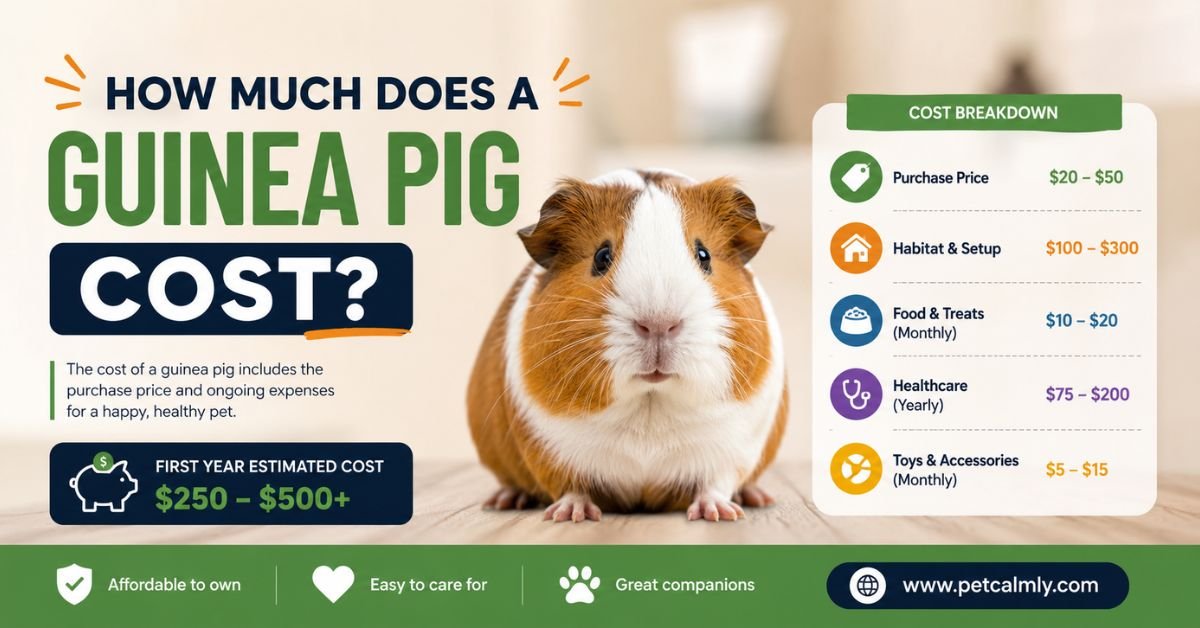
A guinea pig usually costs between $20 and $50 for the pet itself, depending on breed, age, and where you adopt or buy. However, the real cost of owning a guinea pig is much higher when you include the setup and ongoing care. Most new owners spend around $120 to $300 initially, and then $40 to $80 per month for food, bedding, and basic maintenance.
If you’re planning responsibly, a guinea pig is not just a “cheap pet” it’s a long-term commitment with steady care needs, especially since they are social animals that often need at least one companion.
Introduction
When people search “how much does a guinea pig cost?”, they’re usually thinking about the price tag at the pet store. But guinea pig ownership is more like setting up a small living system than buying a single pet.
These gentle, social rodents may look low-maintenance, but they depend on a proper environment, balanced diet, and regular care to stay healthy. The real cost is a combination of:
- Initial setup (cage, bedding, accessories)
- Monthly food and care expenses
- Veterinary visits
- Unexpected health needs
Many first-time owners underestimate these hidden costs, which can lead to stress for both the pet and the family. This guide breaks everything down clearly so you know exactly what to expect before bringing one home.
What Is the Real Cost of a Guinea Pig? Full Breakdown
To understand the total expense, it helps to separate initial costs and ongoing costs.
Guinea Pig Purchase Price (Adoption vs Pet Store Cost)
The first cost you’ll encounter is the guinea pig itself.
Typical price ranges:
- Pet store guinea pig: $30 – $60
- Breeder guinea pig: $40 – $100+
- Animal shelter/adoption: $10 – $40 (often includes basic vet check)
What affects the price?
- Breed (Abyssinian, Peruvian, American)
- Age (babies are often more expensive)
- Health condition
- Location and availability
Expert insight
Adoption is often the most responsible choice because many guinea pigs in shelters already receive initial health checks and sometimes even vaccinations or grooming.
Initial Setup Cost for Guinea Pig Habitat
This is where most of your budget goes at the beginning.
Setup cost breakdown:
| Item | Estimated Cost |
|---|---|
| Cage or enclosure | $50 – $150 |
| Bedding | $10 – $25 |
| Food bowls & water bottle | $10 – $20 |
| Hideouts / houses | $10 – $30 |
| Hay rack | $5 – $15 |
| Toys & enrichment | $10 – $25 |
Total setup cost:
$100 – $250 (average)
Important note
Guinea pigs need spacious cages, not small plastic enclosures. A cramped cage can lead to stress, obesity, and behavioral problems like hiding or aggression.
Monthly Guinea Pig Care Cost
Once everything is set up, the ongoing cost becomes more predictable.
Monthly expenses:
- Hay (main diet): $15 – $30
- Pellets: $10 – $20
- Fresh vegetables: $10 – $20
- Bedding replacement: $10 – $20
Total monthly cost:
$40 – $80 per guinea pig
If you have two guinea pigs (recommended), the cost increases slightly, but not double since they share space and some supplies.
Veterinary Costs for Guinea Pigs
Guinea pigs are small, but they are not low-maintenance medically.
Common vet costs:
- Routine checkup: $30 – $70
- Emergency visit: $80 – $200+
- Dental treatment: $50 – $150
- Parasite treatment: $20 – $80
Why vet care matters
Guinea pigs hide illness naturally. By the time symptoms appear, conditions like dental disease or respiratory infections may already be advanced.
Hidden Costs New Guinea Pig Owners Often Miss
Many first-time owners forget these expenses:
- Nail trimming tools or grooming sessions
- Cage upgrades as the guinea pig grows
- Chew toys to prevent dental issues
- Replacement bedding during illness
- Travel carriers
- Heating pads in cold seasons
These small items add up over time, even if they seem minor individually.
Cost Differences Between One Guinea Pig vs Two Guinea Pigs
Guinea pigs are highly social and thrive in pairs.
One guinea pig:
- Lower cost
- Higher risk of loneliness and stress
Two guinea pigs:
- Slightly higher upfront cost
- Better emotional health and behavior
- Shared bonding and activity
Real-world observation
Owners often report that a single guinea pig becomes quiet, hides more, or stops eating normally due to loneliness. This can even lead to additional vet costs later.
Breed Differences and Their Cost Impact
Some breeds cost more due to rarity or grooming needs.
Common breeds:
- American Guinea Pig: affordable, easy care
- Abyssinian: slightly higher cost, unique coat
- Peruvian: higher grooming needs and cost
Grooming consideration
Long-haired breeds may require:
- Regular brushing
- Occasional trimming
- More bedding maintenance
Budget-Friendly Guinea Pig Ownership Tips
If you want to reduce costs without harming your pet’s health:
- Adopt instead of buying from breeders
- Buy hay in bulk
- Choose washable bedding options
- Use simple DIY enrichment toys (cardboard tunnels)
- Avoid unnecessary accessories
- Plan for 2 guinea pigs together to reduce long-term stress costs
Are Guinea Pigs Expensive Pets?
Guinea pigs are moderately affordable pets, but not “cheap.”
They are:
- Less expensive than dogs or cats
- More expensive than hamsters or fish
- Consistent in monthly care needs
Honest perspective:
If you are only budgeting for the purchase price, guinea pigs may surprise you later. But if you plan properly, they are very manageable and rewarding pets.
When Should You Worry About Guinea Pig Costs?
You should reconsider ownership or adjust your budget if:
- You cannot afford monthly $40–$80 care
- You are unable to access veterinary services
- You cannot maintain proper cage size
- You are not prepared for a 5–7 year commitment
Guinea pigs rely heavily on stable care routines. Financial stability is part of their welfare.
What Should First-Time Guinea Pig Owners Do?
Before bringing a guinea pig home, follow this checklist:
Beginner Preparation Checklist:
- Set up cage in advance
- Budget for at least 2 guinea pigs
- Research local exotic vets
- Stock up on hay and pellets
- Prepare safe vegetables list
- Understand daily cleaning routine
If you want deeper guidance, check related topics like:
- Guinea pig cage size requirements
- Best guinea pig diet plan
- Why guinea pigs hide or squeak
Conclusion
So, how much does a guinea pig cost? The simple answer is: a few dozen dollars to buy, but several hundred dollars to properly care for.
A responsible owner should think beyond the price tag and focus on long-term wellbeing. When properly cared for, guinea pigs become affectionate, expressive, and deeply social companions.
If you are ready for the commitment, they can be one of the most rewarding small pets you can bring into your home.
More Information About Pets, Please Visit Our Website: Guinea Pig Lifespan Indoors
Why Is My Guinea Pig Hiding More Than Usual?
Frequently Asked Questions
1. What is the cheapest way to get a guinea pig?
Adoption from a local shelter is usually the cheapest option and often includes basic health checks.
2. How much does it cost to keep a guinea pig per month?
On average, it costs $40 to $80 per month, depending on diet and bedding choices.
3. Is a guinea pig a good pet for beginners?
Yes, but only if you are ready for daily care, cleaning, and social interaction needs.
4. Why do guinea pig costs vary so much?
Costs depend on breed, location, cage size, and whether you adopt or buy from a breeder.
5. Do guinea pigs need vet care often?
Not often, but they do require regular checkups and prompt care if illness appears.
6. Is it cheaper to keep one or two guinea pigs?
Two guinea pigs cost slightly more but are healthier emotionally and behaviorally, often reducing stress-related issues.