Short direct answer
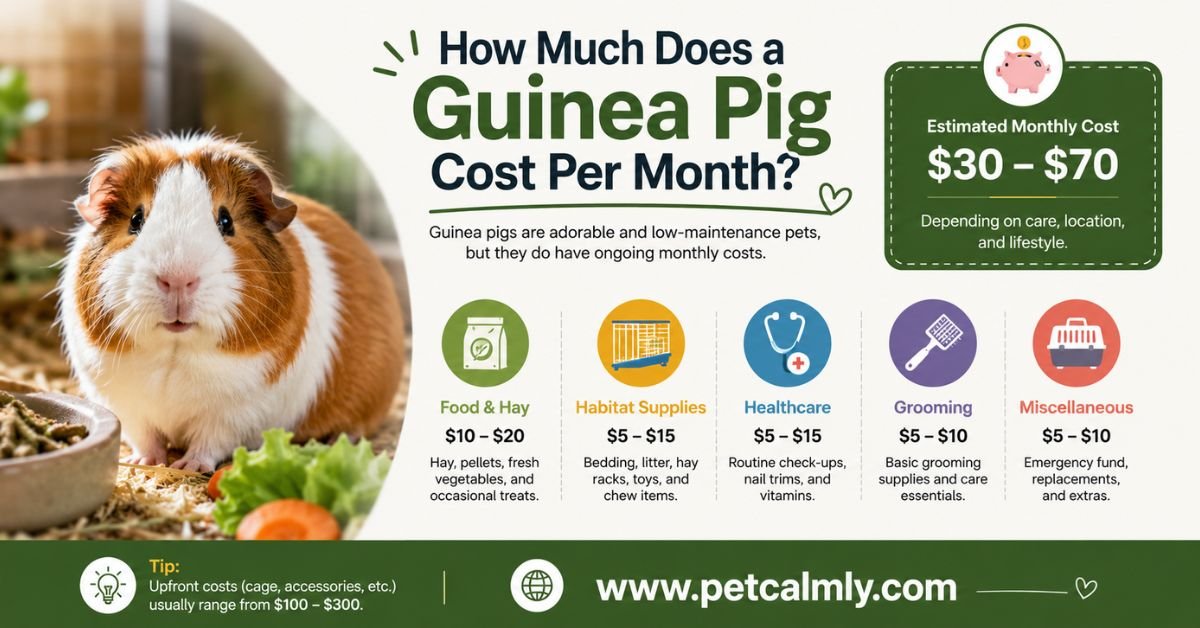
A guinea pig usually costs between $20 and $60 per month to keep healthy and comfortable, depending on food quality, bedding type, and whether you include grooming or vet savings. The biggest ongoing expenses are fresh vegetables, hay, bedding, and occasional health care. Some owners may spend less with budget setups, while others spend more if they choose premium pellets, fleece bedding, or frequent vet checkups.
The key point: guinea pigs are not expensive pets, but they do require consistent monthly care, especially for hay and fresh vegetables, which are essential for their digestion and dental health.
Introduction
Before bringing a guinea pig home, many new owners focus on the one-time setup cost cage, accessories, and initial supplies. But the real long-term commitment comes from the monthly expenses that keep your guinea pig healthy, active, and stress-free.
Guinea pigs are small animals, but their care is surprisingly specific. They rely heavily on fresh hay, vitamin C-rich vegetables, and clean bedding. Unlike some low-maintenance pets, skipping on quality food or hygiene can quickly affect their health.
If you’re asking “how much does a guinea pig cost per month,” you’re already thinking like a responsible owner. Let’s break it down clearly so you can plan realistically without surprises.
Why Monthly Guinea Pig Costs Matter More Than You Think
Many owners underestimate recurring costs because guinea pigs look “cheap to maintain.” But small daily needs add up quickly.
Monthly costs matter because:
- Guinea pigs need daily fresh food
- Bedding must be replaced regularly for hygiene
- Hay is required in unlimited supply
- Health issues can appear if nutrition is poor
- Stress from poor care leads to vet visits later
In other words, consistent care prevents expensive problems later.
Average Monthly Guinea Pig Cost Breakdown (Simple Overview)
Here is a realistic monthly budget based on typical care standards:
| Expense Category | Monthly Cost Range |
|---|---|
| Hay (timothy or orchard grass) | $8 – $20 |
| Fresh vegetables | $10 – $25 |
| Pellets | $5 – $10 |
| Bedding | $10 – $20 |
| Health/Vet savings | $5 – $15 |
| Treats & extras | $2 – $5 |
Total Estimated Monthly Cost: $20 – $60
Some households may spend slightly more if they choose premium or organic options.
Guinea Pig Food Costs Per Month (Hay, Vegetables, Pellets)
Food is the largest and most important monthly expense because guinea pigs have sensitive digestive systems.
Hay – The Most Important Daily Food
Hay is not optional. It should be available 24/7.
- Timothy hay is most commonly recommended
- Helps with digestion and dental health
- Prevents obesity and gut issues
Monthly cost depends on quality and source:
- Budget hay: $8–$12
- Premium hay: $15–$20+
Fresh Vegetables for Vitamin C
Guinea pigs cannot produce vitamin C on their own, so vegetables are essential.
Common safe vegetables:
- Bell peppers (high vitamin C)
- Cucumber
- Romaine lettuce
- Carrot (small amounts only)
Monthly cost:
- $10–$25 depending on variety and freshness
Owners who buy seasonal vegetables often save more.
Pellets and Supplements
Pellets are a support food, not the main diet.
- Look for fortified vitamin C pellets
- Avoid sugary mixes
Monthly cost:
- $5–$10
Guinea Pig Bedding Cost Per Month (Clean Habitat Matters)
Bedding is where costs can vary the most depending on your setup.
Paper Bedding or Wood Shavings
Traditional bedding options include:
- Paper-based bedding (softer, more expensive)
- Aspen wood shavings (budget-friendly)
Monthly cost:
- $10–$20
Fleece Bedding (Reusable Option)
Some owners switch to fleece liners:
- Higher initial cost
- Lower monthly spending after washing setup
Monthly cost:
- $5–$10 (mainly detergent and washing utilities)
Hidden or Unexpected Guinea Pig Monthly Expenses
New owners often forget small but important costs.
Cage Maintenance and Cleaning Supplies
- Disinfectant sprays (pet-safe)
- Paper towels
- Cleaning tools
Estimated cost: $2–$8 monthly
Health Care Savings (Very Important)
Even healthy guinea pigs need occasional vet visits.
Recommended:
- Set aside $5–$15 monthly for emergencies
Common issues:
- Dental problems
- Respiratory infections
- Vitamin C deficiency
Toys, Enrichment, and Chews
Guinea pigs need stimulation to prevent boredom.
- Wooden chew toys
- Hideouts
- Tunnel toys
Monthly cost: $2–$10
Monthly Cost Differences Based on Care Style
Not all guinea pig owners spend the same amount.
Budget Guinea Pig Care ($20–$30/month)
Typical setup:
- Basic hay
- Standard vegetables
- Simple bedding
- Minimal toys
Best for:
- Beginners
- Students
- Multi-pet households
Balanced Care ($30–$45/month)
Includes:
- Good-quality hay
- Fresh daily vegetables
- Clean bedding rotation
- Regular enrichment
This is the most common care level.
Premium Guinea Pig Care ($45–$60+ per month)
Includes:
- Organic vegetables
- High-quality hay
- Fleece bedding system
- Frequent toy rotation
- Extra health monitoring
Best for:
- Show pets
- Bonded indoor pets
- Owners focused on optimal wellness
What Most First-Time Guinea Pig Owners Get Wrong
Understanding costs isn’t just about money it’s about planning correctly.
Common mistakes include:
- Underestimating hay usage
- Buying low-quality pellets
- Ignoring vitamin C needs
- Not budgeting for bedding replacement
- Forgetting vet emergencies
These mistakes often lead to higher long-term costs.
Real-Life Example Monthly Guinea Pig Budget
Here is a realistic example for one guinea pig:
- Hay: $12
- Vegetables: $18
- Pellets: $7
- Bedding: $15
- Toys & treats: $5
- Vet savings: $10
Total: $67/month (premium care scenario)
Now a budget version:
- Hay: $9
- Vegetables: $12
- Pellets: $5
- Bedding: $10
- Extras: $3
Total: $39/month
Both are normal—your lifestyle and care choices decide the final cost.
How to Reduce Guinea Pig Monthly Costs Safely
Saving money is fine but never reduce essential care.
Safe ways to lower costs:
- Buy hay in bulk (cheaper long-term)
- Use seasonal vegetables
- Switch to fleece bedding
- Avoid unnecessary pet store “extras”
- Plan weekly food shopping
Avoid cutting:
- Vitamin C foods
- Hay supply
- Clean bedding
When Should You Worry About Guinea Pig Costs?
Cost becomes a concern when:
- You can’t afford fresh vegetables regularly
- Bedding is not changed often enough
- Vet visits are skipped due to budget
- Hay supply is inconsistent
If any of these happen, it can affect your guinea pig’s health quickly.
Guinea pigs are sensitive animals, and poor nutrition or hygiene often leads to long-term medical expenses that are far higher than monthly care costs.
What Should Guinea Pig Owners Do Before Adopting?
Before bringing a guinea pig home, consider:
- Can you spend $25–$60 monthly consistently?
- Do you have access to fresh vegetables?
- Can you maintain daily feeding routine?
- Are you prepared for vet emergencies?
If yes, guinea pigs can be a rewarding and gentle companion.
Conclusion
Guinea pigs are affordable pets compared to many animals, but they are not “zero-cost” pets. A realistic monthly budget of $20 to $60 ensures they stay healthy, active, and stress-free.
The real secret is consistency. Good food, clean bedding, and attention matter more than luxury items. When properly cared for, guinea pigs are calm, social, and highly rewarding pets that fit well into most households.
More Information About Pets, Please Visit Our Website: Guinea Pig Lifespan Indoors
Why Is My Guinea Pig Hiding More Than Usual?
Frequently Asked Questions
1. How much does it cost to feed a guinea pig per month?
Most owners spend $15–$40 monthly on hay, vegetables, and pellets combined.
2. Is owning a guinea pig expensive?
No, guinea pigs are generally affordable, but they require consistent monthly care.
3. What is the biggest monthly expense for guinea pigs?
Hay and fresh vegetables are usually the largest ongoing costs.
4. Can I keep a guinea pig on a low budget?
Yes, but never reduce hay or vitamin C foods, as they are essential for health.
5. Do guinea pigs need monthly vet visits?
Not always, but it’s smart to save monthly for unexpected health issues.
6. What is the cheapest way to keep a guinea pig?
Buying hay in bulk, using seasonal vegetables, and switching to reusable fleece bedding helps reduce costs safely.