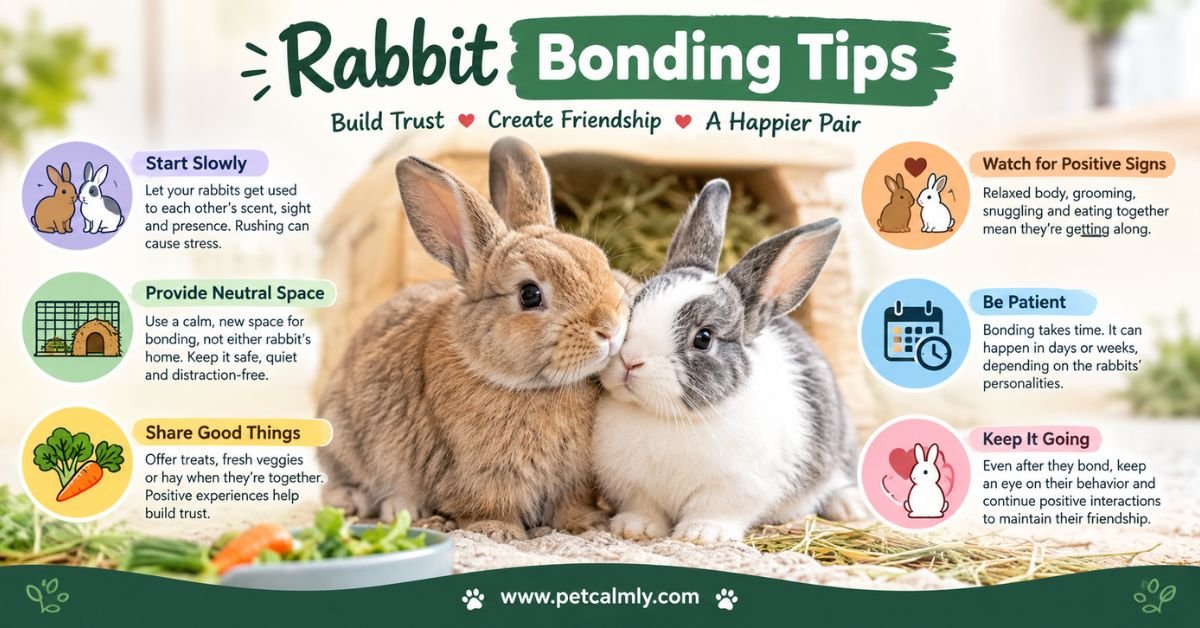
Short direct answer
Building a strong bond with your rabbit takes patience, consistency, and understanding their unique communication style. Start by respecting their space, offering treats from your hand, spending quiet time near them, learning their body language, and handling them gently but only when they’re comfortable. Most rabbits develop trust within weeks to months when given daily positive interactions in a calm environment. The key is letting your rabbit set the pace rather than forcing interaction.
Why Rabbit Bonding Matters (More Than You Might Think)
When you first bring a rabbit home, they might seem distant, skittish, or even unfriendly. You might wonder: Does my rabbit like me? Will we ever have a real relationship?
The answer is almost always yes but not in the way you might expect with a dog or cat.
Rabbits are prey animals. In the wild, staying alert and cautious keeps them alive. This means your rabbit’s natural instinct isn’t to seek you out; it’s to assess whether you’re safe. Unlike dogs who see us as pack leaders, rabbits gradually decide to trust you through repeated, positive experiences. When they do, the bond you develop is something special a quiet, gentle connection built on mutual respect and understanding.
The difference between a nervous rabbit and a bonded rabbit is often just a few weeks of consistent, patient effort. Many new rabbit owners give up too quickly because they expect immediate affection. But once your rabbit trusts you, they’ll binky around you in pure joy, flop onto their side when you’re near, and even ask for pets by nudging your hand. These small moments are what rabbit bonding is really about.
This guide will walk you through the science and practice of bonding with your rabbit, including common mistakes that slow progress and clear signs that your relationship is strengthening.
Your Rabbit’s Temperament: The Foundation of Bonding
Before you can bond with your rabbit, you need to understand what your rabbit is actually communicating. Rabbits don’t vocalize much they “talk” through body language, which is why so many new owners misinterpret their behavior.
Recognizing a Nervous Rabbit
A nervous or fearful rabbit will:
- Freeze in place (their defense mechanism)
- Press their ears flat against their head
- Have dilated pupils
- Thump their hind legs (a warning signal)
- Dash away when you approach
- Hide in a corner or under furniture
- Grind their teeth softly (which can indicate stress different from contentment tooth purring)
This doesn’t mean your rabbit dislikes you. It means your rabbit is in protection mode. Overwhelming a nervous rabbit with handling and attention actually slows bonding. You need to meet them where they are first.
Signs of a Confident, Bonded Rabbit
A rabbit who trusts you will:
- Approach you without being called
- Rest near you while you sit quietly
- Groom themselves calmly in your presence
- Allow gentle stroking, especially on their head and cheeks
- Purr softly when petted (a deep, gentle grinding sound)
- Flop onto their side near you (the ultimate sign of trust and contentment)
- Binky (jump and twist joyfully) around you
- Nudge your hand for attention
- Sit upright and watch you without tension
- Come running when you enter the room (in their own rabbit way)
Understanding this progression helps you recognize progress that might otherwise feel invisible.
Create a Safe, Calm Environment: Where Bonding Begins
Your rabbit will never fully bond with you if they’re stressed about their living space. Environment shapes behavior. A anxious rabbit living in chaos can’t relax enough to trust you.
Space Requirements
Rabbits need more room than most people realize. The minimum living space should be 30 square feet (larger is better). This includes:
- A quiet area for rest and privacy
- Space to move, stretch, and binky
- A separate potty area (rabbits naturally go to one corner)
- Hiding spots where they feel safe
- Access to hay, water, and food
- Room to do a full litter-box flop
Many rabbit owners keep their rabbits in small cages, which creates constant stress. A stressed rabbit cannot bond. If you currently house your rabbit in a cage smaller than they can stretch out in, expanding their space will immediately improve bonding potential.
Noise and Activity Level
Rabbits startle easily. Loud noises, sudden movements, and unpredictable activity keep them in a low-level state of alert. This doesn’t mean your home has to be silent, but creating quiet pockets of time helps.
Some practical approaches:
- Set aside 30 minutes to an hour daily when your household is calm
- Let your rabbit settle in the living space without sudden activity
- Avoid yelling, loud music, or sudden movements when your rabbit is in the room
- Keep your rabbit away from areas with high foot traffic or loud appliances
- If you have young children, teach them to move slowly and speak softly around the rabbit
As your rabbit becomes more confident, they’ll actually venture out into busier areas. But building initial trust happens in calm spaces.
Temperature and Lighting
Rabbits are sensitive to extreme heat (dangerous above 75°F) and benefit from consistent lighting. Natural light cycles help regulate their mood and energy. A rabbit living in a dark basement or hot garage will be stressed, which directly impacts bonding.
Spend Time in Their Space: The Quiet Presence Approach
One of the most effective but underutilized bonding techniques is simply being present without demanding anything from your rabbit.
How the Quiet Presence Method Works
Sit or lie down on the floor near your rabbit (never above them it feels threatening). Don’t try to pet them, talk to them, or grab them. Just be there. Read a book. Work on your laptop. Exist quietly in their space.
What happens during these sessions:
- Your rabbit gradually realizes you’re not a threat
- They become curious about you
- They may approach to investigate
- They’ll feel safe enough to exhibit normal behaviors (grooming, eating, relaxing)
- Trust builds silently, without pressure
This is powerful because it’s non-demanding. Many rabbit owners unintentionally make every interaction about the owner’s wants—”Let me pick you up,” “Let me pet you,” “Let me hold you.” Your rabbit learns that your presence means demands. By contrast, quiet presence teaches them that being near you is peaceful and voluntary.
The Duration and Frequency
Aim for 20-30 minutes daily, if possible. For very nervous rabbits, even 10 minutes helps. The consistency matters more than the length. A rabbit who knows you’ll sit quietly with them every evening at 7 pm learns to anticipate and trust that time.
After a week of daily quiet presence, most rabbits begin moving closer, exploring while you’re there, or even resting nearby. After two to four weeks, many rabbits will approach you first.
Hand-Feeding and Treats: Building Positive Associations
Treats are one of the fastest ways to build positive associations with you but only if done correctly.
Which Treats Work Best
Your rabbit’s favorite food is your bonding superpower. This might be:
- Fresh herbs (cilantro, parsley, basil)
- Small pieces of apple, carrot, or banana
- Hay cubes or timothy hay pieces
- Specially formulated rabbit treats (use sparingly)
The best treats are something your rabbit doesn’t get any other way. If you give your rabbit carrots every day in their bowl, carrots won’t feel like a special gift from you.
Hand-Feeding Technique
Place a small treat in your open palm (not your fingers this feels less threatening). Hold your hand low, at nose level, and let your rabbit come to you if they choose. Don’t move your hand toward them; let them reach out. If they’re too nervous, place the treat near them and step back.
When your rabbit takes the treat from your hand, they’re learning: “This person provides good things without grabbing me.” This is foundational trust.
Building a Routine
Offer treats at the same time each day. Your rabbit will start to anticipate your arrival. Eventually, they may binky or perky up when they see you, knowing treats are coming. Once this habit is established, transition to also offering pets or gentle touch during treat time, but keep the treats as the primary reward.
Learning Rabbit Body Language: What Your Bunny Is Actually Telling You
Rabbits communicate constantly you just have to learn their language. This skill alone transforms your bonding process because you’ll finally understand what your rabbit needs.
Ears: The Primary Communication Tool
- Ears up and alert: Your rabbit is interested and attentive. Safe approach time.
- Ears slightly back, relaxed: Calm, comfortable, content.
- Ears flat back: Annoyed, stressed, frightened, or aggressive (depends on context). Back off.
- Ears flopping to the sides (while lying down): Extremely relaxed and trusting—this is bonding bliss.
Posture Tells the Real Story
- Loaf position (tucked position, like a loaf of bread): Comfortable and resting nearby.
- Flopped on their side: The ultimate bonding indicator. Your rabbit feels safe enough to be vulnerable.
- Stretched out, moving toward you: Investigating, interested.
- Frozen, eyes wide: Scared. Give space.
- Thumping back feet: Warning signal. Something is wrong.
- Binkying (jumping and twisting mid-air): Pure joy. You’re doing something right.
Vocalizations to Understand
- Tooth purring (gentle grinding): Contentment, like a cat’s purr. Safe to continue petting.
- Teeth grinding (loud, aggressive): Distress or pain. Stop what you’re doing and check their health.
- Honking or squeaking: Various emotions can indicate curiosity, interest, or alarm depending on context.
- Silence is normal: Rabbits rarely make noise. No sound during handling is actually good.
Bonding Behavior to Watch For
Once your rabbit trusts you, they may:
- Groom your hands or arms (they’re grooming you like a mate high honor)
- Nudge your hand repeatedly (asking for more pets)
- Sit beside you and relax (choosing your company)
- Circle your feet or legs (affection or curiosity)
- Lay down very close to you (trust)
Proper Handling: Building Confidence, Not Causing Fear
This is where many rabbit owners accidentally derail bonding. Most rabbits don’t enjoy being picked up, and forcing handling too early or too aggressively can damage trust for weeks.
When Your Rabbit Is Ready for Handling
Wait until your rabbit:
- Approaches you consistently
- Accepts treats from your hand without fear
- Allows you to pet them for at least 30 seconds without pulling away
- Shows no signs of extreme stress (no thumping, freezing, or rapid breathing)
If you pick your rabbit up before they’re ready, every part of your bonding work resets.
How to Pick Up Your Rabbit Safely
When your rabbit is ready:
- Let them see your hands approaching (no sudden movements)
- Support their back legs and hindquarters firmly (unsupported back legs cause panic)
- Tuck them against your chest
- Hold them securely but gently
- Keep sessions short (30 seconds to 2 minutes initially)
- Put them down gently if they show stress signs
Reading Their Stress During Handling
Signs to stop immediately:
- Thumping
- Struggling or thrashing
- Grinding teeth
- Rapid breathing
- Trying to jump away
- Ears flat back
Put them down gently and return to quiet presence work. Pushing through resistance damages trust.
Why Some Rabbits Never Enjoy Pickup
Many rabbits, especially those adopted as adults, simply don’t like being held—and that’s okay. A bonded rabbit might never want to be picked up, but they’ll still show affection through proximity, grooming, and behavior. Don’t force holding as a measure of bonding. Watch for the other signs instead.
Interactive Play and Enrichment: Bonding Through Activity
Bonding isn’t just about sitting still. Shared activities build connection and give your rabbit positive things to associate with you.
Safe Play Activities
Bunny-proofed spaces: Create an area where your rabbit can explore safely while you supervise. They’ll engage with their environment while you’re present. This is passive bonding you’re there, they’re doing rabbit things, trust builds.
Gentle tossing games: Some rabbits enjoy nudging a small ball back to you. This creates interaction without physical handling. Toss a small toy, let them nudge it, celebrate their involvement.
Chase games: Let your rabbit chase you (slowly), or gently chase them (very slowly). This should feel playful, not stressful. Stop immediately if your rabbit seems scared.
Foraging together: Hide small treats or hay in a box with paper and toys. Sit nearby while your rabbit forages. They’re having fun, you’re present—bonding happens.
Digging boxes: Rabbits love digging. Provide a box filled with safe digging materials (shredded paper, aspen shavings, hay). Sit next to the box and watch them engage in this natural behavior. Your presence becomes associated with fun.
The Timing Factor
Rabbits are most active and playful during dawn and dusk (crepuscular). Schedule interactive time during these windows when your rabbit is naturally energized. Trying to play with a sleepy rabbit at 2 pm won’t work as well.
7 Common Bonding Mistakes: What’s Slowing Your Progress
Even well-intentioned owners can accidentally slow bonding without realizing it.
Mistake #1: Too Much Handling Too Soon
Grabbing and holding a nervous rabbit teaches them to fear you. Bonding requires patience. Many owners try to “socialize” their rabbit by holding them constantly during the first week. This backfires completely. Go slow.
Mistake #2: Loud or Sudden Interactions
Approaching your rabbit quickly, speaking loudly, or making sudden movements feels predatory. Your rabbit’s instinct is to run. Smooth, slow, quiet movements build trust. Fast movements build fear.
Mistake #3: Ignoring Body Language
Your rabbit is telling you clearly when they’re uncomfortable. If you ignore their signals (ears back, thumping, freezing) and continue the interaction anyway, you teach them that their boundaries don’t matter. This breaks trust. Listen when your rabbit says no.
Mistake #4: Unpredictable Interactions
If sometimes you’re gentle and sometimes you grab your rabbit without warning, they can’t predict what will happen. Consistency is essential. Every interaction should follow the same calm, respectful pattern.
Mistake #5: Bonding Only When Convenient
Rabbits have excellent memories and routines. If you only spend time with your rabbit when you feel like it, they can’t build trust. Daily interaction even 20 minutes builds bonds. Sporadic interaction builds confusion.
Mistake #6: Keeping Your Rabbit in a Small Cage
You can’t bond with a stressed rabbit. If your rabbit is confined to a small space most of the day, bonding becomes nearly impossible regardless of how kind you are during limited out-of-cage time. Environment matters as much as effort.
Mistake #7: Skipping the Quiet Presence Phase
Many owners try to move directly to petting and handling without the essential quiet-presence work. Your rabbit hasn’t learned that you’re safe yet. Slow down. Sit quietly. Let trust develop before you demand interaction.
How Long Does Rabbit Bonding Actually Take?
This question frustrates many new rabbit owners, and the honest answer is: it varies dramatically.
Factors That Influence Timeline
Prior experience: A rabbit adopted as an adult from a home where they weren’t handled may take 3-6 months. A rabbit from a reputable breeder who handled them young might bond in 2-4 weeks. A rabbit raised in poor conditions might take 6-12 months.
Your consistency: A rabbit with an owner who spends time with them daily bonds faster than a rabbit with an owner who visits sporadically. Consistent daily effort can cut bonding time in half.
The rabbit’s personality: Some rabbits are naturally cautious. Others are curious adventurers. Personality matters. A naturally outgoing rabbit might approach you within days. A more reserved rabbit might take weeks.
Your techniques: Using the quiet presence method, hand-feeding, and learning body language accelerates bonding. Forcing handling or ignoring signals slows it dramatically.
Realistic Timeline
- Weeks 1-2: Most rabbits are nervous. Focus on quiet presence and letting them settle.
- Weeks 2-4: Many rabbits start approaching for treats. Bonding accelerates.
- Weeks 4-8: Most rabbits show clear signs of trust flopping, resting near you, seeking interaction.
- Months 2-3: Consistent rabbits develop strong bonds. Floppiness increases. They might ask for pets.
- Beyond 3 months: Bonded rabbits show reliable affection patterns. Trust is deeply established.
Some rabbits never fully match the bonding description above and that’s fine. A rabbit who sits calmly near you and accepts treats is bonded, even if they never flop or seek petting. Your expectations matter. Bonding manifests differently across rabbit personalities.
Signs Your Rabbit Is Bonding With You (What You’re Actually Looking For)
Rather than waiting for a single moment of bonding, watch for these progression indicators.
Early Signs (Weeks 1-3)
- Your rabbit stops running away when you approach
- They eat treats from your hand
- They rest in a loaf position near you
- They groom themselves calmly in your presence
- They show curiosity about you without fear
Progressive Signs (Weeks 3-8)
- Your rabbit seeks treats from you
- They allow gentle head petting
- They rest their ears back comfortably around you
- They binky in your presence
- They follow you around the room
- They come when you call (even if it’s in their own way)
- They thump occasionally but return for treats (less fear-based thumping)
Deep Bonding Signs (Months 2+)
- Your rabbit flops near you (or in your lap)
- They groom your hands or arms
- They nudge you for more attention
- They purr when petted
- They welcome you home with binkies or excited hops
- They feel safe enough to sleep near you
- They allow handling for veterinary purposes without extreme stress
- They choose your company over other areas of the home
Notice that these signs build gradually. You’re not looking for one magic moment you’re recognizing a pattern of increasing comfort and trust over time.
When to Seek Professional Help: Recognizing Serious Behavior Issues
Some bonding challenges are beyond normal patience and technique. Recognizing when to seek help protects your rabbit and your relationship.
Persistent Aggression
If your rabbit consistently:
- Bites hard enough to break skin
- Lunges at you with teeth
- Won’t stop aggressive behavior even with consistent, gentle handling
This can indicate pain, hormonal aggression (especially in unneutered rabbits), or prior trauma. Consult your veterinarian to rule out health issues first. Then consider a rabbit-savvy veterinary behaviorist.
Extreme Fear That Doesn’t Improve
If after 8-12 weeks of daily, consistent work your rabbit remains extremely fearful, won’t eat from your hand, freezes constantly, or seems unable to relax, this might indicate:
- Underlying health issues (pain, illness)
- Severe prior trauma
- A poor personality match
A veterinary behaviorist can assess whether there’s an underlying medical cause or whether your rabbit might thrive in a different environment.
Teeth Grinding or Other Pain Signs
Constant teeth grinding, hunching, loss of appetite, or reluctance to move often indicates pain, not a bonding issue. These are veterinary emergencies, not training problems. See your vet immediately.
When Your Vet Should Be Involved
Always consult your veterinarian if:
- Your rabbit seems ill or injured
- Behavior changes suddenly without explanation
- Bonding efforts seem to cause visible stress responses
- Your rabbit stops eating or has other behavioral changes
Your vet can rule out medical causes that might be preventing bonding. Sometimes what looks like behavioral stubbornness is actually illness or pain.
Frequently Asked Questions
1: My rabbit bit me when I tried to hold them. Does this mean they’ll never bond with me?
A: No. A bite is communication, not permanent rejection. Your rabbit was telling you they weren’t ready for handling. Stop picking them up for now. Return to quiet presence and hand-feeding. Most rabbits who bite are scared, not aggressive. As trust builds through gentler methods, the biting stops. A bonded rabbit is far less likely to bite because they trust you.
2: How do I know if my rabbit likes me or just tolerates me?
A: Tolerance looks like: your rabbit avoids you but doesn’t run away, eats treats you offer but from a distance, sits in the same room but doesn’t approach. Bonding looks like: your rabbit seeks you out, approaches without being called, flops near you, grooms you, or nudges for attention. If you’re seeing approach behavior and flopping, your rabbit likes you. If you’re only seeing avoidance, you need more time or adjustments to your technique.
3: Is it possible to bond with an adult rabbit, or is it too late?
A: Adult rabbits bond all the time. Age itself isn’t the barrier prior experience is. An adult rabbit treated badly in the past takes longer to trust, but it’s absolutely possible. Some adult rescues bond faster than young rabbits because they’re calmer. The timeline might be 3-6 months instead of 2-4 weeks, but adult rabbit bonding is real and rewarding. Be patient.
4: My rabbit is bonded to my partner but not to me. What am I doing wrong?
A: This often means your partner spends more time in quiet presence, uses a calmer voice, or makes fewer sudden movements. Watch what your partner does differently. Do they sit on the floor more? Speak softly? Move slowly? Copy that approach exactly. Also ensure you’re spending equal daily time with your rabbit. Bonding is partly personality match and partly sheer exposure time. Increase your calm presence time and adjust your approach to match what works with your partner.
5: Can two rabbits bond with each other instead of me? Will I miss out?
A: Bonded rabbit pairs form deep relationships with each other this is great. They can still bond with you, though the strength might be different. Two rabbits who are paired still benefit from your quiet presence, hand-feeding, and consistent, calm interaction. Their primary bonding focus might be each other, but they can definitely appreciate and trust you too. Don’t see their rabbit-to-rabbit bond as competition; see it as a sign that you’ve given them an appropriate social life.
6: My rabbit grinds their teeth when I pet them. Is this good or bad?
A: Loud, aggressive teeth grinding stress. Soft, gentle grinding (purring) contentment. The difference is audible and your rabbit’s body language matters. If their eyes are half-closed, ears are back comfortably, and they seem relaxed, it’s purring continue. If they suddenly stop accepting pets and grind teeth loudly, something’s wrong stop petting and check if they’re ill or uncomfortable. When in doubt, consult your vet.
More Information About Pets, Please Visit Our Website: How to Calm a Scared Rabbit
How to Pick Up a Rabbit Properly
Can Rabbits Eat Bananas?
How to Choose the Right Pet for Your Family
How Much Does a Rabbit Cost?
Can Rabbits Eat Carrots Daily?
Why Does My Rabbit Chew on Everything?
Indoor Rabbit Setup Ideas
Conclusion
Building a bond with your rabbit isn’t complicated, but it requires something many modern pet owners struggle with: patience. We’re used to dogs who seem to like us immediately, cats who come and go on their terms. Rabbits ask something different they ask us to prove ourselves worthy of trust.
The reality is this: Your rabbit is trying. They’re small, they’re vulnerable, and in nature, humans are predators. That your rabbit gradually stops running when you enter a room, that they take treats from your hand, that they eventually flop near you these are profound acts of trust. They’re your rabbit choosing to be vulnerable around you.