Short direct answer
Guinea pigs are adorable, social, and rewarding pets, but they are not the right choice for everyone. Some people underestimate the daily cleaning, long-term commitment, veterinary costs, space requirements, and social needs involved in caring for them. Before adopting one, it’s important to understand the realities of guinea pig ownership so you can decide whether a guinea pig truly fits your lifestyle.
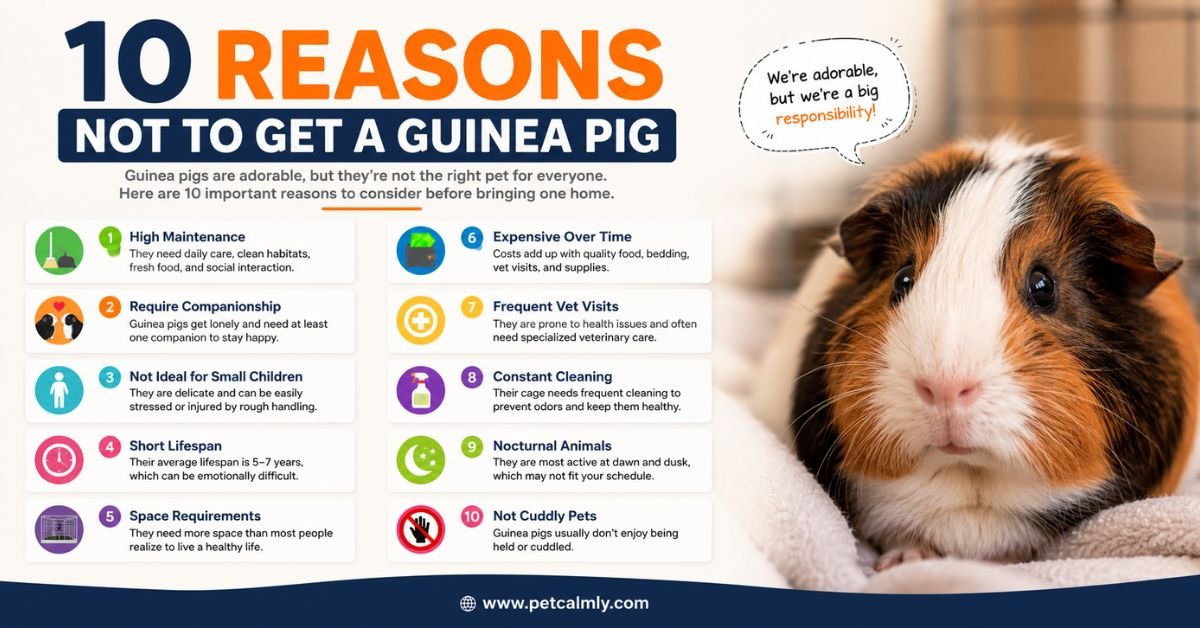
10 Reasons Not to Get a Guinea Pig
Many pet stores make guinea pigs look like easy starter pets. In reality, they require far more time, space, money, and attention than most first-time owners expect.
If you’re thinking about bringing one home, reading the potential downsides first can help prevent disappointment and ensure any guinea pig you adopt gets the care it deserves.
This guide isn’t meant to discourage responsible ownership. Instead, it’s designed to help you make an informed decision before making a long-term commitment.
Why People Often Underestimate Guinea Pig Care
Guinea pigs are small animals, but their care requirements are surprisingly large.
Many new owners assume they are similar to hamsters, mice, or other pocket pets. However, guinea pigs need larger enclosures, daily fresh vegetables, regular cage cleaning, companionship, and specialized veterinary care.
Understanding these challenges beforehand can help you avoid one of the most common pet-owner regrets: realizing a pet doesn’t fit your lifestyle after bringing it home.
1. Guinea Pigs Need More Space Than Most People Expect
One of the biggest surprises for new owners is how much room guinea pigs require.
Many cages sold in pet stores are far too small for long-term housing.
A healthy guinea pig setup should provide enough space for:
- Running
- Exploring
- Popcorning (happy jumping behavior)
- Hiding
- Eating comfortably
For a pair of guinea pigs, most welfare organizations recommend significantly more floor space than standard commercial cages provide.
Why This Can Be a Problem
If you live in:
- A small apartment
- A dorm room
- Shared housing
- Limited indoor space
Finding room for an appropriately sized enclosure may become difficult.
2. Guinea Pigs Should Not Live Alone
Unlike some small pets, guinea pigs are highly social animals.
In the wild, they live in groups and communicate constantly through sounds, body language, and social interactions.
Many guinea pigs become lonely when housed alone.
What This Means for Owners
You should usually plan for:
- Two guinea pigs instead of one
- Double food expenses
- Larger cages
- More cleaning
- More veterinary costs
People expecting a low-maintenance single pet often underestimate this responsibility.
3. Daily Cleaning Is Unavoidable
Guinea pigs are messy.
They produce a surprising amount of waste relative to their size.
Even with high-quality bedding, you’ll still need:
- Daily spot cleaning
- Regular fleece maintenance
- Weekly deep cleaning
- Constant hay management
Common Beginner Mistake
Many owners assume cleaning will only take a few minutes per week.
In reality, neglected cages can quickly develop:
- Strong odors
- Damp bedding
- Bacterial growth
- Respiratory risks
If you dislike routine cleaning, guinea pig ownership may become frustrating.
4. Veterinary Care Can Be Expensive
Many people focus on adoption costs but forget about medical expenses.
Guinea pigs require veterinarians experienced with exotic animals.
These specialists are often:
- Harder to find
- More expensive
- Located farther away
Common Health Issues
Guinea pigs may develop:
- Dental problems
- Respiratory infections
- Skin conditions
- Digestive issues
- Urinary problems
Because guinea pigs hide illness instinctively, veterinary treatment is often urgent when symptoms become obvious.
Realistic Cost Consideration
Emergency visits can easily cost more than the original purchase price of the guinea pig.
5. Guinea Pigs Live Longer Than Many People Realize
Some people choose guinea pigs expecting a short-term commitment.
However, healthy guinea pigs often live:
- 5 to 8 years
- Sometimes longer with excellent care
Questions to Ask Yourself
Will your lifestyle remain stable for the next several years?
Consider:
- Moving homes
- College plans
- Career changes
- Family responsibilities
- Travel habits
A guinea pig should never be viewed as a temporary pet.
6. They Require Fresh Vegetables Every Day
Guinea pigs cannot produce their own vitamin C.
This makes daily nutrition especially important.
A healthy diet typically includes:
- Unlimited hay
- Fresh water
- Quality guinea pig pellets
- Fresh vegetables
Why This Matters
Owners must consistently purchase and prepare fresh produce.
Skipping proper nutrition can contribute to health problems over time.
If you’re looking for a pet that thrives on occasional feeding alone, guinea pigs may not be the best fit.
7. Travel Becomes More Complicated
Guinea pigs require daily care.
Unlike some pets that can be left with extra food for a weekend, guinea pigs need:
- Fresh hay
- Fresh water
- Daily monitoring
- Vegetable feeding
Vacation Challenges
Before every trip, you’ll need:
- A reliable pet sitter
- A knowledgeable family member
- A boarding facility experienced with guinea pigs
Finding suitable care can sometimes be difficult.
8. Guinea Pigs Are Not Ideal for Very Young Children
Many families buy guinea pigs as children’s pets.
Unfortunately, this often leads to unrealistic expectations.
Why Problems Happen
Young children may:
- Handle them incorrectly
- Lose interest quickly
- Accidentally cause injuries
- Forget feeding responsibilities
Guinea pigs have delicate spines and can be seriously hurt if dropped.
The Reality
Adults usually become the primary caregivers.
If parents are not prepared for daily responsibility, guinea pig ownership may not work well.
9. They Can Be Surprisingly Noisy
People often assume guinea pigs are silent pets.
They aren’t.
Guinea pigs communicate through a variety of sounds including:
- Wheeking
- Chirping
- Purring
- Chattering
- Squealing
When Noise Becomes Noticeable
Many guinea pigs learn:
- Refrigerator sounds
- Vegetable bag sounds
- Feeding schedules
Some become extremely vocal whenever food is nearby.
While many owners find this charming, others may find it disruptive.
10. Guinea Pigs Need Daily Interaction and Attention
Although guinea pigs are not dogs, they still require social enrichment.
They benefit from:
- Gentle handling
- Human interaction
- Floor time
- Mental stimulation
- Environmental enrichment
What Happens Without Interaction
Bored guinea pigs may become:
- Less active
- More fearful
- Harder to handle
- Less confident
People seeking a pet that requires very little engagement may be disappointed.
A Quick Comparison: Guinea Pigs vs Expectations
| Expectation | Reality |
|---|---|
| Small pet = easy care | Guinea pigs require significant daily care |
| One guinea pig is enough | Most do better with companionship |
| Cheap to own | Ongoing expenses add up |
| Small cage is acceptable | Large enclosures are essential |
| Great kid pet | Adults usually provide most care |
| Quiet animal | Can be surprisingly vocal |
| Minimal cleaning | Daily maintenance is needed |
Are Guinea Pigs Bad Pets?
Absolutely not.
Guinea pigs can be wonderful companions for the right owner.
They are:
- Affectionate
- Entertaining
- Intelligent
- Social
- Full of personality
The issue isn’t that guinea pigs are bad pets.
The issue is that they are often misunderstood pets.
People who understand their needs before adopting are far more likely to enjoy the experience.
Who Should Not Get a Guinea Pig?
A guinea pig may not be the best choice if you:
- Travel frequently
- Dislike cleaning
- Have limited living space
- Want a highly independent pet
- Cannot budget for veterinary care
- Expect a child to handle all responsibilities
- Prefer low-maintenance pets
Being honest about your lifestyle helps prevent future problems.
Who Makes a Good Guinea Pig Owner?
The best guinea pig owners are people who:
- Enjoy caring for animals daily
- Have enough space for a large enclosure
- Can provide companionship
- Understand long-term commitments
- Budget for veterinary care
- Enjoy observing animal behavior
These owners often find guinea pigs incredibly rewarding.
What Should You Do Before Getting a Guinea Pig?
Before adopting, complete this checklist:
Guinea Pig Readiness Checklist
✔ Space for an appropriately sized enclosure
✔ Budget for food and supplies
✔ Emergency veterinary fund
✔ Plan to adopt at least two guinea pigs
✔ Reliable pet sitter for travel
✔ Time for daily care
✔ Willingness to clean regularly
✔ Understanding of their lifespan
If several boxes remain unchecked, it may be worth waiting.
When Should You Reconsider Getting a Guinea Pig?
Consider postponing adoption if:
- You’re moving soon
- Financial resources are limited
- You lack space
- You travel often
- You’re uncertain about long-term commitment
Waiting until circumstances improve is often the most responsible choice.
Helpful Internal Resources to Read Next
If you’re still researching guinea pig ownership, consider exploring:
- How much does a guinea pig cost?
- Guinea pig cage setup ideas for two
- Fleece vs paper bedding for guinea pigs
- Can guinea pigs eat carrots?
- Guinea pig squeaking meaning
These topics can help you understand daily care requirements before adopting.
Frequently Asked Questions
1: Is a guinea pig a high-maintenance pet?
Compared with many small pets, yes. Guinea pigs require daily feeding, cage maintenance, social interaction, and ongoing health monitoring.
2: What is the biggest downside of owning a guinea pig?
Many owners say the biggest challenge is the combination of cleaning, space requirements, and ongoing expenses.
3: Can I keep just one guinea pig?
While laws and recommendations vary by location, guinea pigs are highly social and generally thrive with companionship.
4: Are guinea pigs expensive to maintain?
The initial purchase price is usually low, but food, bedding, enclosure upgrades, and veterinary care can add up significantly over time.
5: Do guinea pigs smell bad?
A healthy guinea pig itself usually has very little odor. Most smells come from inadequate cage cleaning or damp bedding.
6: Are guinea pigs good pets for beginners?
They can be, provided the owner understands their needs and is prepared for the daily commitment involved.
More Information About Pets, Please Visit Our Website: Can Guinea Pigs Eat Lettuce?
Conclusion
Understanding the 10 reasons not to get a guinea pig doesn’t mean guinea pigs are poor pets. In fact, they can be affectionate, entertaining companions when their needs are properly met.
The goal is to look beyond the cute face and recognize the real commitment involved. Guinea pigs need space, companionship, daily care, veterinary support, and consistent attention throughout their lives.
If you’re willing to provide those things, a guinea pig may become one of the most rewarding small pets you’ll ever own. If not, it’s far better to realize that before adoption than after. Responsible pet ownership starts with honest expectations, and that’s exactly what every guinea pig deserves.