Short direct answer
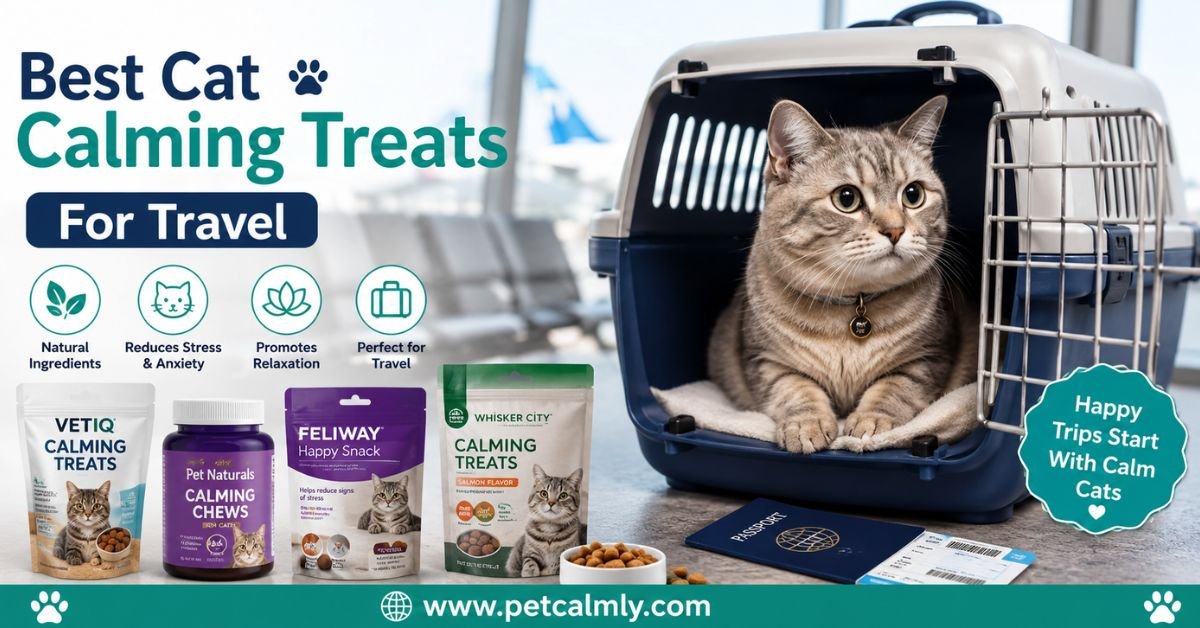
The best cat calming treats for travel are those built around calming amino acids and compounds like L-theanine, L-tryptophan, colostrum-derived alpha-casozepine, or vet-formulated ingredients such as Zylkene’s milk protein hydrolysate. These work best when combined with a carrier your cat already trusts, a pheromone spray like Feliway, and a practice run before the actual trip. No treat replaces proper carrier training, and cats with severe travel anxiety or motion sickness should be evaluated by a veterinarian before you rely on any calming product.
If your cat turns into a howling, panting, drooling mess the moment the carrier comes out, you already know treats alone won’t fix everything. But the right calming treat, used correctly and at the right time, can genuinely take the edge off a stressful car ride, vet visit, or flight.
Why Cats Struggle So Much With Travel in the First Place
Cats are territorial animals. Their sense of safety is tied almost entirely to a familiar, predictable environment the smell of their home, the layout of their rooms, the routine of their day. The moment you put a cat in a carrier and move that environment, you’re asking their nervous system to process unfamiliar motion, sound, smell, and loss of control all at once.
This isn’t stubbornness or drama. It’s a survival instinct. In the wild, an animal that can’t predict or control its surroundings is vulnerable, so the stress response kicks in hard: dilated pupils, rapid breathing, vocalizing, trying to escape, or freezing completely still. Some cats shut down and go quiet, which owners sometimes mistake for calm when it’s actually the opposite.
Understanding this matters because it changes how you approach the solution. A calming treat isn’t a magic switch it’s one tool that works alongside carrier training, scent familiarity, and a calm owner energy, because cats also pick up on your stress during travel.
What Actually Makes a Cat Calming Treat Effective
Not every “calming” treat on a pet store shelf does much. Here’s what tends to separate treats that genuinely help from ones that are mostly marketing.
Ingredients With Real Behavioral Backing
- L-theanine — an amino acid found naturally in green tea that supports relaxation without sedation. It’s one of the more commonly referenced calming ingredients in pet behavior products.
- L-tryptophan — a precursor to serotonin, often included in calming formulas to support mood regulation.
- Alpha-casozepine — a milk protein derivative (used in products like Zylkein) studied for its calming effects in cats and dogs.
- Chamomile and passionflower extracts — mild herbal ingredients sometimes included for their traditional calming reputation, though the evidence in cats specifically is limited compared to human studies.
- CBD-based options — increasingly available, but regulation and dosing consistency vary widely by brand, so this category deserves extra caution and ideally a conversation with your vet first.
Format and Palatability
A calming treat only works if your cat actually eats it and cats are notoriously picky, especially when they’re already anxious. Soft chews or pastes tend to work better than hard treats during travel prep, since a stressed cat may not want to chew much.
Onset Time
This is the detail most owners miss. Many calming treats need to be given 30 to 90 minutes before the stressful event to take effect, not five minutes before you zip the carrier shut. Read the label, and if it’s unclear, that’s a sign to test the product on a calm day first never for the first time on travel day itself.
Types of Calming Support Beyond Treats (And Why They Matter Together)
Treats work best as part of a system, not a standalone fix. Here’s how they typically fit alongside other tools:
| Method | What It Does | Best Paired With |
|---|---|---|
| Calming treats | Supports relaxation through diet-based compounds | Carrier training, pheromones |
| Pheromone spray (e.g., Feliway) | Mimics natural feline facial pheromones to signal safety | Spraying the carrier 15–20 minutes before travel |
| Calming collars | Slow-release pheromone delivery worn throughout the day | Long trips or multi-day travel |
| Carrier training | Builds a positive association with the carrier itself | Every method on this list |
| Thundershirts / wraps | Gentle, constant pressure that can reduce anxiety in some cats | Cats who respond well to swaddling |
| Prescription anti-anxiety medication | Used for cats with severe anxiety or motion sickness | Only under veterinary guidance |
If your cat’s anxiety is mild to moderate hiding, some vocalizing, restlessness treats and pheromones combined with training usually help a lot. If your cat has severe reactions like vomiting, extreme panting, or attempts to escape at all costs, that’s a conversation for your vet, not a job for treats alone.
How to Actually Use Calming Treats for Travel (Step-by-Step)
1. Test the Treat at Home First
Give the treat on a normal, low-stress day, at least a week before travel. You’re watching for two things: does your cat actually eat it willingly, and does it cause any stomach upset. Never introduce a new product for the first time on travel day.
2. Time It Correctly
Check the product’s guidance, but a common window is 30–60 minutes before you start carrier prep. Giving it too late means it hasn’t taken effect; giving it too early means the calming window may have passed by the time you’re actually in the car.
3. Pair It With a Familiar Carrier Setup
Line the carrier with a blanket or towel that already smells like your cat or your home. Spray a pheromone product inside the carrier a few minutes before placing your cat in it not directly on your cat.
4. Keep the Environment Predictable
Loud music, sudden stops, and a lot of talking or fussing over the cat can undo the calming effect of any treat. A quiet car, a covered carrier (partially, so airflow isn’t blocked), and minimal handling go a long way.
5. Don’t Overdo the Dosage
More is not better. Follow the label’s weight-based dosing exactly. Giving extra “just in case” can cause digestive upset or oversedation, which is its own kind of stressful for your cat.
Common Mistakes Owners Make With Calming Treats
- Using them for the first time on travel day.
You won’t know if your cat tolerates it, and you won’t know if it actually helps in time to adjust your plan. - Assuming the treat replaces carrier training.
A cat who’s never been comfortable in a carrier will still struggle, calming treat or not. - Skipping the vet conversation for cats with existing health conditions.
Some calming ingredients aren’t appropriate for cats with certain liver, kidney, or metabolic conditions. - Expecting sedation.
Calming treats are meant to take the edge off, not knock your cat out. If you’re expecting your cat to sleep through a flight, that’s a different conversation with your veterinarian, potentially involving prescription options. - Giving human calming supplements.
Products made for people, including anything containing xylitol or essential oils like tea tree, can be dangerous for cats. Only use products formulated specifically for cats.
When You Should Worry (And When to Call Your Vet)
Mild travel stress meowing, pacing, hiding in the carrier, a bit of drooling is common and usually manageable with the strategies above. But certain signs mean it’s time to loop in a veterinarian rather than trying another treat brand:
- Repeated vomiting during or after travel
- Signs of extreme panic that don’t ease even with a familiar carrier and calming product
- Labored breathing, open-mouth breathing, or blue-tinged gums
- Self-injury from trying to escape the carrier
- A cat who stops eating or drinking for more than 24 hours after a trip
These can indicate motion sickness, an underlying medical issue, or anxiety severe enough to need prescription support. According to Cornell University’s Feline Health Center, chronic or severe anxiety in cats can have real physical health consequences over time, so it’s worth addressing properly rather than managing indefinitely with treats alone.
What Pet Owners Should Do Before Their Next Trip
If you’re planning travel whether it’s a car ride to the vet or a flight across the country a little preparation goes further than any single product:
- Start carrier training at least two weeks ahead if your cat isn’t already carrier-comfortable.
- Test your chosen calming treat on a calm day, well before the trip.
- Book a vet check-up if you’re traveling long distance, especially by air, since some airlines require health certificates.
- Pack familiar-smelling bedding, a small amount of your cat’s regular food, and any medications with clear dosing instructions.
- Keep a consistent, calm routine on travel day cats read your energy more than you’d think.
Real-World Example: What This Looks Like in Practice
A common scenario: a cat who’s fine at home but becomes a different animal the second the carrier appears hiding under the bed, growling, or needing to be physically coaxed out. Owners in this situation often see the biggest improvement not from the treat itself, but from decoupling the carrier from stress entirely: leaving it out permanently with soft bedding inside, tossing treats near and eventually inside it during calm moments, so it stops being a signal that something scary is about to happen. The calming treat then becomes the final layer of support on travel day, not the whole strategy.
More Information About Pets, Please Visit Our Website: Best Cat Brushes for Shedding
What Kind of Soap Is Safe for Kittens?
Frequently Asked Questions
1: Do calming treats actually work for cats during travel?
For many cats, yes especially for mild to moderate anxiety. Ingredients like L-theanine and alpha-casozepine are commonly used in feline calming products and can help take the edge off travel stress, though results vary by cat and shouldn’t replace carrier training.
2: How long before travel should I give my cat a calming treat?
Most calming treats need roughly 30 to 90 minutes to start working, so check your specific product’s label and plan to give it before you begin carrier prep, not right before you leave.
3: Are calming treats safe for kittens?
Many calming treats are labeled for cats over a certain age or weight. Always check the product’s age guidance and check with your vet before giving any supplement to a kitten.
4: Can I use dog calming treats for my cat?
No. Dosing, ingredients, and safety margins differ between species. Always use a product formulated and labeled specifically for cats.
5: What if my cat refuses to eat the calming treat before travel?
Try a different format, like a paste or liquid that can be mixed into a small amount of wet food, and always test this at home first rather than during a time crunch.
6: Is it better to use calming treats or a pheromone spray for travel?
They’re not competing options many owners get the best results combining both, since treats work internally through diet-based compounds while pheromone sprays work through scent-based signaling in the carrier environment.
Conclusion
Calming treats can genuinely make travel easier for a stressed cat, but they work best as one part of a bigger plan familiar scents, a carrier your cat already trusts, a predictable routine, and realistic expectations about what a treat can and can’t do. If your cat’s travel anxiety is severe or comes with physical symptoms like vomiting or breathing changes, that’s worth a conversation with your veterinarian before your next trip, not just a new product on the shelf.