Short direct answer
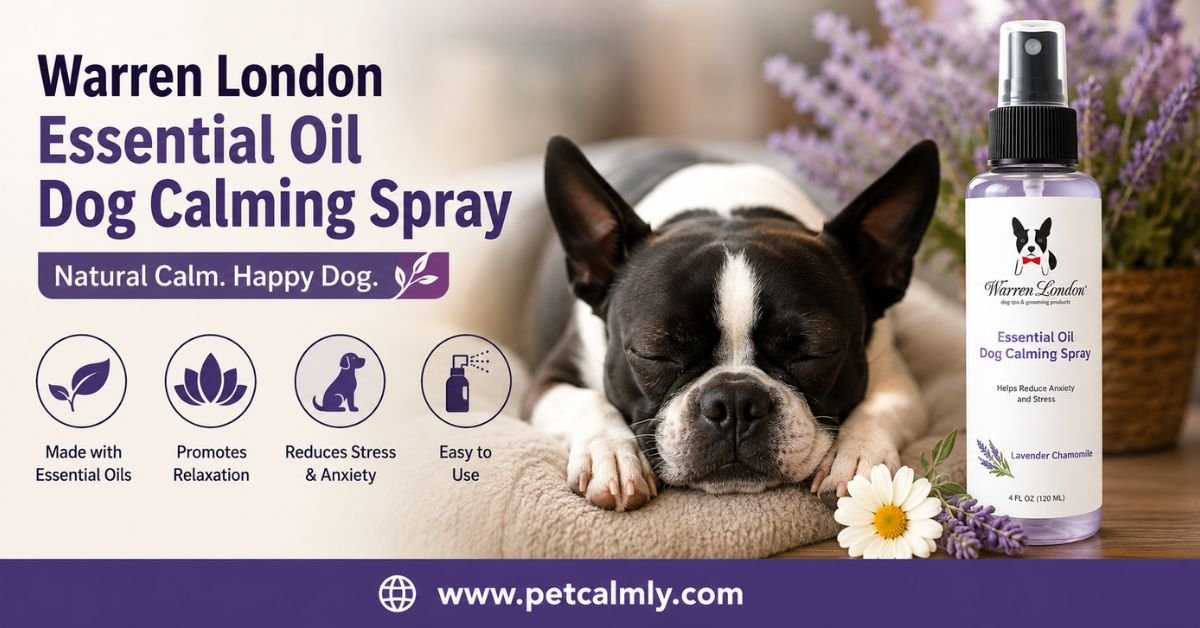
Warren London Essential Oil Dog Calming Spray is a plant-based aromatherapy spray made with lavender, sweet orange, vetiver, and clary sage oils. It’s designed to be misted onto a dog’s chest, back, or bedding before stressful moments like grooming, vet visits, fireworks, or car rides. It doesn’t contain sedatives, so it won’t knock your dog out instead, it works through scent to help ease tension in dogs who are mildly to moderately anxious. It’s not a fix for severe anxiety or panic, and it works best paired with training and a calm routine.
If you’ve landed here because your dog turns into a shaking, panting mess every time the vacuum comes out or the sky rumbles, you’re not alone. A lot of pet owners try calming sprays before jumping to prescription medication, and it’s a reasonable place to start. But “reasonable” doesn’t mean “guaranteed,” and there’s a difference between a spray that genuinely takes the edge off and one that just smells nice while your dog is still miserable underneath.
This guide walks through what’s actually in the bottle, how it’s supposed to work on a dog’s brain and body, when it helps, when it won’t be enough, and what mistakes even well-meaning owners tend to make. No inflated claims, no invented studies just what’s known, what’s uncertain, and what to watch for.
What Is Warren London Essential Oil Dog Calming Spray, Exactly?
Warren London is a pet grooming and wellness brand, and this spray is one of its aromatherapy products aimed at dogs who get anxious, hyper, or overstimulated in specific situations. It’s a topical mist, not a supplement or a chew, so there’s nothing for your dog to swallow the idea is that the scent itself does the work.
What’s Actually Inside the Bottle
The formula centers on four essential oils:
- Lavender – the most studied calming scent for dogs; often associated with reduced restlessness and vocalization.
- Sweet orange – a citrus note used in aromatherapy blends for its mild, uplifting quality.
- Vetiver – an earthy, grounding oil sometimes used alongside lavender in calming blends.
- Clary sage – included for its relaxing scent profile, though it needs a bit more caution around pregnant or nursing dogs (more on that below).
There are no sedatives, alcohol, or synthetic fragrances listed, which is part of the appeal for owners who want to avoid anything that makes a dog groggy or “checked out.”
How It’s Meant to Be Used
The directions are simple: mist it lightly onto your dog’s chest or lower back, or spray it directly onto bedding, a crate, or a travel carrier. It’s meant to be reapplied as needed rather than used once and forgotten, since scent fades. Some owners find it easiest to spray a cloth or their hands first and then pet the dog, especially with dogs who dislike the sound or sensation of a spray bottle.
How Does a Calming Spray Like This Actually Work on Dogs?
It’s worth understanding the mechanism, because that shapes what you should expect from it.
Why Scent Affects a Dog’s Nervous System
Dogs process scent through the olfactory bulb, which has a direct line to the amygdala and hippocampus the brain structures involved in emotion and memory. That’s a big part of why smell can influence mood so quickly, in both dogs and people. Lavender in particular has been looked at in veterinary research: a study published in the Journal of the American Veterinary Medical Association found that dogs exposed to lavender scent during car travel showed less movement and vocalization compared to a control group, suggesting a calming effect during a known stressor. That’s a modest, specific finding, not proof that lavender fixes anxiety broadly, but it does support the idea that scent can meaningfully shift a dog’s state in the moment.
What the Spray Can (and Can’t) Do
Realistically, a calming spray works best as a mild mood-shifter for situational stress the kind of everyday nervousness around nail trims, houseguests, or a bumpy car ride. It’s not designed to, and shouldn’t be expected to, resolve:
- Separation anxiety severe enough to cause destructive behavior
- Noise phobia so intense the dog tries to escape or injures itself
- Generalized anxiety that shows up even in calm, familiar settings
- Aggression rooted in fear
For those situations, a spray can be one small piece of a bigger plan, but it isn’t a substitute for behavioral work or, in some cases, veterinary care.
Is Warren London’s Calming Spray Safe for Dogs?
Generally, yes, when used as directed on a healthy adult dog but “essential oils” as a category deserves a more careful look than most marketing copy gives it, because not all essential oils are treated equally by veterinary toxicology.
Essential Oils That Raise Safety Questions
Lavender is considered one of the lower-risk essential oils for dogs when used in small, diluted amounts, which is reassuring here. Sweet orange and other citrus oils are generally tolerated in small topical amounts but can occasionally cause skin irritation in sensitive dogs. Clary sage is usually fine for topical use in healthy adult dogs, but most veterinary sources recommend avoiding it around pregnant or nursing dogs and steering clear of ingestion entirely. Vetiver has a limited safety research base compared to lavender, so it’s worth treating with the same “less is more” caution as any oil you haven’t used on your dog before.
None of this means the spray is dangerous for the average healthy dog. It means essential oil products are not automatically risk-free just because they’re labeled “natural,” and it’s worth reading the full ingredient and warning label rather than assuming.
Dogs Who Should Avoid It
A few groups warrant extra caution or a chat with your vet before using any essential oil spray:
- Puppies under the manufacturer’s stated age minimum (many calming sprays, including this one, specify a minimum age for use)
- Pregnant or nursing dogs, due to the clary sage content
- Cats in the household — cats metabolize essential oils very differently from dogs and are far more sensitive to many of them, including some citrus and lavender compounds in concentrated form, so keep sprayed dogs separated from cats until it’s dry
- Dogs with known skin sensitivities, open wounds, or recent surgical sites
- Dogs on any medication, especially anything metabolized by the liver, without checking with your vet first
- Dogs who’ve reacted badly to essential oils before, even mildly (sneezing fits, scratching, or avoidance)
If your dog has a chronic illness or you’re already managing a health condition with your vet, it’s worth a quick check-in before adding any new topical product, even a natural one.
When Pet Owners Reach for This Spray (Real-Life Situations)
This is where the spray tends to earn its keep. Common scenarios include:
- Grooming appointments – for dogs who tense up at the sound of clippers or the feeling of being handled
- Vet visits – misting the carrier or car seat ahead of time so the space already smells familiar and calm
- Thunderstorms and fireworks – applied before the noise starts, since it works better proactively than reactively
- Car rides – especially for dogs who drool, pace, or whine in the car
- New visitors or busy households – a light spray before guests arrive can take the edge off greeting-time overexcitement
- Crate training – spraying bedding can make the crate feel more like a safe den and less like a box
One pattern worth noting from real dog owners: the spray tends to work better as a preventive tool than as an emergency one. Spraying a dog who is already mid-panic during fireworks is a much harder ask than spraying them 15–20 minutes beforehand, while they’re still just uneasy.
How to Use Warren London Calming Spray the Right Way
A few practical steps make a real difference in how well this works:
- Do a small patch test first. Spray a small amount on the chest and watch for scratching, redness, or excessive sneezing over the next hour.
- Apply before the stressful event, not during it. Aim for 10–20 minutes ahead of grooming, storms, or car rides.
- Spray from a short distance, aiming for the chest, neck, or lower back never directly at the face, eyes, nose, or any open skin.
- Reapply as needed, since the scent fades over a few hours, especially outdoors or in a moving car.
- Pair it with something your dog already finds comforting a familiar blanket, a favorite chew, or your own calm voice and body language.
- Keep the first few uses low-pressure. Let your dog sniff the bottle, spray a cloth instead of directly on them if they’re spray-shy, and build a positive association gradually.
What Pet Owners Often Get Wrong
A few avoidable mistakes come up again and again:
- Expecting sedation. This is a mood-support spray, not a tranquilizer. If your dog needs to be visibly “knocked down” for something like a nail trim, this product isn’t the right tool talk to your vet about options instead.
- Spraying directly at a startled or resistant dog’s face. This usually backfires, teaching the dog to associate the bottle itself with stress.
- Using it as a one-time fix instead of a repeated tool. Consistency helps the dog build a scent association with calm over time.
- Ignoring body language after use. If your dog is licking their lips excessively, pinning their ears, or trying to move away after application, that’s feedback worth listening to, not something to push through.
- Treating it as a substitute for training. A spray can lower baseline stress, but it won’t teach a dog that the vacuum isn’t a threat that takes desensitization work over time.
Warren London Spray vs Other Calming Options for Dogs
| Option | Best For | How Fast It Works | Sedating? |
|---|---|---|---|
| Warren London Essential Oil Spray | Mild, situational stress (grooming, car rides, guests) | Minutes, when applied ahead of time | No |
| Calming chews/treats | Dogs comfortable eating during stress; longer-lasting anxiety | 30–60 minutes | Sometimes mild |
| Pheromone diffusers/collars | Household-wide or constant background anxiety | Days to build up | No |
| Compression wraps (e.g., “calming shirts”) | Noise phobia, travel anxiety | Immediate, physical effect | No |
| Prescription anti-anxiety medication | Moderate to severe anxiety, panic, phobias | Varies by medication | Often yes |
None of these options rules out the others many owners combine a spray with a pheromone diffuser at home, or a compression wrap during storms, for a more layered approach. If you’re already using a calming product and it isn’t making a noticeable difference after a few honest tries, that’s useful information, not a failure on your part it just means your dog’s anxiety may need a different tool.
When Should You Worry? Signs Anxiety Needs More Than a Spray
It’s easy to keep reaching for over-the-counter calming products because they feel low-risk, but some symptoms point to something a spray genuinely won’t resolve.
Red Flags That Call for a Veterinarian
Reach out to your vet, or a veterinary behaviorist, if your dog shows any of the following:
- Destructive behavior or self-injury during anxious episodes (chewing through crates, breaking teeth or nails trying to escape)
- Panting, drooling, or pacing that doesn’t ease even in a quiet, familiar space
- Loss of appetite or vomiting tied to anxiety episodes
- Aggression that appears only when the dog is fearful or cornered
- Anxiety that seems to be getting worse over weeks or months rather than improving
- Any sudden behavior change in an older dog, since this can sometimes signal a medical issue rather than pure anxiety
- Signs of a reaction after using the spray persistent scratching, drooling, vomiting, wobbliness, or breathing changes (this warrants an urgent call, not a wait-and-see approach)
A spray, treat, or wrap is meant to support a mildly anxious dog through a specific moment. It’s not designed to treat panic disorders, phobias, or anxiety that’s affecting your dog’s daily quality of life those situations usually respond much better to a structured behavior plan, and sometimes medication, worked out with a vet.
What Should Pet Owners Do Next?
If you’re trying to figure out your next step, here’s a simple way to think about it:
- If your dog gets a little nervous but recovers quickly (a bit of shaking during a storm, then back to normal once it passes): a calming spray used proactively is a reasonable, low-risk starting point.
- If your dog’s anxiety is frequent but not extreme: combine the spray with consistent routines — same crate, same blanket, same calm tone — and give it a few weeks before judging whether it’s helping.
- If your dog’s anxiety is severe, escalating, or involves self-harm or aggression: book a vet visit before trying more over-the-counter products. A vet can rule out medical causes and refer you to a veterinary behaviorist if needed.
- If you’re not sure which category your dog falls into: a quick call to your regular vet costs little and can save weeks of guessing.
Conclusion
Warren London Essential Oil Dog Calming Spray is a genuinely useful, low-risk tool for the everyday stress dogs face — grooming days, car rides, thunderstorms, new visitors. It’s not medication, and it’s not marketed as one, which is refreshing in a category that sometimes overpromises. Used thoughtfully, ahead of the stressful moment rather than during it, and paired with the things your dog already finds comforting, it can genuinely take the edge off.
What it won’t do is replace a proper behavior plan for a dog whose anxiety is more than situational nervousness. Knowing which category your dog falls into is really the whole ballgame and that’s worth a few minutes of honest observation, or a conversation with your vet, before you decide how much to lean on any calming product.
More Information About Pets, Please Visit Our Website: Best Cat Calming Treats for Travel
Best Dog Anxiety Medication Over the Counter
Best Dog Calming Treats
Dog Brushes for Long Hair
Frequently Asked Questions
1: Does Warren London Calming Spray actually work?
For dogs with mild, situational anxiety grooming, car rides, houseguests many owners report a noticeable difference within 10 to 20 minutes of applying it, especially when it’s used consistently and before the stressful event starts. It’s less effective for dogs with severe anxiety or panic responses, where a behavior plan or veterinary support tends to make a bigger difference.
2: How long does the calming effect last?
Most reviews and product guidance suggest the scent, and its calming effect, lasts roughly a few hours before it fades and needs reapplying. For longer events like an all-day car trip, reapplying periodically works better than a single spray at the start.
3: Can I use this spray on my cat too?
No. Cats process essential oils very differently from dogs and are more prone to negative reactions, even to oils considered relatively safe for dogs, like some citrus and lavender compounds in concentrated form. This spray is formulated for dogs. If you have a multi-pet household, keep a freshly sprayed dog away from cats until the spray has fully dried, and look into cat-specific calming products instead.
4: Is it okay to spray this directly on my dog’s fur every day?
Occasional to regular use is generally fine for healthy adult dogs, but daily, heavy use isn’t necessary for most situational anxiety and increases the chance of skin irritation over time. Use it around the specific triggers your dog faces rather than as a blanket daily habit, and watch for any skin changes with regular use.
5: My dog hates the spray bottle itself what can I do?
This is common, especially with sound-sensitive dogs. Try spraying a cloth, bandana, or your own hands away from your dog first, then let them approach and sniff before petting them with it. Building a slow, positive association with the scent separate from the sound of the spray nozzle usually resolves this within a few sessions.
6: What’s the difference between a calming spray and calming chews?
A spray works through scent and tends to act faster, which makes it well-suited to situations you can anticipate a few minutes ahead, like a car ride or grooming appointment. Calming chews work through ingredients your dog eats, generally take 30 to 60 minutes to take effect, and can be a better fit for dogs who won’t tolerate being sprayed or for anxiety that builds up over a longer stretch of time. Some owners use both, depending on the situation.