Short direct answer
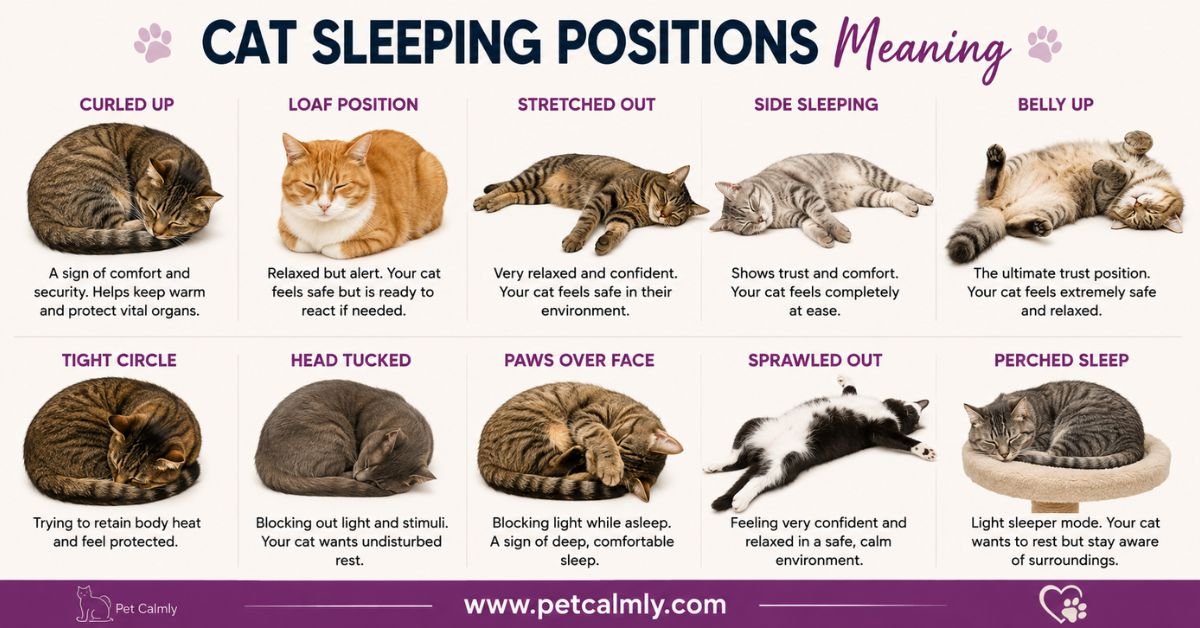
A cat’s sleeping position mostly reflects how safe, warm, and relaxed they feel in that moment not a deep emotional statement. A curled-up ball usually means a cat is conserving heat and protecting its belly. A cat sprawled on its back with paws in the air is showing total trust in its surroundings. Sleeping tucked against you or another pet usually signals bonding and comfort. Sudden changes in sleeping posture, especially hiding more or sleeping oddly still, can sometimes point to pain or illness and are worth watching closely.
Why Cat Sleeping Positions Actually Matter
If you’ve ever watched your cat drift off mid-afternoon and wondered why they suddenly look like a pretzel one day and a starfish the next, you’re not overthinking it. Sleeping posture in cats isn’t random. It’s shaped by body temperature, sense of safety, recent activity, and even subtle physical discomfort.
Cats spend a huge portion of their lives asleep often somewhere between 12 and 16 hours a day, with kittens and senior cats sleeping even more. Because sleep takes up so much of a cat’s daily rhythm, the way they position themselves becomes a genuinely useful window into their physical and emotional state.
This isn’t about reading your cat’s mind. It’s about noticing patterns. Once you understand what’s normal for your own cat, you’ll start picking up on the small shifts that matter the kind of thing an experienced cat owner notices before anyone else does.
The Loaf Position: Calm, Alert, and Comfortable
The “cat loaf” — paws tucked underneath, body rounded into a neat oval — is one of the most recognizable sleeping and resting positions. It’s not always full sleep either; cats often loaf while dozing lightly, ready to react if something interesting happens.
What it usually means: Your cat feels settled but not fully off-guard. Tucking the paws under keeps them warm and ready to spring up quickly if needed. You’ll often see this position in a cat who’s resting in a shared space — a living room, a windowsill, somewhere with some activity nearby.
Why it happens this way: Cats are both predators and prey animals in the wild. Even a well-fed, safe indoor cat carries some of that instinct. The loaf is a middle ground between full relaxation and staying alert.
The Curled-Up Ball: Warmth-Seeking and Self-Protective
This is the classic “cinnamon roll” position — nose tucked near the tail, body wrapped into a tight circle. It’s especially common in cooler weather or in cats who are naturally more cautious.
What it usually means: Your cat is prioritizing warmth and protecting vulnerable areas like the belly and throat. This position minimizes heat loss and keeps the softest, most exposed parts of the body tucked away.
A common owner mistake: Many people assume a curled-up cat is always anxious. That’s not accurate. A cat curled up on a heated blanket during winter is simply regulating temperature, not expressing distress. Context matters more than the position alone — a curled cat in a quiet, familiar spot is very different from a curled cat suddenly hiding under furniture during the day.
The Belly-Up Sprawl: Maximum Trust, Not Always an Invitation
Few images say “relaxed cat” like a cat flat on its back, paws loosely in the air, belly fully exposed. Owners often find this position irresistible — and often make the same mistake because of it.
What it usually means: This is one of the clearest trust signals a cat can give. The belly is the most vulnerable part of a cat’s body, and exposing it during sleep means your cat feels genuinely safe in that environment.
Why you shouldn’t always rub the belly: This is a detail many articles skip. A cat sleeping belly-up is showing trust in the environment, not necessarily inviting a belly rub. Many cats have a strong grab-and-kick reflex when touched there, even affectionate ones. If your cat wakes up and swats at your hand after a belly touch, that’s not a contradiction — it’s a normal defensive reflex layered on top of a relaxed sleeping posture.
The Side Sleeper: Deep, Uninterrupted Rest
A cat lying fully on its side, legs extended, often breathing slowly and deeply, is usually in a deeper sleep cycle rather than a light doze.
What it usually means: This posture typically shows up during REM-like sleep phases, where you might notice whisker twitches, paw movements, or soft vocal sounds. Cats need this deeper rest to support normal cognitive and physical function, similar to how deep sleep works in other mammals.
A reassuring note for new owners: Twitching paws or a fluttering tail during side-sleeping is normal and doesn’t need intervention. It’s part of a healthy sleep cycle, not a sign of pain or seizure activity in most cases.
The Face-Planted Sleep: Total Comfort or Sensory Overload
Some cats sleep with their face pressed into a blanket, your leg, or the floor, sometimes described as the “face-plant” or “smush” position.
What it usually means: Often, this is simply extreme comfort blocking out light and sound to sleep more deeply. In bright rooms or busy households, this position helps a light-sensitive cat get uninterrupted rest.
Something worth watching: Occasionally, cats press their face down repeatedly because of minor sinus discomfort or mild nasal irritation, especially flat-faced breeds like Persians. This is usually harmless, but if it’s paired with visible discharge, sneezing, or noisy breathing, it’s worth mentioning to your veterinarian rather than assuming it’s just a sleep preference.
Sleeping Near You or Another Pet: Social Bonding in Action
Whether it’s curled against your leg, on your chest, or pressed against a housemate cat or dog, co-sleeping is a strong social signal.
What it usually means: Cats who sleep near their humans or animal companions are showing attachment and comfort with that relationship. Shared body heat plays a role too, but the choice of who they sleep next to is rarely accidental.
Real owner example: A cat who previously slept alone in another room but starts moving to the foot of the bed after a household change a new pet, a move, or a family member leaving is often using proximity sleeping as a way to re-establish security. This kind of shift is normal and usually resolves as the cat adjusts.
High-Up Sleeping: Safety Through Elevation
Cats who consistently choose shelves, cat trees, or the top of the refrigerator to sleep are following a deeply rooted instinct.
What it usually means: Height offers a vantage point and a sense of control over the environment. In multi-pet households, high sleeping spots also reduce unwanted interaction from other animals, giving a cat a low-stress place to fully rest.
Why this matters for multi-cat homes: If one cat in a household always sleeps high and rarely comes down to shared floor space, it can be a subtle sign of social tension with another pet, not necessarily illness. Giving that cat multiple safe, elevated resting spots often reduces stress without requiring any other change.
Hiding to Sleep: When It’s Normal and When It’s Not
Sleeping in a closet, under the bed, inside a box, or behind furniture is common and usually harmless.
When it’s normal: Many cats naturally prefer enclosed, den-like spaces, especially shy or older cats. This is simply a preference for privacy and reduced stimulation.
When it’s worth paying attention: A sudden increase in hiding, especially combined with reduced appetite, avoiding play, or reluctance to move normally, can indicate pain, illness, or significant stress. Cats are known for masking discomfort, so a behavioral change like this is often more reliable than obvious symptoms. This is the kind of pattern that’s genuinely worth a veterinary visit rather than waiting it out.
Comparison Table: Common Cat Sleeping Positions at a Glance
| Sleeping Position | Typical Meaning | When to Simply Enjoy It | When to Pay Closer Attention |
|---|---|---|---|
| Loaf (paws tucked) | Calm, alert rest | Everyday resting in shared spaces | Rarely a concern on its own |
| Curled ball | Warmth-seeking, self-protective | Cold weather, quiet napping | Frequent hiding while curled |
| Belly-up sprawl | Deep trust in environment | Cat chooses it freely, wakes relaxed | Combined with lethargy or appetite loss |
| Side sleeping | Deep sleep cycle | Twitching paws, soft sounds | Labored breathing, stiffness after waking |
| Face-plant | Comfort, blocking stimulation | Normal in bright or noisy rooms | Nasal discharge, noisy breathing |
| Near owner/pet | Social bonding, security | Consistent affectionate behavior | Sudden clinginess after a household change |
| High-up sleeping | Safety through elevation | Confident, independent cats | Avoiding all floor-level interaction |
| Hiding to sleep | Privacy preference | Occasional, cat still eats/plays normally | Increased frequency with other symptom changes |
Common Mistakes Owners Make When Reading Sleep Positions
- Assuming every curled-up posture means anxiety. Temperature and personal preference explain most cases.
- Touching the belly just because it’s exposed. Trust in the environment isn’t the same as inviting physical contact.
- Ignoring gradual pattern changes. A single unusual nap means little; a two-week shift in preferred sleeping spot or posture means more.
- Overreacting to twitching during sleep. Mild movement during rest is normal and part of healthy sleep cycles.
- Waking a sleeping cat abruptly to check on them. This can startle a cat and create defensive reactions that have nothing to do with their actual wellbeing.
When Should You Worry About Your Cat’s Sleeping Behavior
Most sleeping position changes are harmless and simply reflect comfort, temperature, or personality. However, certain combinations of signs warrant a veterinary conversation rather than a wait-and-see approach:
- Sleeping significantly more or less than your cat’s normal baseline
- Difficulty settling into a comfortable position, or frequent repositioning
- Avoiding jumping onto usual high resting spots
- Stiffness, limping, or vocalizing when getting up after sleep
- Increased hiding paired with appetite changes or withdrawal from interaction
- Labored or noisy breathing during rest
- Sleeping in unusual, hunched positions that look tense rather than relaxed
None of these signs are meant to cause alarm on their own. Cats naturally vary in behavior, and one unusual day rarely means anything serious. The key is noticing patterns over days or weeks, not single incidents. If something feels off compared to your cat’s normal routine, a veterinary check is a reasonable and responsible next step not an overreaction.
What Pet Owners Should Actually Do
You don’t need to analyze every nap your cat takes. A few practical habits go a long way:
- Learn your own cat’s baseline. Every cat has a normal range of sleeping spots and postures. That baseline is more useful than any general guide, including this one.
- Offer a variety of resting options. A soft bed, a warm sunny spot, an elevated perch, and at least one enclosed hideaway cover most preferences.
- Avoid interrupting sleep unnecessarily. Let cats wake naturally when possible, especially during deep sleep phases.
- Track changes, not single moments. Keep a mental note (or a simple phone note) if something feels different for more than a few days.
- When in doubt, ask a veterinarian. Especially with older cats, subtle sleep and mobility changes are often the earliest sign something needs attention.
If you’re also trying to understand your cat’s daytime habits, it can help to look into related behaviors like [why cats knead before sleeping] or [understanding your cat’s body language], since sleep posture is just one piece of a much larger picture of feline comfort and communication.
A Realistic Owner Example
Consider a cat who has always slept loafed on the living room rug during the day and curled on the bed at night. Over a couple of weeks, the owner notices the cat has stopped jumping onto the bed and instead sleeps curled tightly on the floor, sometimes hunched rather than relaxed. Individually, none of these changes look dramatic. Together, they suggest something possibly joint discomfort worth mentioning at a veterinary visit. This is exactly the kind of pattern-based observation that matters far more than any single sleeping position.
Conclusion
Cat sleeping positions aren’t a secret code, but they are a genuinely useful, low-effort way to understand your cat’s comfort, trust, and physical state. A loafed cat is settled but alert. A belly-up sprawl means real trust, not necessarily a belly-rub invitation. Curling up is often about warmth, not worry. And while most position changes are perfectly normal, sudden or lasting shifts especially paired with other symptoms deserve a closer look and, when needed, a veterinary opinion.
The best approach isn’t to overanalyze every nap. It’s to know your own cat well enough to notice when something changes, and to trust that instinct as much as any guide.
More Information About Pets, Please Visit Our Website: Why Is My Cat Drooling So Much?
Why Does My Cat Smell So Bad?
Frequently Asked Questions
1. Why does my cat sleep with its paws tucked under its body?
This “loaf” position keeps a cat warm while staying ready to move quickly. It’s one of the most common resting postures and generally reflects calm alertness rather than deep sleep.
2. Is it safe to pet my cat’s belly while it’s sleeping belly-up?
Not always. A belly-up sleeping position shows trust in the environment, but many cats still react defensively when the belly is touched, even while relaxed. It’s safer to let your cat initiate belly contact while awake.
3. Why does my cat suddenly sleep in a new spot?
Cats often change sleeping spots due to temperature shifts, household changes, or a desire for more privacy or elevation. Occasional changes are normal; frequent or anxious-seeming changes are worth monitoring.
4. Do cats twitch or move while sleeping, and is that normal?
Yes. Twitching paws, whiskers, or soft vocal sounds usually occur during deeper sleep cycles and are a normal part of feline rest, similar to dreaming phases in other animals.
5. How much should a healthy adult cat sleep each day?
Most healthy adult cats sleep somewhere between 12 and 16 hours daily, with kittens and senior cats often sleeping more. Significant deviations from a cat’s personal normal range are more meaningful than the exact number of hours.
6. When should I be concerned about my cat’s sleeping habits?
Concern is warranted when sleep changes are paired with other signs, such as reduced appetite, reluctance to move, avoiding elevated spots, labored breathing, or increased hiding. A single unusual nap is rarely a problem; a pattern lasting more than a few days is worth a veterinary conversation.