Short direct answer
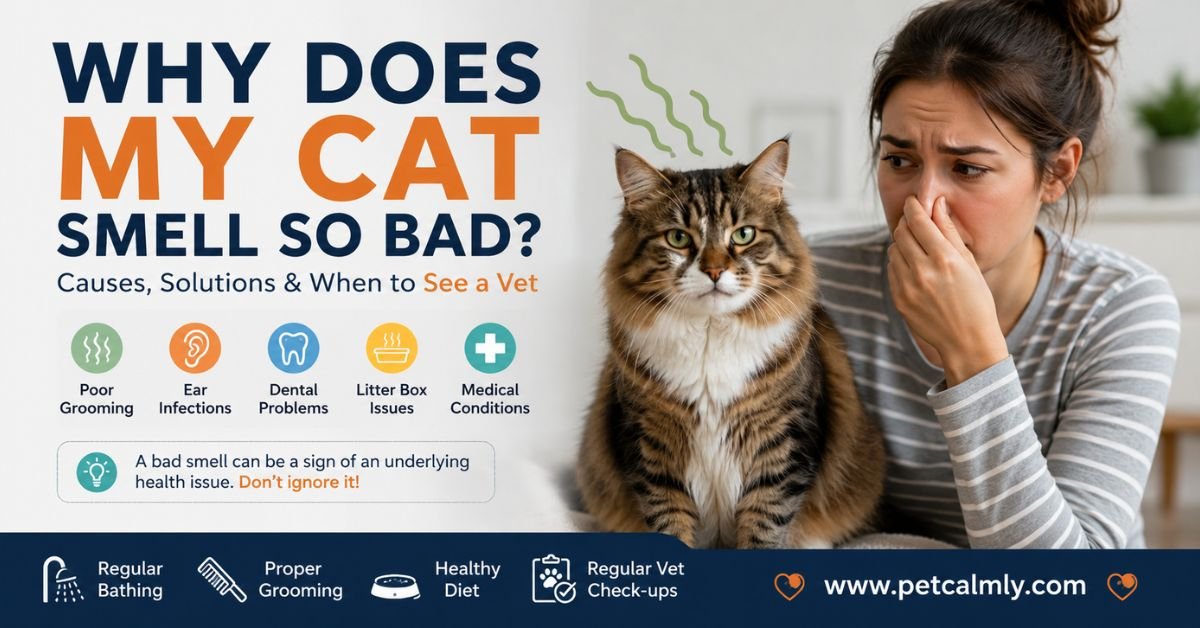
If you’re wondering “why does my cat smell so bad?”, the answer depends on where the odor is coming from. A healthy cat usually has very little natural smell because cats spend a large part of their day grooming themselves. A strong or unusual odor may come from poor grooming, dental disease, infected ears, skin infections, anal glands, digestive problems, urine contamination, or an underlying medical condition. While some smells have simple causes that can be managed at home, persistent or foul odors should always be checked by a veterinarian to rule out illness.
Why Does My Cat Smell So Bad?
Cats are famous for being clean animals. Many owners are surprised when a cat suddenly develops an unpleasant smell, especially if the odor appears without an obvious reason.
Sometimes the smell is harmless. Your cat may have rolled in something dirty, gotten wet outdoors, or simply missed a few grooming sessions after a lazy afternoon. In other situations, however, a bad smell is your cat’s way of telling you something isn’t right.
The first step is to identify where the odor is coming from. Is it your cat’s mouth? Their ears? Their fur? Their rear end? Different smells often point to different problems.
This guide explains the most common reasons a cat may smell bad, how to recognize warning signs, and what you can safely do before deciding whether it’s time for a veterinary visit.
Why Does My Cat Smell So Bad? Common Causes
Many different problems can cause an unpleasant odor in cats. Some are temporary, while others require medical treatment.
Here are the most common reasons.
| Cause | Common Smell | Serious? |
|---|---|---|
| Dental disease | Rotten or fishy breath | Often yes |
| Ear infection | Yeasty or foul odor | Yes |
| Skin infection | Musty or sour smell | Yes |
| Urine on fur | Ammonia smell | Sometimes |
| Dirty litter contamination | Waste odor | Usually no |
| Anal gland problems | Strong fishy odor | Yes if persistent |
| Obesity or arthritis | Body odor from poor grooming | Sometimes |
| Digestive upset | Feces or vomit smell | Depends on cause |
| Kidney disease | Ammonia-like breath | Yes |
| Diabetes | Sweet or fruity breath | Emergency if severe |
Not every odor means your cat is seriously ill, but strong smells that continue for more than a day or two deserve attention.
Healthy Cats Usually Shouldn’t Smell Bad
One of the reasons cats make such popular pets is their excellent grooming habits.
Most healthy adult cats spend several hours every day:
- Cleaning their coat
- Removing loose hair
- Spreading natural skin oils
- Removing dirt
- Reducing odors
A healthy cat’s coat may have a mild natural scent, but it shouldn’t smell foul, rotten, sour, or fishy.
If your cat suddenly smells much worse than usual, there’s often an underlying reason.
Is the Smell Coming From Your Cat’s Mouth?
Bad breath is one of the most common reasons owners think their cat smells terrible.
Unfortunately, bad breath is often more than just “cat breath.”
Dental Disease
Dental disease affects many adult cats, especially those over three years old.
As plaque builds up on the teeth, bacteria multiply around the gums. This creates a strong smell that owners often describe as:
- Rotten
- Fishy
- Sour
- Decaying meat
Other signs include:
- Drooling
- Difficulty eating
- Pawing at the mouth
- Red gums
- Loose teeth
- Eating only soft food
- Weight loss
Without treatment, dental disease becomes painful and may lead to tooth loss or infection.
Food Trapped Between Teeth
Sometimes the cause is much simpler.
Small pieces of food can become trapped around damaged teeth or inflamed gums.
The trapped food begins to break down, producing unpleasant odors.
Regular veterinary dental examinations help prevent these problems before they become severe.
Kidney Disease
Breath that smells like ammonia or urine may indicate kidney disease.
Healthy kidneys remove waste products from the bloodstream. When they stop working properly, waste builds up inside the body and changes the smell of the breath.
Other symptoms include:
- Drinking much more water
- Frequent urination
- Weight loss
- Poor appetite
- Vomiting
- Lethargy
Kidney disease is common in older cats and requires veterinary care.
Diabetes
Some owners notice their cat’s breath smells unusually sweet or fruity.
This can occur in cats with diabetes.
If fruity breath appears together with:
- Increased thirst
- Increased urination
- Weight loss
- Weakness
- Vomiting
your cat should be seen by a veterinarian promptly. Severe diabetes can become life-threatening if left untreated.
Could the Smell Be Coming From the Ears?
A surprisingly common source of bad odor is the ears.
Healthy cat ears should have little to no smell.
If you notice a strong odor when your cat shakes its head or sits beside you, an ear problem may be developing.
Ear Infections
Ear infections often produce:
- Yeasty smell
- Sour odor
- Rotten smell
Other signs include:
- Head shaking
- Scratching ears
- Dark discharge
- Redness
- Swelling
- Pain when touched
Ear infections are less common in cats than dogs but still occur, especially in cats with allergies, ear mites, or weakened immune systems.
Never use cotton swabs deep inside your cat’s ears, as this can cause injury.
Ear Mites
Ear mites are tiny parasites that live inside the ear canal.
They commonly affect:
- Kittens
- Rescue cats
- Outdoor cats
- Multi-cat households
Signs include:
- Very itchy ears
- Dark coffee-ground debris
- Head shaking
- Strong odor
Fortunately, ear mites are highly treatable once properly diagnosed.
Does Your Cat’s Fur Smell Bad?
Sometimes the odor comes from the coat rather than the mouth or ears.
A healthy coat should feel clean and have very little smell.
When the fur develops a sour, greasy, or musty odor, several problems are possible.
Poor Grooming
Cats that stop grooming themselves often develop noticeable body odor.
Common reasons include:
- Obesity
- Arthritis
- Pain
- Illness
- Old age
These cats may struggle to reach parts of their body, especially:
- Lower back
- Tail base
- Belly
- Rear end
Over time, saliva, oils, loose hair, urine, and dirt accumulate in the coat, creating an unpleasant smell.
Owners sometimes notice greasy fur, small mats, or dandruff alongside the odor.
Skin Infections
Bacteria and yeast naturally live on healthy skin.
When the skin becomes damaged through allergies, wounds, excessive scratching, or moisture, these organisms can multiply rapidly.
The result may be:
- Musty odor
- Sour smell
- Rotten smell
- Oily coat
Watch for additional signs like:
- Hair loss
- Red skin
- Scabs
- Excessive licking
- Thickened skin
- Crusts
Skin infections usually require veterinary treatment rather than home remedies.
Allergies
Cats with allergies often scratch, bite, and lick themselves excessively.
This damages the skin barrier and allows bacteria or yeast to grow.
You may notice:
- Smelly skin
- Hair loss
- Red patches
- Itchy ears
- Constant grooming
The odor often improves only after the underlying allergy is managed.
Why Does My Cat Smell Like Urine?
If your cat smells strongly of urine, it’s important to determine whether the odor is coming from the fur or whether your cat is having urinary problems.
Cats sometimes get urine on their coat because:
- They are overweight.
- They have arthritis and cannot clean themselves properly.
- Long fur traps urine.
- The litter box is too small.
- The litter isn’t cleaned often enough.
Older cats and overweight cats are especially prone to urine-soaked fur around the hindquarters.
However, if your cat is also:
- Straining to urinate
- Crying in the litter box
- Visiting the litter box repeatedly
- Passing only small amounts of urine
- Producing blood in the urine
seek veterinary care immediately. Urinary blockages especially in male cats can quickly become life-threatening.
Could the Smell Be Coming From the Rear End?
Many owners suddenly notice an intense fishy smell and immediately wonder why their cat smells so bad.
Often, the odor comes from the area around the tail.
Anal Gland Problems
Cats have two small anal glands that release a strong-smelling fluid during bowel movements.
Sometimes these glands don’t empty normally.
The trapped material becomes thick, irritated, or infected, producing an unmistakable fishy odor.
Other signs include:
- Scooting across the floor
- Excessive licking under the tail
- Swelling beside the anus
- Pain when sitting
- Sudden foul smell after your cat becomes frightened
Anal gland issues are less common in cats than in dogs, but they do occur and should be treated before an abscess develops.
Diarrhea or Dirty Fur
Cats with diarrhea or soft stools may accidentally soil the fur around their tail.
Long-haired breeds are especially prone to this problem because waste can stick to the coat.
In many cases, a gentle cleanup is all that’s needed. However, recurring diarrhea or frequent fecal staining may point to digestive issues, parasites, food intolerance, or other health concerns that deserve further investigation.
Why Does My Cat Smell So Bad? Less Obvious Causes You Shouldn’t Ignore
Not every unpleasant smell comes from your cat’s mouth, ears, or coat. Sometimes the odor is a symptom of a health condition that’s affecting the entire body.
The smell alone doesn’t provide a diagnosis, but when combined with other signs—such as changes in appetite, grooming, or litter box habits it can help you and your veterinarian identify the underlying problem more quickly.
Let’s look at some less obvious causes.
Can Digestive Problems Make a Cat Smell Bad?
Yes. Digestive issues can affect both your cat’s breath and body odor.
When a cat has an upset stomach or chronic digestive disease, food may not be digested efficiently. Some cats also groom themselves after vomiting or diarrhea, leaving unpleasant odors trapped in their fur.
Common digestive-related causes include:
- Food intolerance
- Sudden diet changes
- Intestinal parasites
- Inflammatory bowel disease (IBD)
- Chronic constipation
- Gastrointestinal infections
Besides a bad smell, you may notice:
- Vomiting
- Diarrhea
- Gas
- Weight loss
- Poor appetite
- Dull coat
- Litter box changes
Digestive problems that last more than a day or two, especially when accompanied by lethargy or dehydration, should be evaluated by a veterinarian.
Can Obesity Cause a Cat to Smell Bad?
Absolutely.
Many overweight cats have difficulty reaching certain areas of their body while grooming.
The areas most commonly missed include:
- Lower back
- Base of the tail
- Belly
- Inner thighs
- Around the anus
As natural skin oils, loose fur, urine, and debris build up, bacteria and yeast can multiply, creating a stale or greasy odor.
Obesity may also increase the risk of:
- Skin fold irritation
- Matted fur
- Urine staining
- Reduced mobility
- Arthritis
Helping an overweight cat lose weight gradually under veterinary guidance often improves grooming habits and reduces body odor over time.
Why Older Cats Sometimes Develop an Unpleasant Smell
Senior cats often require extra grooming support.
As cats age, they may develop conditions that make self-grooming uncomfortable, including:
- Arthritis
- Dental pain
- Vision loss
- Kidney disease
- Muscle weakness
Instead of keeping their coat spotless, they may leave patches of greasy fur or develop mats that trap moisture and dirt.
You may also notice:
- Flaky skin
- Increased dandruff
- Thinner coat
- Less flexibility
- Longer sleeping periods
Gentle brushing and regular health checks can help older cats stay clean and comfortable.
Can Stress Affect How a Cat Smells?
It can.
Stress itself doesn’t usually create a bad smell, but it can lead to behaviors that do.
For example, a stressed cat may:
- Stop grooming regularly
- Spray urine to mark territory
- Have stress-related digestive upset
- Overgroom until the skin becomes irritated
- Develop a greasy coat
Common stress triggers include:
- Moving to a new home
- Bringing home another pet
- Loud construction
- New family members
- Changes in routine
Reducing stress often improves grooming habits within a few days or weeks.
What Does Each Type of Cat Odor Usually Mean?
The type of smell can provide useful clues.
| Smell | Possible Cause |
|---|---|
| Fishy | Anal glands, dental disease |
| Rotten | Dental infection, skin infection |
| Yeasty | Ear infection, yeast dermatitis |
| Sour | Skin infection, dirty fur |
| Ammonia | Urine contamination, kidney disease |
| Sweet or fruity | Diabetes |
| Feces | Dirty coat, diarrhea |
| Musty | Poor grooming, oily skin |
Keep in mind that these are clues—not diagnoses. The same smell can have more than one cause.
How to Find the Source of the Smell
Instead of guessing, perform a gentle head-to-tail check.
Look at your cat’s:
Mouth
Check for:
- Red gums
- Drooling
- Broken teeth
- Difficulty chewing
- Bad breath
Ears
Look for:
- Wax buildup
- Dark debris
- Redness
- Scratching
- Strong odor
Coat
Feel for:
- Greasy patches
- Mats
- Damp fur
- Bald spots
- Scabs
Rear End
Look for:
- Feces stuck to fur
- Urine stains
- Swelling
- Excessive licking
- Redness
Litter Box Habits
Watch for changes such as:
- Urinating more often
- Straining
- Diarrhea
- Constipation
- Blood in urine or stool
These observations can be very helpful for your veterinarian if an appointment becomes necessary.
Safe Home Care for a Smelly Cat
If your cat otherwise seems healthy and the odor appears mild, there are a few safe steps you can take at home.
Brush Your Cat Regularly
Regular brushing removes:
- Loose fur
- Dirt
- Dander
- Dead skin
- Minor debris
Long-haired cats often benefit from daily brushing, while short-haired cats usually do well with a few sessions each week.
Brushing also gives you the chance to spot lumps, wounds, parasites, or skin irritation early.
Keep the Litter Box Clean
A dirty litter box can make even a healthy cat smell unpleasant.
Aim to:
- Scoop waste daily.
- Replace litter regularly.
- Wash the litter box with mild soap and warm water.
- Dry it completely before adding fresh litter.
Cats with long fur may also benefit from occasional sanitary trimming around the hindquarters, performed carefully or by a professional groomer.
Clean Minor Messes Promptly
If urine or feces gets on your cat’s coat:
- Use a soft damp cloth or pet-safe grooming wipe.
- Trim heavily soiled fur if necessary.
- Dry the coat thoroughly.
- Avoid using scented human wipes or alcohol-based products.
Never leave dried urine or feces on the fur, as it can irritate the skin.
Support Good Dental Health
Healthy teeth help prevent one of the most common causes of bad odor.
Helpful habits include:
- Veterinary dental checkups
- Cat-safe toothpaste
- Dental diets recommended by your veterinarian
- Veterinary-approved dental treats
- Gradual tooth-brushing training
Never use human toothpaste, as it contains ingredients that can be harmful to cats.
Encourage Healthy Grooming
If your cat has become less active, make grooming easier by:
- Keeping the coat brushed
- Providing soft bedding
- Maintaining a healthy body weight
- Scheduling regular wellness exams
- Monitoring for signs of pain
Older cats may appreciate short, gentle grooming sessions instead of one long brushing.
5 Common Mistakes Cat Owners Make
When a cat smells bad, it’s tempting to solve the problem quickly. Unfortunately, some well-meaning solutions can make things worse.
Avoid these common mistakes.
1: Bathing Too Frequently
Cats rarely need full baths unless recommended by a veterinarian.
Frequent bathing can:
- Dry the skin
- Remove natural oils
- Increase irritation
- Cause stress
Instead, spot-clean dirty areas whenever possible.
2: Using Human Shampoo
Human shampoos have a different pH than feline skin.
Using them may lead to:
- Dryness
- Itching
- Skin irritation
Always choose a shampoo specifically formulated for cats if bathing is necessary.
3: Ignoring Persistent Bad Breath
Many owners assume bad breath is normal.
It isn’t.
Persistent foul breath often signals dental disease, which becomes more painful over time if left untreated.
4: Cleaning Ears With Cotton Swabs
Pushing cotton swabs into the ear canal can:
- Push debris deeper
- Injure the ear
- Damage the eardrum
Clean your cat’s ears only with products recommended by your veterinarian and only as instructed.
5: Covering Up the Smell
Spraying perfume, air freshener, or scented products on your cat doesn’t solve the problem.
Instead, it may:
- Irritate sensitive skin
- Trigger respiratory irritation
- Hide symptoms that need medical attention
Finding the cause is always better than masking the odor.
When Does a Bad Smell Become an Emergency?
Some odors are simply unpleasant. Others can signal a condition that needs urgent treatment.
Contact your veterinarian as soon as possible if your cat has a bad smell along with:
- Difficulty breathing
- Severe lethargy
- Repeated vomiting
- Refusing food for more than 24 hours
- Bloody diarrhea
- Large skin wounds
- Facial swelling
- Difficulty urinating
- No urine production
- Fruity breath with weakness
- Sudden collapse
These symptoms may indicate a serious illness that shouldn’t wait.
When Should You Schedule a Veterinary Visit?
Arrange an appointment if:
- The smell lasts longer than a few days.
- Your cat stops grooming.
- The odor keeps returning.
- Bad breath becomes severe.
- You notice swollen gums or loose teeth.
- Your cat scratches its ears constantly.
- There is discharge from the ears, nose, or skin.
- Your cat loses weight unexpectedly.
- Drinking or urination changes significantly.
- Your cat seems painful or withdrawn.
Early treatment is often simpler, less expensive, and more comfortable for your cat than waiting until symptoms worsen.
A Simple Checklist for Cat Owners
If your cat smells bad, work through this checklist:
- ✓ Identify where the smell is coming from.
- ✓ Check your cat’s mouth, ears, coat, and rear end.
- ✓ Look for changes in eating, drinking, or litter box habits.
- ✓ Brush your cat and clean away any visible dirt.
- ✓ Scoop and sanitize the litter box regularly.
- ✓ Monitor the odor for one to two days if your cat otherwise seems well.
- ✓ Schedule a veterinary examination if the smell persists or your cat develops additional symptoms.
By approaching the problem step by step, you’ll be more likely to find the true cause instead of treating only the odor.
More Information About Pets, Please Visit Our Website: How Many Teeth Do Adult Cats Have?
What Do Kitten Teeth Look Like When They Fall Out?
Cat Constipation Home Remedy
Why Is My Cat Losing Hair and Weight?
Frequently Asked Questions
1: Why does my cat smell so bad even after grooming?
If your cat still smells bad despite grooming, the odor may be coming from a health problem rather than dirt. Dental disease, ear infections, skin infections, anal gland issues, or an underlying medical condition can all cause persistent odors that grooming alone won’t fix. If the smell continues for more than a few days or is accompanied by other symptoms, schedule a veterinary examination.
2: Why does my indoor cat suddenly smell bad?
A sudden bad smell in an indoor cat is often a sign that something has changed. Possible causes include:
- Dental problems
- Ear infections
- Urine or feces on the fur
- Skin infections
- Poor grooming due to pain or obesity
- Digestive illness
Because indoor cats are less likely to encounter outdoor dirt or wildlife, a new odor deserves a closer look.
3: Why does my cat smell fishy?
A fishy smell usually comes from the anal glands, although severe dental disease can also produce a similar odor.
If your cat has a fishy smell along with scooting, excessive licking under the tail, or swelling near the anus, have your veterinarian check the anal glands.
4: Is it normal for a senior cat to smell different?
Older cats sometimes develop a stronger body odor because they groom less effectively due to arthritis, dental pain, or other age-related conditions. While a mild change in smell can happen with age, a strong or foul odor is not considered normal and should be investigated.
5: Can I give my cat a bath if it smells bad?
Sometimes, but bathing should not be your first solution.
A bath may help if your cat has dirt, urine, or feces on its coat. However, frequent bathing won’t treat infections, dental disease, or internal illnesses. Use only a cat-safe shampoo, and avoid bathing a cat that is sick, injured, or extremely stressed unless instructed by your veterinarian.
6: When should I worry about my cat smelling bad?
You should seek veterinary care if the bad smell:
- Lasts more than a few days
- Becomes stronger over time
- Comes with vomiting or diarrhea
- Is accompanied by weight loss
- Causes your cat to stop eating
- Is associated with difficulty urinating
- Includes bleeding, swelling, or discharge
- Appears alongside unusual tiredness or behavior changes
These signs suggest the odor may be linked to a medical condition that requires treatment.
Key Takeaways
If you’re still asking, “Why does my cat smell so bad?”, remember these important points:
- Healthy cats usually have very little natural odor.
- Identifying where the smell originates mouth, ears, skin, fur, or rear end is the first step toward finding the cause.
- Dental disease, ear infections, skin infections, poor grooming, urine contamination, and anal gland problems are among the most common reasons for a bad smell.
- Senior cats, overweight cats, and cats with chronic illnesses may need extra grooming support.
- A persistent or worsening odor should never be ignored, especially if your cat is also eating less, losing weight, or acting differently.
- Early veterinary care can often prevent minor issues from becoming serious health problems.
How to Help Your Cat Stay Fresh and Healthy
Preventing unpleasant odors starts with good everyday care. A few simple habits can make a big difference:
- Feed a balanced, high-quality diet.
- Provide fresh, clean water every day.
- Brush your cat regularly, especially if they have long hair.
- Keep the litter box clean by scooping daily.
- Schedule routine veterinary wellness exams.
- Watch for changes in grooming, appetite, or behavior.
- Address dental care before bad breath becomes severe.
Routine observation is one of the best ways to catch health problems early. Because cats often hide signs of illness, even a new smell can be an important clue that something isn’t right.
Conclusion
A healthy cat should not have a strong or unpleasant odor. If you’ve noticed yourself wondering, “Why does my cat smell so bad?”, the answer often lies in identifying where the smell is coming from and paying attention to any other changes in your cat’s health or behavior.
Sometimes the solution is straightforward, such as cleaning urine from the coat or helping an older cat with grooming. In other cases, a persistent smell may be an early warning sign of dental disease, an ear or skin infection, digestive issues, kidney disease, diabetes, or another medical condition that requires professional care.
The good news is that most causes of bad odor can be successfully managed when caught early. By combining regular grooming, proper dental care, a clean environment, and routine veterinary checkups, you can help your cat stay comfortable, healthy, and smelling the way a healthy cat should clean and fresh.
If the odor is unusual, keeps returning, or is accompanied by symptoms like weight loss, vomiting, difficulty urinating, or changes in appetite, don’t wait. A prompt veterinary examination is the safest way to identify the cause and begin the right treatment.