Short direct answer
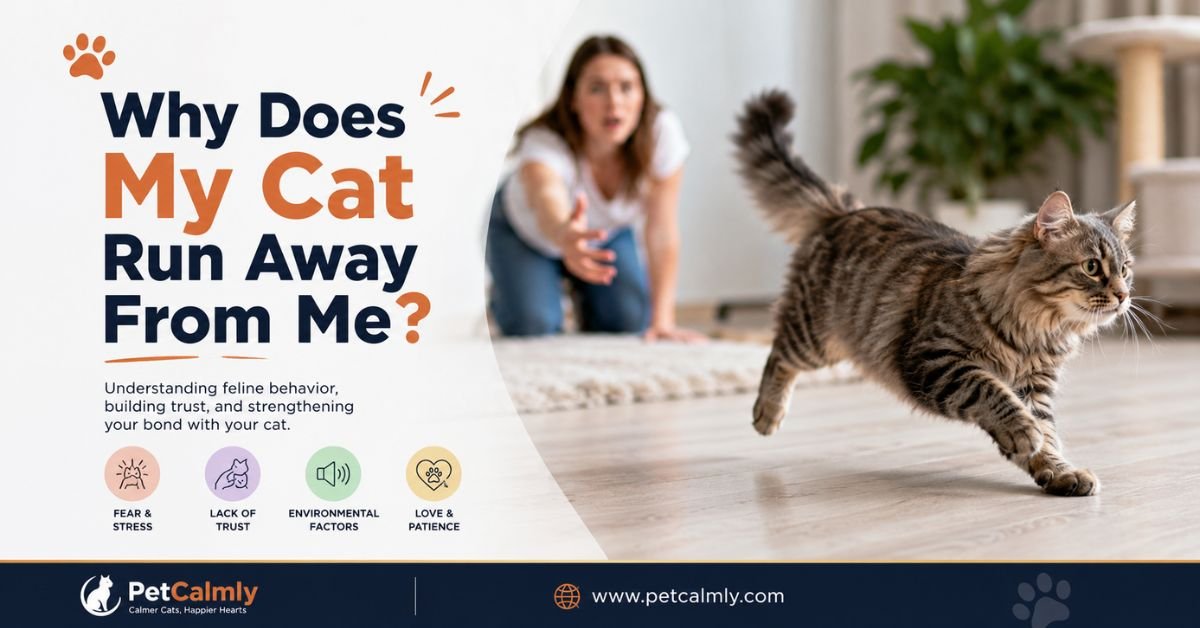
If you’re asking “why does my cat run away from me,” the most common reason is fear or lack of trust, but it’s not always that simple. Cats may also run away due to past negative experiences, poor socialization, overstimulation, illness, stress, or simply natural independence. Unlike dogs, cats are more sensitive to body language, movement, and tone of voice.
In many cases, your cat isn’t “rejecting” you it’s protecting its personal space or responding to something in its environment that feels unsafe. Understanding the trigger is the key to improving your bond and helping your cat feel secure around you.
Introduction
It can feel confusing—and even a little hurtful—when your cat sees you and immediately runs away.
You might start wondering:
- “Did I do something wrong?”
- “Does my cat hate me?”
- “Why is my cat scared of me all of a sudden?”
The truth is usually much calmer and more fixable than it feels in the moment. Cats are sensitive animals. Small changes in your behavior, environment, scent, or routine can change how they respond to you.
Sometimes a cat that runs away is simply:
- Unsure about your intention
- Overstimulated or anxious
- Reacting to past experiences
- Feeling unwell or uncomfortable
- Or just in “independent mode”
In this guide, we’ll break down every realistic reason behind this behavior and help you rebuild trust step by step—without forcing interaction or stressing your cat.
7 Main Reasons Your Cat Runs Away From You
Let’s look at the most common causes in a clear and practical way.
1. Fear or Lack of Trust (Most Common Reason)
Cats don’t automatically trust humans. Trust is built slowly through consistent, predictable experiences.
A cat may run away if:
- It wasn’t socialized properly as a kitten
- It had a stressful past (shelter, abuse, stray life)
- You move too quickly or unpredictably
- Your voice is loud or sudden
Even friendly cats can become fearful if something changes in your behavior.
Example:
You reach toward your cat quickly to pet it while it’s resting. The cat perceives that sudden movement as a possible threat and runs away even if your intention was affectionate.
2. You Are Accidentally Overstimulating Your Cat
Many owners don’t realize that cats have a “limit” for interaction.
Signs of overstimulation include:
- Tail flicking or swishing
- Ears turning sideways or back
- Skin twitching on the back
- Sudden movement away from touch
If you ignore these signals, your cat may choose to run away next time to avoid being touched again.
3. Negative Association With You (Even Unintentional)
Cats have strong memory for experiences linked to emotions.
Your cat may avoid you if:
- You’ve given medicine recently
- You forced grooming or bathing
- You picked it up when it didn’t want to be held
- You accidentally scared it once (falling object, loud noise near you)
Even one or two negative moments can influence behavior temporarily.
4. Your Cat Is Naturally Independent
Not all cats are social or clingy. Some breeds and personalities prefer distance.
More independent cats often:
- Observe from afar
- Choose when to interact
- Avoid being approached suddenly
- Prefer routine over affection bursts
This is normal feline behavior, not rejection.
5. Stress or Environmental Changes
Cats are highly sensitive to environmental changes.
Common stress triggers:
- New furniture
- Moving house
- New pet or baby
- Guests visiting frequently
- Loud construction or noise
- Changes in feeding schedule
When stressed, a cat’s instinct is to hide or avoid contact.
6. Health Problems or Pain
Sometimes, avoidance is a sign of discomfort.
Cats may run away if they are:
- In pain when touched
- Experiencing dental issues
- Suffering from arthritis (especially older cats)
- Feeling nauseous or unwell
A cat in pain often avoids interaction completely not just with you, but with everyone.
7. Strong Smells or Sensory Triggers
Cats rely heavily on scent. Even your smell can change their reaction.
They may avoid you if you:
- Used a new perfume or lotion
- Smell like another animal
- Recently cleaned with strong chemicals
- Have unfamiliar outdoor scents on your clothes
To a cat, scent change can feel like “you are not the same safe person today.”
Emotional Reasons Behind the Behavior
Cats don’t run away randomly. There is almost always an emotional trigger.
Let’s break it down simply:
Fear-Based Reaction
- “Something about this feels unsafe.”
Uncertainty
- “I’m not sure what will happen if I stay.”
Overwhelm
- “That’s too much attention right now.”
Past Memory Trigger
- “This reminds me of something I didn’t like.”
Understanding the emotional layer is key to solving the behavior long-term.
5 Common Owner Mistakes That Make Cats Run Away
Sometimes, the issue isn’t the cat it’s the interaction style.
Here are common mistakes:
1 Approaching Too Quickly
Cats prefer slow, predictable movement.
2 Reaching Over Their Head Immediately
This feels threatening to many cats.
3 Picking Them Up Without Warning
Even friendly cats dislike being grabbed suddenly.
4 Staring Directly at Them
In cat language, intense staring can feel like pressure or challenge.
5 Chasing Them for Attention
This often increases fear instead of bonding.
How to Stop Your Cat From Running Away (Step-by-Step Guide)
Now let’s focus on real solutions you can use daily.
Step 1: Let Your Cat Initiate Contact
Instead of approaching, sit calmly and allow your cat to come to you.
- Sit on the floor or couch
- Avoid eye contact at first
- Stay still and relaxed
This builds trust naturally.
Step 2: Use Slow Blinking Communication
Cats use blinking as trust signals.
Try this:
- Look at your cat gently
- Slowly blink
- Look away calmly
If your cat blinks back, that’s a positive sign.
Step 3: Offer Treats Without Pressure
Place treats near you instead of handing them directly.
This helps your cat associate you with positive experiences.
Step 4: Respect Distance
If your cat walks away, do not follow it.
Following reinforces fear. Respecting space builds confidence.
Step 5: Use Calm Voice Tone Only
Avoid:
- Loud calling
- Sudden excitement
- High-pitched chasing tone
Instead:
- Soft, steady voice
- Gentle repetition of name
Step 6: Build Routine Interaction
Cats feel safer with predictability.
Try:
- Feeding at same times daily
- Short daily calm interactions
- Consistent play sessions
Daily Routine to Build Trust
Here is a simple structure:
Morning
- Quiet greeting
- Fresh food
- No forced handling
Afternoon
- 10–15 minutes of play (wand toys work best)
Evening
- Sit near your cat calmly
- Allow approach
- Soft interaction if invited
Consistency matters more than intensity.
When Should You Worry?
While most cases are behavioral, sometimes vet attention is needed.
Seek veterinary advice if:
- Your cat suddenly starts running away after being very affectionate
- There are signs of pain when touched
- Appetite has changed
- Grooming habits decrease
- Your cat hides constantly
These can indicate underlying health issues.
What Should Pet Owners Do? (Practical Action Plan)
If your cat runs away from you:
Do:
- Stay calm and patient
- Observe body language carefully
- Give space and time
- Reward calm behavior
- Build trust slowly
Don’t:
- Chase your cat
- Force interaction
- Punish avoidance
- Overstimulate with constant petting
- Ignore stress signals
Think of trust as something earned, not demanded.
Real-Life Example (Common Situation)
A cat owner adopts a young rescue cat. At first, the cat hides whenever approached. Over time, the owner stops trying to grab it and instead sits nearby quietly each day.
After a few weeks:
- The cat starts observing from a distance
- Then slowly comes closer
- Eventually begins rubbing against the owner
Nothing “magical” changed the cat simply learned that the environment was safe.
Conclusion
If your cat runs away from you, it’s usually not rejection it’s communication. Cats use distance to express emotions like fear, uncertainty, overstimulation, or simply preference for space.
The good news is that this behavior can improve significantly with patience, consistency, and respect for your cat’s boundaries.
The goal is not to force closeness, but to create safety so closeness happens naturally. When your cat feels secure around you, running away becomes less necessary and trust becomes the foundation of your relationship.
More Information About Pets, Please Visit Our Website: Why Does My Cat Lick My Nose?
Best Professional Cat Grooming Brush
Best Cat Litter for Odor Control in 2026
Frequently Asked Questions
1. Why does my cat suddenly run away from me for no reason?
Sudden avoidance often comes from stress, fear, or a change in environment. Even small changes like scent, noise, or routine can trigger it.
2. Is it normal for cats to avoid their owners?
Yes, many cats are naturally independent. Avoidance doesn’t always mean dislike—it often means they want space.
3. Why does my cat run away when I try to pet it?
Your cat may be overstimulated or not in the mood for touch. Some cats prefer limited or specific types of affection.
4. How do I stop my cat from being scared of me?
Let your cat approach you first, avoid sudden movements, use treats, and maintain a calm, predictable routine.
5. Could my cat be sick if it keeps running away?
Yes, if the behavior is sudden or paired with other symptoms like hiding or appetite loss, a vet check is recommended.
6. How long does it take for a cat to trust you?
It varies. Some cats take days, others weeks or months. Consistency and patience are the key factors.