Short direct answer
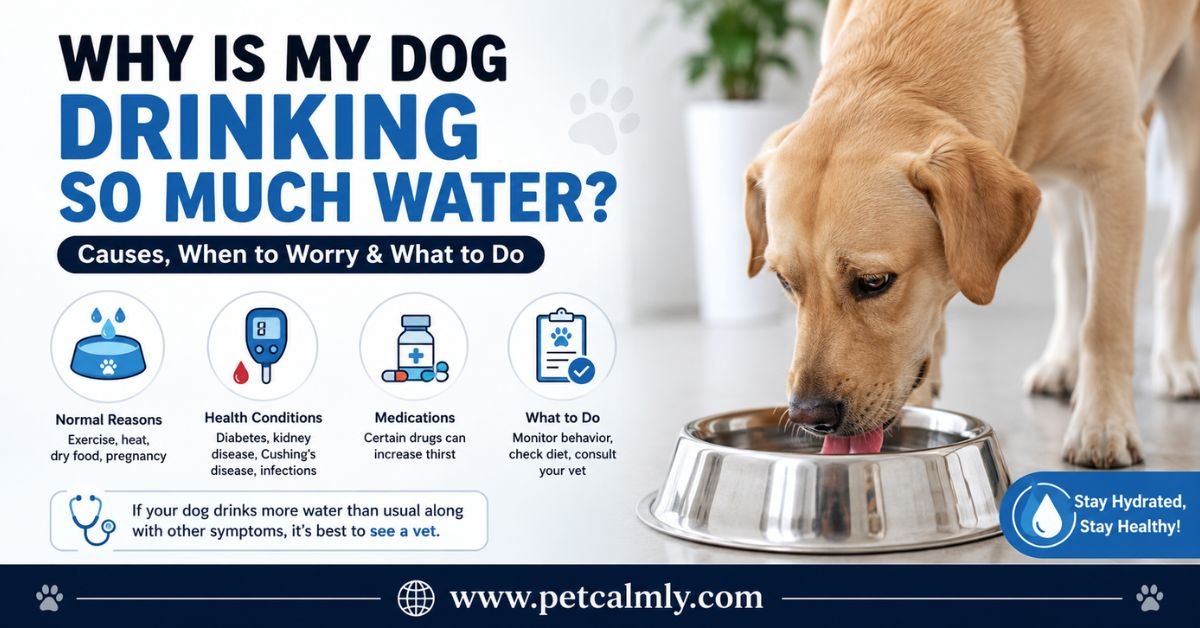
A dog drinking noticeably more water than usual is usually trying to tell you something. Sometimes it’s harmless hot weather, a new dry food, more exercise, or a salty treat. Other times, sudden or ongoing excessive thirst (called polydipsia) can be an early sign of diabetes, kidney disease, Cushing’s disease, or a urinary infection. If the increase is sudden, lasts more than a couple of days, or comes with other changes like weight loss, more frequent urination, or low energy, it’s worth a call to your veterinarian rather than waiting it out.
The rest of this guide walks through exactly why this happens, how to tell normal thirst from a red flag, and what to actually do next so you’re not left guessing at 9 p.m. with a dog who just drained the water bowl for the third time today.
How Much Water Should a Dog Actually Drink?
Before you can decide whether your dog is drinking “too much,” it helps to know what normal even looks like. Water needs shift depending on your dog’s size, activity level, diet, and the weather, so there’s no single perfect number but there is a useful range.
Normal Daily Water Intake for Dogs
Most healthy dogs drink somewhere around 1 ounce of water per pound of body weight each day, though this can vary quite a bit. A 30-pound dog eating dry kibble on a mild day might drink close to a liter of water, while the same dog on a hot afternoon after a long walk could easily drink more. Dogs on wet or raw food naturally drink less from the bowl, since a large portion of their water intake already comes from their meals.
Veterinary sources generally consider daily intake above roughly 100 milliliters per kilogram of body weight (about 1.5 ounces per pound) to be excessive and worth investigating further. That’s a helpful benchmark, but in practice, most owners notice a pattern change long before they’d ever measure it in milliliters.
Signs Your Dog Is Drinking More Than Usual
You probably don’t need a measuring cup to know something’s off. Watch for:
- Refilling the water bowl far more often than usual
- Your dog waking up at night to drink
- Increased urination, accidents in the house, or asking to go outside more
- Drinking immediately after eating, then again shortly after
- Water-seeking behavior following you to the kitchen, drinking from taps, puddles, or the toilet
- Increased thirst paired with weight loss, low energy, or appetite changes
If you’re noticing two or three of these together, that’s a stronger signal than just one isolated day of heavy drinking.
Common, Everyday Reasons Dogs Drink Excessive Water
Not every thirsty dog has a medical problem. A lot of the time, the explanation is something simple happening in daily life.
Hot Weather, Exercise, and Mild Dehydration
Heat and activity are the most obvious triggers. A dog who just ran around the yard, went for a long hike, or spent the afternoon outside in summer will naturally want to replace lost fluids. This kind of thirst usually settles down within an hour or two of rest and shouldn’t continue for days on end.
A Recent Diet Change
Switching from wet food to dry kibble is one of the most common — and most overlooked — reasons for a sudden jump in water intake. Wet food is roughly 70–80% water, while dry kibble contains very little. If you recently changed your dog’s food, increased thirst is often just biology catching up, not a health scare.
Salty table scraps, jerky treats, or foods with added sodium can have the same effect, pulling more water into your dog’s system and driving thirst upward for a day or so.
Medications That Increase Thirst
Several common veterinary medications list increased thirst as a known side effect. Steroids (like prednisone), certain seizure medications (such as phenobarbital), and diuretics prescribed for heart or kidney conditions can all noticeably increase how much a dog drinks. If your dog recently started a new medication, this is worth mentioning to your vet rather than assuming it’s unrelated.
Stress, Boredom, or Habit
Some dogs drink more when they’re anxious, bored, or going through a change in routine — a move, a new pet in the house, or being left alone longer than usual. This is sometimes called psychogenic or compulsive drinking, and while it’s real, veterinarians typically only diagnose it after ruling out medical causes first. It’s rarely the first explanation, and it shouldn’t be assumed without a vet’s input.
Medical Causes of Excessive Thirst in Dogs (Polydipsia)
This is the part most owners are actually searching for, and it deserves a straightforward answer: persistent, unexplained excessive drinking is one of the most common early warning signs in veterinary medicine. It’s often noticed by owners at home before any other symptom shows up, which is exactly why it shouldn’t be brushed off.
Here are the conditions most frequently linked to increased thirst and urination (often written as PU/PD — polyuria/polydipsia — in vet notes).
Diabetes Mellitus
In diabetic dogs, the body either doesn’t produce enough insulin or can’t use it properly, so excess sugar builds up in the blood and spills into the urine. That sugar pulls extra water out with it, leading to frequent urination — which then drives the dog to drink more to keep up. Increased thirst combined with increased urination, weight loss despite a normal or increased appetite, and low energy are the classic combination vets look for.
Chronic Kidney Disease
Healthy kidneys concentrate urine, holding onto water the body needs. When kidney function declines, that ability weakens, so more water passes out in the urine than it should. The dog compensates by drinking more to avoid becoming dehydrated. Kidney disease is more common in older dogs, but it can appear at any age, and increased thirst is frequently one of the very first signs owners notice at home — often before appetite or energy changes.
Cushing’s Disease (Hyperadrenocorticism)
This condition involves the body producing too much cortisol, usually due to a small tumor on the pituitary or adrenal gland. Along with excessive thirst and urination, dogs with Cushing’s often develop a pot-bellied appearance, thinning fur, increased appetite, and noticeably thinner skin. It tends to develop gradually, which is part of why it’s sometimes mistaken for “just getting older.”
Urinary Tract Infections and Bladder Issues
A UTI can cause a dog to feel like they need to urinate frequently, even when very little urine is actually produced. This can create a cycle of increased drinking alongside more frequent, sometimes uncomfortable, bathroom trips. Straining, blood in the urine, or licking around the genital area alongside increased thirst points more toward a urinary issue than a systemic one.
Liver Disease and Hypercalcemia
Liver problems can interfere with normal hormone regulation and fluid balance, sometimes leading to increased thirst as one of several subtle signs. Elevated blood calcium (hypercalcemia) which can be caused by certain cancers, infections, or metabolic issues — is another less common but important cause your vet may test for during bloodwork.
Pyometra in Unspayed Female Dogs
If your dog is female and not spayed, a uterine infection called pyometra is an important possibility to rule out, especially if the increased thirst appears a few weeks after her last heat cycle. Pyometra is a genuine emergency — it often comes with lethargy, loss of appetite, vomiting, and sometimes vaginal discharge, and it requires urgent veterinary care.
A quick summary table for reference:
| Possible Cause | Other Common Signs | Typical Onset |
|---|---|---|
| Diabetes mellitus | Weight loss, increased appetite, frequent urination | Gradual |
| Chronic kidney disease | Bad breath, reduced appetite, lethargy | Gradual, more common in older dogs |
| Cushing’s disease | Pot-bellied look, hair thinning, increased appetite | Gradual |
| Urinary tract infection | Straining, frequent small urinations, blood in urine | Can appear suddenly |
| Liver disease | Vomiting, yellowing of gums/eyes, appetite loss | Variable |
| Pyometra (unspayed females) | Lethargy, vomiting, discharge, fever | Weeks after a heat cycle |
This table is a starting point for conversation with your vet, not a diagnostic tool. Several of these conditions look similar from the outside, and bloodwork or urinalysis is usually needed to tell them apart.
Is It Normal for a Puppy to Drink a Lot of Water?
Puppies are generally more active, grow quickly, and regulate their body temperature less efficiently than adult dogs, so it’s normal for them to drink a bit more relative to their size — especially after play sessions or meals. That said, the same warning signs apply at any age. A puppy who is drinking excessively and having frequent accidents despite being mostly house-trained, losing weight, or seeming unusually tired deserves a vet visit rather than a “they’ll grow out of it” assumption. Juvenile-onset diabetes and congenital kidney conditions, while less common, do occur in young dogs.
It also helps to rule out the simple stuff first with puppies. New homes, new food, and the excitement of exploring a bigger world can all temporarily increase how much a puppy drinks. If the increase settles down within a few days as your puppy adjusts to their routine, that’s usually a good sign. If it doesn’t, or if it’s paired with lethargy or vomiting, treat it the same way you would in an adult dog and get it checked.
Senior Dogs and Increased Water Intake: What Changes With Age
Many of the medical causes above kidney disease, Cushing’s, diabetes — become more common as dogs get older, which is part of why increased thirst in a senior dog deserves a closer look sooner rather than later. It’s easy to write off a thirstier older dog as “just aging,” but age itself doesn’t cause increased thirst; an underlying condition usually does. Annual or twice-yearly bloodwork becomes especially valuable in senior dogs partly because it can catch these changes before symptoms become obvious at home.
When Should You Worry About Your Dog Drinking Too Much Water?
Not every thirsty afternoon needs a vet visit, but certain patterns should move you from “watching” to “acting.”
Contact your veterinarian if:
- The increased thirst has lasted more than 2–3 days without an obvious cause (heat, new food, exercise)
- Your dog is also urinating more frequently or having accidents indoors
- You notice weight loss, a change in appetite, or reduced energy
- Your dog has vomiting, diarrhea, or seems uncomfortable
- An unspayed female dog’s thirst increases a few weeks after a heat cycle
- Your dog has an existing diagnosis (kidney disease, diabetes, liver disease) and their thirst suddenly changes
Seek urgent or same-day veterinary care if:
- The increase in thirst came on very suddenly and severely
- Your dog seems weak, disoriented, or is having trouble standing
- There’s vomiting combined with lethargy and reduced appetite
- You suspect pyometra in an unspayed female
None of this is meant to cause alarm over a single hot afternoon of heavy drinking. It’s meant to help you recognize the difference between “my dog is thirsty today” and “my dog’s body is trying to tell me something.”
Here’s a realistic example of how this often plays out: an owner notices their seven-year-old Labrador is asking to go outside more often and seems to be drinking constantly, but otherwise acting completely normal same appetite, same energy, same enthusiasm at the door. It’s tempting to assume everything is fine because the dog “seems okay.” But increased thirst paired with increased urination is exactly the kind of subtle, easy-to-dismiss pattern that bloodwork often catches early, well before a dog looks or acts sick. That’s precisely why this particular symptom carries more weight than it might seem to at first glance.
What Pet Owners Should Do If Their Dog Is Drinking Too Much
If you’ve noticed a real, ongoing change, here’s a practical way to approach it rather than just worrying about it.
Track Water Intake Before Your Vet Visit
For a few days, measure how much water you’re putting in the bowl and how much is left at refill time (accounting for spills is tricky, but even a rough estimate helps). Note:
- Total water offered vs. remaining each day
- Any changes in urination frequency or accidents
- Appetite, energy, and weight changes
- Any new food, treats, medications, or environmental changes
This information is genuinely useful to your vet and can speed up diagnosis significantly, since “a lot” means something different to every owner.
What to Expect at the Veterinary Appointment
Your vet will likely start with a physical exam and ask about the timeline and any other symptoms. From there, diagnosis usually involves:
- Bloodwork to check kidney and liver values, blood sugar, and calcium levels
- Urinalysis to assess how concentrated the urine is and check for infection, glucose, or protein
- Additional tests if needed, such as imaging or hormone-specific tests for conditions like Cushing’s disease
Try not to restrict your dog’s water access before the appointment unless your vet specifically tells you to. If an underlying condition is causing fluid loss, withholding water can lead to dangerous dehydration rather than solving anything.
Common Mistakes Pet Owners Make With Excessive Thirst
A few well-intentioned habits can actually make things harder to figure out:
- Restricting water “just in case.” This can be genuinely dangerous if your dog has an underlying condition causing fluid loss, and should only be done under direct veterinary guidance.
- Assuming it’s “just the heat” for weeks on end. Heat explains a day or two of extra drinking, not a month.
- Waiting for a second symptom before calling the vet. Excessive thirst is often the first sign, appearing well before appetite or energy changes.
- Changing food or treats right before a vet visit without mentioning it. This can muddy the diagnostic picture, so always share recent diet changes.
- Comparing your dog’s thirst to another dog’s. Breed, size, diet, and individual habits all affect normal water intake, so what’s normal for one dog may not be for another.
How to Support a Healthy, Well-Hydrated Dog
Regardless of the cause, a few habits help you stay ahead of problems rather than reacting to them after the fact:
- Keep fresh water available at all times, and clean the bowl daily — a dirty bowl can reduce how much a dog is willing to drink.
- Note your dog’s “normal” so you can actually recognize when something changes.
- Keep an eye on urination habits during walks, not just drinking habits at home.
- Schedule routine bloodwork, especially once your dog reaches their senior years, so subtle shifts get caught early.
- Introduce new foods or treats gradually, and keep an eye on sodium content in store-bought treats.
- Never restrict water intake as a home remedy without your vet’s direction.
None of these prevent every medical condition, but they make it far more likely you’ll notice a change early — which almost always leads to a better outcome, whatever the cause turns out to be.
More Information About Pets, Please Visit Our Website: Is Dog Anxiety Normal?
Why Is My Dog Suddenly Anxious in the Car?
Why Is My Dog Suddenly Anxious?
Rescue Dog Separation Anxiety at Night
Dog Barking When Owner Leaves
Frequently Asked Questions
1: Why is my dog suddenly drinking a lot of water?
A sudden increase is often linked to heat, exercise, a recent food change, or a new medication. If it continues for more than a couple of days or comes with other symptoms like increased urination or weight loss, it’s worth a veterinary check to rule out conditions like diabetes or kidney disease.
2: How much water is too much for a dog to drink in a day?
As a general guideline, daily intake above roughly 100 milliliters per kilogram of body weight (about 1.5 ounces per pound) is considered excessive. In practice, most owners notice the change in behavior more frequent bowl refills, more bathroom trips — before they ever measure it precisely.
3: Can stress or anxiety make a dog drink more water?
Yes, some dogs do drink more when anxious, bored, or dealing with a routine change, sometimes called psychogenic drinking. However, vets typically only reach this conclusion after ruling out medical causes, since the symptoms overlook with several health conditions.
4: Is excessive thirst always a sign of diabetes in dogs?
No. While diabetes is one common cause, excessive thirst can also point to kidney disease, Cushing’s disease, urinary infections, liver issues, or simply diet and weather changes. Bloodwork and a urinalysis are needed to tell these apart.
5: Should I limit my dog’s water if they’re drinking too much?
Generally, no not without your veterinarian’s direct guidance. If an underlying condition is causing your dog to lose fluid through urination, restricting water can lead to dehydration rather than fixing the root problem.
6: When should I take my dog to the vet for drinking too much water?
If the increase lasts more than two to three days, is paired with more frequent urination, weight loss, low energy, or appetite changes, or comes on very suddenly, it’s time to schedule a veterinary visit rather than wait and see.
Conclusion
An empty water bowl by lunchtime doesn’t automatically mean something’s wrong but it’s also not something to wave off indefinitely, especially if the pattern sticks around. Your dog can’t tell you they’ve been feeling off, so a change like this is often the clearest message they can send. Paying attention to it, tracking what you’re seeing, and looping in your vet when the pattern doesn’t resolve on its own is one of the simplest ways to catch a health issue while it’s still easy to manage.