Short direct answer
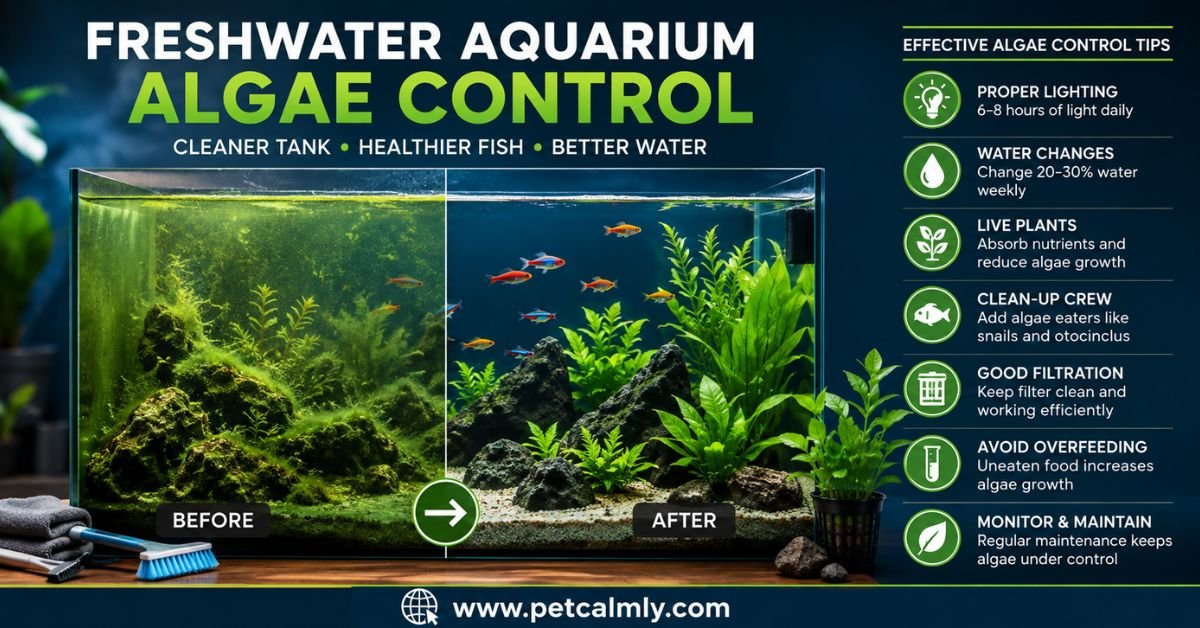
Algae thrives when you have excess nutrients (from food waste and fish waste), too much light, and irregular water changes. Control it by reducing feeding, doing 25-30% weekly water changes, limiting light to 6-8 hours daily, cleaning the tank glass weekly, and using algae-eating fish or invertebrates like plecos, otocinclus, or amano shrimp. For stubborn algae, reduce nitrates with more frequent water changes, add aquatic plants that compete with algae for nutrients, or use targeted methods like UV sterilizers or hydrogen peroxide spot treatments for specific algae types. Most algae problems disappear within 2-3 weeks once you address the root cause.
Why Algae Feels Like a Never-Ending Battle
If you’ve stared at your aquarium and watched a green film creep across the glass overnight, or noticed brown fuzz coating your plants and decorations, you’re not alone. Algae is one of the most common frustrations for aquarium owners even experienced ones.
The tricky part? Algae isn’t always bad. In fact, a small amount of algae is completely normal and even healthy. The problem is that algae grows quickly when conditions favor it, and once it gets going, it can feel impossible to stop without knowing exactly what you’re fighting.
The good news: algae control isn’t complicated once you understand what causes it. Unlike some aquarium problems that require expensive equipment or professional help, algae is something you can manage at home with basic changes to your routine and a clear understanding of what your algae is trying to tell you.
This guide walks you through everything you need to know about controlling algae in your freshwater aquarium—from identifying different types, to understanding what causes blooms, to practical solutions that actually work. By the end, you’ll have a clear action plan you can start implementing today.
What Is Algae in Freshwater Aquariums and Why Does It Grow?
Algae isn’t a single organism. It’s a broad category of aquatic plants mostly single-celled or simple multicellular organisms that reproduce through spores or simple division. Algae exists naturally in almost every freshwater environment on Earth, including your tap water.
In an aquarium, algae does what it’s designed to do: convert light and nutrients into energy. The problem isn’t that algae exists. The problem is that aquarium conditions often create a perfect storm for algae to multiply faster than your tank’s cleanup crew can handle.
Why algae blooms happen in aquariums:
Algae needs three things to grow:
- Nutrients (nitrogen and phosphorus, primarily from fish waste and uneaten food)
- Light (photosynthesis requires light energy)
- Time (algae reproduces rapidly when conditions are right)
When your tank has excess nutrients, prolonged lighting periods, and limited competition for those nutrients, algae takes over. It’s not a reflection of poor aquarium keeping it’s actually a sign that your tank is productive and stable enough to support life. The issue is simply one of balance.
Types of Algae You’ll Find in Your Freshwater Tank
Different algae types respond to different control methods. Knowing what you’re dealing with helps you treat it more effectively.
Green Water Algae (Suspended Algae)
This is exactly what it sounds like: your entire tank turns cloudy or pea-soup green. It happens when single-celled algae floats freely in the water column instead of settling on surfaces.
What causes it: Excessive nutrients combined with intense light. It develops quickly sometimes overnight and can clear up just as fast once you address the cause.
Why it matters: Green water blocks light from reaching your plants and decorations, making the tank look neglected even if you’re keeping up with maintenance. Fish can still live fine in green water, but it’s aesthetically frustrating.
Green Spot Algae
Small, dark green dots appear on your tank glass, plants, and decorations. They’re firmly attached and don’t wipe off easily with a cloth.
What causes it: This is actually one of the slower-growing algae types and often appears in tanks with lower nutrient levels but still adequate light. It’s less of a crisis than it looks.
Why it matters: While harmless, it obscures your view of the tank and suggests that light-to-nutrient balance is slightly off.
Brown Algae (Diatoms)
A brownish or tan film that looks almost furry it covers plants, decorations, and glass. It’s particularly common in new tanks during the first month.
What causes it: Diatoms thrive in tanks with lower light and higher nitrate levels. They’re especially common when silicates (from gravel, sand, or tap water) are present.
Why it matters: Brown algae is usually harmless and often clears up on its own as your tank matures. However, it can block light from reaching your plants.
Black Brush Algae (Beard Algae)
Black, hair-like strands, usually on plant leaves and hardscape. It’s stubborn and harder to control than other types.
What causes it: Often linked to inconsistent water parameters, high carbon dioxide levels, or poor water flow. It indicates an imbalance somewhere in your system.
Why it matters: This algae grows slowly but persists. It looks unsightly and can smother plants if left unchecked. Most fish won’t eat it, making manual removal necessary.
Hair Algae (Thread Algae)
Thin, bright green strands that look like hair. It tangles on plants and can cover entire areas if unchecked.
What causes it: Excess nutrients (especially nitrates and phosphates) combined with adequate light. It thrives in tanks with infrequent water changes.
Why it matters: Hair algae spreads quickly and can block light from beneficial plants. It’s annoying to remove manually but responds well to nutrient control.
Why Algae Control Matters for Your Fish
This is important: algae itself doesn’t directly harm most fish. Many fish species actually eat algae and benefit from it as part of their diet.
However, excess algae creates secondary problems:
Light blocking: Thick algae reduces light available to aquatic plants. Plants produce oxygen and absorb excess nutrients, so when plants struggle, your whole tank ecosystem suffers.
Oxygen depletion: When algae dies and decays, it consumes oxygen during decomposition. In severe cases, this can cause oxygen levels to drop enough to stress fish, especially at night when plants aren’t photosynthesizing.
Water parameter swings: Heavy algae growth followed by sudden algae die-off (which happens when you suddenly change your approach) can cause rapid pH and oxygen shifts. Fish are sensitive to these swings.
Reduced tank visibility: While this is mostly aesthetic, it affects your ability to monitor your fish for health problems or unusual behavior.
Plant competition: Algae competes with aquatic plants for nutrients and light. Plants are better for your tank than algae, so controlling algae helps plants thrive.
The bottom line: algae control is really about maintaining the balance that lets your plants, fish, and beneficial bacteria all coexist healthily. It’s not about creating a sterile tank it’s about preventing one organism from dominating the others.
Root Causes of Algae Blooms in Freshwater Aquariums
Understanding what’s actually causing your algae is the difference between temporary fixes and permanent solutions.
Overfeeding and Excess Nutrients
This is the most common cause. Fish waste and uneaten food break down into ammonia, nitrite, and eventually nitrate. Algae thrives on nitrate.
Red flags: You’re feeding more than your fish actually eat, you’re feeding more than once a day for beginner setups, or you’re not seeing food disappear within a few minutes of feeding.
The fix: Feed smaller amounts. Most fish only need to eat once daily. Watch for uneaten food and remove it immediately. A good rule: feed only what your fish can consume in 2-3 minutes.
Inadequate Water Changes
Water changes dilute accumulated nutrients, especially nitrates. Skipping or shortening your water change schedule lets nutrients build up faster than algae can consume them.
Red flags: You’re doing water changes less than once weekly, or your water changes are smaller than 20% of tank volume.
The fix: Most freshwater tanks benefit from 25-30% water changes weekly. Heavily stocked tanks or those with heavy feeding schedules may need 50% weekly changes.
Too Much Light
Light drives photosynthesis. More light means algae grows faster, but this only matters when nutrients are also available.
Red flags: Your light is on more than 8 hours daily, your tank is in direct sunlight (which provides intense, uncontrolled light), or you recently upgraded to a more powerful light.
The fix: Reduce lighting to 6-8 hours daily for planted tanks, or 4-6 hours for non-planted setups. Use an automatic timer to keep it consistent. Avoid direct sunlight, which adds uncontrolled light energy.
Poor Water Circulation
Stagnant areas of the tank allow nutrients and algae spores to settle and accumulate. Good flow keeps everything suspended and allows your filter to process it.
Red flags: You notice dead zones behind decorations, or debris accumulates in certain spots without your removing it.
The fix: Position your filter output to create gentle circulation throughout the tank. Avoid completely blocking flow with large decorations.
New Tank Syndrome
New tanks experience algae blooms during the first 2-4 weeks because the bacterial colonies that consume waste are still establishing. This is totally normal.
Red flags: Your tank is less than a month old and you’re seeing algae bloom.
The fix: Be patient. Continue normal maintenance. The bloom usually subsides as bacteria establish. You can speed this by doing 30-40% water changes twice weekly during this phase.
Tap Water Nutrients
Some tap water contains nitrates from agricultural runoff or treatment processes. These feed algae immediately.
Red flags: Algae appears despite consistent maintenance, or the problem started when you first filled the tank.
The fix: Test your tap water for nitrates. If levels are high (above 20 ppm), consider using distilled water for top-offs or water changes, or using a nitrate-removing resin in your filter.
How to Control Algae: The Complete Step-by-Step Guide
Once you understand what’s causing your algae, controlling it becomes straightforward. Here’s a systematic approach that addresses the problem from multiple angles.
Step 1: Identify and Address the Root Cause
Before treating algae, solve the underlying problem. Look at your maintenance routine:
- Are you overfeeding? Cut feeding by 25-50%.
- Are water changes too infrequent? Increase to 25-30% weekly.
- Is your light on too long? Reduce to 6-8 hours daily with a timer.
- Is your tank new? Be patient—algae blooms typically resolve in 2-3 weeks.
This step alone solves 80% of algae problems. Don’t skip it and jump straight to adding fish or chemicals. You’ll just be treating the symptom, not the cause.
Step 2: Clean the Tank
Remove as much visible algae as possible before it continues spreading. Use these methods based on where the algae is:
On the glass: Use an algae scraper or soft cloth. Don’t use harsh abrasives that can scratch acrylic or scratch glass if you’re not careful.
On decorations: Remove decorations and scrub them with an old toothbrush under running water (no soap). This is a good opportunity to clean substrate debris underneath.
On plants: Gently rub leaves between your fingers or use a soft brush. Be gentle with delicate leaves. If a leaf is heavily covered, it may be easier to remove that leaf and let a new one grow.
In the substrate: Use a gravel vacuum during water changes to remove decaying matter that feeds algae.
Step 3: Perform a Larger Water Change
After cleaning, do a 30-40% water change. This accomplishes multiple things at once:
- Removes floating algae and debris you dislodged while cleaning
- Dilutes accumulated nutrients
- Removes organic matter that would decompose into more nutrients
- Starts resetting water parameters
Don’t vacuum the substrate too aggressively you want to preserve your beneficial bacteria colonies, which live in the gravel.
Step 4: Adjust Your Maintenance Routine
This is where you prevent the problem from returning:
Feeding: Feed smaller portions once daily. Watch for uneaten food and remove it within a few minutes.
Water changes: Do 25-30% water changes every 7 days. Mark your calendar so you don’t miss them.
Light: Set your light on a timer for 6-8 hours daily. Consistency matters more than the exact duration.
Cleaning: Wipe the glass weekly before algae establishes. It’s much easier to prevent algae growth than to remove thick layers.
Most tanks respond to these four changes within 2-3 weeks. If algae persists after three weeks of consistent maintenance, move to the next steps.
Step 5: Add Algae-Eating Fish or Invertebrates (Optional)
Algae-eating animals are useful, but they’re not a complete solution. They work best alongside proper maintenance, not instead of it.
Common algae-eating fish:
- Plecos (Plecostomus): Excellent at eating algae. However, many common plecos grow 12-24 inches and produce significant waste. Research your species before buying some stay small, others don’t.
- Otocinclus catfish: Small, peaceful fish that eat brown algae and green spot algae. They need to be kept in groups and prefer established tanks with abundant algae for grazing.
- Siamese algae eaters (SAE): Excellent at eating hair algae. More active and visible than plecos or otocinclus. Can be pricey and are sometimes confused with flying foxes (which are aggressive).
Common algae-eating invertebrates:
- Amano shrimp: Voracious hair algae eaters. Small, peaceful, and great in planted tanks. Prefer cooler water (72-78°F). Need established tanks with plenty of places to hide.
- Nerite snails: Eat green spot algae and brown algae. Excellent cleaners and very low-bioload. Won’t reproduce in freshwater.
- Mystery snails: Eat algae and leftover food. Larger and more visible than nerites. Can reproduce in freshwater, so populations can grow quickly if you don’t want them to.
Important: These animals eat algae but don’t eliminate the root cause. If you add them to a tank with excessive nutrients and light but don’t fix your maintenance routine, you’ll just have overfed animals producing more waste.
Step 6: Use Targeted Methods for Specific Algae Types
If algae persists despite addressing root causes and cleaning, use methods tailored to your specific algae type:
For green water: UV sterilizers kill floating algae cells. Place the sterilizer in your filter output and run it for 1-2 weeks. It won’t prevent future blooms but clears existing blooms quickly. Cost: $30-100.
For green spot algae: It’s slow-growing and usually indicates balanced conditions. Manual scraping works fine. This algae type typically doesn’t require additional treatment.
For brown algae: Usually resolves on its own as the tank matures. If it persists, increase water changes slightly and ensure your light isn’t too dim (counterintuitive, but insufficient light can favor diatoms).
For black brush algae: This is stubborn. Try CO2 supplementation if you’re running a planted tank (creates an environment where plants outcompete algae). Manual removal is necessary carefully pull strands away with tweezers. Some aquarists use hydrogen peroxide spot treatments (see below).
For hair algae: Increase water changes to 40-50% weekly temporarily. Add fast-growing stem plants that compete aggressively with algae. Consider amano shrimp, which specifically target hair algae.
Step 7: Consider Advanced Methods (If Needed)
Most algae problems resolve with the steps above. However, if you’re still struggling after 3-4 weeks of consistent maintenance plus adding algae-eating animals, consider these approaches:
Hydrogen peroxide spot treatment: For localized algae (especially black brush algae), carefully apply hydrogen peroxide directly to affected areas using a syringe. Use 3% hydrogen peroxide, not household cleaning peroxide. The dose is roughly 1ml per gallon of tank water. Wait a few hours, then do a partial water change. Use this sparingly high doses harm fish and beneficial bacteria.
Algaecides (chemical algae control): Commercial algaecides kill algae directly. However, they’re a last resort because:
- Dead algae decays and consumes oxygen, potentially stressing fish
- The dead matter still becomes nutrients that feed new algae growth
- They don’t fix the root cause
- They can harm sensitive fish and plants
If you use an algaecide, reduce the dose to half of what the label recommends, follow up with increased aeration, and plan more frequent water changes afterward.
Phosphate removers: Since phosphate is a key algae nutrient, removing it from the water prevents new growth. These work well in established tanks without live plants (since plants also need phosphate). In planted tanks, they can limit plant growth.
Natural Algae Control Methods vs. Chemical Solutions
There’s an ongoing discussion in the aquarium hobby about the best approach to algae control. Let’s compare the methods:
Natural Approach: Balanced Tank Management
How it works: Adjusting feeding, light, water changes, and filtration creates an environment where plants outcompete algae and algae-eating animals naturally control what remains.
Pros:
- Addresses root causes, not just symptoms
- Creates a self-sustaining system that requires less intervention long-term
- Safer for all tank inhabitants
- Cheaper overall
- Builds your understanding of aquarium ecology
Cons:
- Takes longer to show results (2-4 weeks vs. a few days)
- Requires patience and consistency
- May feel like you’re not doing enough when algae is thick
Best for: Beginner aquarists, anyone building long-term tank stability, planted tanks, tanks with sensitive fish
Chemical Approach: Algaecides and Additives
How it works: Commercial products kill algae directly through various mechanisms (copper compounds, enzymes, dyes, etc.).
Pros:
- Fast results noticeable improvement in days
- Feels more active and decisive
- Useful for severe infestations
Cons:
- Doesn’t address root causes, so algae typically returns
- Dead algae decays, consuming oxygen and creating more nutrients
- Some formulations harm plants or sensitive fish
- Adds chemicals to your tank environment
- More expensive long-term since you may need repeated treatments
- Can disrupt your tank’s bacterial balance
Best for: Emergency situations where algae is overwhelming the tank, heavily established tanks where you know what you’re doing
Hybrid Approach: The Practical Middle Ground
Most experienced aquarists eventually settle on a hybrid approach:
- Fix maintenance first (the natural approach)
- If needed, add algae-eating animals (natural, gentle)
- For persistent specific problems, use targeted methods like UV sterilizers or hydrogen peroxide spot treatments
- Reserve chemical algaecides for emergency situations only
This approach addresses root causes while providing faster relief when necessary.
Preventing Algae Growth in Your Freshwater Aquarium
Prevention is genuinely easier than treatment. Once you’ve solved an algae problem, these practices keep it from returning:
Establish a Consistent Maintenance Schedule
Write it down, set phone reminders, or use a calendar app. Consistency matters more than perfection.
Weekly tasks:
- 25-30% water change
- Wipe down the front glass
- Clean filter intake (if it’s clogged, water flow decreases)
- Remove uneaten food
Monthly tasks:
- Deep clean filter media (in old tank water, not tap water, to preserve bacteria)
- Check and replace filter media if necessary
- Test water parameters (especially after recent changes)
As-needed:
- Scrape algae off decorations
- Trim plants
- Remove dead leaves
Control Light Carefully
Light is one of the most overlooked algae prevention methods. Proper lighting prevents problems before they start.
Best practices:
- Use a timer set for 6-8 hours daily (consistency prevents algae better than duration)
- Avoid direct sunlight
- If you upgrade to a stronger light, reduce duration accordingly
- In non-planted tanks, 4-6 hours is sufficient and provides less algae growth
Choose Plants Wisely
Live plants consume nutrients that would otherwise feed algae. Fast-growing stem plants are particularly effective competitors.
Good algae-fighting plants:
- Ludwigia species
- Rotala species
- Cabomba
- Water sprite
- Stem plants generally
Why they help: These plants grow quickly and consume large amounts of nitrogen and phosphorus. The faster they consume nutrients, the less is available for algae.
Plant density: More plants mean more nutrient consumption. If you’re fighting algae, increase plant density.
Feed Thoughtfully
Overfeeding is the root cause of most algae problems. Being conservative with food prevents algae before it starts.
Feeding guidelines:
- Feed once daily for most fish
- Feed only what’s consumed in 2-3 minutes
- Most fish can go 1-2 days without food with no negative effects
- Carnivorous fish may need different feeding (research your specific species)
Match Stocking to Your Tank
More fish produce more waste. A tank with fewer fish has fewer nutrients for algae.
Consideration: You don’t need to keep your tank underfilled, but slight understocking makes algae prevention much easier.
When Algae Becomes a Serious Problem
Most algae is cosmetic frustration, not a health crisis. However, certain situations warrant closer attention or intervention:
Heavy Algae Bloom with Fish Distress
If your fish are gasping at the surface, hiding constantly, or showing lethargy during a heavy algae bloom, oxygen may be depleted.
What to do:
- Increase aeration immediately (point filter output toward the surface to create disturbance)
- Do an emergency 50% water change
- Turn off the light and remove algae manually
- Increase water change frequency temporarily
When to worry more: If fish distress continues after you’ve improved aeration and reduced algae, there may be an underlying water quality problem. Test ammonia, nitrite, and nitrate. High ammonia or nitrite indicates a filtration problem requiring more substantial intervention.
Rapid Algae Spread Covering Most of the Tank
Algae that covers more than 50% of visible surfaces within a few days indicates severe conditions—usually high nutrient levels combined with intense light.
What to do:
- Remove the light cover and inspect the bulb is it an unusually powerful unit?
- Test your tap water for nitrates
- Immediately reduce feeding to minimal levels
- Do two 50% water changes 3-4 days apart instead of one larger change
- Check that your filter is running properly (clogged filter means nutrients aren’t being processed)
When to consider professional help: If algae blooms despite addressing all obvious causes, have your water tested by an aquarium store or with a master test kit. Professional-grade testing sometimes reveals issues home test kits miss.
Persistent Black Brush Algae Despite Good Maintenance
Black brush algae that persists suggests an environmental problem beyond simple nutrient excess.
Possible causes:
- Inconsistent CO2 levels (in planted tanks)
- Poor water circulation in certain areas
- Excess organics from dead plant matter or trapped debris
- Tap water issues
What to do:
- Increase water change frequency to twice weekly
- Ensure good water circulation with filter adjustment
- Remove any dead plant matter promptly
- Consider manual removal of affected plant leaves
More Information About Pets, Please Visit Our Website: Freshwater Fish Diseases
Ich Treatment for Freshwater Fish
Frequently Asked Questions
1: Is algae bad for my fish?
Not directly. Most algae is harmless. Fish benefit from eating algae, and algae provides oxygen and nutrient cycling. However, excess algae can reduce light for plants, deplete oxygen when it dies and decays, and indicate that something in your tank’s balance needs attention. Algae itself isn’t the enemy it’s a signal that maintenance or environmental adjustment is needed.
2: Can I use bleach or household cleaners to clean my tank?
Never use bleach, vinegar, or household cleaners for your aquarium. These leave residues toxic to fish and beneficial bacteria. Clean decorations and plants with old toothbrushes under running water only. For the tank glass, use a magnetic algae scraper or soft cloth and tank water. If you need to sanitize something between tanks, rinse it thoroughly with extremely hot water instead.
3: How long does it take to get algae under control?
If you address the root cause (overfeeding, water changes, lighting, cleaning), most tanks show noticeable improvement within 1-2 weeks. Significant improvement typically happens within 3-4 weeks of consistent maintenance. Green water algae can clear remarkably fast sometimes within days of reduced light and feeding while green spot algae and brown algae are slower to resolve.
4: Will adding more plants definitely stop algae?
Plants compete with algae for nutrients, but adding a few low-light plants to a nutrient-rich, brightly lit tank won’t solve an algae problem. You need fast-growing plants in sufficient density, plus proper maintenance. Think of plants as a helpful addition, not a complete solution. They work best combined with proper feeding, water changes, and lighting.
5: What’s the best algae-eating fish for a beginner?
Otocinclus catfish or Siamese algae eaters are better beginner choices than plecos, which grow large and produce significant waste. Otocinclus are small and stay inconspicuous. Both need established tanks with existing algae to graze on. The key is adding them after you’ve reduced the algae problem, not as a solution to an active bloom. Expect a 2-week adjustment period before they become efficient algae-eaters.
6: Will a UV sterilizer completely solve my algae problem?
UV sterilizers kill floating green algae very effectively but don’t address root causes or prevent new growth. They’re best used as a temporary tool to clear an existing bloom while you’re adjusting your maintenance routine. Without fixing the underlying cause, algae returns once you turn off the sterilizer. Most aquarists use them for 1-2 weeks as part of a larger algae-control approach, not as a permanent solution.
The Path Forward: Your Algae Control Action Plan
Here’s your step-by-step checklist to start controlling algae today:
This week:
- ☐ Set a phone reminder for weekly water change day (choose a specific day)
- ☐ Reduce feeding amount by 25-50% and feed only once daily
- ☐ Reduce light to 6-8 hours daily and set a timer
- ☐ Clean the tank glass thoroughly
- ☐ Do a 30-40% water change and vacuum substrate
Next week:
- ☐ Perform your regular weekly water change
- ☐ Clean the glass again (before algae establishes)
- ☐ Assess progress is algae spreading less? Getting lighter?
- ☐ If you haven’t already, order or purchase algae-eating fish or invertebrates (optional)
Weeks 2-4:
- ☐ Maintain your new routine consistently
- ☐ Add algae-eating animals if you’re considering them
- ☐ Monitor for changes in algae growth rate
- ☐ Resist the urge to add chemicals or algaecide
After 4 weeks:
- If algae is significantly reduced: You’ve solved the problem. Maintain this routine.
- If algae persists: Identify which root cause you might have missed (overfeeding, inadequate water changes, too much light, new tank, tap water nutrients). Adjust accordingly.
Most aquarists find that once they establish this routine, algae becomes minimal and manageable. You’re not fighting algae indefinitely you’re establishing habits that keep your tank balanced.
Conclusion
One final perspective that helps many aquarists: algae isn’t a punishment for poor aquarium keeping. It’s feedback from your tank telling you something about the balance of nutrients, light, and maintenance. Every algae bloom is an opportunity to learn more about how your specific tank works.
Experienced aquarists don’t keep algae-free tanks by using secret products or magical methods. They keep balanced tanks by maintaining consistent feeding, regular water changes, appropriate lighting, and good cleaning habits. That’s it. Those four things, done consistently, prevent and control nearly all algae problems.
The satisfaction of moving from an algae-filled tank to a clean, balanced one comes from understanding your tank’s needs, not from discovering a silver-bullet product. And once you’ve achieved that balance once, maintaining it gets easier with each cycle.
Start with the root-cause fixes this week. Give it 2-3 weeks of consistency. Watch your tank transform. You’ve got this.