Short direct answer
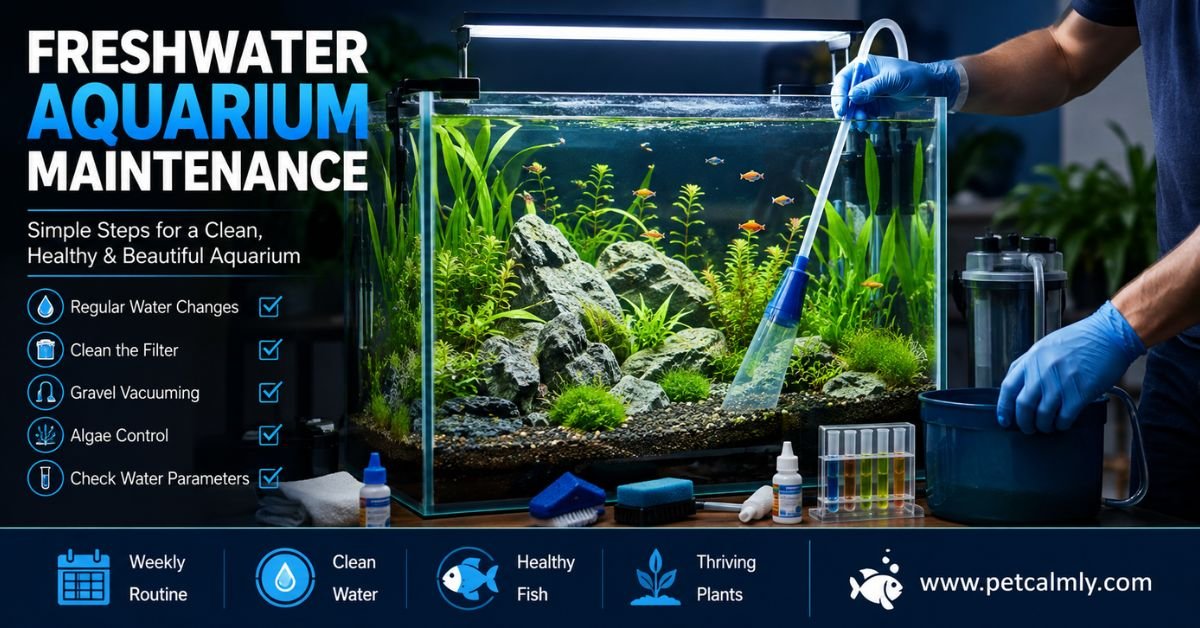
Freshwater aquarium maintenance means doing a few small, consistent tasks on a schedule instead of one big cleanup when things go wrong. Weekly, you’ll do a 10–25% water change and gravel vacuum. Every 2–4 weeks, you’ll rinse (not replace) your filter media and test your water. Monthly, you’ll check equipment and trim live plants. Skip the full teardown-and-scrub approach it destroys the beneficial bacteria your fish actually depend on to survive.
If you’ve ever scrubbed an aquarium spotless only to watch your fish gasping at the surface two days later, you already know something counterintuitive about this hobby: a “clean” tank and a “healthy” tank aren’t always the same thing. That mismatch is where most new aquarium owners get stuck, and it’s exactly what this guide is going to untangle for you.
I’ve written this the way I’d explain it to a friend who just brought home their first ten-gallon tank and a betta fish plainly, without jargon, and with the reasoning behind each step so you’re not just following orders, you actually understand your tank.
What Does Freshwater Aquarium Maintenance Actually Involve?
At its core, freshwater aquarium maintenance is the ongoing management of three things: water quality, biological filtration, and the physical environment your fish live in. It’s not a single chore it’s a rhythm made up of daily glances, weekly water changes, and monthly deeper checks.
Here’s the part most beginners miss: your aquarium isn’t a fish bowl with decorations. It’s a small, enclosed ecosystem. Waste from fish, uneaten food, and decaying plant matter constantly break down into ammonia, which is toxic to fish even in tiny amounts. A colony of beneficial bacteria living in your filter and substrate converts that ammonia into nitrite, then into nitrate a process called the nitrogen cycle. Your maintenance routine exists to support that cycle, not fight against it.
That’s why “cleaning” an aquarium the way you’d clean a bathtub draining it, scrubbing every surface, and refilling actually backfires. You end up wiping out the bacteria colony that was keeping your fish safe in the first place.
Why a Consistent Routine Matters More Than a Deep Clean
Fish don’t get sick from a little bit of algae on the glass. They get sick from swings sudden spikes in ammonia, nitrite, or nitrate, or abrupt changes in temperature and pH. Consistency is what protects them.
Think of it like this: a fish’s gills are in constant, direct contact with the water around it. There’s no skin barrier, no filtering the way our lungs filter air. Whatever is dissolved in that water goes straight into their bloodstream. A slow, steady maintenance rhythm keeps those water parameters stable, which is far less stressful on a fish’s body than a dramatic weekly overhaul followed by weeks of neglect.
This is also why owners who “rescue” a neglected tank by doing one massive cleaning session often see fish die within days afterward — not because the tank was dirty, but because the sudden change in water chemistry shocked the fish’s system.
The Weekly Freshwater Aquarium Maintenance Checklist
This is the backbone of your routine. Most healthy tanks need about 15–20 minutes a week once you’re in a rhythm.
- Change 10–25% of the water. Smaller, more frequent changes are gentler on fish than infrequent large ones.
- Vacuum the substrate with a gravel siphon to remove uneaten food and waste before it breaks down into ammonia.
- Wipe algae off the front glass with an algae pad or scraper (leave the back and side panels if you want a natural look algae there isn’t harmful).
- Check the temperature to confirm your heater is holding steady.
- Inspect fish briefly for clamped fins, unusual spots, labored breathing, or hiding behavior.
- Top off evaporated water with dechlorinated water if levels have dropped between changes.
A simple habit that saves a lot of headaches: do this on the same day every week. Sunday-morning tank time, for example, becomes second nature within a month, and you’ll start noticing small changes in your fish’s behavior faster because you’re looking closely on a predictable schedule.
Monthly and Deep Maintenance Tasks
Weekly care handles day-to-day stability. Monthly tasks catch the slower-building issues.
- Rinse filter media in old tank water, never tap water — chlorine and chloramine in tap water kill the beneficial bacteria living in the sponge or cartridge. Squeeze it gently in a bucket of water siphoned from the tank during a water change.
- Check and clean intake tubes on canister or hang-on-back filters, where debris tends to collect.
- Trim overgrown live plants and remove any decaying leaves.
- Test your full water parameters — ammonia, nitrite, nitrate, and pH — even if everything seems fine visually.
- Inspect equipment cords, seals, and suction cups for wear, since aquarium accidents often start with equipment failure rather than fish health issues.
- Clean the outside glass, lid, and light fixture to prevent salt creep and dust buildup that reduce light penetration for plants.
You do not need to replace filter media monthly. Full filter cartridge replacement, if your system uses disposable ones, should happen only occasionally and staggered — never all media at once — so you don’t wipe out your bacteria colony in a single move.
Understanding the Nitrogen Cycle (Why Your Tank Needs Time to “Mature”)
If you’ve heard the term “cycling” and felt confused, here’s the plain-English version.
When you first set up a tank, it has no beneficial bacteria. Ammonia from fish waste builds up with nothing to break it down. Over roughly 4–6 weeks, two types of bacteria colonize your filter and substrate: one converts ammonia into nitrite (also toxic), and another converts nitrite into nitrate (far less harmful, removed through regular water changes).
This is why adding a full stock of fish to a brand-new tank on day one is one of the most common beginner mistakes — there’s no bacteria yet to process their waste, and ammonia poisoning follows quickly. Experienced fishkeepers either cycle a tank fish-free for several weeks using a bottled bacteria starter and a source of ammonia, or add just one or two hardy fish at a time and monitor closely.
Once a tank is cycled, your maintenance routine is essentially about protecting that established bacteria colony while managing the waste it can’t fully absorb — namely nitrate, which only water changes remove.
Common Freshwater Aquarium Maintenance Mistakes
Over-cleaning the filter. Rinsing filter media in tap water or replacing it entirely resets your bacteria colony, often triggering a mini ammonia spike known as “new tank syndrome” even in an established tank.
Skipping water testing because the water “looks clear.” Clear water can still carry dangerous ammonia or nitrite levels. Clarity and safety aren’t the same thing.
Overfeeding. Uneaten food is one of the biggest contributors to poor water quality. Most fish do better on smaller amounts fed once or twice daily than owners expect — a common rule of thumb is only what fish can consume within two to three minutes.
Changing too much water at once. A 90–100% water change might feel thorough, but it can shock fish through sudden shifts in temperature, pH, and hardness.
Ignoring the substrate. Gravel and sand trap waste. Without regular vacuuming, that waste becomes a hidden, ongoing ammonia source even in a tank with a good filter.
Using untreated tap water. Chlorine and chloramine, added to make tap water safe for humans, are harmful to fish and the bacteria in your filter. A water conditioner should be part of every water change, without exception.
How to Read Your Fish: Behavior as an Early Warning System
Fish can’t tell you something’s wrong, but their behavior does the talking if you know what to watch for.
- Gasping at the surface often points to low oxygen or high ammonia/nitrite — test water immediately.
- Clamped fins or hovering in one spot can signal stress, poor water quality, or the early stages of illness.
- Rapid gill movement may indicate ammonia or nitrite exposure, or a temperature that’s too high.
- Loss of appetite is frequently one of the first signs something is off, whether environmental or health-related.
- Flashing (rubbing against decor or substrate) can point to parasites or skin irritation.
None of these symptoms confirm a specific problem on their own they’re signals to test your water and observe more closely, not a diagnosis. Behavior changes are your earliest, most useful maintenance tool, often showing up before a test kit would flag a problem.
Water Testing: What the Numbers Actually Mean
| Parameter | Ideal Range (Most Community Tanks) | What It Signals |
|---|---|---|
| Ammonia (NH3/NH4) | 0 ppm | Any detectable amount is dangerous; indicates filtration or bioload issues |
| Nitrite (NO2) | 0 ppm | Toxic to fish; often appears during cycling or after filter disruption |
| Nitrate (NO3) | Under 20–40 ppm | Removed mainly through water changes; high levels stress fish over time |
| pH | Species-dependent, generally 6.5–7.5 | Sudden swings are more harmful than a stable number outside the “ideal” range |
| GH/KH (hardness) | Species-dependent | Affects pH stability and is important for certain species like African cichlids |
| Temperature | Species-dependent, generally 74–80°F for tropical fish | Fluctuations stress fish and weaken immune response |
A liquid test kit tends to be more accurate over time than test strips, and it’s worth the investment if you plan to keep fish long-term rather than replace a struggling tank repeatedly.
Setting Up a Maintenance Schedule That Actually Sticks
The most common reason maintenance routines fail isn’t lack of knowledge it’s lack of a system. A simple checklist taped near the tank or a recurring phone reminder does more for your fish’s health than memorizing water chemistry ever will.
A realistic weekly-to-monthly rhythm:
- Daily — Quick visual check: fish behavior, temperature, obvious debris.
- Weekly — Water change, gravel vacuum, glass cleaning, brief water clarity check.
- Every 2–4 weeks — Full water test, filter media rinse.
- Monthly — Equipment inspection, plant trimming, deeper cleaning of tank exterior and accessories.
If you’re managing multiple tanks or a busier schedule, batching tasks (testing water for all tanks on the same day, for example) keeps things from slipping through the cracks.
When Should You Worry? Signs That Go Beyond Routine Maintenance
Most day-to-day issues a bit of algae, slightly cloudy water after a water change, one fish looking a little shy resolve with normal care. But certain signs mean it’s time to look deeper or involve a professional.
Contact an aquatic veterinarian or experienced fish health specialist if you notice:
- Persistent gasping at the surface that doesn’t improve after a water change and increased surface agitation
- Visible sores, unusual growths, or cotton-like fungal patches
- Multiple fish showing symptoms simultaneously, which can indicate a spreading illness or a serious water quality event
- Sudden, unexplained fish deaths despite normal-looking water
- Ongoing loss of appetite lasting more than a few days across multiple fish
While general fishkeeping problems are usually manageable at home, disease outbreaks, parasitic infections, and unexplained mass die-offs go beyond routine maintenance advice and are worth consulting an aquatic veterinarian or a knowledgeable local fish store with a strong reputation for accurate diagnosis.
What Should Pet Owners Do Differently as Beginners?
If you’re new to this hobby, a few adjustments make the learning curve much gentler
- Start with hardier fish species while you’re still learning to read water parameters and behavior.
- Resist the urge to add fish quickly. A slowly stocked tank is a far more forgiving one.
- Keep a simple log of water test results and water change dates for the first few months patterns become obvious once you can see them written down.
- Avoid “fixing” problems with chemicals as a first response. Most water quality issues trace back to overfeeding, overstocking, or inconsistent water changes, not something a bottled treatment will solve long-term.
- Ask questions before adding new fish, since not every species is compatible in temperament, size, or water needs this prevents a surprising number of maintenance headaches down the line.
Conclusion
A thriving freshwater aquarium isn’t the result of one perfect cleaning session it’s built from small, repeated actions that protect a delicate, living balance under the surface. Once you understand why each step matters, maintenance stops feeling like a chore list and starts feeling like a routine check-in with animals that genuinely depend on your consistency.
Give the process a few months. Your instincts will sharpen, your fish will settle into predictable, healthy behavior, and the whole routine will take a fraction of the time and worry it does right now.
More Information About Pets, Please Visit Our Website: Why Is My Fish Tank Water Cloudy?
How to Cycle a Fish Tank With Plants
Freshwater Aquarium Algae Control
Freshwater Fish Diseases
Ich Treatment for Freshwater Fish
Frequently Asked Questions
How often should I do a water change in a freshwater aquarium?
Most freshwater tanks do well with a 10–25% water change weekly. Heavily stocked tanks or tanks with larger, messier fish may need slightly more frequent changes, while lightly stocked, well-planted tanks can sometimes go a bit longer.
Can I clean my fish tank too much?
Yes. Over-cleaning especially rinsing filter media in tap water or scrubbing every surface during one session — can destroy the beneficial bacteria your tank depends on, leading to ammonia spikes even in an established aquarium.
Why is my aquarium water cloudy after a water change?
Mild cloudiness after a water change is often just disturbed substrate settling and usually clears within a day. Persistent cloudiness can point to a bacterial bloom, overfeeding, or an underlying filtration issue worth testing for.
Do I need to treat tap water before adding it to my aquarium?
Yes, in almost all cases. Tap water typically contains chlorine or chloramine, which are safe for humans but harmful to fish and to the beneficial bacteria in your filter. A water conditioner neutralizes these before the water touches your tank.
How do I know if my tank is fully cycled?
A fully cycled tank consistently shows 0 ppm ammonia and 0 ppm nitrite on a test kit, with nitrate present and rising between water changes. This typically takes four to six weeks from setup, though it can vary.
What’s the difference between routine tank maintenance and a fish health emergency?
Routine maintenance covers predictable tasks like water changes, filter rinsing, and testing. A health emergency multiple fish gasping, sudden deaths, visible sores, or a rapid ammonia/nitrite spike that doesn’t resolve with a water change calls for closer investigation and, if it persists, guidance from an aquatic veterinarian or experienced aquatics professional.