Short direct answer
The best food for aquarium fish is a species-appropriate diet that matches your fish’s natural feeding style flakes or pellets as a daily base, supplemented with freeze-dried, frozen, or live foods for protein and enrichment. Goldfish and koi need more plant matter, bettas and cichlids need higher protein, and bottom feeders need sinking wafers. No single food works for every tank, which is why matching food to species not just buying the fanciest bag on the shelf is what actually keeps fish healthy.
If you’ve ever stood in the fish food aisle holding three different containers, unsure which one your fish actually needs, you’re not alone. Most new aquarium owners assume “fish food is fish food.” It isn’t. A neon tetra, a goldfish, and a betta have completely different digestive systems, feeding behaviors, and nutritional needs and feeding the wrong type isn’t just wasteful, it’s one of the most common (and preventable) reasons aquarium fish develop bloating, poor color, weakened immunity, or cloudy water problems that owners often blame on everything except the food itself.
This guide walks through exactly what to feed, how to choose based on your specific fish, how to avoid the mistakes that quietly stress out a tank, and when a feeding issue is actually a sign of something bigger.
Why “Best Food” Depends on the Fish, Not the Brand
Before picking a product, it helps to understand what your fish is built to eat. Fish fall into three broad feeding categories, and this single distinction explains almost every feeding mistake people make.
- Herbivores/omnivores with plant-heavy diets goldfish, koi, mollies, plecos. Their guts are long and built to process plant fiber slowly.
- Omnivores with balanced needs — most community tropical fish like tetras, guppies, platies, and corydoras.
- Carnivores/predatory feeders — bettas, many cichlids, and larger predatory species that need concentrated protein and struggle to digest heavy plant fillers.
A goldfish fed a high-protein carnivore pellet every day is a common cause of swim bladder trouble, because its digestive tract simply isn’t designed to process that much protein efficiently. Meanwhile, a betta fed mostly flakes meant for community tanks often ends up undernourished, since flakes are formulated for a broader, lower-protein diet. Matching the food to the fish’s natural biology solves most of these issues before they start.
Types of Aquarium Fish Food Explained
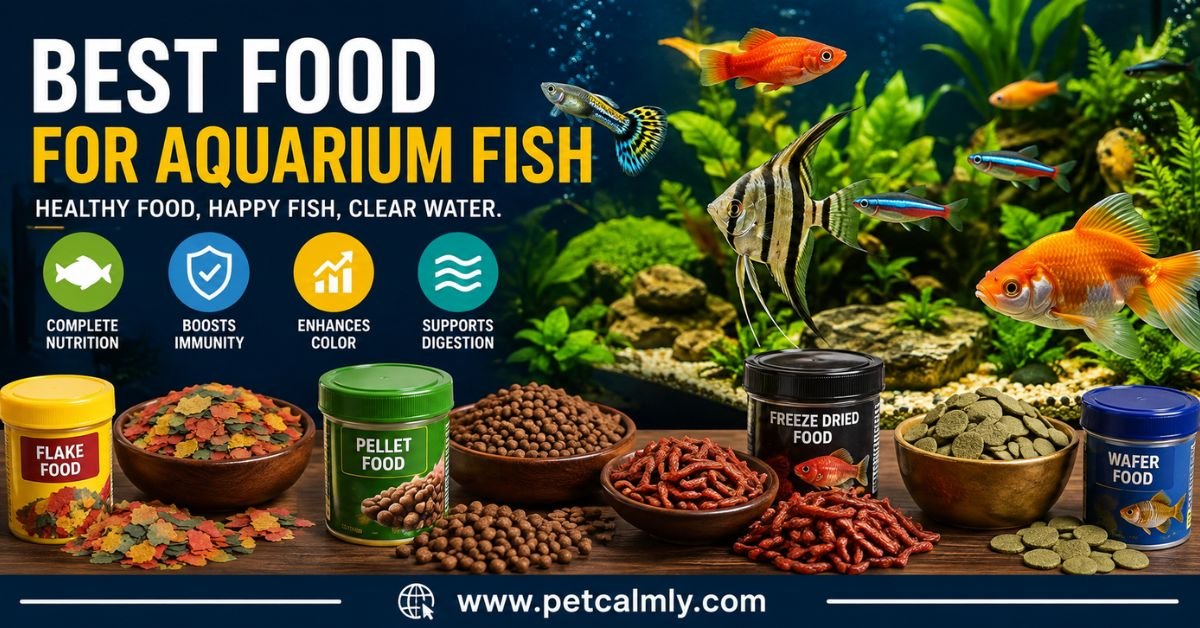
Walk into any pet store and you’ll see flakes, pellets, freeze-dried cubes, frozen packs, and live food tanks. Each has a purpose, and a well-fed aquarium usually uses more than one.
Flake Food
Flakes are the most common starting point, especially for community tanks. They’re convenient, float long enough for mid-water feeders, and come in formulas for tropical fish, goldfish, or color-enhancing blends. The downside: flakes lose nutritional value faster once the container is opened, and they can cloud water quickly if overfed since uneaten flakes disintegrate.
Pellets
Pellets hold their shape longer, sink at different rates depending on the type, and are generally more nutrient-dense per bite than flakes. They’re a strong choice for larger fish, cichlids, and goldfish, and they tend to cause less water fouling than flakes because they don’t crumble apart the same way.
Freeze-Dried and Frozen Foods
Bloodworms, brine shrimp, daphnia, and tubifex worms (freeze-dried or frozen) are excellent protein boosters. They’re especially useful for conditioning fish before breeding, helping underweight fish recover, or simply adding variety. Frozen foods retain slightly more nutritional integrity than freeze-dried, but freeze-dried is easier to store and less messy for beginners.
Live Food
Live brine shrimp, daphnia, or blackworms trigger natural hunting behavior and are often the gold standard for picky eaters, breeding pairs, or fish recovering from illness. The tradeoff is that live food carries a small risk of introducing parasites or disease if it isn’t sourced from a reputable supplier, so it’s worth being selective about where it comes from.
Gel and Vegetable-Based Food
Gel food is a newer category that’s become popular for goldfish and plecos because it can be customized with vegetables, spirulina, and binders, and it holds together well without clouding water. Blanched vegetables — zucchini, cucumber, peas (shelled) — also work well as an occasional addition for herbivorous species.
Best Food by Fish Type
This is usually the part readers actually came for, so here’s a breakdown by the most commonly kept aquarium fish.
Goldfish and Koi
Goldfish need a diet lower in protein and higher in fiber than most tropical fish. Look for goldfish-specific pellets or flakes, and supplement with blanched peas or leafy greens weekly peas in particular are widely recommended by fish keepers for helping with digestion and buoyancy issues. Avoid feeding tropical fish flakes to goldfish long-term; the protein ratio is often mismatched.
Bettas
Bettas are carnivores in the wild, primarily eating insects and larvae. A high-quality betta pellet formulated with fish meal as a primary ingredient (not fillers like wheat or corn) should be the daily base, with occasional freeze-dried bloodworms or brine shrimp as a treat. Bettas are also prone to overeating, so portion control matters more here than almost any other species.
Community Tropical Fish (Tetras, Guppies, Platies, Mollies)
A quality tropical flake or micro-pellet works well as a daily staple. Because community tanks mix species with slightly different needs, rotating in freeze-dried daphnia or brine shrimp a couple times a week helps cover nutritional gaps without needing five different products.
Cichlids
Cichlids vary widely — some are herbivorous (many African cichlids), others are aggressive predators (like larger New World cichlids). Cichlid-specific pellets are formulated with this in mind, and it’s worth checking whether your species leans plant-based or protein-based before choosing a formula.
Bottom Feeders (Corydoras, Plecos, Loaches)
These fish need food that actually reaches the bottom of the tank before the mid-water fish eat it all. Sinking wafers, algae discs, and gel food work best. Plecos in particular benefit from occasional blanched zucchini or cucumber slices clipped to the glass overnight.
Saltwater and Marine Fish
Marine fish often need more specialized diets, including marine-formulated pellets, flakes, or frozen mysis shrimp, since reef fish frequently have narrower dietary tolerances than freshwater community fish. If you’re new to saltwater tanks, it’s worth researching your specific species rather than assuming a generic marine flake covers everyone in the tank.
How to Read a Fish Food Label (Without a Nutrition Degree)
Fish food labels can be genuinely confusing, but there are a few things worth checking every time.
Look for:
- A named protein source listed first (fish meal, shrimp meal, krill) rather than vague terms like “animal byproduct”
- Added vitamins (especially Vitamin C and D3), which support immune health
- Spirulina or other algae content for species that need plant matter
Be cautious of:
- Excessive fillers like wheat flour or soy listed as a top ingredient, especially for carnivorous species
- Artificial color enhancers with no nutritional purpose some products add dye purely for fish or water color rather than fish health
- Very old stock fish food loses nutritional potency over time, so check manufacture dates when possible
How Much and How Often Should You Feed Aquarium Fish?
This is where most overfeeding problems start, and it’s almost always well-intentioned. A good general guideline:
- Feed once or twice daily, only what fish can fully consume in 2–3 minutes
- If food is still visible on the substrate or glass after a few minutes, you’re overfeeding
- Adult fish can typically handle a fasting day once a week without any harm in fact, many experienced keepers build this in deliberately to support digestion
| Fish Type | Feeding Frequency | Portion Guide |
|---|---|---|
| Goldfish/Koi | 1–2x daily | Small amount, fully eaten in 2–3 min |
| Bettas | 1–2x daily | 2–4 pellets per feeding |
| Community Tropical | 1–2x daily | Pinch consumed in 2–3 min |
| Cichlids | 1x daily | Species-dependent, avoid overfeeding protein |
| Bottom Feeders | Every 1–2 days | 1 wafer per 2–3 fish |
5 Common Feeding Mistakes That Quietly Hurt Fish
Most feeding-related problems aren’t dramatic they build up slowly, which is exactly why they’re easy to miss.
- Overfeeding “because they act hungry.” Fish beg for food reflexively; it doesn’t mean they’re underfed. This is one of the single biggest causes of poor water quality in home aquariums.
- Feeding only one food type indefinitely. Even a good staple food can leave nutritional gaps if it’s the only thing ever offered.
- Not accounting for uneaten food. Leftover food breaks down and raises ammonia, which stresses fish even if the feeding amount seemed reasonable at the time.
- Feeding the wrong protein level for the species. As mentioned earlier, this is especially common with goldfish fed high-protein tropical food.
- Storing food incorrectly. Fish food exposed to humidity or heat loses nutrients and can develop mold. Keep containers sealed and away from direct light.
When Should You Worry? Signs of a Feeding or Diet Problem
General feeding advice is helpful, but it’s just as important to know when something has moved from “adjust the diet” to “this needs closer attention.” Some signs worth taking seriously include:
- Persistent bloating, floating, or sinking that doesn’t resolve after a day of fasting
- Sudden loss of appetite lasting more than 2–3 days in an otherwise active fish
- Stringy, white, or unusually colored waste over multiple days
- Rapid weight loss despite normal feeding
- Fin or color changes alongside appetite changes
Occasional appetite dips are normal, especially after water changes, temperature shifts, or stress from tank changes. But if a fish stops eating for several days, appears lethargic, or shows physical changes alongside the appetite loss, this is a good point to consult an aquatic veterinarian or a knowledgeable local fish store rather than continuing to adjust food on your own. Diet alone can’t fix issues that stem from water quality problems, parasites, or underlying illness, and treating a health issue as a feeding issue can delay the care a fish actually needs.
What Pet Owners Should Do: A Practical Feeding Checklist
If you want a simple system rather than trying to remember everything above, this covers the essentials:
- Identify your fish species’ natural diet type (herbivore, omnivore, carnivore)
- Choose a species-appropriate staple (flake, pellet, or gel)
- Add a rotating protein or plant supplement 2–3 times a week
- Feed only what’s consumed in 2–3 minutes, once or twice daily
- Skip feeding one day a week for adult fish
- Store food sealed, cool, and away from light
- Watch for appetite or waste changes as an early health signal
- Check in with an aquatic vet or experienced fish store if changes persist beyond a few days
Conclusion
There isn’t one “best” fish food that works across every tank there’s a best food for your fish, based on what they’d naturally eat, how much they need, and how consistently you can offer variety without overdoing it. Once you match the food to the species and build a simple rhythm around portion size and feeding frequency, most day-to-day feeding problems tend to sort themselves out. And if something still feels off despite a solid diet, that’s usually your fish telling you it’s time to look a little closer not a sign you’re doing something wrong.
More Information About Pets, Please Visit Our Website: Betta Fish Water Temperature Range
Best Aquarium Fish for Beginners
Best Freshwater Fish for Beginners
Best Fish for 10 Gallon Tank
Freshwater Aquarium Maintenance
Why Is My Fish Tank Water Cloudy?
How to Cycle a Fish Tank With Plants
Freshwater Aquarium Algae Control
Frequently Asked Questions
1: What is the healthiest food for aquarium fish?
The healthiest food is one matched to your fish’s natural diet herbivore-leaning food for goldfish and plecos, higher-protein food for bettas and carnivorous cichlids, and a varied omnivore diet for most community tropical fish. Variety, not a single “superfood,” is what supports long-term health.
2: Can I feed my fish human food?
Some blanched vegetables like peas, zucchini, and cucumber are safe occasional additions for herbivorous species. Avoid seasoned, oily, or processed human foods, as these can upset digestion and pollute the water.
3: How often should aquarium fish be fed?
Most aquarium fish do well with one to two feedings a day, offering only what they can eat within 2–3 minutes. Adult fish can also safely go without food one day a week.
4: Why is my fish not eating its food?
Temporary appetite loss can follow water changes, temperature shifts, or new tank stress. If it continues beyond a few days, or comes with lethargy or physical changes, it’s worth checking water parameters and consulting an aquatic vet if the issue persists.
5: Do flakes or pellets work better for aquarium fish?
Both can work well depending on the species and tank setup. Pellets tend to hold together longer and cause less water clouding, while flakes are convenient for smaller community fish. Many owners use both depending on which fish are being fed.
6: Is it bad to overfeed aquarium fish?
Yes — overfeeding is one of the most common causes of poor water quality and health issues in home aquariums, since uneaten food breaks down and raises ammonia levels, which stresses fish even when the feeding amount seems reasonable.