Short direct answer
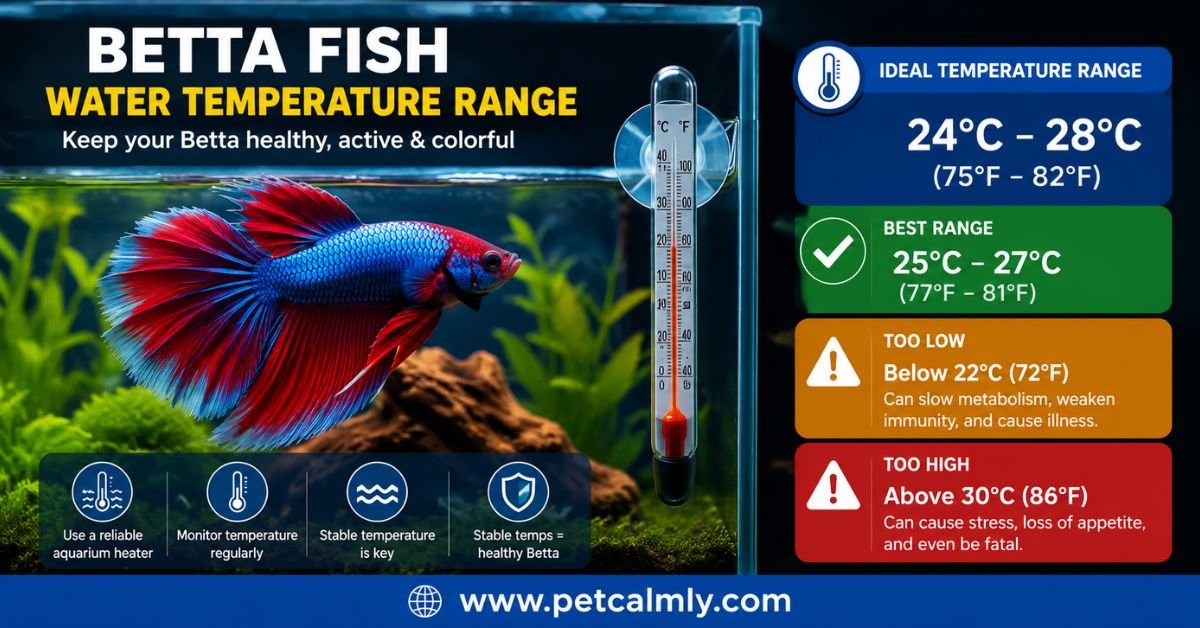
The ideal betta fish water temperature range is 76°F to 82°F (24.4°C to 27.8°C), with most bettas doing best around 78°F to 80°F (25.5°C to 26.7°C). Anything below 74°F stresses their metabolism and immune system, while water above 84°F speeds up their metabolism dangerously and lowers dissolved oxygen. Because bettas are cold-blooded tropical fish, they can’t regulate their own body heat the water temperature is their body temperature. A reliable aquarium heater and thermometer are the two tools that make this range easy to maintain.
That’s the short version. But if you’ve ever watched your betta go from flaring and exploring to sitting motionless at the bottom of the tank, you know temperature isn’t just a number it’s the difference between a fish that’s surviving and one that’s actually thriving. Let’s go through what’s really going on, why it matters, and how to get it right without overthinking it.
Why Water Temperature Matters So Much for Betta Fish
Bettas (Betta splendens) originally come from the shallow rice paddies, slow-moving streams, and warm marshes of Thailand, Cambodia, and Vietnam. Those waters stay consistently warm year-round there’s no autumn chill or winter drop the way there is in a typical living room.
Because betta fish are ectothermic (cold-blooded), their internal body temperature moves with the water around them. This affects almost everything:
- Metabolism – how efficiently they digest food and convert it to energy
- Immune response – how well their body fights off parasites, fungus, and bacteria
- Activity level – how much they explore, flare, and interact with their environment
- Oxygen use – warmer water holds less dissolved oxygen, so extreme heat can leave them gasping at the surface
When the water sits outside their comfort zone for too long, none of these systems work the way they’re supposed to. A betta in cold water isn’t “just being lazy” its body is quite literally running slower, the same way a car engine struggles to start on a freezing morning.
The Ideal Betta Fish Water Temperature Range, Explained
The Sweet Spot: 78°F to 80°F
Most experienced betta keepers and aquatic references agree that 78–80°F is where bettas show the most vivid color, the steadiest appetite, and the most natural behavior flaring at reflections, building bubble nests, and swimming actively around the tank rather than hiding.
The Safe Working Range: 76°F to 82°F
Outside the sweet spot, bettas can still live comfortably between 76°F and 82°F. This is the range most heaters are set to, and it gives you a small buffer for normal household temperature swings without putting your fish under stress.
The Survival Range: 72°F to 86°F
Bettas can technically tolerate temperatures as low as 72°F or as high as 86°F for short periods without dying immediately. But “surviving” and “thriving” are two very different things. Extended time in this outer range weakens the immune system, slows digestion, and makes your fish far more vulnerable to common illnesses like fin rot, ich, and fungal infections.
| Temperature Range | What It Means for Your Betta |
|---|---|
| Below 72°F (22°C) | Dangerous — sluggish metabolism, high illness risk |
| 72°F–75°F (22°C–24°C) | Tolerable short-term, not recommended long-term |
| 76°F–82°F (24°C–28°C) | Healthy, stable, comfortable range |
| 78°F–80°F (26°C–27°C) | Ideal “sweet spot” — most active and vibrant |
| 83°F–86°F (28°C–30°C) | Tolerable short-term, raises stress and oxygen risk |
| Above 86°F (30°C) | Dangerous — rapid metabolism, oxygen deprivation |
How to Tell If Your Betta’s Water Is Too Cold
A betta in cold water rarely shows one dramatic symptom — it’s usually a pattern of small changes that add up.
- Lying at the bottom of the tank for long stretches instead of swimming
- Clamped fins held tightly against the body rather than spread out
- Reduced appetite or spitting out food it would normally eat
- Slow, sluggish movement, almost like the fish is moving through syrup
- Pale or duller color compared to how it normally looks
- Increased susceptibility to ich, which often shows up as tiny white specks on the body and fins when temperatures drop
If you notice several of these signs together, check the water temperature before assuming it’s a behavior or diet issue. Cold stress is one of the most common and most overlooked reasons betta owners end up dealing with recurring illness.
How to Tell If Your Betta’s Water Is Too Warm
Overheating tends to look almost the opposite of cold stress instead of slowing down, your betta’s body speeds up in ways that aren’t sustainable.
- Darting or frantic swimming that doesn’t settle down
- Gasping at the surface or spending unusual time near the top of the tank, which usually signals low oxygen
- Faster gill movement than normal
- Increased aggression or restlessness, especially flaring at nothing in particular
- Rapid appetite followed by lethargy, as the fish’s metabolism burns through energy faster than it can recover
Warm water also lowers the amount of oxygen the water can hold, which is why gasping at the surface is one of the clearest warning signs of an overheated tank.
What Causes Betta Tank Temperature to Fluctuate
Most temperature problems aren’t caused by anything dramatic they’re the result of everyday household conditions that owners don’t think to account for.
- No heater at all. Many first-time betta owners assume room temperature is “warm enough.” In most homes, it isn’t — especially at night or during winter.
- Heater placed near cold glass or drafts. A tank sitting near a window, air conditioning vent, or exterior wall can lose heat faster than the heater can replace it.
- Small tank size. Tanks under 5 gallons lose and gain heat much faster than larger tanks, making temperature swings more sudden and more frequent.
- Sunlight exposure. Direct sun can spike tank temperature during the day, then drop sharply at night.
- Faulty or uncalibrated heaters. Even a “working” heater can be off by several degrees from what the dial shows.
- Water changes with mismatched temperature. Adding cold tap water directly during a water change can shock the fish if it isn’t warmed first.
How to Maintain the Right Betta Water Temperature
Use an Adjustable Aquarium Heater
A submersible heater is the single most reliable way to keep betta water in range. For most home tanks, a general guideline is 3–5 watts per gallon of water so a 5-gallon tank typically needs a 15–25 watt heater, while a 10-gallon tank does better with a 25–50 watt model. Preset heaters (often fixed around 78°F) work well for beginners who want a simpler setup, while adjustable heaters give you more control if your room temperature varies a lot.
Always Pair the Heater With a Thermometer
Never rely on the heater’s dial alone it’s a setting, not a guarantee. A simple stick-on or digital thermometer lets you confirm the actual water temperature at a glance, rather than assuming the heater is doing its job correctly.
Keep the Tank Away from Temperature Extremes
Position the tank away from direct sunlight, air vents, exterior windows, and drafty doorways. Even a well-functioning heater has to work harder and fluctuates more when it’s fighting against a cold draft or a sunny windowsill.
Match Water Temperature During Water Changes
Before adding new water, check that it’s close to the existing tank temperature. A difference of more than a couple of degrees, especially on the cold side, can cause temperature shock, which shows up as sudden lethargy or erratic swimming shortly after a water change.
Choose an Appropriately Sized Tank
Tanks of 5 gallons or larger hold temperature far more steadily than smaller bowls or cups, which is one of the many reasons vets and experienced keepers recommend against keeping bettas in unheated, undersized containers.
Betta Tank Size and Temperature Stability
It’s worth calling out directly: tank size and temperature stability are connected. A 1-gallon bowl can swing several degrees within an hour just from a draft or sunlight hitting the glass, while a 10-gallon tank holds heat far more evenly. If you’re setting up a first betta tank, a 5-gallon (or larger) heated, filtered tank isn’t just about giving your fish more room to swim it also makes temperature control dramatically easier and reduces the day-to-day stress on your fish.
6 Common Mistakes Betta Owners Make With Water Temperature
- Assuming a small bowl doesn’t need a heater — small volumes of water lose heat the fastest, not the slowest.
- Trusting the heater dial without verifying with a thermometer.
- Turning the heater off at night to “save energy” — this causes daily temperature swings that stress the fish more than a steady, slightly warm tank would.
- Placing the tank on a windowsill for natural light without accounting for how much the temperature swings between day and night.
- Doing large, cold water changes instead of smaller, temperature-matched ones.
- Reacting to illness with medication first, without first checking whether temperature is the underlying cause.
When Should You Worry? Signs That Need Closer Attention
Occasional mild lethargy or a day of reduced appetite isn’t automatically an emergency — fish, like any animal, have off days. But you should take temperature-related symptoms more seriously if you notice:
- Your betta hasn’t eaten in more than 2–3 days
- Breathing looks labored, rapid, or the fish is gasping at the surface
- You see white spots, cottony growths, or fraying fins developing alongside a temperature problem
- Your betta is lying on its side or struggling to stay upright
- Symptoms don’t improve within 24–48 hours after you’ve corrected the water temperature
These signs can point to secondary issues like ich, fin rot, or a bacterial infection that sometimes follow prolonged cold or heat stress. General care adjustments (fixing temperature, doing a partial water change, reducing stress) are appropriate first steps for mild symptoms, but persistent or worsening illness in fish is a situation where consulting an aquatic veterinarian or a knowledgeable local fish health specialist is the safer path, rather than guessing with over-the-counter medications.
What Should Pet Owners Do? A Practical Checklist
Use this as a quick reference any time you’re setting up a new tank or troubleshooting a temperature issue:
- Install a heater rated for your tank size (3–5 watts per gallon as a starting point).
- Add a thermometer and check it daily for the first two weeks, then a few times a week once stable.
- Target 78–80°F, and treat 76–82°F as your acceptable working range.
- Keep the tank away from windows, vents, and drafts.
- Match new water to tank temperature before every water change.
- Watch behavior daily — appetite, color, and activity level are your earliest warning signs, often before a thermometer shows a big swing.
- Upgrade tank size if you’re consistently fighting temperature swings in a bowl or nano tank.
- Don’t panic over one off day — but act quickly if multiple symptoms show up together or persist.
More Information About Pets, Please Visit Our Website: Best Aquarium Fish for Beginners
Best Freshwater Fish for Beginners
Best Fish for 10 Gallon Tank
Freshwater Aquarium Maintenance
Why Is My Fish Tank Water Cloudy?
How to Cycle a Fish Tank With Plants
Freshwater Aquarium Algae Control
Freshwater Fish Diseases
Ich Treatment for Freshwater Fish
Frequently Asked Questions
1: What is the best water temperature for betta fish?
The best water temperature for betta fish is 78°F to 80°F (25.5°C to 26.7°C). This range keeps their metabolism, immune system, and activity level at their healthiest, while staying close to the warm tropical waters bettas naturally come from.
2: Can betta fish live in room temperature water?
It depends on the room. If your home consistently stays above 76°F year-round, room temperature water might occasionally work, but most homes drop below that at night or during colder months. A heater is the only reliable way to guarantee your betta stays in a safe range regardless of the season.
3: Do betta fish need a heater in a small tank or bowl?
Yes — arguably even more than in a large tank. Small volumes of water lose and gain heat much faster than large ones, so bowls and tanks under 5 gallons are actually more prone to dangerous temperature swings, not less.
4: What happens if betta water gets too cold?
Cold water slows a betta’s metabolism, weakens its immune system, and often leads to clamped fins, lethargy, appetite loss, and a higher risk of illnesses like ich. Prolonged cold exposure is one of the most common preventable causes of betta health problems.
5: How can I raise my betta tank’s temperature without a heater?
Moving the tank away from cold drafts, using a tank lid to reduce heat loss, and keeping the room itself warmer can help slightly, but none of these fully replace a proper aquarium heater. If your water regularly falls below 74°F, a heater isn’t optional — it’s the safest long-term fix.
6: How often should I check my betta’s water temperature?
Check daily for the first couple of weeks after setting up a new tank or heater, since this is when you’ll catch calibration issues or placement problems. Once the temperature has stayed stable, checking two to three times a week is usually enough to catch any drift early.
Conclusion
Getting betta water temperature right isn’t about chasing a perfect number every single hour it’s about creating a stable, warm environment that mirrors the tropical waters your betta evolved in. A good heater, a simple thermometer, and a bit of daily observation cover almost every temperature-related problem before it becomes a health issue. If you’re ever unsure whether what you’re seeing is a temperature problem or something else, correcting the water conditions first and watching closely for 24–48 hours is a reasonable, low-risk starting point and if symptoms persist, reaching out to an aquatic vet or experienced fish health specialist is always the safer next step.