Short direct answer
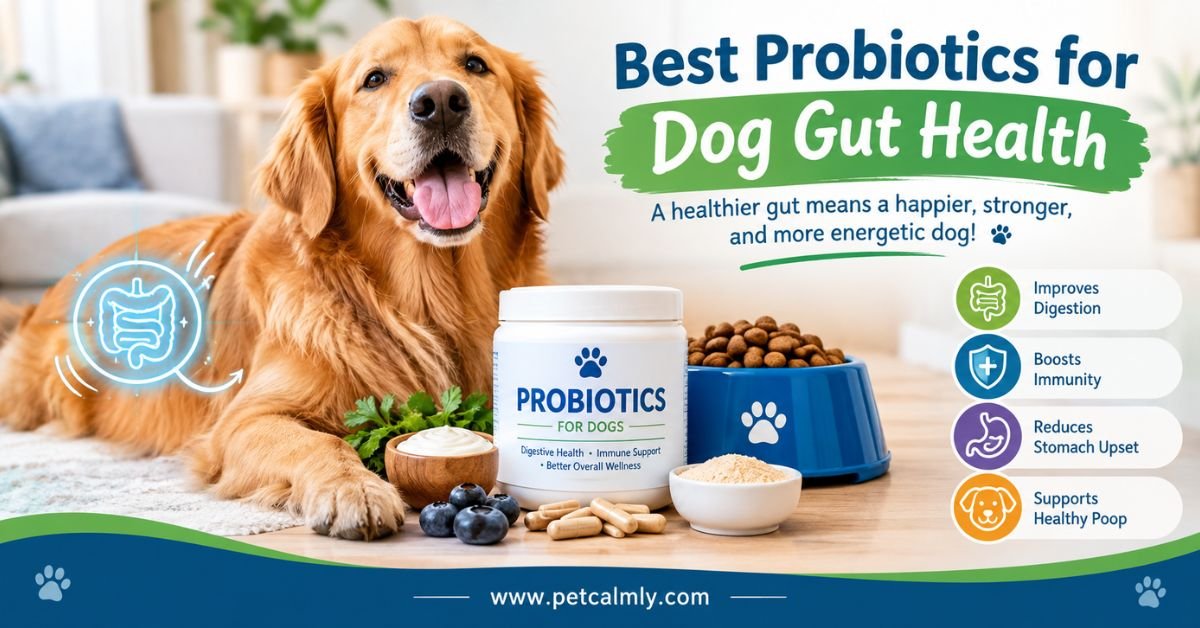
The best probiotics for dog gut health are made specifically for dogs, list their exact bacterial strains, guarantee a CFU count through the expiration date, and come from brands that test their products. Vet-trusted options include Purina Pro Plan FortiFlora and Nutramax Proviable, while daily chews and powders suit mild, ongoing digestive support. Match the product to the problem: stress diarrhea, antibiotic recovery, or general maintenance. If symptoms last more than a couple of days, call your vet before supplementing.
Why Your Dog’s Gut Deserves More Attention Than You Think
If you’ve ever cleaned up soft stools at 6 a.m. in the rain, you already know how fast a dog’s digestive system can derail your whole day. And if you’re reading this, there’s a good chance your dog has had more than one of those mornings.
The gut does far more than digest dinner. It’s home to trillions of bacteria, and the balance between helpful and harmful ones affects stool quality, nutrient absorption, and even how your dog handles stress. When that balance slips, you see loose stool, gas, a gurgling belly, or a dog who suddenly turns up their nose at breakfast.
That’s where probiotics come in. But the pet aisle is crowded, labels are confusing, and not every product deserves your money. This guide walks you through what probiotics really do, how to pick a good one, which products vets commonly recommend, and the moments when a supplement isn’t the answer at all.
What Are Probiotics for Dogs, and How Do They Work?
Probiotics are live microorganisms, mostly specific strains of bacteria, that may support digestive health when given in the right amounts. Think of them as reinforcements for the good bacteria already living in your dog’s intestines.
Your dog’s gut community is called the microbiome. In a healthy dog, it keeps harmful bacteria in check, helps break down food, and supports the intestinal lining. Illness, antibiotics, stress, and sudden diet changes can all knock that community off balance. Probiotics are meant to help restore it.
A useful way to picture it: the microbiome is a garden. Antibiotics or a bout of stress can pull up the good plants and leave room for weeds. Probiotics are like reseeding the lawn while you also fix the soil.
Probiotics vs. prebiotics vs. postbiotics
These three words get mixed up constantly, so here’s the plain-English version:
- Probiotics: live beneficial bacteria or yeast.
- Prebiotics: fibers (like inulin or FOS) that feed the good bacteria already in the gut.
- Postbiotics: helpful substances the bacteria produce, such as short-chain fatty acids.
Many dog supplements combine probiotics and prebiotics. These are often labeled as synbiotics. That pairing can make sense, though it isn’t automatically better. Some dogs with sensitive stomachs do better with a simple, single-purpose product.
Do probiotics for dogs really work?
They can, but results depend on the strain, the product quality, and the problem you’re treating. Veterinary sources, including the Merck Veterinary Manual and VCA Animal Hospitals, note that certain probiotic strains have shown benefit for some types of diarrhea, particularly stress-related and antibiotic-associated cases. For other conditions the evidence is thinner.
In other words, probiotics are a useful tool, not a cure-all. Be wary of any label promising to fix allergies, behavior problems, and itchy skin all at once.
Signs Your Dog Might Benefit From a Probiotic
Not every upset stomach calls for a supplement. But these patterns are the ones vets and owners most often connect with gut imbalance:
- Soft or loose stools that come and go
- Frequent gas or a noisy, gurgling belly
- Diarrhea after boarding, travel, or a stressful event
- Digestive upset during or after a course of antibiotics
- Loose stool after switching dog food
- Mild, recurring tummy troubles with no clear cause
- Bad breath or stool odor that seems out of the ordinary (this can have many causes, so it’s a clue, not a diagnosis)
Why dogs get gut imbalance in the first place
Understanding the cause helps you pick the right fix. The most common triggers include:
- Antibiotics. They kill harmful bacteria, but they also wipe out helpful ones.
- Stress. Boarding, thunderstorms, moving house, or a new baby can all trigger what vets often call stress colitis.
- Sudden diet changes. Dog guts like routine. Swapping food overnight is a classic cause of diarrhea.
- Dietary indiscretion. The dog who eats garbage, table scraps, or something from the yard.
- Age. Puppies and senior dogs often have more fragile digestive systems.
- Underlying illness. Parasites, infections, food allergies, and inflammatory bowel disease can all disrupt gut health.
That last one matters. A probiotic can’t solve a problem that needs a diagnosis, which we’ll come back to in the section on when to worry.
A common real-world scenario
Here’s a situation vets see all the time. A healthy dog goes to a boarding kennel for a long weekend. He eats less, barks a lot, and comes home with loose stool and mucus. Nothing else is wrong. He’s bright, wagging, and drinking normally.
This is classic stress-related diarrhea, and it’s one of the situations where veterinarians often reach for a probiotic as part of the plan. A different dog with the same loose stool plus vomiting and lethargy is a completely different story. The symptoms may look similar, but the right response isn’t.
Best Probiotics for Dog Gut Health: Top Picks by Situation
There’s no single best probiotic for every dog. The better question is which one fits your dog’s situation. The table below groups some well-known options by use. These are examples of commonly recommended products, not a guarantee that any one will work for your dog, and formulas change, so always check the current label.
| Situation | Product example | Why it’s commonly chosen | Form |
|---|---|---|---|
| Stress diarrhea, sudden soft stool | Purina Pro Plan Veterinary Supplements FortiFlora | Contains a single, well-studied strain (Enterococcus faecium SF68); widely used by vets | Powder sachet |
| Antibiotic recovery, ongoing gut support | Nutramax Proviable | Multi-strain probiotic with prebiotic; often recommended by veterinarians | Capsules, paste |
| Daily maintenance, picky eaters | Zesty Paws Probiotic Bites or similar chews | Palatable and easy to give; suited to mild, general support | Soft chew |
| Food-sensitive dogs who need simple options | Single-strain or limited-ingredient probiotic powders | Fewer additives to react to | Powder |
Best for stress-related diarrhea: FortiFlora
FortiFlora is one of the products vets mention most often, and for good reason. It’s built around one specific strain with published research behind it, and it’s designed to be sprinkled over food. Dogs tend to accept it easily.
It’s a good fit for situations like boarding, travel, or a vet visit that sends your dog’s stomach into a spin. Some owners keep a box on hand for exactly those moments.
Best for antibiotic recovery and long-term support: Proviable
When a dog is on antibiotics, the gut can take a beating. Proviable combines multiple probiotic strains with a prebiotic, and it’s widely used in veterinary practice for digestive support. It comes in capsules or paste, which gives you flexibility depending on how your dog takes supplements.
A practical note: if your vet prescribes an antibiotic, ask whether you should add a probiotic and how to time it. Some vets suggest giving the two a few hours apart so the antibiotic doesn’t undermine the probiotic. Follow your vet’s instructions over generic advice.
Best for everyday digestive support: daily chews and powders
Soft chews are popular because most dogs treat them like treats. If your dog has occasional gas or slightly inconsistent stools and is otherwise healthy, a daily probiotic chew can be a convenient option.
The trade-off is that chews often contain extra ingredients like flavorings, binders, and sometimes added sugars or fillers. If your dog has allergies or a sensitive stomach, read the ingredient list carefully, or choose a plain powder instead.
What about yogurt, kefir, and fermented foods?
Plain yogurt and kefir contain live cultures, so owners often ask whether they work as a probiotic. The honest answer is: sometimes, a little, but not reliably.
The strains and amounts in food are inconsistent, and they’re not necessarily the strains that have been studied in dogs. If you do offer a spoonful as a treat, keep these rules in mind:
- Choose plain and unsweetened only.
- Check the label for xylitol, which is toxic to dogs. Never feed a product containing it.
- Avoid flavored versions with added sugar.
- Remember that many dogs are lactose-sensitive, so dairy can cause the very diarrhea you’re trying to fix.
For a dog with a real gut issue, a purpose-made dog probiotic is more predictable than a spoonful of yogurt.
How to Choose a Dog Probiotic: A Practical Checklist
Because pet supplements aren’t regulated the way human medications are, quality varies a lot. Independent testing of commercial pet probiotics has found that some products don’t contain what the label claims. A few minutes of label reading can save you money and frustration.
Use this checklist before you buy:
- Made for dogs. Human probiotics are formulated for different bacteria and often contain ingredients, like xylitol, that are unsafe for dogs.
- Strain names, not just genus names. Look for a full strain designation (for example, Enterococcus faecium SF68), not simply ‘Lactobacillus blend.’ Strain matters because different strains do different jobs.
- CFU count guaranteed through expiration. CFU stands for colony-forming units, which measures live bacteria. A good label guarantees the number at the end of shelf life, not just at manufacture.
- Quality testing. A NASC (National Animal Supplement Council) seal suggests the manufacturer follows quality standards. It isn’t perfect, but it’s a helpful signal.
- Storage requirements. Some products need refrigeration. Heat and moisture can kill live bacteria quickly.
- Clean ingredient list. Skip products with artificial colors, excessive fillers, or ingredients your dog is allergic to.
- Realistic claims. Be cautious of anything claiming to cure disease or treat multiple unrelated problems.
- Vet-backed or vet-formulated. Not mandatory, but products developed with veterinary input tend to have more transparency.
Powder, capsule, chew, or paste: which form is best?
There’s no universal winner. It comes down to your dog and your routine.
- Powder: Easy to mix into food and simple to adjust. Great for picky eaters who ignore treats.
- Capsules: Precise and often protective of the bacteria, but harder to give to dogs who spit out pills.
- Chews: The easiest sell for most dogs, though they may include extra ingredients.
- Paste: Handy for dogs with poor appetite or those who need a quick dose during a flare-up.
The best form is the one your dog will actually take consistently. A perfect probiotic sitting unopened in the cupboard does nothing.
How to Give Your Dog a Probiotic Safely
Start with the label. Dosing differs from product to product, and it often depends on your dog’s weight, so follow the manufacturer’s directions or your vet’s specific instructions. Avoid guessing based on what worked for a friend’s dog.
Step-by-step: introducing a probiotic
- Talk to your vet if your dog has a health condition, takes medication, or is a puppy, senior, or pregnant.
- Start with a small amount if your dog has a sensitive stomach, and work up to the labeled dose over a few days if your vet agrees.
- Mix it into a meal with a bit of moist food. Powders stick better to wet food.
- Keep the rest of the routine steady. Don’t change food, treats, and supplements all in the same week, or you won’t know what’s helping.
- Watch the stool. A simple log of stool quality, appetite, and energy for one to two weeks gives you real information.
- Reassess. If there’s no improvement after the time frame on the label, or the problem returns when you stop, bring that to your vet.
How long do probiotics take to work in dogs?
It depends on the problem. For stress-related soft stool, owners sometimes notice a change within a few days. For longer-standing issues or general maintenance, it can take a couple of weeks of consistent use. If nothing has changed after a fair trial, the issue may not be gut bacteria at all.
Should probiotics be given daily or only when needed?
Both approaches exist. Some dogs get a probiotic during short-term trouble, like antibiotics or boarding. Others, with recurring mild issues, stay on a daily one. Your vet can help you decide which approach fits your dog’s history. Long-term use shouldn’t be open-ended guesswork.
8 Common Mistakes Dog Owners Make With Probiotics
Most problems with probiotics aren’t about the product. They’re about how it’s used. Watch for these:
- Giving a human supplement. Capsules made for people may contain ingredients that aren’t safe for dogs, and the strains weren’t chosen for canine guts.
- Expecting overnight results. Gut changes take time. Switching products every three days never gives any of them a fair chance.
- Treating a symptom that needs a diagnosis. Chronic diarrhea can mean parasites, infection, food allergy, or disease. A probiotic may mask the issue while it gets worse.
- Storing it badly. Leaving a bottle in a hot car or a humid bathroom can kill the live organisms.
- Mixing it into hot food. Heat damages bacteria. Let food cool before adding powder.
- Buying on price or marketing alone. The cheapest bottle often has the weakest evidence, and the flashiest packaging doesn’t mean quality.
- Changing everything at once. New food, new treats, and a new probiotic in the same week makes it impossible to tell what helped or what caused a reaction.
- Ignoring other causes. Stress, fast eating, and too many table scraps can undo even the best supplement.
Are Probiotics Safe for Dogs? Side Effects and Risks
For most healthy dogs, probiotics designed for dogs are generally considered safe. The most common side effects are mild and short-lived: temporary gas, bloating, or slightly softer stools during the first few days.
That said, a few groups need extra caution and a conversation with a vet first:
- Dogs with weakened immune systems, including those on certain chemotherapy or immunosuppressive drugs, because live bacteria can occasionally cause infections in vulnerable animals.
- Dogs with serious underlying illness, such as pancreatitis, severe gastrointestinal disease, or those with feeding tubes or central lines.
- Very young puppies, whose digestive systems are still developing.
- Dogs with known allergies to ingredients in chews or flavorings.
If your dog gets worse after starting a probiotic, with more diarrhea, vomiting, or lethargy, stop it and call your vet.
Natural Ways to Support Your Dog’s Gut Health Beyond Supplements
A probiotic works best as part of a bigger picture. If you only add a supplement and leave everything else alone, you may see limited results. A few habits make a real difference:
Feed a consistent, balanced diet
Choose a complete and balanced dog food suited to your dog’s age and size, and avoid frequent switching. When you do change foods, transition gradually over about a week by mixing increasing amounts of the new food with the old. Sudden swaps are one of the most common causes of loose stool.
Include fiber your dog tolerates
Fiber feeds beneficial bacteria. Some foods already contain prebiotic fibers. For some dogs, vets recommend plain canned pumpkin (not pie filling) in small amounts for mild stool issues. Ask your vet about the right amount for your dog.
Cut down on fatty table scraps
Rich leftovers can trigger digestive upset and, in some dogs, more serious problems like pancreatitis. Keep people food to a minimum and avoid anything toxic like onions, garlic, grapes, or xylitol-containing items.
Reduce stress where you can
The gut and the brain are closely linked. Keeping routines steady, offering a quiet space, and planning ahead for stressful events can reduce stress-related diarrhea. If your dog has predictable triggers, such as boarding, plan a probiotic or a calming routine before the event, with your vet’s input.
Keep water and exercise consistent
Fresh water and regular activity support healthy digestion. Dehydration can make any stomach problem worse.
When Should You Worry? Signs It’s Time to Call Your Vet
Probiotics are for mild, short-lived digestive issues in otherwise healthy dogs. They are not a substitute for veterinary care. Contact your vet promptly if you notice:
- Blood in the stool, or black, tarry stool
- Repeated vomiting
- Diarrhea lasting more than 24 to 48 hours, or sooner for puppies, seniors, and small dogs
- Lethargy, weakness, or hiding
- Loss of appetite lasting more than a day
- A swollen, painful belly
- Signs of dehydration, such as dry gums, sunken eyes, or skin that stays tented when gently pinched
- Possible ingestion of a toxin, foreign object, or spoiled food
- Weight loss alongside digestive symptoms
- Fever
Puppies deserve special mention. They can become dangerously dehydrated quickly, and diarrhea in an unvaccinated puppy can be a sign of serious infections such as parvovirus. If your puppy has diarrhea and seems unwell, call your vet right away rather than trying a supplement.
What Should You Do If Your Dog Has an Upset Stomach Right Now?
If your dog seems otherwise normal, with good energy, drinking water, and a single episode of soft stool, a calm approach often makes sense:
- Check for red flags from the list above. If any apply, call your vet.
- Make sure fresh water is available at all times.
- Ask your vet about a short, bland-diet period if they recommend it. Don’t use long-term home diets without guidance.
- Skip treats, table scraps, and new foods for a day or two.
- Note what changed. New food, stress, a trip, or something your dog ate can point to the cause.
- Consider a vet-recommended probiotic if the stool stays loose but your dog otherwise feels fine.
- Track it. Write down stool quality, appetite, and energy so your vet has clear information if you need to call.
If things aren’t improving within a day or two, that’s your cue to bring your dog in. Waiting longer rarely helps.
Frequently Asked Questions
1: What is the best probiotic for dog gut health?
There’s no single best option for every dog. FortiFlora is commonly used for stress-related diarrhea, and Proviable is widely used for antibiotic recovery and ongoing digestive support. The right choice depends on your dog’s symptoms, age, and health history, so ask your vet which product fits.
2: Can I give my dog human probiotics?
It’s best to avoid it. Human probiotics are formulated for people and may contain xylitol, sweeteners, or additives that are harmful to dogs. The bacterial strains also may not match what’s been studied in dogs. Choose a product made for dogs.
3: How long does it take for a probiotic to work in dogs?
Some dogs show improvement within a few days, especially with stress-related soft stool. Others need one to two weeks of consistent use. If you see no change after the time recommended on the label, talk with your vet.
4: Is yogurt a good probiotic for dogs?
Plain, unsweetened yogurt with no xylitol is generally safe in small amounts for many dogs, but it isn’t a reliable probiotic. The strains and quantities are inconsistent, and dairy can upset lactose-sensitive dogs. A dog-specific probiotic is more dependable.
5: Can dogs take probiotics every day?
Many dogs do, and daily use is generally considered safe for healthy dogs when the product is made for dogs. Still, ask your vet whether long-term use is appropriate, especially if your dog has a health condition or takes medication.
6: Should I give my dog a probiotic while on antibiotics?
Often, yes, but ask your vet first. Many vets recommend a probiotic during antibiotic treatment to support the gut, and some suggest spacing the doses a few hours apart. Your vet can tell you the best timing for the specific medication.
More Information About Pets, Please Visit Our Website: Best Cat Calming Treats
Best Dog Anxiety Medication Over the Counter
Best Calming Supplements for Dogs
Vet Recommended Calming Supplements for Dogs
Best Food for Senior Dogs
What to Feed Dogs With Gastrointestinal Problems?
Conclusion
When your dog’s stomach is off, it’s easy to grab the first probiotic with a happy dog on the label. A calmer approach works better. Work out what’s likely behind the symptoms, choose a dog-specific product with clear strain names and quality testing, and give it a fair trial while you watch stool, appetite, and energy.
Probiotics can be a genuinely helpful part of caring for a dog’s digestive health, especially around stress, antibiotics, and diet changes. But they work best alongside a steady diet, low stress, and a vet who knows your dog’s history. And when something seems more than a mild tummy upset, trust your instincts and call your vet. That instinct is usually right.