Short direct answer
Most new aquarists get their first batch of guppy fry by surprise. One day you notice your female guppy looks unusually round, and a few weeks later tiny, paper-thin babies are darting between the plants. If you’re suddenly staring at dozens of miniature fish and wondering whether they’ll survive the next week, you’re not alone. The good news: guppy fry are more resilient than they look, and with the right approach, most will thrive.
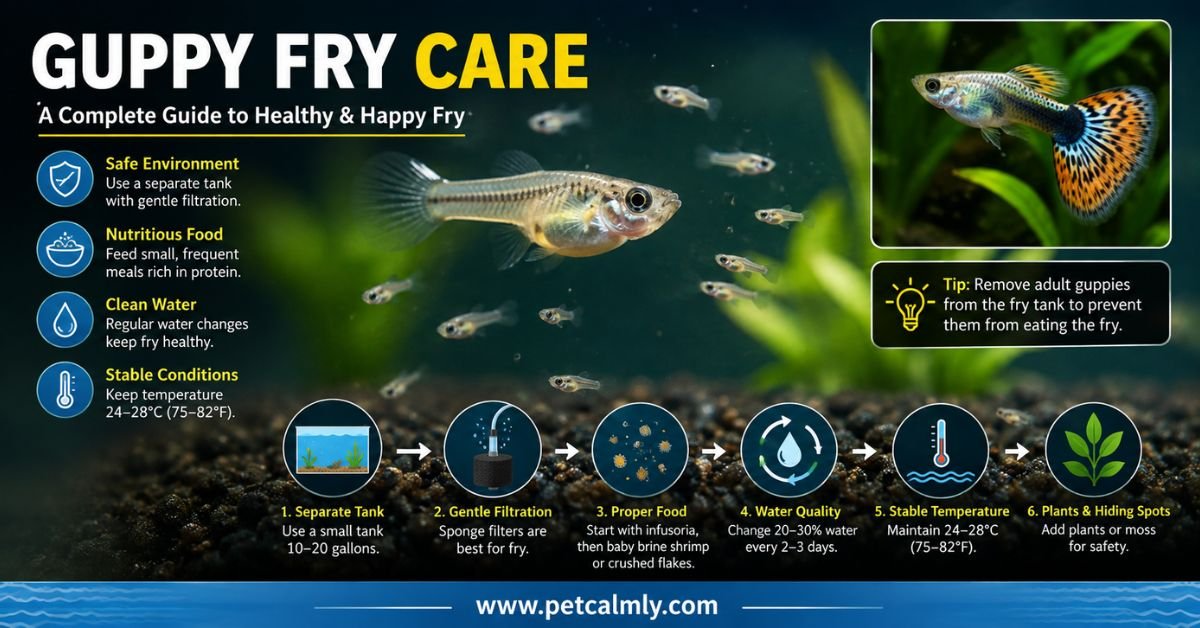
The core of successful guppy fry care centers on three essentials: separation from adult fish, frequent small meals, and stable water conditions. Most fry loss happens within the first two weeks because they’re so small that even fish-safe tank mates see them as food, and their tiny mouths need appropriately sized food several times per day. Beyond those basics, a calm understanding of their developmental needs makes the entire process manageable even for first-time breeders.
Why Guppy Fry Need Special Care (And Why They’re So Vulnerable)
Newborn guppy fry are genuinely tiny. At birth, they measure roughly 6–8mm, making them smaller than a grain of rice. This size matters enormously because it determines what can eat them, what food fits in their mouths, and how quickly they can hide from danger.
The survival problem isn’t complexity it’s simple predation. Adult guppies, tetras, corydoras catfish, and practically every other fish in a community tank will eat fry without hesitation. It’s not aggression; it’s opportunistic feeding. An adult fish sees movement and a meal, not a member of the same species. Many aquarists lose their first batches within days because they assumed the parents or tank mates would leave the babies alone.
Guppy fry also grow at different rates. At six weeks, some fry will be noticeably larger than their siblings. This size variation is completely normal and actually works in your favor it means you have some flexibility in deciding when to move them to a community tank without constant monitoring.
The First Step: Separating Fry From Adults (And Why Timing Matters)
Remove the adults, or remove the fry—pick your strategy before babies arrive.
Many experienced breeders believe the simplest approach is to let the female give birth in the main tank, then remove her within 24 hours. Pregnant female guppies often hide in plants or corners just before giving birth, and you’ll see a noticeable change in body shape once she’s released the fry. Within the first day, she’ll have delivered most (though not necessarily all) of her brood—a single pregnancy can produce 20–50 fry depending on her age and size.
Why move the adult instead of the fry? Because moving multiple tiny fry increases stress and injury risk, while a single adult fish moves easily with a net.
The alternative is a breeding box or nursery tank. A floating breeding box works well for this—you place a pregnant female inside before she gives birth, and the fry drop into a separate compartment where she can’t reach them. After 24 hours, remove the female and let the fry remain in the breeding box for their first few days while they absorb their yolk sacs and develop enough strength to swim reliably. This method works, though it requires space and careful water parameter matching.
If you notice fry are already scattered in the main tank and you missed the birth window: Don’t panic. Remove as many adults as you can identify, especially larger fish, and watch closely over the next few days. You’ll likely lose some fry, but a percentage will survive if you begin feeding immediately and maintain water quality.
Feeding Guppy Fry: The Frequency and Food That Make the Difference
Guppy fry need to eat multiple times daily four to six times is standard, though three times will suffice if you’re establishing a routine. This frequent feeding isn’t excessive; it matches how they naturally forage in planted systems where small organisms are constantly available.
What to Feed Newborn Guppy Fry
First foods (days 0–7): Newly hatched brine shrimp (baby artemia) is the gold standard. Live brine shrimp are nearly the perfect size for newborn fry just large enough to see and eat, just small enough to fit comfortably in their mouths. They’re also nutritious and trigger the fry’s hunting instinct, which is important for behavioral development.
If you don’t have access to live brine shrimp, commercial fry powders designed for egg-layers work as a substitute, though many experienced keepers report better survival and growth rates with live food. If you use powder, less is more add only a tiny pinch and remove uneaten food after 2–3 minutes to prevent water quality crashes.
Second foods (weeks 1–3): Once fry are a week old, you can introduce micro worms or very finely crushed flake food alongside continued brine shrimp. Micro worms are cultured easily at home (they grow in containers of oatmeal or yeast medium), cost nearly nothing to maintain, and are an excellent intermediate-sized food. Many breeders maintain a micro worm culture specifically for this stage because the nutritional value and digestibility are high.
After three weeks: Crushed quality flake food, small sinking pellets, and continued live foods create a varied diet that supports rapid growth. Variety matters it reduces nutritional gaps and keeps fry engaged in feeding.
How Much to Feed
This is where many new breeders over-correct and create water quality problems. The rule is: feed only what they can consume in a few minutes, multiple times per day. With live brine shrimp, this means adding enough that the fry actively hunt for several minutes, then stop adding food. With powders, a light dusting is correct if the water looks visibly cloudy with food, you’ve added too much.
Signs of overfeeding: Uneaten food accumulating on the substrate, visible waste buildup, foul odors, or cloudy water between water changes. These signs mean immediate action increase water changes and reduce food volume.
Signs of underfeeding: Fry with visibly thin bodies, slow growth rate, or aggressive competition during feeding. If you see this, gradually increase feeding frequency or portion size.
Water Parameters and Tank Conditions for Growing Fry
Guppy fry are more sensitive to water quality than adults, but they’re not delicate. The key is stability. Frequent large water changes are safer than complex filtration or elaborate tank setups.
Temperature
Guppy fry develop fastest at 75–80°F (24–27°C). Temperatures below 72°F slow growth and digestion noticeably. If you’re keeping fry in an unheated breeding box floating in a warmer main tank, this isn’t usually a problem—the surrounding water maintains temperature. If fry are in a separate tank, use a small adjustable heater to maintain consistent warmth.
pH and Water Hardness
Guppies are adaptable and tolerate a wide range. Fry do well in pH 6.5–7.5 and moderate water hardness (8–12 dGH is comfortable, though they’ll adapt to softer or slightly harder conditions). The critical point: avoid sudden swings. Daily small water changes using dechlorinated water that matches the existing tank parameters prevent pH crashes and fluctuations that stress fry.
Filtration and Aeration
A small sponge filter or air-powered filter is ideal for a fry tank. Canister filters and power filters create strong currents that exhaust tiny fry and can suck them into intake tubes. Sponge filters provide gentle mechanical and biological filtration without risk, and they colonize quickly with beneficial bacteria if you seed them from an established tank.
If you’re raising fry in a breeding box within a larger tank, the main tank’s filter provides water circulation and gas exchange, so additional equipment isn’t needed.
Water Changes
Perform daily 25–30% water changes in a dedicated fry tank, or every other day if space permits. This maintains water quality despite the waste produced by frequent feeding and removes accumulated metabolic byproducts. In a breeding box or nursery tank within an established setup, perform smaller water changes every two to three days using a turkey baster or small tubing to avoid disturbing fry.
Real talk: The most common fry deaths happen not from starvation or predation, but from poor water quality in overstocked nursery setups. A 10-gallon tank crammed with 50 fry and minimal water changes will crash within a week. A 5-gallon tank with 20 fry, daily maintenance, and live food has an 80%+ survival rate.
Tank Setup for Raising Healthy Guppy Fry
You don’t need elaborate equipment, but thoughtful setup prevents problems.
Minimum Tank Size
A 5–10 gallon tank works well for raising a first batch of fry (up to 40–50 individuals). Smaller tanks (2.5 gallons) work for 10–20 fry but require very careful water management and frequent changes. Larger tanks (20+ gallons) give you more buffer against mistakes and allow you to raise more fry to sell or distribute.
Substrate and Decorations
A bare bottom or very fine sand is best. Gravel can trap uneaten food and waste, creating pockets of decay that spike ammonia levels. Sand is easier to clean with a siphon during water changes. A bare bottom is simplest—just ensure the tank has shaded areas and hiding spots using floating plants or low decor.
Live plants are optional but beneficial. Moss (Java moss, Christmas moss) provides hiding space, contributes oxygen, and naturally consume some waste. They also serve as an emergency food source if you run short on prepared foods—fry nibble microscopic organisms on plant surfaces. If you include plants, be sure to rinse them thoroughly and inspect for snails or hitchhiking predators.
Lighting
Keep the fry tank in moderate light for 10–12 hours daily. Complete darkness or excessive light both stress fry. A standard aquarium light or natural indirect light works well.
Monitoring Growth and Recognizing Healthy Fry
Healthy fry are active, engaged, and visibly growing every week. By week two, you should notice clear size differences. By week four, the largest fry will show adult coloration patterns.
Weekly Growth Benchmarks
- Week 1: Fry are mobile, darting between plants, feeding actively. Some may still have egg yolk absorption visible.
- Week 2–3: Noticeable size increase. Coloration begins to show. Fry are interactive at feeding time and explore the tank constantly.
- Week 4–5: Clear variation in size. Adult coloration and fin patterns emerging. Fry can compete with small juveniles in community tanks.
- Week 6–8: Most fry are large enough for community tank placement (depending on tank mates). Sexual dimorphism becomes obvious—males show brighter colors and develop gonopodium (modified anal fin).
Signs of Trouble
Stunted growth: Fry that remain tiny or grow much slower than siblings may have underlying health issues or poor nutrition. Isolate them, increase live food offerings, and ensure water quality is stable. If stunting continues, humane euthanasia via chilling followed by clove oil may be appropriate.
Lethargy or clamping: Fry that rest on the bottom, hold their fins tightly, or move slowly indicate water quality stress or illness. Perform an immediate 30–50% water change and recheck parameters. If fry don’t improve within hours, parasites or bacterial infection may be present—consult a fish veterinarian or experienced keeper for treatment options.
Unexpected mass death: If multiple fry die over days, suspect ammonia spike, temperature crash, or disease outbreak. Test ammonia and nitrite immediately, perform large water changes, and isolate survivors if possible.
5 Common Mistakes That Kill Guppy Fry
Mistake 1: Not Separating Fry From Adults
This causes about 70% of first-time fry losses. Even “gentle” fish like adult guppies will eat their own young without hesitation. If you’re keeping fry in the same tank as adults without physical separation, expect minimal survival. Use a breeding box, separate tank, or remove all other fish pick one strategy and commit to it.
Mistake 2: Inconsistent Feeding or Inadequate Food Size
Tiny fry can’t eat standard flake food, no matter how hungry they are. Feeding too infrequently or offering only powder in cloudy water means many fry starve simply because they can’t access nutrition. Start with live brine shrimp (easiest method) or a reliable fry powder, and feed small amounts 4–6 times daily for the first three weeks.
Mistake 3: Neglecting Water Changes
The “set it and forget it” approach fails catastrophically with fry. Dedicated fry tanks require daily maintenance or they crash. Daily 25–30% water changes take 15 minutes and prevent 90% of water-quality-related deaths.
Mistake 4: Overstocking the Tank
A 10-gallon nursery tank can raise 30 fry comfortably, but 80 fry in the same tank will create chaos. Overcrowding means poor water quality, stunted growth, and stress-related disease. If you’re unsure how many fry you have, count them during water changes.
Mistake 5: Sudden Transitions to Community Tanks
Moving fry directly from a nursery tank with stable parameters to a large community tank with different conditions stresses them. When fry are 4–6 weeks old and large enough for integration, acclimate them gradually float a net with fry in the main tank for 15 minutes to equalize temperature and parameters, then gradually add small amounts of main tank water to the net over 30 minutes before releasing them.
When to Be Concerned and When to Act
Most guppy fry issues are preventable, not treatable. Prevention (good feeding, water changes, separation) stops 95% of problems before they start. That said, knowing when to seek help is important.
Seek Help From an Aquatic Veterinarian or Experienced Keeper If:
- Multiple fry develop visible spots, fuzzy growth, or lesions (potential fungal or bacterial infection)
- Fry show extreme lethargy despite stable water parameters (parasites or systemic illness possible)
- Mass die-offs occur despite apparent good care (disease outbreak)
- A single fry shows severe deformity or physical damage (may benefit from humane euthanasia guidance)
What You Can Do Independently:
- Fry are growing slowly: Increase feeding frequency, add live foods, and verify water parameters with a test kit. Growth spurts often follow improved nutrition.
- A few fry die despite good care: This is normal. Not every fry survives, even in ideal conditions. Mortality rates of 10–20% in the first month are acceptable.
- Occasional fry show minor damage or bent spines: If water quality is stable and they’re eating, they often recover without intervention.
Transitioning Fry to a Community Tank: Timeline and Tips
Once fry reach 4–6 weeks old and are visibly larger, you can introduce them to a community tank with conditions and tank mate selection in mind.
Safe Tank Mates for Growing Guppy Fry
Not all community fish are safe for fry transitioning from a nursery. Avoid:
- Larger predatory fish: Cichlids, plecos over 3 inches, large tetras
- Aggressive species: Jack Dempseys, Oscars, bettas
- Any fish with a mouth large enough to swallow a fry
Good choices include:
- Other guppies (juveniles and adults)
- Small, peaceful tetras (Neon, Cardinal, Ember)
- Rasboras
- Small corydoras catfish
- Kuhli loaches
- Amano or ghost shrimp
The Acclimation Process
- Float the fry in a net or breeding box within the community tank for 15–20 minutes to equalize temperature.
- Gradually introduce main tank water into the net or box over 30 minutes, allowing parameters to match slowly.
- Release fry into plants or low-current areas of the community tank.
- Monitor feeding for the first few days ensure fry can access food before larger fish consume it all. Offer small amounts of fry food alongside community food.
Setting Up a Brine Shrimp Hatchery (The Fry Breeder’s Essential Tool)
If you’re serious about raising guppy fry regularly, a simple brine shrimp culture pays dividends.
Basic Setup
- A 2-liter bottle or small plastic container
- Aquarium air pump and small air stone
- Brine shrimp eggs (available online or at aquarium stores)
- Sea salt or brine shrimp salt (not table salt)
- Dechlorinated water
The Process
- Fill the container 2/3 with dechlorinated water.
- Add 1 teaspoon of sea salt per liter and stir until dissolved.
- Add 1/2 teaspoon of brine shrimp eggs to the container.
- Attach the air stone and run continuous air for 24–48 hours.
- After 48 hours, stop aeration briefly and allow eggs to settle. Harvested shrimp will gather near the air stone.
- Use a small siphon or baster to extract live shrimp and add to the fry tank.
Brine shrimp hatch in batches, so you can harvest continuously for several days from a single hatch. Start a new batch every 48 hours to maintain supply. Most breeders keep 2–3 containers rotating so fresh food is always available.
More Information About Pets, Please Visit Our Website: How Many Babies Do Guppies Have in a Year?
Best Food for Guppy Fish
How Often to Feed Betta Fish?
Best Food for Aquarium Fish
Best Fish for 10 Gallon Tank
Freshwater Aquarium Maintenance
How to Cycle a Fish Tank With Plants
Frequently Asked Questions
1: How long before guppy fry are safe from being eaten?
Guppy fry are safest from predation once they reach about 2–3 weeks old and are clearly visible, large enough that even aggressive fish hesitate to target them. By 4–6 weeks, most fry are large enough to join a community tank without risk from smaller fish. Very small predatory species (pygmy puffers, small tetras) may still target fry until they’re nearly juvenile-sized at 8+ weeks.
2: Can I raise guppy fry without live food?
Yes, though survival rates are generally lower. High-quality fry powders designed for egg-layers work, as does finely crushed quality flake food mixed with powdered foods. Live food (brine shrimp, micro worms) produces the fastest growth and highest survival rates, so most experienced breeders prioritize it. If you can only use prepared foods, change water more frequently and feed smaller amounts to prevent water quality crashes.
3: What’s the best ratio of male to female guppies in a breeding group?
The classic ratio is 1 male to 2–3 females. This ratio prevents females from being harassed constantly while ensuring consistent breeding. A single male with multiple females is calmer than mixed groups, and each female typically produces 20–50 fry every 28–30 days. If you want fewer fry, keep only females (they’ll stop breeding without males), or use only males for color and form without breeding activity.
4: How many fry can I expect from one female guppy?
A healthy, well-fed female can produce 20–50 fry per brood, typically every 4 weeks once mature. Over a year, a single female may produce 200+ fry. Larger or older females tend to produce more fry. Young first-time mothers may produce fewer (10–20). Fry production depends on nutrition, water conditions, and the female’s age and genetics.
5: Do I need to do partial water changes during pregnancy to stimulate breeding?
Partial water changes (25–30% every week or every other week) do stimulate breeding by removing waste and replicating the natural rainy-season environment guppies breed in. They’re not essential for breeding to occur, but they support overall health and breeding frequency. If you’re maintaining stable water conditions and feeding well, regular maintenance already provides these benefits.
6: Can I raise fry in a bowl or very small container?
Technically, yes but it’s difficult. A 2–5 gallon container works for a very small first batch (10–15 fry) with daily water changes and careful feeding. Anything smaller than 2 gallons creates water quality problems too quickly. If you’re building confidence with your first fry batch, a small dedicated tank (5–10 gallons) offers much more margin for error than a bowl, and it’s not significantly more expensive to set up.
Troubleshooting: Quick Reference for Common Issues
| Issue | Likely Cause | Solution |
|---|---|---|
| Fry disappearing within 24 hours | Predation by adults or larger fish | Remove all adult fish immediately or use breeding box |
| Fry appear inactive on bottom | Poor water quality or temperature drop | Test ammonia/nitrite; perform large water change; verify heater is working |
| Very slow growth by week 3 | Insufficient feeding or poor food quality | Increase feeding frequency to 5–6 times daily; add live food |
| Cloudy water after feeding | Food overload creating bacterial bloom | Reduce portion sizes; increase water change frequency to every 12 hours until clarity returns |
| One or two fry die daily | Normal attrition | Continue current care; losses of 5–10% are typical. Investigate only if deaths spike |
| Fry with bent spines or visible damage | Developmental issue or water quality trauma | If fry are eating and active otherwise, they often recover; monitor closely |
| Fry stop eating or appear lethargic | Disease, temperature drop, or ammonia spike | Perform immediate water change; test parameters; check heater; consider isolation |
Conclusion
Raising guppy fry successfully isn’t a mystery it’s the result of three consistent actions: separation, feeding, and water maintenance. Those three elements together will give you an 80%+ survival rate from the day fry are born to the day they’re independent juveniles.
The first batch is always the steepest learning curve. You’ll likely lose some fry, and that’s okay. Each generation teaches you something about your setup, your feeding style, and how your particular fish respond. By your third or fourth batch, you’ll notice the tasks become automatic, fry develop faster, and you develop intuition for what they need.
Remember: guppy fry are resilient. They’re designed by evolution to survive in dense aquatic vegetation, tiny tributaries, and unpredictable conditions. Your job isn’t to create a perfect lab environment it’s to provide stability, food, and safety from predation. Do those three things, and the rest follows naturally.