Short direct answer
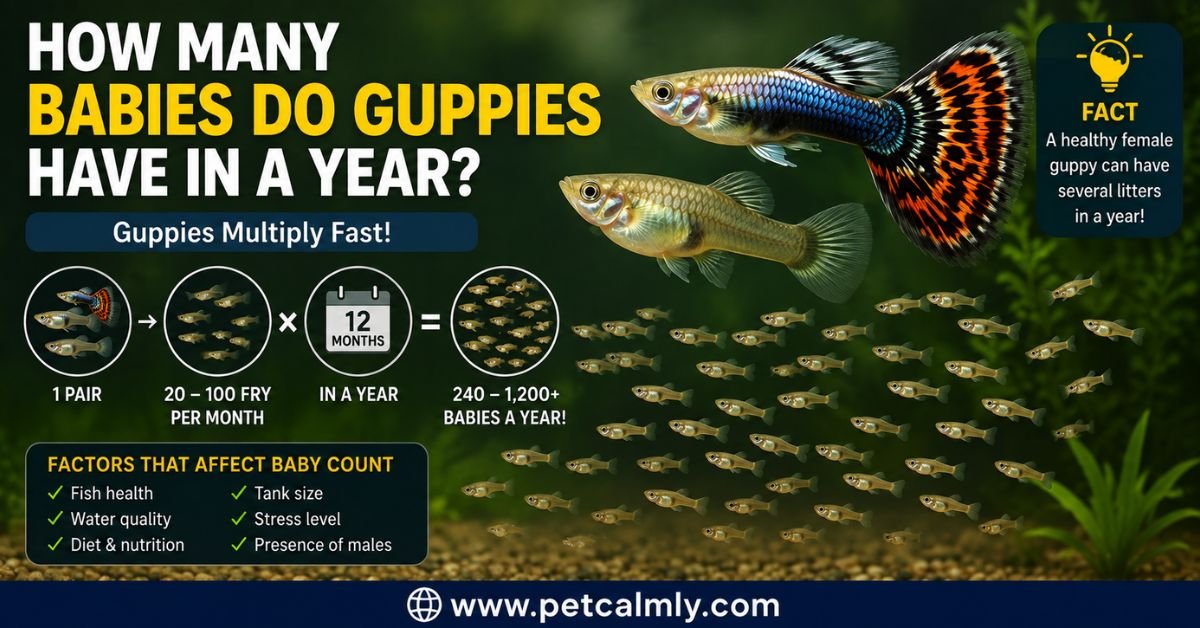
A single female guppy can produce 100 to 300+ fry per year sometimes more under ideal conditions. If you have multiple females in your tank, that number multiplies quickly. Many aquarists are surprised to learn that a small 10-gallon tank can expand into hundreds of guppies within 12 months if breeding isn’t managed. This happens because guppies are live-bearers (they don’t lay eggs), and females can become pregnant again just days after giving birth.
If you’re reading this because you noticed your guppy tank population exploding, or you’re worried about what happens next, you’re not alone. Guppy breeding catches many new aquarists off guard. The good news? Once you understand how it works, managing it becomes straightforward.
Why You’re Here: Understanding Guppy Population Growth
Guppies are among the easiest fish to breed in captivity sometimes too easy. They’re colorful, peaceful, and adaptable, which is why they’ve become beginner-friendly staples. But their reproductive efficiency is part of what makes them so successful as a species.
The question “how many babies do guppies have” isn’t just academic curiosity. It’s often asked by aquarists facing a practical problem: their tank is suddenly full of tiny fry, and they’re not sure what to do about it. Some owners want to breed guppies intentionally (for selective coloring or to sell), while others are dealing with accidental breeding. Both situations require understanding the actual numbers and timelines involved.
This guide covers everything you need to know about guppy reproduction the biology, the practical realities, the challenges, and your actual options for managing it.
How Guppies Reproduce: The Basics
Before diving into annual numbers, it helps to understand the timeline of a single breeding cycle.
Guppies are live-bearing fish, which means females carry developing fry inside their bodies and give birth to fully formed, free-swimming babies. They don’t lay eggs and abandon them like many fish species do.
A female guppy’s pregnancy lasts approximately 21 to 30 days depending on water temperature (warmer water = faster development). The warmer your tank, the quicker breeding happens. A tank at 78°F sees faster reproduction cycles than one kept at 72°F.
After giving birth, a female can become pregnant again within 24 to 48 hours sometimes even sooner. This is where the numbers add up so quickly. A single female isn’t waiting between pregnancies. She’s essentially pregnant year-round if a male is present in the tank.
How Many Babies Do Guppies Have Per Breeding Cycle?
This is where the numbers get specific.
A single female guppy typically produces 20 to 200+ fry per pregnancy. The wide range depends on several factors:
- Female age and size: Older, larger females produce more fry than young ones
- Tank conditions: Good water quality and nutrition support larger broods
- Male genetic quality: Some males father healthier, larger batches
- Nutrition: Well-fed females produce bigger, more viable fry
A young female having her first litter might deliver 20–30 fry. A mature, well-fed female in perfect conditions can produce 100–150 fry in a single birth. Some exceptional females exceed 200 fry per pregnancy, though this is less common.
If a female is producing an average of 100 fry every 28 days, that’s:
- 13 pregnancies per year
- 1,300 fry annually from a single female
But that assumes survival of the fry, which brings us to the next critical factor.
Why Don’t All Guppy Babies Survive?
Here’s where reality differs from the raw numbers.
If every fry survived, a single female would indeed create population explosions within months. In practice, fry survival rates in community tanks (tanks with multiple fish species) range from 5–30%. In breeding tanks designed to protect fry, survival rates jump to 50–80%+.
Why is survival so low in regular community tanks?
Adult fish eat fry. Guppy parents—including their own parents—will consume babies opportunistically. It’s not cruelty; it’s survival instinct. In nature, this keeps populations balanced. In captivity without intervention, most fry get eaten before reaching maturity.
Other survival factors include:
- Tank size and overcrowding: Stressed fish produce fewer, weaker fry
- Predatory tank mates: Larger fish, cichlids, and aggressive species quickly thin out fry
- Water quality: Overcrowded tanks develop poor parameters that harm developing babies
- Hiding spots: Fry without cover are more vulnerable to predation
- Parental care: Guppies provide none. Fry are on their own from birth
So while a female might produce 100 fry, realistic community tank survival might mean only 10–30 reach fingerling size.
The Real Annual Numbers: What Actually Happens
Let’s be practical about what actually happens in a real aquarium.
In a 10-gallon community tank with standard conditions:
Starting point: 1 female + 1 male guppy
- Month 1–3: Female produces 3 batches (approximately 60–90 fry total). Most get eaten. You end up with 5–10 surviving juveniles visible by month 3
- Month 4–6: Juveniles mature; some are female and become pregnant. Tank population grows to 20–40 fish
- Month 7–9: Multiple females breeding simultaneously. Population reaches 50–100+
- Month 10–12: Tank becomes dangerously overstocked with 100–200+ guppies crowding a 10-gallon space
The overcrowding then causes:
- Poor water quality from excess waste
- Stunted growth from stress and competition
- Increased disease susceptibility
- Higher fry mortality
- Stressed adults producing smaller broods
This is why understanding the annual reproduction rate matters. Many aquarists don’t intervene early and suddenly face an overstocked tank crisis by year’s end.
What Affects Guppy Breeding Frequency and Brood Size?
Several factors influence how quickly guppies reproduce and how many fry each female produces.
Water Temperature
Warmer water accelerates everything. At 78–82°F, guppies breed nearly continuously. At 68–72°F, breeding slows. Some aquarists intentionally keep guppy tanks slightly cool to reduce breeding pressure if they’re not planning to breed actively.
Tank Size
Smaller tanks with less stable conditions produce more stress. Stressed females produce smaller broods. Larger, more established tanks support bigger broods and healthier fry.
Nutrition
Well-fed guppies are better breeders. High-quality flake food, live foods like brine shrimp, and plant matter support larger broods and stronger fry. Malnourished females produce fewer, smaller babies.
Male-to-Female Ratio
In tanks with multiple males chasing one female constantly, breeding happens frequently but fry quality sometimes suffers. A 1:2 or 1:3 male-to-female ratio typically produces the best reproductive results without excessive female stress.
Genetics and Age
Female guppies reach sexual maturity around 3–4 months and can breed productively for several years. Peak fertility occurs between 1–2 years of age. Older females (3+ years) produce smaller broods.
Tank Conditions
Clean water, stable parameters, and low ammonia support healthy reproduction. Poor conditions tank size, overcrowding, and neglected maintenance reduce brood size significantly.
Guppy Fry Development: When Do They Become Adults?
This timeline matters if you’re planning breeding or trying to predict population growth.
Days 0–2 (Newborn): Fry are born fully formed but tiny (about ¼ inch). They hide in plants and decorations. Most aquarists don’t even see the initial batch because they’re eaten so quickly.
Week 1–2: Fry become visible to the naked eye. They’re exploring the tank and eating microscopic food. Size is roughly ½ inch.
Week 3–4: Fry reach about ¾ inch. Gender differences start appearing (males develop more pointed dorsal fins).
Week 5–8: Fry reach 1–1.5 inches. Gender is usually distinguishable. Coloring patterns emerge. These fry are less vulnerable to predation from adult guppies, though larger fish species still hunt them.
Week 9–12: Fry are 1.5–2 inches. Most aquarists consider them “safe” from standard guppy predation. They look like miniature adults.
Month 4–5: Fry are nearly full-size and reaching sexual maturity. Females may become pregnant. Males develop full coloration.
Month 6+: Fry are fully mature and reproducing if space and opposite-sex partners are available.
This 4–6 month timeline to maturity is crucial for predicting population growth. A single female can produce multiple broods before the first brood even matures. That’s when the doubling effect kicks in.
Do You Actually Want Your Guppies to Breed?
Before we talk about managing breeding, let’s address whether you want breeding to happen at all.
If you love guppies and enjoy watching fry develop, controlled breeding can be rewarding. Selective breeding for color, pattern, or fin type is a legitimate aquarium hobby.
If you’re already overwhelmed, uncontrolled breeding creates a genuine problem. Too many guppies means:
- Ammonia spikes that stress and kill fish
- Stunted growth from overcrowding
- Constant need to rehome or cull fish
- Reduced water quality
- Difficult feeding management
Many aquarists discover they’re unintentionally breeding guppies only when their tank becomes dangerously overstocked.
Honest talk: Preventing breeding entirely requires separating males and females. Controlling breeding requires active management. Ignoring it usually leads to an overcrowded tank within 12 months.
How to Manage Guppy Breeding: Practical Solutions
If you’re not planning selective breeding but want to keep some guppies, you have several options.
Option 1: All-Male or All-Female Tanks
The simplest solution: keep only males or only females. All-male tanks are most popular because males display more vibrant colors and interesting behaviors.
All-male guppies:
- Never breed (eliminating the population growth problem)
- Display and compete (simulating natural behavior)
- Require no special management for fry
- Live 2–3 years on average in good conditions
Practical tip: When buying “male guppies,” don’t assume they’re truly all-male. Some juveniles are mistaken at point of sale. Give them 3–4 months to fully mature, and you may still see some females.
Option 2: Separate Breeding Tank
If you want to breed guppies intentionally, dedicate a separate tank to it. This keeps your main tank predictable and prevents accidental overstocking.
A 10–20 gallon breeding setup:
- Houses 1 female or a small group
- Includes dense plants for fry shelter
- Gets frequent partial water changes to remove excess waste
- Allows you to observe fry development safely
- Prevents adults from eating every baby
This controlled approach lets you decide how many fry to raise and which to keep.
Option 3: Controlled Co-Habitation
If you must keep mixed-sex guppies in one tank, you can slow (not stop) breeding through:
Reduce water temperature: Keep tank at 70–74°F instead of 78–80°F. Cooler water extends breeding cycles.
Lower food availability: Reduce feeding slightly. Hungry, stressed guppies breed less aggressively and produce smaller broods.
Increase hiding spots: More plants mean more fry survive predation, which triggers higher mortality later—a natural population control.
Larger tank: 20+ gallons provides more stability and space for fry to grow without severe overcrowding.
Aggressive tank mates: Certain species (like small tetras or small loaches) consume guppy fry opportunistically, naturally controlling population. Note: This isn’t ideal from a welfare perspective and some fish combinations create stress.
Option 4: Selective Culling
Harsh but honest: some aquarists remove fry to prevent overstocking. This requires:
- Regular tank checks for fry
- A plan for removing or rehoming babies before they mature
- Willingness to humanely cull unwanted fish
This isn’t everyone’s preference, but it’s a reality some breeders face.
How to Care for Guppy Fry If They Arrive Unexpectedly
Many aquarists encounter fry without planning for it. Here’s what actually works.
Feeding Fry
Newly born fry are tiny and require food proportional to their size. Options include:
- Powdered fry food: High quality, readily available, appropriate size
- Live foods: Infusoria, microworms, or newly hatched brine shrimp—excellent for first 2–3 weeks
- Egg yolk (careful): A tiny amount can work but fouls water quickly
- Crushed regular flake food: Works for slightly older fry (1+ week)
- Spirulina powder: Vegetable matter that supports healthy growth
Feed small amounts 2–3 times daily. Overfeeding kills more fry than underfeeding (excess food decays, worsening water quality).
By week 2–3, fry can eat crushed regular food or small pellets. By week 4, they eat standard flake food.
Tank Setup for Fry
If fry arrive in a community tank:
Dense plants (Java moss, Amazon frogbit) give hiding places. This increases survival above the baseline 5–10%. A breeder box or separate container works better if you want to raise most of them.
If you want to raise fry intentionally:
A dedicated 5–10 gallon tank with:
- Gentle filtration (sponge filter or hang-on with flow directed away from fry)
- No other fish species
- Dense plants
- Frequent small water changes (25–30% every 2–3 days) to maintain water quality
- Stable temperature (75–78°F)
This setup allows 50–80%+ survival instead of 5–30%.
When Are They Ready for Your Main Tank?
Once fry reach 1.5–2 inches (week 8–10), they’re usually safe from adult guppies. Larger community fish may still eat them, so introduce gradually or in batches.
Tank Size and Overstocking: When Is It a Problem?
This is where numbers matter practically.
The standard rule is 1 inch of adult fish per gallon (though many experts argue this is too loose). A mature guppy is about 1.5–2 inches.
In a 10-gallon tank:
- 5–6 adult guppies: Comfortable, stable water quality
- 10–15 guppies: Acceptable but crowded, requires frequent maintenance
- 20+ guppies: Overstocked, ammonia buildup, stunted growth
- 50+ guppies: Severe welfare issue, frequent fish death
Uncontrolled breeding easily exceeds 50 guppies in a 10-gallon tank within 8–12 months.
Signs of overstocking:
- Visible ammonia cloudiness or algae blooms
- Fish gasping at the surface
- Reduced activity or fin rot
- Stunted growth (fry staying tiny even at 2–3 months old)
- Sudden fish death after weeks of stability
If you’re seeing these signs, your tank has too many guppies.
When Should You Worry About Your Guppy Population?
Let’s be clear about what’s normal versus what’s a problem.
This is normal:
- Noticing fry 3–4 weeks after buying guppies
- Seeing small fry in plants for the first month
- Population gradually increasing from 2 to 8–10 guppies in 6 months
This is concerning:
- Tank becoming visibly crowded with fry by month 3–4
- Dozens of fry in a 10-gallon tank with no management
- Water quality deteriorating (cloudiness, odor, algae)
- Stunted growth or increased mortality
This requires immediate action:
- 50+ guppies in a 10-gallon tank
- Visible ammonia or consistent cloudiness
- Fish disease outbreak
- Any fish showing signs of stress
If you’re in the “concerning” or “requires action” category, you need to:
- Do a large water change (40–50%) to improve water quality immediately
- Remove fry or adult guppies to another tank or rehome them
- Implement one of the management strategies discussed above
- Increase tank size if possible
Can You Sell or Rehome Guppy Fry?
Yes, though the market reality is worth understanding.
Petstore credit: Many local aquarium stores accept healthy juveniles (finger-sized and above) in exchange for store credit. Expect $1–5 per fish depending on color and quality.
Online sales: Aquarium hobby groups sometimes facilitate sales of quality guppies. High-quality show guppies or rare color strains sell better than common varieties.
Local aquarium clubs: Breeding enthusiasts sometimes buy or trade healthy juveniles.
Realistic expectations: Common guppy colors are difficult to sell. Stores receive free feeder guppies regularly. Rare colors, show strains, or exceptional individuals command better prices.
Donation: If selling isn’t an option, many aquarium clubs and schools accept donations of healthy guppies for community programs.
More Information About Pets, Please Visit Our Website: Best Food for Guppy Fish
How Often to Feed Betta Fish?
Best Food for Aquarium Fish
Betta Fish Water Temperature Range
Best Aquarium Fish for Beginners
Best Freshwater Fish for Beginners
Best Fish for 10 Gallon Tank
Why Is My Fish Tank Water Cloudy?
Frequently Asked Questions
1: How can I tell if my female guppy is pregnant?
A pregnant guppy develops a dark spot (called the gravid spot) near her rear vent as fry develop. The spot darkens as birth approaches. Additionally, the female’s abdomen appears swollen or box-shaped. Non-pregnant females look slender by comparison.
2: What temperature helps guppies breed faster?
Warmer water accelerates the breeding cycle. At 78–82°F, guppies breed nearly continuously. At 68–72°F, breeding slows by about 30–40%. Most guppies thrive at 74–78°F, which balances breeding rate with fish health.
3: Can I keep guppies with other fish without breeding concerns?
It depends on the tank mates. Larger fish (tetras, rainbowfish, small gouramis) consume guppy fry naturally. However, aggressive species stress adult guppies, reducing brood size. Small tetras work well; aggressive cichlids do not. The trade-off is that fry rarely survive, so breeding still happens it’s just not visible.
4: How long do guppies live?
Healthy guppies live 2–3 years on average in aquariums. Some live 4 years in excellent conditions. Wild guppies live shorter lives due to predation and environmental stress.
5: Do male guppies help care for fry?
No. Guppies provide no parental care. Males and females both consume fry if given the opportunity. This is normal fish behavior and not a sign of a problem.
6: How many guppies should I start with if I don’t want breeding?
For a 10-gallon tank without breeding: 5–6 all-male guppies is ideal. They’ll display, interact with each other, and create a peaceful community. Avoid any females to eliminate breeding entirely.
What You Actually Need to Know
Here’s the takeaway: A single female guppy can produce 100–300+ fry annually, leading to an overstocked tank within 12 months if left unmanaged. But with simple planning whether that’s keeping all-male guppies, maintaining a separate breeding tank, or using natural fry predation you can prevent the chaos.
Most aquarists don’t realize how productive guppies are until they’re suddenly managing hundreds of babies. By understanding the timelines, reproductive rates, and practical solutions outlined here, you’ll avoid that surprise.
Guppies are wonderful fish precisely because they’re hardy and prolific. The trick is channeling that productivity intentionally rather than being swept along by it.
Conclusion
Guppies are beginner-friendly aquarium fish for good reason they adapt to varied conditions, display fascinating behavior, and reproduce readily. That last point, though, is exactly why many new aquarists find themselves overwhelmed by fry within their first year.
The numbers are real: a single female produces 100–300+ babies annually under standard conditions, though most don’t survive in community tanks. But survival rates improve dramatically with planning, and uncontrolled breeding becomes controlled breeding with just a few simple changes.
Whether you decide to embrace breeding, prevent it entirely, or find a middle ground, the key is deciding actively rather than letting it happen by accident. Start observing your tank’s population now. Notice when fry appear. Track how many you see month to month. If growth is accelerating, implement one of the solutions discussed here before the situation becomes stressful.
Guppies will reward you with color, activity, and yes, plenty of babies. You’re simply making sure you’re ready for them.