Short direct answer
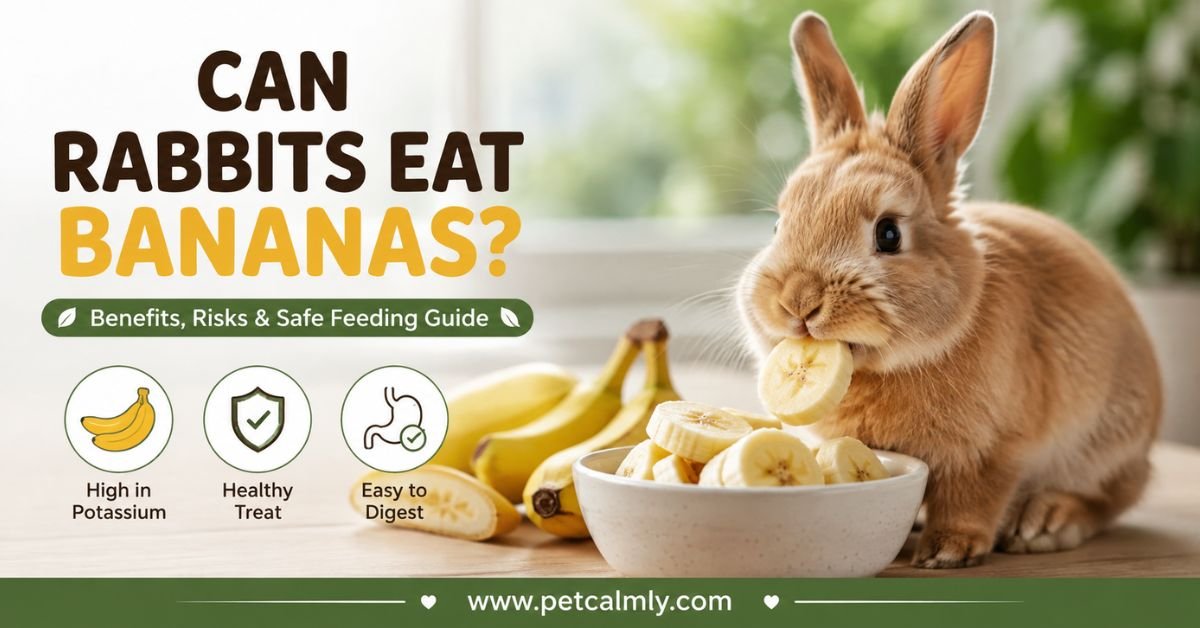
Yes, rabbits can eat bananas, but only in small amounts and as an occasional treat. Bananas are safe for healthy adult rabbits when given a few times a week in tiny portions roughly a 1-inch slice, once or twice weekly. Because bananas are high in natural sugar and low in fiber compared to hay, they should never replace a rabbit’s core diet of hay, fresh greens, and pellets. Too much banana can cause digestive upset, weight gain, or gut bacteria imbalance over time.
If you’ve ever watched your rabbit go absolutely wild for a piece of banana, you already know the real question isn’t “will my rabbit eat this.” It’s “should I let them, and how much is actually okay.” That’s exactly what this guide is going to sort out for you, without the fear-mongering and without the vague “everything in moderation” answer that doesn’t tell you anything useful.
Why Rabbits Love Bananas So Much (And Why That’s Not a Good Thing)
Rabbits are drawn to sugar the same way most animals are it’s an energy-dense food source, and in the wild, opportunistic sweetness signaled a rare, calorie-rich find. Your house rabbit hasn’t lost that instinct just because dinner shows up in a bowl every day.
This is actually the tricky part of feeding rabbits fruit. Their enthusiasm isn’t a reliable guide to what’s good for them. A rabbit will happily eat banana until it makes them sick, the same way a toddler would happily eat an entire bag of candy. The desire for banana and the appropriate amount of banana are two completely separate things, and it’s on you as the owner to be the one who draws that line.
This matters more with rabbits than with a lot of other pets because of how their digestive system works.
How a Rabbit’s Digestive System Handles Fruit
Rabbits are hindgut fermenters. Their digestive tract is built around a very specific balance of gut bacteria that ferment fiber in the cecum, a pouch near the junction of the small and large intestine. This system depends heavily on a steady, high-fiber diet mainly hay to keep everything moving and to keep the bacterial population stable.
When a rabbit eats something high in sugar and low in fiber, like banana, it can disrupt that bacterial balance if it happens too often or in too large a quantity. According to the Merck Veterinary Manual, diet-related gastrointestinal disease is one of the most common health issues seen in pet rabbits, and sudden dietary changes or excess sugar are frequently involved.
This doesn’t mean banana is dangerous. It means banana is a food that has to respect the rabbit’s system rather than override it.
Nutritional Breakdown: What’s Actually in a Banana
It helps to look at what you’re actually giving your rabbit when you hand over a slice of banana.
| Nutrient (per 100g banana) | Approximate Amount | What It Means for Your Rabbit |
|---|---|---|
| Sugar | ~12g | High relative to a rabbit’s normal diet |
| Fiber | ~2.6g | Low compared to hay (which is what rabbits actually need most) |
| Water | ~75% | Contributes some hydration but isn’t a substitute for fresh water |
| Potassium | High | Generally fine in small amounts for healthy rabbits |
| Fat | Very low | Not a concern |
The takeaway here is simple: banana isn’t nutritionally harmful in the way that toxic foods are. It’s more that it’s nutritionally unbalanced for a rabbit’s needs. A rabbit’s daily diet should be roughly 80–90% hay, with fresh leafy greens, a small measured amount of pellets, and treats like fruit making up a very small slice of the picture not because fruit is bad, but because hay is what their gut and teeth are actually built for.
How Much Banana Is Actually Safe
This is the part most articles skip past too quickly, so let’s be specific.
For a healthy adult rabbit:
- One slice, about the size of your thumbnail to one inch, is a reasonable single serving
- Offer it no more than 1–2 times per week
- Always pair it with the rabbit’s normal hay-based diet that day, not as a replacement for any part of it
For rabbits under 12 weeks old:
- Avoid banana and other fruit entirely
- Young rabbits’ digestive systems are still developing and are far more sensitive to sugar and sudden dietary changes
- Introduce fruit gradually only after their gut has matured, and always in consultation with an exotic or rabbit-savvy vet if you’re unsure
For senior rabbits or rabbits with existing health conditions:
- Talk to your vet before adding banana or any new treat
- Rabbits with a history of GI stasis, obesity, or dental issues may need to avoid sugary treats altogether
A useful way to think about portion size: if the amount of banana looks bigger than a couple of bites for a small animal, it’s too much. Rabbits are small-bodied, and what feels like “just a little treat” to us can be a disproportionately large sugar hit for them.
How to Introduce Banana Safely (Step-by-Step)
If your rabbit has never had banana before, don’t just hand over a slice and see what happens. Introduce it the way you’d introduce any new food.
- Start with a tiny piece. A sliver, not a slice. You’re testing tolerance, not rewarding enthusiasm.
- Wait 24 hours and watch. Check their droppings they should stay normal in size, shape, and consistency. Watch appetite and energy levels too.
- Look for soft stool, reduced appetite, bloating, or lethargy. Any of these signs means you should stop offering banana and monitor closely.
- If all looks normal, you can offer small amounts occasionally going forward, sticking to the portion guidance above.
- Never introduce banana at the same time as another new food. If something goes wrong, you won’t know which food caused it.
This slow, observational approach is really just good practice for any new treat, not just banana. Rabbits can’t tell you when something disagreed with them, so your job is to notice before it becomes a bigger problem.
Banana Peel, Leaves, and Plant Parts: What’s Actually Okay
Owners often assume the peel or plant is automatically off-limits, but it’s more nuanced than that.
Banana peel is not toxic to rabbits and some rabbits enjoy chewing on it. It’s higher in fiber than the fruit itself, though it can also carry pesticide residue if not washed thoroughly, and its tougher texture isn’t appealing to every rabbit. If you offer peel, use organic when possible, wash it well, and offer a small piece rather than a whole peel.
Banana leaves are sometimes used as forage in tropical regions and are generally considered safe in small quantities, but they’re not a common or necessary part of a pet rabbit’s diet in most households, and there’s limited practical need to seek them out.
Dried banana chips or banana treats sold in pet stores are a different story. These are often much higher in concentrated sugar than fresh banana because of the dehydration process, and some contain added sugar. Fresh banana is almost always the better choice over dried or processed versions.
5 Common Mistakes Rabbit Owners Make With Fruit Treats
A few patterns show up again and again in rabbit-owner communities and vet visits, and they’re worth naming directly:
- Using banana as a daily reward for training or bonding. It works because rabbits love it, but daily sugar intake adds up fast in such a small animal.
- Increasing portion size because the rabbit “seems fine.” A rabbit not showing symptoms yet doesn’t mean the gut bacteria balance isn’t being stressed.
- Feeding banana to a rabbit that’s already overweight. Extra sugar calories on top of an existing weight issue compounds the problem.
- Skipping the hay that day because the rabbit already “ate.” Banana is not a meal replacement, and hay intake should never drop because of a treat.
- Assuming all fruit is equally safe. Some fruits (like grapes or dried fruit) carry more risk than others, so treating “fruit” as one uniform category is a mistake.
None of these are about being a careless owner — they’re just easy patterns to fall into, especially when your rabbit is clearly asking for more.
Signs Your Rabbit Reacted Poorly to Banana
If you’ve fed banana and want to know whether it caused a problem, here’s what to actually watch for over the following 24–48 hours:
- Smaller, misshapen, or reduced fecal pellets
- No fecal pellets at all (this can indicate GI stasis, which is a genuine emergency in rabbits)
- Noticeable bloating or a hard, tense abdomen
- Loss of appetite or refusal to eat hay
- Lethargy or hiding more than usual
- Audible teeth grinding that sounds different from normal contentment purring (a sign of pain)
When You Should Worry: Signs That Need a Vet
This is where general pet-care advice ends and professional care becomes necessary. According to VCA Animal Hospitals, GI stasis in rabbits can become life-threatening within 24 hours if untreated, because the slowdown of gut motility allows gas and bacteria to build up rapidly.
Contact a rabbit-savvy veterinarian immediately if you notice:
- No droppings for more than 12 hours
- A rabbit that stops eating or drinking entirely
- Visible signs of pain — hunched posture, grinding teeth, reluctance to move
- A swollen or hard abdomen
- Lethargy that doesn’t improve within a few hours
Rabbits are prey animals, which means they instinctively hide signs of illness until they can no longer manage it. By the time a rabbit looks obviously sick, the underlying issue may have been building for a while. This is part of why rabbit owners are generally advised to treat any sudden drop in appetite or droppings as an urgent situation rather than a “wait and see.”
What Pet Owners Should Do Going Forward
If you want to keep banana in the rotation as an occasional treat, here’s a simple, sustainable approach:
- Keep a mental (or written) note of when you last gave a sugary treat, so it doesn’t become a daily habit without you realizing it
- Prioritize hay availability at all times unlimited access is the standard most rabbit-focused vets recommend
- Use banana as an occasional bonding treat or training reward, not a daily staple
- Rotate treats rather than relying on one fruit repeatedly
- Keep an eye on your rabbit’s weight over time, since gradual weight gain is easy to miss day to day
If you’re ever unsure whether a specific amount or frequency is appropriate for your individual rabbit especially one with a health history a quick check-in with your vet is worth more than guessing.
Other Rabbit-Safe Fruits and Vegetables to Know About
Since bananas aren’t the only treat question rabbit owners have, here’s quick context on a few related foods:
- Apples (no seeds): Safe in small amounts, similar sugar caution applies
- Strawberries: Safe occasionally, in small portions
- Blueberries: Safe in very small quantities due to concentrated sugar
- Leafy greens (romaine, cilantro, basil): Should make up a much larger daily portion than any fruit
- Carrots: Often assumed to be a rabbit staple because of cartoons, but actually high in sugar too and should be limited, not offered daily
If you want a deeper breakdown of safe versus unsafe vegetables, our guide on what vegetables rabbits can eat daily covers portion sizes for greens in more detail, and our article on building a balanced rabbit diet walks through how hay, pellets, greens, and treats should be proportioned across a week.
Conclusion
Bananas aren’t dangerous for rabbits, but they’re also not something to hand out freely just because your rabbit begs for more. A small piece once or twice a week fits comfortably into a healthy rabbit’s diet, as long as hay stays the foundation of what they eat every single day. The real skill in rabbit ownership isn’t finding out what they can technically eat it’s knowing when to say no, even when they’re staring at you like you’ve personally wronged them by not sharing the whole banana.
Pay attention to your individual rabbit’s reaction, keep portions small, and treat any changes in appetite or droppings as worth a closer look. That balance of generosity and restraint is really what keeps a rabbit both happy and healthy long-term.
More Information About Pets, Please Visit Our Website: Rabbit Behavior Meanings
How Long Do Pet Rabbits Live Indoors?
Can Rabbits Eat Strawberries?
Why Is My Rabbit Suddenly Biting Me?
Frequently Asked Questions
1: Can baby rabbits eat bananas?
No. Rabbits under about 12 weeks old should not be given banana or any fruit. Their digestive systems are still developing and are much more sensitive to sugar and dietary changes, which raises the risk of GI upset.
2: How much banana can a rabbit eat per day?
Rabbits shouldn’t have banana daily. A small piece, roughly one inch, offered once or twice a week is a safer approach than daily feeding, which can lead to weight gain and digestive imbalance over time.
3: Is banana peel safe for rabbits to eat?
Yes, banana peel is not toxic and some rabbits enjoy the texture. Wash it thoroughly first to remove pesticide residue, and offer only a small piece, especially if it’s the rabbit’s first time trying it.
4: Can rabbits eat banana every day as a treat?
It’s not recommended. Daily banana intake adds up in sugar over time for such a small animal, and it can gradually contribute to weight gain or disrupt the gut bacteria that keep a rabbit’s digestion working properly.
5: What fruits should rabbits never eat?
Avoid fruit pits and seeds (like apple seeds, which contain trace cyanogenic compounds), and be cautious with high-sugar dried fruits. When in doubt about a specific fruit, check with your vet or a reputable rabbit-care resource before offering it.
6: My rabbit ate too much banana what should I do?
Monitor closely for the next 24–48 hours. Watch for reduced or absent droppings, bloating, or loss of appetite. If your rabbit stops eating, stops producing droppings, or seems to be in pain, contact a vet immediately, as this can indicate GI stasis, which needs urgent care.