Short direct answer
When your dog stretches upon seeing you, they’re usually saying hello in their own physical language. Dogs stretch for several reasons: to wake up muscles after resting, to prepare their body for activity, and most importantly to greet you with affection and anticipation. This behavior, often called the “play bow” or greeting stretch, signals that your dog is excited, comfortable, and ready to interact with you. It’s a completely normal, healthy sign of a happy dog who’s genuinely happy to see you.
Introduction
There’s something almost magical about the moment your dog sees you come home. Their tail starts wagging, their ears perk up, and suddenly they stretch their front legs out while their rear end stays high in the air sometimes with a little play bow thrown in. You might find yourself wondering: Why does my dog do this?
The answer isn’t just a single reason. Dogs don’t stretch because they’re bored or because something is wrong. Instead, they stretch as a form of communication that’s been hardwired into their behavior for thousands of years. Understanding what your dog is actually trying to tell you through this stretch deepens your bond and helps you recognize when your dog is truly healthy and happy.
This guide breaks down everything you need to know about your dog’s stretching behavior from the science behind it to when it might signal something worth paying attention to.
What Does It Mean When a Dog Stretches and Sees You?
The Greeting Bow Is Communication, Not Just Movement
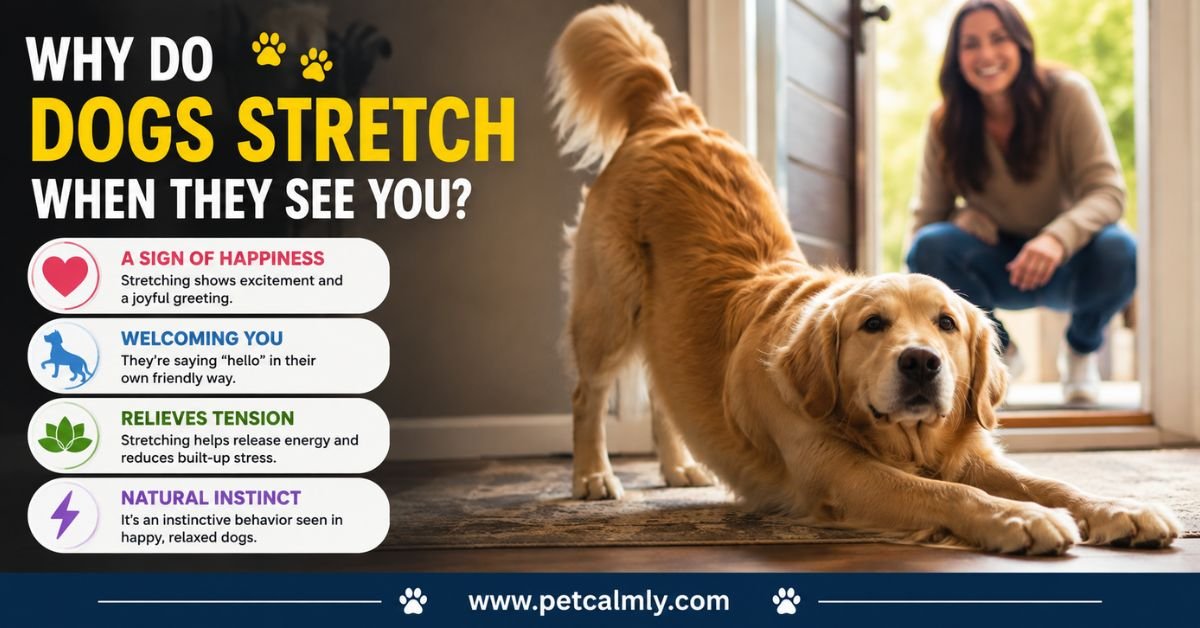
When your dog does that adorable play bow front legs extended, butt in the air they’re doing something ancient and deliberate. This posture, sometimes called the “play solicitation posture,” is a genuine invitation to interact. It says, “I see you, I’m happy you’re here, and I want to spend time with you.”
Dogs don’t have words, so they use their bodies. A stretch before or during a greeting is your dog’s way of saying multiple things at once:
- “I’m awake and alert now”
- “I’m glad to see you”
- “I’m ready to play or go for a walk”
- “I feel safe and comfortable with you”
This behavior is rooted in your dog’s pack mentality and their natural instinct to greet family members. In the wild, canines greet each other through physical communication. Your dog is simply following this instinct with you.
Why Dogs Stretch After Resting
Here’s the practical side: dogs stretch for the same reason humans do. After lying down for a while, muscles naturally get tight. A good stretch loosens them up, increases blood flow, and prepares the body for movement. This is especially true if your dog has been napping or resting before you arrive home.
Your dog might stretch multiple times throughout the day when they wake up, before a walk, after eating, or in preparation for playtime. When this stretching happens at the exact moment they see you, it combines both the practical muscle-loosening function with the greeting ritual.
Why Your Dog Stretches Specifically When Greeting You
The Anticipation Factor
Dogs are incredibly perceptive creatures. When they hear your car pull into the driveway, smell your scent, or hear your key in the door, their brain goes into activation mode. Stress hormones and excitement hormones spike, muscles tense, and their body prepares for what’s about to happen your arrival.
Before engaging physically, your dog’s body essentially “preps” itself by stretching. Think of it like an athlete stretching before a game. Your dog is loosening up and readying their muscles for whatever comes next: running, jumping, playing, or simply following you around the house.
Dogs Mirror Their Emotional State Through Movement
A relaxed, comfortable dog moves differently than an anxious one. When your dog stretches during greeting, it’s actually a sign of emotional wellness. An anxious dog wouldn’t stretch; they’d show tension, cowering, or avoidance. The fact that your dog takes the time to stretch and play bow tells you they feel:
- Safe in your presence
- Excited about interaction
- Confident in their environment
- Secure in your relationship
This is why the stretch is so meaningful. It’s not just a physical movement it’s your dog’s emotional state on display.
The Role of Oxytocin and Bonding
When dogs greet their owners, oxytocin often called the “love hormone” floods both your brains. This is the same chemical that bonds mothers to babies. Your dog’s body is literally flooded with the desire to connect with you, and the stretch is part of that physical expression of affection.
Research into dog-human attachment has shown that dogs release oxytocin when they see their owners, and that this chemical makes them want to be near us and interact with us. The stretching behavior is a physical manifestation of that chemical reality.
Different Types of Stretches: What Each One Means
The Classic Play Bow
This is the most recognizable stretch. Front legs are extended forward, sometimes so far that your dog’s chest nearly touches the ground, while the back legs and rear end stay elevated. The tail is usually wagging.
What it means: “I want to play!” This is an unambiguous invitation for interaction. Your dog is saying they’re ready for engagement and fun.
The Full-Body Stretch
Your dog stretches their entire body at once front legs extended, back legs stretched out behind them, sometimes with a big yawn. It looks almost like a yoga pose.
What it means: “I’m waking up and feel good.” This is less about greeting and more about physical preparation. It often happens when your dog has been resting and is transitioning to activity.
The Side Stretch
Your dog stretches one side of their body, often while lying down or in a play bow position. You might see them reach their front legs to one side while their rear end stays put.
What it means: This is usually just physical—dogs do side stretches to loosen specific muscle groups, similar to how you might stretch your sides. It’s not necessarily a greeting behavior.
The Sitting Stretch
Your dog sits and then extends their front legs while keeping their bottom on the ground. Sometimes they’ll do this with a bow, sometimes with legs fully extended.
What it means: This is often a transitional behavior your dog is waking up muscles before standing up to move around. It’s less about greeting and more about practical body mechanics.
Is Your Dog’s Stretching Normal?
When Stretching Is a Positive Sign
Your dog’s stretching is absolutely normal and healthy when:
- It happens during greetings and playtime
- Your dog appears relaxed and happy
- Stretching is followed by normal movement and activity
- Your dog shows no signs of pain or discomfort
- The stretches are occasional and natural, not compulsive
In these situations, your dog is simply being a healthy, happy dog. Enjoy it as part of their personality and greeting ritual.
When Stretching Might Signal a Problem
While occasional stretching is normal, excessive or compulsive stretching can occasionally indicate an underlying issue. You should pay attention if:
- Your dog stretches constantly throughout the day, far more than usual
- Stretching seems forced or uncomfortable (your dog winces, yelps, or shows stiffness)
- Your dog’s stretching is accompanied by reluctance to move, stiffness, or limping
- Your dog stretches frequently but seems to be in discomfort afterward
- There’s a sudden increase in stretching behavior that coincides with other changes
In these cases, it’s worth consulting your veterinarian. While most stretching is benign, excessive stretching can sometimes indicate conditions like arthritis, back pain, digestive issues, or neurological concerns that deserve professional assessment.
The Science Behind Stretching in Dogs
Muscle Preparation and Flexibility
Dogs’ muscles need stretching just like human muscles do. Stretching increases blood flow, warms up muscles, and improves flexibility. This is why you often see dogs stretch after sleeping or before physical activity.
A study published in the Journal of Veterinary Behavior noted that dogs naturally engage in preparation behaviors before active play, and stretching is a key component of this. The behavior has deep evolutionary roots—wild canines stretch to prepare for hunting, running, or other physical demands.
The Neurological Component
Stretching isn’t just physical it’s neurological too. When your dog stretches, they’re activating their nervous system and increasing proprioception (their awareness of where their body is in space). This is why young puppies stretch frequently as they develop motor control, and why adult dogs stretch before engaging in complex physical tasks.
The specific timing of stretching when seeing you isn’t random. Your dog’s brain recognizes you, predicts that activity is coming, and initiates stretching as a preparatory response. This is learned behavior combined with instinctive physiology.
How to Respond When Your Dog Stretches to Greet You
Reinforce the Behavior Positively
When your dog stretches to greet you, they’re giving you a gift: a clear signal of affection and engagement. The best response is to:
- Acknowledge it warmly – A happy greeting in return reinforces that they’ve communicated successfully
- Engage physically – Pet them, play with them, or prepare for the activity they’re anticipating (like a walk or playtime)
- Stay calm if they’re overly enthusiastic – If your dog is jumping or getting too excited, you can redirect that energy into structured play or training
Responding positively to your dog’s stretching greeting strengthens your bond and shows your dog that this form of communication works.
Avoid Misinterpreting the Stretch
Sometimes new dog owners worry that stretching means something is wrong. It doesn’t. A dog doing a play bow in greeting is a happy, healthy dog. The only time you need to be concerned is if:
- The stretching looks painful or strained
- It’s accompanied by other signs of discomfort
- It’s happening far more frequently than normal
- Your dog seems reluctant or anxious during the stretch
Use It as a Training Opportunity
Some owners turn the greeting stretch into a training moment. Instead of immediately engaging in play, you can teach your dog to sit after their play bow, creating a more controlled greeting ritual. This is especially helpful if your dog gets overly excited or jumps on visitors.
4 Common Questions About Dog Stretching Behavior
Does Stretching Mean My Dog Is in Pain?
Not necessarily. Normal, relaxed stretching is a sign of good health. However, if your dog’s stretching looks strained, forced, or is accompanied by limping or reluctance to move, that’s when pain might be involved. The context matters.
Should I Stretch My Dog for Them?
While gentle handling is fine, you don’t need to actively stretch your dog’s limbs. Dogs are naturally good at stretching themselves. If your dog has joint issues or arthritis, your veterinarian can recommend specific exercises or therapy.
Why Does My Dog Stretch More in the Morning?
Dogs often stretch more in the morning because they’ve been resting overnight. Just like humans, they need to wake up their muscles and get blood flowing. Morning stretching is completely normal and healthy.
Is Excessive Stretching a Sign of Anxiety?
Not typically. Anxious dogs usually show different behaviors—pacing, panting, or avoidance. However, if your dog’s stretching seems obsessive and is paired with other anxiety signs, mention it to your vet.
When to Talk to Your Veterinarian About Stretching
You should schedule a vet visit if you notice:
- A sudden increase in stretching frequency (more than typical for your dog)
- Stretching that seems painful or is accompanied by whimpering
- Stiffness or difficulty moving after stretching
- Limping, lameness, or reluctance to bear weight
- Stretching combined with other symptoms (loss of appetite, lethargy, behavioral changes)
- Repetitive, compulsive stretching that seems obsessive
Your veterinarian can rule out conditions like arthritis, intervertebral disc disease, or other musculoskeletal issues if they’re concerned. Most of the time, normal greeting stretches are nothing to worry about but it’s always better to be safe when it comes to your dog’s health.
The Bigger Picture: Understanding Your Dog’s Communication
Stretching is just one piece of your dog’s complex communication system. When your dog stretches to greet you, they’re combining it with:
- Tail wagging – Usually indicates happiness and enthusiasm
- Relaxed facial expression – Soft eyes, open mouth “smile,” relaxed ears
- Play bowing – Explicit invitation for interaction
- Vocalizations – Whines, barks, or other excited sounds
- Body posture – Loose, bouncy, forward-facing movement
All of these together paint a clear picture: your dog is genuinely happy to see you and wants to interact. The stretch is just one part of that overall message.
More Information About Pets, Please Visit Our Website: How to Teach a Dog Recall
How to Teach a Dog to Stay Home Alone
How to Train a Stubborn Dog
How to Train a Stubborn Dog to Walk on a Leash
How to Stop Leash Pulling in Dogs
Frequently Asked Questions
1: Is it bad if my dog doesn’t stretch when greeting me?
A: No. Some dogs are simply less demonstrative than others. As long as your dog shows affection in other ways tail wagging, eye contact, approaching you they’re fine. Stretching is common, but not mandatory for a healthy dog.
2: Why does my dog stretch more when I’ve been gone for a long time?
A: Your dog’s anticipation builds over time. The longer you’re away, the more excited they are to see you, and the more likely they are to do their full greeting ritual, including stretching. This is a sign of strong attachment.
3: Can old dogs still stretch normally?
A: Senior dogs often stretch, but it may look different. Older dogs might move more slowly or show some stiffness. If your senior dog’s stretching becomes painful-looking or is accompanied by reluctance to move, consult your vet, as this can signal arthritis or other age-related issues.
4: Should I be worried if my dog stretches a lot during the day?
A: Occasional stretching throughout the day is normal. Dogs stretch when they wake up, before activity, and when transitioning between rest and movement. If it seems excessive or uncomfortable, that’s worth mentioning to your vet.
5: Does stretching mean my dog is getting enough exercise?
A: Not necessarily. Stretching and exercise are related but different. A dog who stretches regularly might still benefit from more physical activity. Use stretching as one indicator of health, but also assess overall activity levels.
6: My dog stretches and then seems stiff. Is this normal?
A: A little residual stiffness is sometimes normal, especially in older dogs. But if your dog seems significantly stiff or limps after stretching, it’s worth discussing with your vet.
Conclusion
Your dog stretches when they see you because their body and mind are expressing genuine joy and anticipation. It’s a combination of practical physiology loosening muscles for activity and emotional communication showing you they’re happy, comfortable, and ready to connect.
Most of the time, your dog’s stretching greeting is nothing to worry about. It’s actually something to appreciate. It means your dog feels safe with you, is excited to see you, and trusts you enough to show enthusiasm openly.
Pay attention to the context. Normal greeting stretches during happy, relaxed moments are a sign of a healthy, well-adjusted dog. Excessive, painful-looking, or strained stretching combined with other concerning symptoms deserves veterinary attention.
But in most cases, when your dog does that adorable play bow and stretches to greet you, you’re simply witnessing your dog’s authentic way of saying, “I’m so glad you’re here.” Treasure that moment. It’s real affection, expressed in your dog’s own language.