Short direct answer
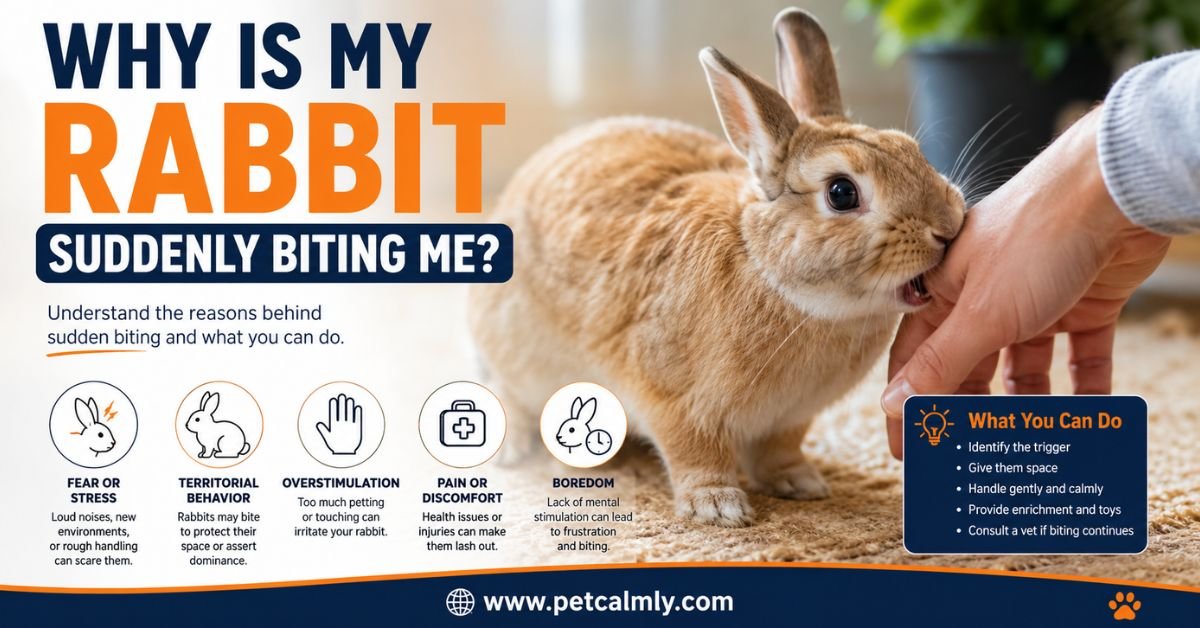
A rabbit that suddenly starts biting is almost always communicating something, not “turning aggressive” for no reason. The most common causes are hormonal changes (especially in unspayed/unneutered rabbits reaching sexual maturity around 4–6 months), territorial guarding of a cage or favorite person, fear or pain, or a misread signal what looks like a bite is sometimes a nip meant to move you out of the way. The fix usually involves identifying the trigger, adjusting handling, and in many cases, spaying or neutering. If the biting is sudden, aggressive, and paired with other behavior changes, a vet visit should come first, since pain is a common hidden cause.
Why This Feels So Confusing (And Why You’re Not Doing Anything Wrong)
If your sweet, cuddly rabbit has started lunging or nipping at you and you have no idea why, you’re not alone, and you haven’t necessarily done anything wrong. Rabbit body language is subtle. Most people who grew up with dogs or cats expect a growl or a hiss before a bite. Rabbits don’t usually give that kind of warning or if they do, it’s a small ear flick, a thumped foot, or a tense body that’s easy to miss until it’s too late.
What makes this especially frustrating is that the biting often seems to come out of nowhere. One week your rabbit is happily hopping onto your lap, and the next week they’re lunging at your hand every time it enters the cage. That sudden shift is actually a clue. Rabbits rarely bite “randomly” something in their environment, body, or routine has changed, and the bite is their way of telling you about it.
This guide walks through the real reasons rabbits suddenly bite, how to tell the difference between a nip and a true bite, what to change in your handling, and when the behavior is serious enough to need a vet’s opinion.
Rabbit Body Language Before the Bite
Before diving into causes, it helps to understand that biting is rarely the first signal a rabbit gives. It’s usually the last one, after quieter warnings were missed.
Watch for these signs in the moments before a bite:
- Thumping a back foot — a general alarm signal
- Flattened or pinned-back ears — fear or irritation
- A tense, low body posture — feeling threatened or cornered
- Circling your feet with grunting — often hormonal or territorial
- A quick nose bump before the bite — sometimes a warning nip that escalates if ignored
- Growling or a soft honking sound — irritation, most common in unspayed females
Learning to spot these early cues is one of the most effective ways to prevent a full bite. Many rabbit owners describe a moment of realization once they start watching closely: the “sudden” bite wasn’t sudden at all, it was preceded by small signs they’d never been taught to notice.
Real Reasons Your Rabbit Started Biting
1: Hormones Are Often the Hidden Trigger
If your rabbit is between 3 and 8 months old and unaltered, hormones are one of the most likely explanations. As rabbits reach sexual maturity, their behavior can shift fairly abruptly. A previously easygoing rabbit may start circling ankles, mounting, spraying urine, or nipping when picked up or approached in their space.
This isn’t a training failure. It’s biology. Intact rabbits, particularly females, can become territorial and possessive over their cage, litter box, or a favorite person almost overnight. Spaying and neutering, once a rabbit is old enough and cleared by a vet, resolves hormonal biting in a large number of cases within a few weeks to a couple of months after the hormones fully clear the system.
2: Your Rabbit May Be Guarding Territory
Rabbits are prey animals with a strong instinct to protect a safe space. If the biting happens specifically when your hand enters the cage, hutch, or a favorite corner of a room, territorial guarding is a likely explanation — even if your rabbit is affectionate everywhere else.
This is different from general aggression. A territorial rabbit might happily sit on your lap in the living room but lunge the moment you reach into their enclosure. The cage has become “theirs,” and your hand is an intruder.
3: Fear, Startle, or a Bad Handling Experience
Rabbits have a strong startle reflex because they’re built to react instantly to threats in the wild. A sudden movement, a loud noise, an unfamiliar smell on your hands, or being picked up incorrectly can all trigger a defensive bite even from a rabbit that’s normally trusting.
This type of biting often shows up after a specific incident: a vet visit, a nail trim, a new pet in the house, or even a change in your perfume or lotion. Rabbits rely heavily on scent to recognize safe people, so something as small as switching hand soap can occasionally cause temporary wariness.
4: Pain Is a Commonly Overlooked Cause
One of the most under-recognized reasons for sudden biting is physical pain. Rabbits are prey animals, so they instinctively hide signs of illness or discomfort until it becomes severe. A rabbit in pain from dental issues, gastrointestinal discomfort (GI stasis), arthritis, or an internal injury may bite when touched in a specific area, or become generally more irritable and defensive.
If the biting started suddenly and is paired with any change in eating, energy, posture, or litter box habits, pain should be ruled out before assuming it’s purely behavioral.
5: Misinterpreted “Love Nibbles” or Nudges
Not every bite is aggression. Rabbits sometimes nip to ask for attention, to move you out of their path, or as a form of grooming that goes slightly too far. A gentle nibble followed by relaxed body language is very different from a hard, sudden bite paired with lunging or thumping.
Learning to distinguish between these two is important, because treating an affectionate nip the same way you’d treat a fear-based bite can actually make the real problem worse.
Nip vs. True Bite: How to Tell the Difference
| Behavior | Likely Meaning | Body Language |
|---|---|---|
| Light nibble, no pressure | Grooming or attention-seeking | Relaxed ears, calm posture |
| Quick nip then retreat | “Move out of my way” | Neutral or slightly tense |
| Hard bite that breaks skin | Fear, pain, or territorial defense | Flattened ears, tense body, possible thump |
| Bite followed by lunging or circling | Hormonal or territorial guarding | Circling, grunting, mounting behavior |
| Bite when touched in one specific spot | Possible pain or injury | Flinching, stillness, reluctance to move |
5 Common Mistakes That Make Biting Worse
Many well-meaning owners unintentionally reinforce biting or increase a rabbit’s stress without realizing it. A few patterns come up again and again:
- Pulling your hand away quickly after a bite. This can accidentally reward the behavior, since the rabbit learns that biting makes the “threat” retreat.
- Punishing or flicking the rabbit’s nose. Rabbits don’t respond well to physical correction. It usually increases fear and can make biting worse, not better.
- Reaching straight down from above. In the wild, this mimics a predator swooping in. Approaching from the side at the rabbit’s eye level feels far less threatening.
- Ignoring early warning signs. Continuing to reach in after a thump or ear flick teaches the rabbit that small signals don’t work, so they escalate to biting.
- Inconsistent handling between family members. If one person respects boundaries and another doesn’t, the rabbit can become anxious and unpredictable.
How to Respond in the Moment (Without Making It Worse)
When your rabbit bites, the instinct to yank your hand back or raise your voice is natural, but neither helps long-term. Instead:
- Stay still for a second rather than jerking away, then calmly withdraw your hand.
- Say a firm, neutral “no” or a short sharp sound, not a scream or a slap.
- Give the rabbit space rather than continuing to reach toward them.
- Avoid immediate treats or attention, which can accidentally reward the behavior.
- Note what happened right before the bite this pattern is more useful than the bite itself.
Practical Guide: Reducing and Preventing Sudden Biting
Once you have a sense of what’s triggering the behavior, these approaches tend to help most rabbits:
Respect the cage as their space. Instead of reaching straight in, let your rabbit come to the door on their own terms when possible, especially during cleaning or feeding.
Approach from the side, at their level. Avoid looming from above. Crouch or kneel so you’re not reaching down onto them.
Let your rabbit initiate contact. Sit near the enclosure or on the floor and let them approach you rather than always picking them up first.
Consider spaying or neutering. For rabbits over 4 months old showing hormonal signs, this is one of the most effective long-term solutions and also has health benefits, including reducing the risk of reproductive cancers in unspayed females.
Keep handling short and predictable. Rabbits often bite when they feel trapped or over-handled. Shorter, calmer sessions build more trust than long ones.
Use consistent scent and routine. Wash hands with unscented soap before handling, and try to interact at similar times each day so your rabbit isn’t caught off guard.
Rule out pain with a vet check. If the timing lines up with any physical changes, a check-up should come before behavioral training.
When Should You Worry? Signs That Need a Vet, Not Just Training
Most sudden biting is behavioral and improves with the right adjustments. But certain signs point toward a medical issue that needs veterinary attention rather than home training:
- Biting paired with reduced appetite or smaller/fewer droppings
- Sudden aggression combined with lethargy or hiding
- Flinching or biting when a specific body part is touched
- Grinding teeth loudly (a possible sign of pain)
- Hunched posture or reluctance to move normally
- Biting that appears with no clear behavioral trigger and doesn’t improve after 2–3 weeks of consistent, gentle handling changes
Rabbits are especially good at masking illness, and conditions like GI stasis can become dangerous quickly. If you notice any of the signs above, it’s worth contacting a rabbit-savvy exotic vet rather than waiting to see if the behavior passes.
What Should Pet Owners Do Next?
If your rabbit has started biting suddenly, the most useful next step is to become a quiet observer for a few days before making changes. Notice:
- When the biting happens (cage, lap, specific times of day)
- Who it happens with (everyone, or one specific person)
- What happened right before it
- Whether your rabbit’s eating, energy, or litter habits have changed
This short observation period usually reveals the pattern, and the pattern tells you whether you’re dealing with hormones, territory, fear, or something that needs a vet’s input. From there, the adjustments above respecting space, calm handling, and considering spay/neuter resolve the majority of sudden biting cases within a few weeks.
Conclusion
A rabbit that suddenly starts biting isn’t being “bad” or unpredictable for no reason. It’s communicating, whether that’s about hormones, territory, fear, or discomfort. The shift in behavior, sudden as it feels, almost always has a traceable cause once you start watching body language and timing closely. With patience, calm handling, and a vet check when something feels physically off, most rabbits return to their trusting, affectionate selves. The bite isn’t the whole story it’s the last sentence of something your rabbit has been trying to tell you for a while.
More Information About Pets, Please Visit Our Website: How to Cycle a Fish Tank
Why Is My Betta Fish Not Eating or Moving?
Cory Catfish Care
Neon Tetra Care Guide
How Often to Feed Goldfish
Why Is My Goldfish Turning Black?
Common Goldfish Tank Size
How Many Babies Do Guppies Have in a Year?
Frequently Asked Questions
1: Why did my rabbit start biting me out of nowhere?
Sudden biting usually has an underlying cause even if it isn’t obvious at first commonly hormones in unaltered rabbits, territorial guarding of their cage, fear from a recent startling event, or pain. Watching for patterns in when and where it happens usually reveals the trigger.
2: Is it normal for rabbits to bite when they reach a certain age?
Yes. Many rabbits go through a hormonal phase between 4 and 8 months old where nipping, circling, and mounting increase. This often improves significantly after spaying or neutering once the rabbit is old enough for the procedure.
3: Should I punish my rabbit for biting?
No. Physical correction, shouting, or flicking a rabbit’s nose tends to increase fear and can make biting worse. A calm, firm “no” followed by withdrawing attention is more effective and doesn’t damage trust.
4: Can spaying or neutering stop rabbit biting?
In many cases, yes, particularly when the biting is linked to hormonal or territorial behavior. It doesn’t guarantee an instant fix, since hormones can take several weeks to fully clear, but it’s one of the most reliable long-term solutions.
5: How do I know if my rabbit’s biting is due to pain?
Look for accompanying signs like reduced appetite, fewer droppings, teeth grinding, hunched posture, or flinching when a specific area is touched. If biting appears alongside any of these, a vet visit is the right next step rather than behavioral training alone.
6: Why does my rabbit only bite me and not other people?
This is often territorial or related to a specific interaction pattern, such as being the person who reaches into the cage most, wears a particular scent, or handles the rabbit in a way that feels less predictable to them. Rabbits can also form stronger opinions about specific people once hormones are involved.