Short direct answer
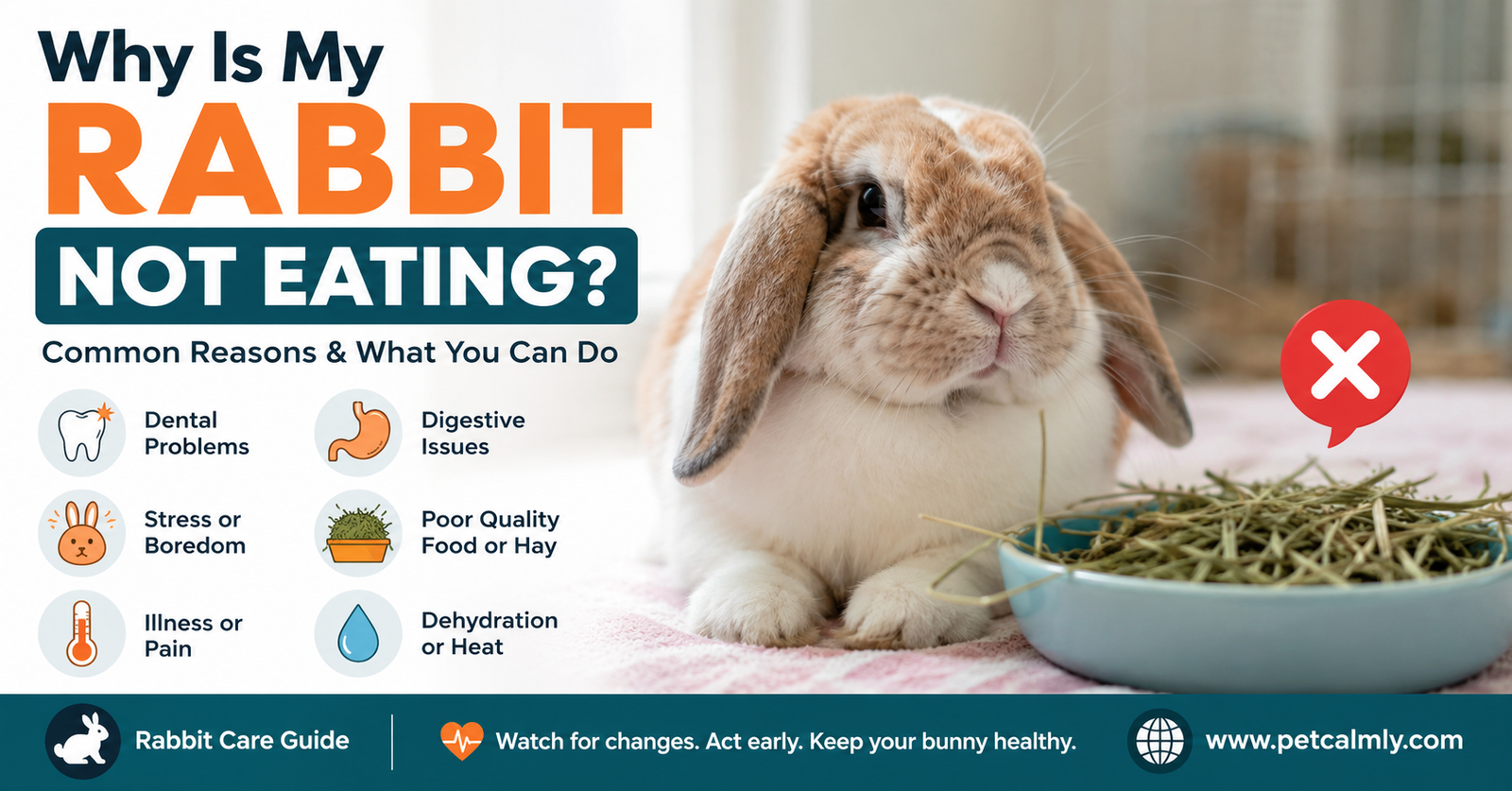
A rabbit not eating is almost always a sign that something is wrong, because rabbits rarely skip meals voluntarily. The most common reasons are gastrointestinal (GI) stasis, dental pain, stress, a sudden diet change, or an underlying illness. Because rabbits have delicate digestive systems that can shut down within hours of a missed meal, any rabbit that hasn’t eaten or pooped in 12 hours needs prompt attention, and one that hasn’t eaten in 24 hours should see a veterinarian the same day.
If you’re staring at an untouched food bowl right now, take a breath. You caught it. That alone puts you ahead of a lot of rabbit owners who don’t realize how quickly this needs to be addressed. Let’s walk through exactly why this happens, what counts as an emergency, and what you can do in the meantime.
Why Rabbits Stop Eating: The Main Causes
Unlike cats or dogs, rabbits don’t usually skip a meal because they’re “not in the mood.” A healthy rabbit is almost always ready to eat, especially hay. When that changes, it’s usually one of these underlying issues.
1: GI Stasis (the Most Common and Most Urgent Cause)
GI stasis happens when a rabbit’s digestive tract slows down or stops moving food through the system. It’s not a disease on its own it’s usually a symptom of pain, stress, dehydration, or low fiber intake that then spirals into a bigger problem. Once the gut slows, gas builds up, harmful bacteria multiply, and the rabbit feels even worse, which makes them eat even less. It becomes a cycle that can turn dangerous within a day.
You might notice a hunched posture, teeth grinding (a sign of pain), a bloated-feeling belly, or fewer and smaller droppings before the rabbit stops eating altogether.
2: Dental Problems
Rabbit teeth grow continuously throughout their life. If the teeth aren’t wearing down evenly often from too little hay or a genetic jaw misalignment sharp points or overgrown molars can form. These can cut into the cheeks or tongue, making chewing painful. A rabbit with dental pain often approaches food, sniffs it, and then walks away, or drops pellets and hay out of its mouth without finishing.
3: Stress or a Change in Environment
Rabbits are prey animals, and their nervous systems are wired for caution. A new pet in the house, a loud renovation, a recent move, boarding, or even rearranging the cage can be enough to put a sensitive rabbit off its food for a day. This is usually short-lived, but it’s still worth monitoring closely, since stress-related appetite loss can tip into GI stasis if it isn’t resolved.
4: Sudden Diet Changes
Switching pellet brands too quickly, introducing a new vegetable, or running out of a rabbit’s usual hay can cause a rabbit to be picky, especially if the new food smells or tastes unfamiliar. Rabbits can also be surprisingly particular about hay freshness — a bag that’s gone stale or damp is often left untouched.
5: Pain That Has Nothing to Do With the Gut
Arthritis, a urinary tract infection, an abscess, or even a sore foot can reduce a rabbit’s motivation to move to the food bowl or hay rack. Pain anywhere in the body can suppress appetite in rabbits, not just pain in the stomach.
6: Respiratory Illness or Infection
A rabbit with a stuffy nose may avoid eating simply because rabbits rely heavily on smell to decide what’s worth eating. If your rabbit is sneezing, has discharge from the eyes or nose, or seems congested, that could explain the disinterest in food.
7: Overheating
Rabbits handle heat poorly. In warm weather, appetite often drops before other signs of heat stress appear, since eating actually raises a rabbit’s internal body temperature slightly through digestion.
Why This Matters So Much: Rabbit Digestion 101
Rabbits are hindgut fermenters, meaning they rely on a constantly moving digestive tract and a delicate balance of gut bacteria to stay healthy. Unlike humans, they can’t comfortably go a day without food. When a rabbit stops eating, gut motility slows almost immediately, and the bacteria that should be breaking down fiber start to be replaced by gas-producing, harmful strains. This is why veterinary sources like the Merck Veterinary Manual and VCA Animal Hospitals treat rabbit anorexia as a genuine emergency rather than a “wait and see” situation the way you might with a dog who skips one meal.
This is also why home remedies that work for other pets like waiting a day to see if they get hungry can actually be dangerous for rabbits.
Signs to Watch for Alongside Loss of Appetite
Appetite loss rarely shows up completely alone. Keep an eye out for these accompanying signs, since they help you and your vet figure out what’s going on faster:
- Fewer, smaller, or oddly shaped droppings (or none at all)
- A hunched, tense posture with the rabbit tucked into a ball
- Teeth grinding (loud and rhythmic, different from the soft purring grind of contentment)
- Bloated or gurgly-sounding belly
- Reluctance to move, or lying stretched out flat and unusually still
- Drooling or wet fur around the chin
- Reduced water intake
- Weight loss you can feel along the spine or hips
- Sneezing, nasal discharge, or watery eyes
- Hiding more than usual
If you notice several of these together, it points toward a medical cause rather than simple pickiness.
When Is a Rabbit Not Eating a Veterinary Emergency?
This is the part owners most often underestimate, so here’s a clear way to think about it.
| Time Since Last Meal | What It Usually Means | What to Do |
|---|---|---|
| A few hours, still alert and moving normally | Possibly just pickiness or mild stress | Monitor closely, try the steps below |
| 8–12 hours with no food or droppings | Early warning sign | Call your vet for advice, don’t wait until morning |
| 12–24 hours, or any lethargy/hunching | Likely GI stasis or illness | Same-day veterinary visit |
| Over 24 hours, or signs of pain/bloating | Medical emergency | Emergency vet visit immediately |
A rabbit that is bright-eyed, moving around, and simply ignoring one meal is very different from a rabbit that is hunched, quiet, and hasn’t produced droppings. The second situation is not something to manage at home. Rabbits are experts at hiding illness, since looking vulnerable makes them a target in the wild, so by the time they look obviously sick, the underlying issue has often been building for a while.
What to Do Right Now If Your Rabbit Isn’t Eating
If your rabbit skipped a meal and you’re trying to figure out whether to worry, here’s a practical order of steps:
- Check for droppings. Look in the litter box or cage for the last few hours. No droppings is more urgent than small droppings.
- Feel the belly gently. A tight, swollen, or gurgling abdomen is a signal to call your vet, not to wait.
- Offer fresh hay and water first. Sometimes stale hay or a dirty water bottle is the entire problem. Replace both before assuming something is medically wrong.
- Check the mouth if your rabbit allows it. Look for drooling, food packed to one side, or visible overgrown teeth.
- Note any other symptoms, like posture, energy level, or breathing, so you can describe them clearly to a vet.
- Keep the environment calm and warm. Reduce loud noise or new stressors while you assess the situation.
- Call your vet if it’s been more than 8–12 hours, even just to ask their advice. Most rabbit-savvy vets would rather get an early call than see a rabbit in full stasis the next day.
Do not attempt to force-feed a rabbit or give home remedies like pineapple juice or gas-relief medication meant for other species without veterinary guidance. Some of these can do more harm than good depending on the actual cause.
How to Encourage a Rabbit to Eat Again (Once Illness Is Ruled Out)
If your vet has confirmed there’s no emergency and the issue seems behavioral or mild, these approaches often help:
- Offer a variety of fresh hay. Timothy, orchard grass, and meadow hay all smell and taste different sometimes a rabbit just wants a change.
- Try favorite herbs, like cilantro, parsley, or basil, to stimulate interest in eating again.
- Warm the room slightly if the environment has been cold, since rabbits often eat less when they’re chilly.
- Reduce stressors cover part of the enclosure, keep other pets away temporarily, and stick to a predictable routine.
- Offer food by hand in a quiet space, which can help nervous or recovering rabbits feel safer eating.
- Keep pellets available but don’t over-rely on them. Hay should always be the primary focus, since it’s what keeps the gut moving.
Recovery from mild appetite loss is often visible within a few hours once the stressor or minor issue is addressed. If there’s no improvement, that’s your signal to escalate to veterinary care rather than keep trying home fixes.
6 Common Mistakes Owners Make When a Rabbit Won’t Eat
- Waiting “just one more day” to see if the rabbit gets hungry on its own. With rabbits, this delay is exactly what turns a manageable issue into a crisis.
- Assuming it’s “just being picky” without checking droppings, weight, or behavior.
- Switching foods repeatedly in a short window, which can make things worse by adding more unfamiliar smells and tastes.
- Giving human medications or remedies without a vet’s input.
- Not checking the teeth, since dental pain is one of the most overlooked causes of appetite changes.
- Overlooking subtle pain signals like teeth grinding or a slightly hunched posture, which rabbits show instead of crying out.
How to Prevent Appetite Loss in Rabbits
Prevention comes down to consistency and paying attention to small changes before they become big ones.
- Provide unlimited access to fresh, good-quality hay every day it should make up the majority of the diet.
- Keep fresh water available and check the bottle or bowl daily for blockages.
- Introduce new foods gradually, one at a time, over several days.
- Schedule regular dental and wellness checks, especially for breeds prone to malocclusion.
- Keep the environment as stress-free and predictable as possible.
- Monitor droppings daily as a quick health check it takes seconds and tells you a lot.
- Watch body weight periodically by gently feeling the spine and hips.
A Realistic Example
Picture a rabbit named Biscuit who normally races to the food bowl every morning. One day, he sniffs his pellets and walks away, then ignores his hay too. His owner notices he’s sitting a little hunched in the corner and hasn’t left any droppings in the litter box for a few hours. Rather than waiting to see if he “snaps out of it,” she calls her vet the same afternoon. It turns out Biscuit has early GI stasis triggered by a few stressful days during apartment construction noise. Because it was caught early, treatment is straightforward fluids, pain relief, and gut-motility support and Biscuit is back to his normal eating habits within two days. Waiting until the next morning could have meant a much more serious, and more expensive, emergency visit.
When You Should Absolutely Call a Vet
To keep this simple: if your rabbit hasn’t eaten in over 12 hours, hasn’t produced droppings, seems hunched or lethargic, or shows any sign of pain like teeth grinding, don’t wait it out. Rabbit-specific veterinary care matters here not every general vet is equally experienced with rabbit GI issues, so if you don’t already have one, it’s worth finding an exotic or rabbit-savvy vet before you’re in an emergency situation.
Frequently Asked Questions
1: How long can a rabbit go without eating before it’s dangerous?
A rabbit should never go more than 12–24 hours without eating. Because rabbits rely on constant gut movement to stay healthy, even a half-day without food can trigger GI stasis, which can become life-threatening if untreated.
2: Can stress alone cause a rabbit to stop eating?
Yes. Rabbits are highly sensitive to changes in their environment, and stress from loud noises, new pets, or a move can suppress appetite. However, stress-related appetite loss should still be monitored closely, since it can progress into GI stasis if it lasts more than several hours.
3: What should I feed a rabbit that won’t eat?
Start with fresh, high-quality hay and clean water, since these are the most likely to tempt a mildly picky rabbit. Favorite herbs like cilantro or parsley can also help stimulate appetite. If your rabbit still won’t eat after a few hours, contact your veterinarian rather than continuing to offer different foods.
4: Is it normal for a rabbit to skip one meal?
It can happen occasionally, especially with a picky rabbit or a minor environmental change, but it’s not something to dismiss without checking. Look at droppings, energy level, and posture. If everything else looks normal and your rabbit eats again within a few hours, it was likely nothing serious.
5: Can I give my rabbit human baby food or Pedialyte if it won’t eat?
Only under veterinary guidance. In some cases, vets do recommend supportive feeding or fluids, but the right approach depends on what’s actually causing the appetite loss, and giving the wrong thing at home can delay proper treatment.
6: Why is my rabbit not eating but still drinking water?
This can still indicate GI stasis, dental pain, or illness drinking water doesn’t rule out a serious problem. Continue monitoring droppings and behavior closely, and don’t wait longer than 12 hours to seek veterinary advice if the appetite loss continues.
More Information About Pets, Please Visit Our Website: Rabbit Water Bottle vs Bowl
What Are the Best Pellets for Rabbits
Can Rabbits Eat Bananas?
Rabbit Behavior Meanings
How Long Do Pet Rabbits Live Indoors?
Why Is My Rabbit Suddenly Biting Me?
How to Care for a Pet Rabbit Indoors
Conclusion
A rabbit that won’t eat is telling you something, even if it can’t tell you exactly what. Most of the time, the cause is manageable — stress, a dental issue, or a diet change but because rabbit digestion can spiral so quickly, the right move is almost always to act early rather than wait and see. Keep fresh hay and water available, watch for the accompanying warning signs, and don’t hesitate to call your vet if more than half a day passes without eating. Catching it early is genuinely the difference between a quick recovery and a medical emergency.