Short direct answer
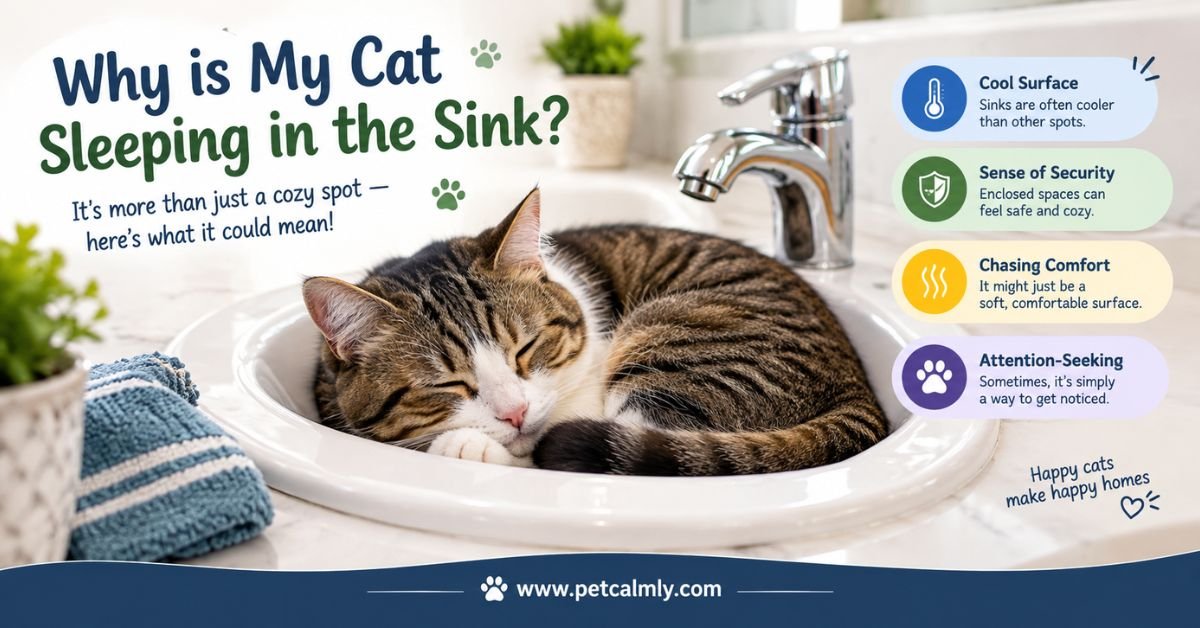
Why is my cat sleeping in the sink? Usually it comes down to comfort and security. A sink bowl is cool in warm weather, snug like a nest, and often sits in a quiet room where your cat can stay close to you. Most of the time it’s harmless. Occasionally, though, a sudden new sink habit points to stress, pain, or a health problem, so it helps to know the difference.
Your Cat Chose the Bathroom Sink Over a $60 Bed
You bought the plush bed. You tried the heated pad. You even gave in and bought the cardboard box. Then one afternoon you walk into the bathroom and find your cat curled up in the basin, eyes half closed, looking like it’s the best real estate in the house.
If that sounds familiar, you’re not alone, and you’re probably not doing anything wrong. Cats are famously picky about where they rest, and their choices often make more sense once you see the room from their point of view.
This guide explains the most common reasons for a cat sleeping in the sink, how to tell which one applies to yours, what’s safe, and what’s worth a call to your vet. It also covers what to do next, whether you decide to allow the habit or gently redirect it.
Why Is My Cat Sleeping in the Sink? 10 Most Common Reasons
Cats rarely do things for just one reason. Your cat may be enjoying two or three benefits of the sink at once. Here are the most likely explanations, starting with the ones that come up most often.
1: Cool Ceramic Feels Good on a Warm Day
Cats are heat lovers in general, but there’s a limit. A fluffy cat in a warm house can overheat, and ceramic or stainless steel stays noticeably cooler than carpet, fabric, or most cat beds.
If your cat started sleeping in the sink during summer or a heat wave, this is the first thing to suspect. The basin gives off a steady coolness and has no insulating fur-trapping fabric. Cats can’t sweat the way we do, so they look for surfaces that pull heat away from their bodies.
A quick check: touch the sink and then touch your cat’s usual bed. If the sink feels clearly cooler, you’ve probably found your answer.
2: The Bowl Shape Feels Like a Snug Nest
Many cats love being surrounded. You’ve probably seen the same instinct at work with shoeboxes, laundry baskets, and paper bags. A sink basin curves up around the body, which gives your cat gentle pressure on the sides and a sense of being tucked in.
That feeling of containment is comforting to many cats. In the wild, a small enclosed spot is harder for a predator to approach. Your house cat doesn’t consciously think about predators, but the instinct to choose a “protected” spot is still there.
3: The Bathroom Feels Safe and Quiet
Bathrooms are often the calmest room in the house. They’re small, the door is often closed, and there’s usually little foot traffic. If you share your home with kids, dogs, other cats, or a busy household, the bathroom can become a retreat.
This matters because a cat sleeping in the sink may simply be saying, “I want somewhere peaceful.” If your cat only goes there when guests arrive or when the vacuum comes out, that’s a strong hint the sink is a hideout, not just a bed.
4: Your Cat Wants to Be Near You
Cats are more social than their reputation suggests. Many follow their owners into the bathroom, and the sink is right there while you brush your teeth, wash your face, or take a shower.
Sitting in the sink puts your cat at eye level with you and within easy reach of a head scratch. If your cat is sleeping in the sink while you’re in the room, or hops in the moment you walk in, attention and companionship are likely part of the picture.
5: Water Is Fascinating (and Sometimes Tempting to Drink)
Dripping faucets, a thin trickle, or leftover drops on the basin can hold a cat’s attention for a surprisingly long time. Moving water is interesting to watch and may seem fresher than a bowl that has been sitting out.
Some cats prefer running or moving water for drinking. If yours always seems to nap near the faucet or licks the basin, it may be a hydration preference. We’ll cover this more in the health section, because a sudden increase in water interest can be a medical clue.
6: A Higher Spot Gives Your Cat a Lookout
Cats like to see without being seen, and height helps. A sink counter sits above floor level, giving your cat a good view of the doorway and the room. A cat who feels they can watch for trouble will often relax enough to doze off.
7: Your Scent Is All Over the Bathroom
Bathrooms hold a lot of your smell: towels, clothes, skin products, and so on. Cats read the world through scent, so a room full of “you” can be reassuring, especially if you’re away during the day.
If your cat tends to sleep in the sink after you leave for work, it might be a way of staying close to your smell, particularly if your cat is prone to separation-related stress.
9: Stress, Anxiety, or a Change at Home
Sometimes the sink is less of a bed and more of a bunker. Cats under stress often look for small, enclosed, or hidden places. Common triggers include:
- A new pet or baby
- Moving furniture or rearranging rooms
- A new home
- Construction noise
- Changes in your schedule
- Tension between cats in the same house
What matters here is timing. If the sink habit began soon after a change, stress is worth considering. Look for other signs too, such as hiding more, eating less, over-grooming, or changes in litter box habits.
10: An Older Cat Looking for Relief
Senior cats sometimes pick odd resting places. Arthritis and joint stiffness are very common in older cats, and many owners don’t recognize them because cats hide discomfort well. A cool, smooth surface may feel soothing, but a cat with sore joints may also avoid jumping up high.
If an older cat suddenly starts using the sink, or suddenly stops, it’s worth mentioning to your vet. A change in where a cat rests is often one of the earliest hints that something has shifted.
How to Tell Why Your Cat Is Sleeping in the Sink
Because there are so many possible causes, a few simple observations can narrow things down quickly. Pay attention to when and how your cat uses the sink, not just that it does.
| What you notice | Most likely reason |
|---|---|
| Only in hot weather or afternoons | Cooling off |
| Curls up tightly, falls asleep fast | Snug nest feeling |
| Goes there when guests or noise appear | Hiding or stress |
| Follows you into the bathroom and hops in | Wants your company |
| Stares at or licks the faucet | Water fascination |
| Habit began suddenly, with other changes | Possible stress or health issue |
| Older cat, new behavior | Comfort-seeking or discomfort |
Questions to Ask Yourself
Take a few days to notice patterns. It helps to jot down quick answers to these:
- When did the sink habit start?
- Does it happen at a certain time of day?
- Is your cat also drinking, peeing, or eating differently?
- Has anything changed in the home recently?
- Does your cat seem relaxed in the sink, or tense and watchful?
A relaxed cat usually has soft eyes, a loose body, and may even purr or slow-blink. A tense cat might look flattened, wide-eyed, or ready to bolt. That difference tells you a lot.
Is a Cat Sleeping in the Sink Safe?
In most homes, yes, with a few precautions. A sink isn’t dangerous by itself, but a few everyday bathroom and kitchen features can become hazards once a cat starts treating it as a bed.
Common Sink Hazards for Cats
Sudden water. Someone turns on the tap without noticing a cat dozing in the basin. A sudden spray of cold or hot water can scare or even injure a cat. This is probably the most common real-world problem.
Cleaning products. Sink cleaners, bleach, drain openers, and toilet-bowl products can leave residue. Cats groom their paws and fur constantly, so anything on their coat ends up in their mouth. Some household cleaners can irritate skin or cause stomach upset.
Small items in or near the basin. Hair ties, dental floss, cotton swabs, razors, and bits of string are tempting to chew on. Linear objects like string and floss are especially dangerous for cats if swallowed.
Medications and toiletries. Pills dropped near the sink, creams, and certain essential oils can be harmful if licked or chewed. Some products that are fine for humans can be toxic to cats, so keep everything off the counter.
Poor stability. Some pedestal or wall-mounted sinks aren’t designed to carry weight. A large cat jumping in repeatedly can loosen a poorly fitted basin.
Slippery landings. Wet porcelain is slick. An older or heavier cat might slip when jumping in or out, which is a particular concern if your cat has arthritis.
Sink Safety Checklist for Cat Owners
Run through this list if your cat is a regular sink sleeper:
- Check the basin before turning on the tap, every time
- Rinse the sink thoroughly after cleaning and let it dry
- Store cleaners and medications in a closed cabinet
- Keep floss, hair ties, and razors in a drawer
- Fix leaky faucets so your cat isn’t tempted to drink from questionable drips
- Place a non-slip mat on the counter or beside the sink
- Make sure the sink is firmly mounted
If you live with other people, tell them. A quick “check the sink first” habit protects your cat more than any gadget.
Why Is My Cat Sleeping in the Sink Suddenly?
A long-time sink napper is usually just a cat with a favorite spot. A sudden change is different, and it deserves more attention.
When the habit appears out of nowhere, think about what else has changed. Ask yourself:
- Is the weather hotter or is the house warmer?
- Did your cat’s bed move or get washed?
- Is there a new smell, pet, or person?
- Has your own routine changed?
Cats are creatures of routine, so even small shifts can matter. A new laundry detergent on a favorite blanket can make the old bed less appealing overnight.
If you can’t connect the habit to anything obvious, don’t panic, but do watch for other changes over the next few days. A new sink habit combined with other behavior shifts is a good reason to book a vet visit.
When Should You Worry About a Cat Sleeping in the Sink?
Most sink naps are normal. But because cats instinctively hide illness, an unusual resting place can be an early clue. Here is when it deserves a closer look.
Signs That Call for a Vet Visit
Contact your veterinarian if the sink habit comes with any of the following:
- Drinking much more water than usual, or constantly hanging around the faucet
- Urinating more often or producing larger clumps in the litter box
- Weight loss despite a normal or increased appetite
- Poor appetite or refusing food
- Vomiting or diarrhea
- Lethargy or hiding for long periods
- Rapid or open-mouth breathing
- Stiffness, limping, or reluctance to jump
- Straining in the litter box or crying while urinating
- Unusual restlessness or seeming unable to get comfortable
Some medical conditions in cats can change how they feel about temperature and water. For example, kidney disease, diabetes, and hyperthyroidism are all more common in middle-aged and older cats, and some of them cause increased thirst. A cat who seeks out cool surfaces and also drinks heavily is worth a check-up, even if they otherwise seem fine.
This article can’t diagnose anything, and a sink nap alone doesn’t mean your cat is sick. But if the behavior is new and comes with changes like these, a vet can run simple tests that give you real answers.
Emergency Warning Signs
Get urgent veterinary help right away if you see:
- Open-mouth breathing or panting (unusual in cats)
- Collapse or inability to stand
- A male cat straining to urinate with little or nothing coming out
- Repeated vomiting
- Pale or blue-tinged gums
These are emergencies, whether or not your cat happens to be in a sink.
What to Do If Your Cat Keeps Sleeping in the Sink
Once you’ve ruled out safety issues and anything medical, you have two reasonable choices: allow the habit with some precautions, or offer something even better nearby. Neither is wrong.
Step-by-Step: Make the Sink Safer
If you’re fine with the habit, make it as safe as possible.
- Clear the area. Remove small items, medications, and cleaning products from the counter.
- Wash and rinse the basin. Use a pet-safe approach, rinse well, and dry it before your cat returns.
- Add a thin towel or fleece. This adds some grip and warmth if your cat likes it, but keep it away from the drain and faucet.
- Make everyone aware. Tell family members or roommates to check before using the water.
- Watch the faucet. Fix drips so your cat isn’t tempted to lick a surface that might hold residue.
A small tip: some owners keep a sticky note on the faucet handle as a reminder. It sounds silly, but it works.
Give Your Cat an Alternative Spot
If you’d rather your cat sleep elsewhere, simply blocking access often isn’t enough. Cats need a replacement that offers the same benefits.
Think about what the sink gives your cat, then copy it:
- For coolness: Offer a cooling mat, a ceramic tile, or a thin sheet of marble in a shady place.
- For the nest feeling: Try a bowl-shaped bed, a cardboard box with low sides, or a donut-style bed.
- For security: Place a covered cat cave or a bed in a quiet corner or on a shelf.
- For height: Set up a cat tree or a window perch near a favorite spot.
- For closeness to you: Put a bed in or near the bathroom doorway or in whichever room you spend time in.
Placement is just as important as the bed itself. A cat who likes the bathroom will probably prefer a bed in the bathroom over a nicer bed in the living room.
You can also encourage the new spot gently. Rub the bed with a worn T-shirt so it smells like you, or put a treat or a favorite toy inside. Reward your cat with calm praise when they use it, and skip the scolding.
Mistakes to Avoid
Some well-meant fixes backfire. Try not to:
- Spray or startle your cat out of the sink. This can make the bathroom feel unsafe and may increase stress, which can lead to new problems.
- Fill the sink with water as a deterrent. Many cats will avoid it, but it can scare a sensitive cat and doesn’t solve the underlying reason.
- Use strong scents. Citrus sprays, essential oils, and some “repellents” can irritate a cat’s nose and skin, and some oils are toxic to cats.
- Ignore sudden behavior changes. A cat who has always avoided the sink and now loves it deserves a second look.
- Lock your cat out without offering an alternative. If the sink was meeting a real need, that need doesn’t go away.
Real-Life Scenarios: What Sink Sleeping Often Looks Like
These are typical examples based on common patterns owners describe. They’re illustrations, not specific cases.
The summer napper. A thick-coated cat starts sleeping in the bathroom sink every July afternoon, and stops again when autumn arrives. The cat is eating, playing, and using the litter box normally. The most likely explanation is simple heat relief. A cooling mat in a shady spot often solves it.
The new-baby hideout. A previously social cat begins retreating to the sink after a newborn comes home. The cat is eating a bit less and avoiding the living room. Here the sink is a refuge. Giving the cat a quiet, high resting place in a calm room, keeping routines steady, and talking to a vet if appetite doesn’t recover are sensible next steps.
The senior who changes habits. A 14-year-old cat who rarely used the sink starts sleeping in it and drinking from the tap constantly. The owner also notices some weight loss. This combination isn’t something to wait on. It’s the kind of pattern vets want to hear about promptly, because increased thirst and weight change can be linked to several treatable conditions in older cats.
The shadow. A young cat follows the owner everywhere and hops into the sink while the owner gets ready for work. There’s nothing unusual here. The cat simply wants company and a perfect view.
Should You Stop Your Cat From Sleeping in the Sink?
Not necessarily. If your cat is healthy, relaxed, and the sink is clean and safe, it’s a perfectly acceptable resting spot. Plenty of cats do this for years without any trouble.
You might want to redirect the habit if:
- Several people share the bathroom and splashing is a real risk
- The sink is unstable or not built for weight
- You can’t keep the area clear of hazards
- Your cat has joint problems and struggles with the jump
- The behavior seems to be driven by stress that the sink isn’t solving
On the other hand, if the sink is how your cat copes with a noisy home, taking it away without fixing the stress isn’t kind. Treat the cause, not just the spot.
What Pet Owners Can Do Today: A Quick Checklist
Here is a simple summary you can follow right now.
- Look at the pattern: when, how often, and how your cat seems
- Check the temperature of the sink versus your cat’s bed
- Remove sink hazards like cleaners, medications, and small items
- Offer a comfortable, cool, quiet alternative nearby
- Keep a note of drinking, urination, appetite, and weight
- Call your vet if the habit is new and comes with other changes
Conclusion
So, why is your cat sleeping in the sink? In most homes, the answer is refreshingly simple: it’s cool, cozy, quiet, and close to you. Cats are very good at finding the exact spot that meets their needs, even if it isn’t the one we picked out.
Still, it pays to stay curious. Notice when and why your cat uses the sink, keep the area safe, and pay attention to anything that changes alongside the habit. A relaxed cat in a clean, safe sink is just being a cat. A cat whose habits are shifting suddenly, especially an older one, deserves a conversation with your vet.
Either way, you know your cat best. Trust what you see, keep things calm, and don’t be too hard on yourself about the expensive bed.
More Information About Pets, Please Visit Our Website: Why Does My Cat Follow Me Everywhere?
How to Bathe a Cat Safely at Home
How to Give a Cat a Bath for the First Time
Why Does My Cat Lick My Hair After a Shower?
How to Remove Fleas from Cats
Frequently Asked Questions
1: Why does my cat sleep in the bathroom sink instead of its bed?
The sink may offer something the bed doesn’t, like a cooler surface, a snugger fit, a quieter room, or a spot closer to you. Cats also change their favorite places with the seasons. Try making the bed cooler or moving it to the bathroom to see if your cat accepts it.
2: Is it bad if my cat sleeps in the sink?
Not usually. It’s generally harmless if the sink is clean, stable, and free of hazards. The main risks are someone turning on the water by accident and exposure to cleaning products or small objects. If the behavior is new and comes with changes in thirst, appetite, or energy, it’s worth checking with a vet.
3: Why does my cat sit in the sink and stare at the faucet?
Many cats are fascinated by dripping or running water, and some prefer to drink from moving water. It may just be curiosity or a drinking preference. If your cat seems to drink much more than before, mention it to your vet, since increased thirst can be a sign of a health issue.
4: Do cats sleep in the sink when they are sick?
Sometimes. Cats instinctively hide illness, so they may seek cool, quiet, or enclosed places when they feel unwell. A sink nap alone doesn’t mean illness, but combined with lethargy, appetite changes, increased thirst, or hiding, it’s a good reason to call your vet.
5: How do I get my cat to stop sleeping in the sink?
Offer an appealing alternative that matches what the sink provides: a cooling mat for coolness, a bowl-shaped bed for coziness, or a bed in the bathroom for closeness. Reward your cat for using it. Avoid punishment, sprays, or startling your cat, as these can add stress.
6: Why does my cat sleep in the sink when it’s hot?
Ceramic and metal stay cool, so the basin helps your cat lower body heat. Cats can’t sweat like people do, so they rely on cool surfaces and shade. If your cat is panting or breathing with an open mouth, treat that as an emergency and call a vet immediately.