
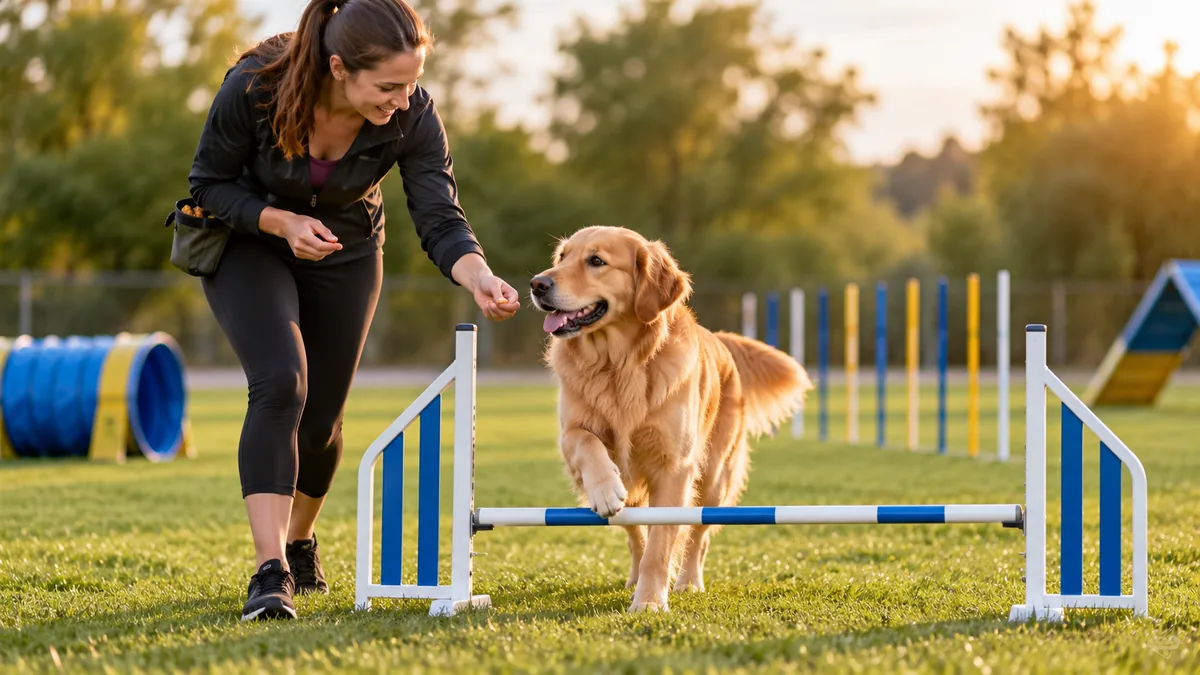
Agility looks like pure speed from the sidelines. Tunnels, weave poles, a flying leap over a bar. But the dogs who seem to enjoy it most are often the ones whose people keep things calm, short and predictable at home.
Even in a fast-paced sport like agility, helping dogs stay focused and comfortable matters just as much as learning the obstacles. A dog who is overexcited may miss cues or have difficulty responding consistently, and may find it harder to settle afterward. This guide looks at how dog parents can keep agility fun for a pup’s mind and kind to the body. It’s educational and doesn’t replace advice from a veterinarian who knows your pup.
Is Agility a Good Fit for Your Pup?
Agility is open to far more dogs than many people expect. The American Kennel Club’s guide to getting started in agility notes that all breeds, mixed breeds included, can take part, and that dogs must be at least 15 months old to compete in AKC trials. It also suggests looking honestly at temperament first: whether the dog enjoys running, responds well to instruction and gets along with other dogs.
The AKC recommends starting with a class, then practicing at least 15 to 20 minutes a day at home with treats or toys, and taking things slowly at the beginning. That pace suits a calm household. Short, regular sessions are easier on a young or nervous dog than a long weekend marathon.
A few questions to ask before signing up:
- Does your pup recover quickly from excitement, or stay wound up for hours?
- Is there any history of limping, stiffness or a past injury?
- Are you willing to build skills over months rather than weeks?
A dog who stays wound up isn’t automatically a poor fit; it mainly shapes how slowly you start. A history of limping, stiffness or injury is different. That’s worth a veterinary check before agility begins.
Keep Sessions Short and Settled
Sessions that tip into a frenzy can make it harder for a dog to focus. Start each session with an easy win, such as a single low jump or a straight tunnel, and reward it. Then build from there.
Reward-based training fits agility well, since the dog has to choose to engage with each obstacle. Food, toys and praise all work. What tends to backfire is pressure: pushing a hesitant dog onto a teeter, or repeating a sequence until it looks tidy.
You can build calm into the obstacles themselves. Reward a relaxed wait at the start line, then release your pup when they’re attentive and ready to begin. It can give your pup regular practice at staying calm while excited.
Physical comfort feeds into calm, too. A pup who feels stiff may look hesitant or edgy on the course, which is one reason many dog parents think about agility support for dogs well beyond the training field, from warm-ups and rest days to joint-focused nutrition.
Building a predictable daily routine can make agility sessions easier to manage. A balanced schedule of exercise, short training activities, mental enrichment and rest can support your dog’s overall well-being. For practical ideas, explore our guide to creating a daily dog care routine that combines suitable activity with opportunities to settle and recover.
Watch for behaviors that may suggest your pup is becoming overstimulated:
- Barking or spinning between obstacles
- Grabbing at the leash, toys or the handler’s clothing
- Ignoring cues the dog knows well at home
- Struggling to settle for several minutes after the session ends
When you notice these behaviors, consider an easier task before ending the session, provided your pup seems comfortable. If you notice signs of pain or distress, stop training. A settle on a mat or a slow sniff walk between short runs can help dogs practice settling between activities.
What Research Says About Agility Injuries
Agility is physical work, and it’s fair to look at the numbers. A 2022 survey of more than 4,000 agility dogs in Frontiers in Veterinary Science found that about 41% had experienced an injury that kept them out of agility for at least a week at some point in their agility history. The authors also point out that soft tissue injuries are the most common type in this sport.
Several patterns stood out. Border Collies had higher odds of injury than other breeds. In the North American sample, dogs working with more experienced agility handlers tended to have lower odds of reported injury. The same pattern was not consistently observed outside North America.
The researchers also found an association between higher weight relative to height and injury history in North American agility dogs. They could not determine whether body fat contributed to that pattern, but maintaining a healthy body condition remains a sensible part of general canine wellness.
One finding is especially relevant for families with young dogs. Dogs who had X-rays to check growth plate closure had higher odds of injury. The X-rays themselves weren’t shown to cause harm; the researchers suggest this group may have been trained harder at a younger age. They also question whether growth plate closure alone tells you when it’s safe to increase training intensity, since ligaments, tendons and muscles develop on their own timeline.
This was a handler-reported survey, so it shows associations rather than causes. Still, the takeaways are practical: build intensity gradually, maintain a healthy body condition and lean on experienced instructors.
Body Care Between Sessions
What happens off the course shapes how a dog moves on it. A few habits are worth building into the weekly routine.
Ease in and ease out. Dr. Felix Duerr, who leads the sports medicine and rehabilitation service at Colorado State University’s veterinary teaching hospital, advises a warm-up before demanding, explosive activity, such as letting a dog trot or jog first. Afterward, a slow walk helps the dog come down physically and mentally before the car ride home.
Watch the footing and the feet. Slick grass, uneven ground or a polished floor can make tight turns harder. Long nails can affect traction and how the paw lands, so regular nail trims belong on the agility checklist.
Plan rest days. Driven dogs often keep going long after they should stop. Lighter days and full rest days give the body time to recover between harder sessions.
Keep weight in check. Dr. Duerr also recommends keeping athletic dogs lean. A veterinarian can show you how to score body condition at home, so you’re tracking more than the number on the scale.
Nutrition is part of the picture too. Some dog parents add a joint-focused chew to the routine, looking for formulas with ingredients like omega-3s from fish and algae, green-lipped mussel and undenatured type-II collagen. A supplement doesn’t replace conditioning or rest, and it’s sensible to check with a veterinarian before adding one, particularly for a pup on medication or recovering from an injury.
Signs to Pause and Call Your Veterinarian
Excitement can make signs of discomfort harder to notice, and the same CSU guidance points out that most dogs don’t show obvious pain with mild injuries. Changes tend to show up in small ways first, which is why a short training log helps. Note the date, what you practiced, for how long and anything that seemed off.
Signs worth a veterinary check include:
- Slower times, knocking bars more often or less interest in play
- Stiffness or trouble getting up, sometimes only after resting
- Shifting weight off one leg while standing
- Limping or an uneven head bob while trotting, even briefly
- Licking at one paw or toe again and again
Take a break from training while you wait for the appointment. Pushing through a minor strain may turn a short layoff into a long one.
Keeping Agility a Calm Habit
The best agility routines look a little boring from the outside. Short sessions, plenty of rewards, rest between runs and a dog who walks off the course loose and relaxed.
If your pup comes home relaxed, moves comfortably and settles into the usual routine, those are encouraging signs that the training pace is appropriate. If the dog comes home wired or sore, adjust the next week before adding anything new.