
Short direct answer
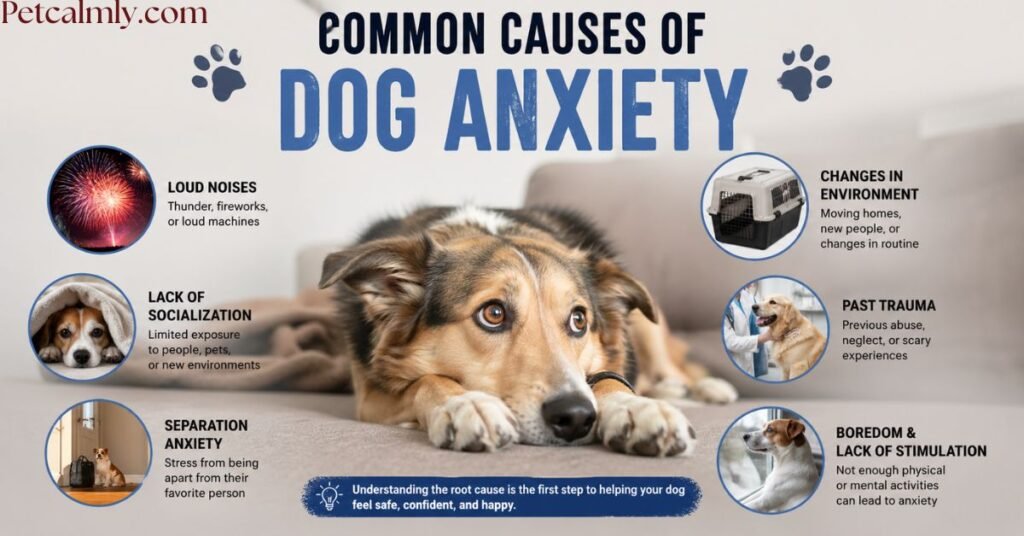
The most common causes of dog anxiety include separation from owners, loud noises, past trauma, poor socialization, sudden environmental changes, and underlying health issues. These triggers make dogs feel unsafe or confused, leading to stress behaviors like barking, pacing, chewing, or hiding.
Why Dog Anxiety Is More Common Than You Think
Dog anxiety is not rare and it’s not just “bad behavior.”
Many dogs live with mild to severe anxiety, but their owners often don’t realize it. Instead, they see chewed furniture, barking, or restlessness and assume the dog is being stubborn.
In reality, anxiety is your dog’s emotional response to fear or uncertainty.
Think of it like this: if you were left alone in a strange place with loud noises and no explanation, you’d feel stressed too. Dogs experience similar feelings, but they can’t explain them with words only behavior.
Understanding the common causes of dog anxiety is the first step to helping your pet live a calmer, happier life.
What Exactly Is Dog Anxiety?
Dog anxiety is a state of fear, stress, or nervousness triggered by certain situations.
It can be:
- Situational (like during thunderstorms)
- Chronic (ongoing anxiety due to lifestyle or environment)
- Trigger-based (specific events like being left alone)
Not all anxiety is harmful. A little fear is natural. But when it becomes frequent or intense, it affects your dog’s health and behavior.
10 Most Common Causes of Dog Anxiety
Let’s explore the major causes in depth so you can identify what might be affecting your dog.
1. Separation Anxiety – The Leading Cause
Separation anxiety is one of the most common and challenging forms of anxiety in dogs.
Dogs are naturally social animals. They form strong emotional bonds with their owners. When left alone, some dogs feel abandoned or unsafe.
Why It Happens
- Over-attachment to the owner
- Lack of independence training
- Sudden changes in schedule (e.g., owner returning to office work)
Real-Life Example
A dog who is used to being around family all day suddenly finds itself alone for 6–8 hours. The silence and absence can trigger panic.
Common Signs
- Barking or howling when alone
- Scratching doors or windows
- Destroying furniture
- Urinating indoors despite being trained
2. Loud Noises and Sound Sensitivity
Many dogs are extremely sensitive to sound.
What seems normal to us can feel overwhelming to them.
Common Noise Triggers
- Thunderstorms
- Fireworks
- Construction work
- Vacuum cleaners
- Sirens
Why Noise Causes Anxiety
Dogs have sharper hearing than humans. Sudden loud sounds can feel like danger signals.
Example
During fireworks, a dog may hide under the bed, shake, or try to escape the house.
3. Past Trauma or Negative Experiences
Dogs remember bad experiences.
A dog that has been abused, neglected, or frightened in the past may carry that fear into future situations.
Common Trauma Sources
- Physical punishment
- Abandonment
- Time in shelters
- Rough handling
Example
A rescue dog may panic when someone raises their hand even if no harm is intended.
4. Lack of Socialization During Puppyhood
Early experiences shape a dog’s confidence.
Puppies need exposure to:
- Different people
- Other animals
- Sounds and environments
Without this, they may grow up fearful of anything unfamiliar.
Example
A dog that never met strangers as a puppy may bark aggressively or hide when guests visit.
5. Sudden Changes in Environment or Routine
Dogs thrive on routine. Predictability makes them feel safe.
When their environment changes, anxiety can develop.
Common Triggers
- Moving to a new house
- A new baby in the family
- A new pet
- Change in owner’s work schedule
- Travel or boarding
Example
A dog used to a quiet home may feel overwhelmed when a newborn baby arrives with noise and new activity.
6. Aging and Cognitive Decline
Older dogs can develop anxiety due to mental changes.
This is similar to dementia in humans.
Signs of Age-Related Anxiety
- Wandering aimlessly
- Barking at night
- Forgetting familiar places
- Increased confusion
Why It Happens
Brain function declines with age, leading to disorientation and fear.
7. Medical Conditions and Pain
Sometimes anxiety is not purely emotional it’s physical.
Pain or illness can make dogs feel uneasy and stressed.
Possible Health Causes
- Arthritis
- Dental pain
- Thyroid imbalance
- Neurological disorders
Important Note
If anxiety appears suddenly without a clear trigger, a medical check-up is essential.
8. Lack of Exercise and Mental Stimulation
Dogs need both physical and mental activity.
Without it, they may develop restlessness and anxiety.
Example
A high-energy dog that doesn’t get enough walks may start pacing, barking, or chewing out of frustration.
9. Fear of New or Unfamiliar Situations
Some dogs feel anxious in new environments.
Examples
- Visiting the vet
- Traveling
- Staying in a boarding facility
Even confident dogs can feel stressed in unfamiliar settings.
10. Owner Behavior and Emotional Influence
Dogs are highly sensitive to human emotions.
If an owner is:
- Stressed
- Anxious
- Inconsistent
The dog may mirror that energy.
Example
If you act nervous during a thunderstorm, your dog may believe there is something to fear.
Signs and Symptoms of Dog Anxiety
Recognizing anxiety early helps prevent it from getting worse.
Behavioral Signs
- Excessive barking or whining
- Pacing or restlessness
- Destructive chewing
- Digging or scratching
- Trying to escape
- Clinginess
Physical Signs
- Trembling or shaking
- Panting without exercise
- Drooling
- Loss of appetite
- Increased heart rate
Emotional and Social Changes
- Hiding
- Avoiding people
- Aggression in some cases
- Sudden fear reactions
A Simple Story: Understanding Anxiety in Action
Consider this scenario:
Ahmed adopted a rescue dog named Max. At first, Max seemed calm. But whenever Ahmed left for work, Max would bark loudly and chew cushions.
Ahmed thought Max was being naughty.
After learning about separation anxiety, he changed his approach:
- He practiced short departures
- Gave Max toys before leaving
- Created a calm environment
Within weeks, Max’s behavior improved.
This shows how understanding the cause changes everything.
When Should You Be Concerned?
Some anxiety is mild and manageable.
But certain signs need serious attention.
Warning Signs
- Anxiety happens daily
- Your dog injures itself trying to escape
- Sudden behavior changes
- Refusal to eat or drink
- Aggression toward people or pets
If you notice these, don’t wait too long. Early help prevents long-term problems.
What Should Pet Owners Do?
Helping an anxious dog doesn’t require complicated solutions. Small, consistent actions make a big difference.
1: Identify the Root Cause
Observe your dog carefully.
Ask:
- When does the anxiety start?
- What triggers it?
- How long does it last?
Understanding the cause helps you choose the right solution.
2: Create a Safe and Comfortable Space
Every dog needs a place where they feel secure.
This could be:
- A crate with soft bedding
- A quiet room
- A corner with favorite toys
This becomes their personal “safe zone.”
3: Maintain a Consistent Routine
Routine reduces uncertainty.
Keep:
- Feeding times
- Walk schedules
- Sleep patterns consistent
Even small stability helps calm your dog.
4: Provide Regular Exercise
Exercise is one of the best natural stress relievers.
Benefits
- Burns excess energy
- Improves mood
- Reduces destructive behavior
Aim for daily walks and playtime.
5: Use Mental Stimulation
Mental activity is just as important as physical exercise.
Try:
- Puzzle toys
- Training sessions
- Hide-and-seek games
A mentally engaged dog is less likely to feel anxious.
6: Gradual Desensitization
This is a training method where dogs are slowly exposed to triggers.
Example
If your dog fears being alone:
- Leave for 2 minutes
- Return calmly
- Gradually increase time
This builds confidence over time.
7: Stay Calm and Positive
Dogs read your emotions.
If you stay calm, your dog feels safer.
Avoid:
- Shouting
- Punishment
- Panic reactions
Instead, use gentle reassurance.
8: Reward Calm Behavior
Positive reinforcement works well.
When your dog stays relaxed:
- Offer treats
- Use praise
- Show affection
This teaches them that calmness is good.
9: Consider Professional Help
If anxiety is severe:
- Consult a veterinarian
- Work with a dog behaviorist
They may suggest training plans or medical support if needed.
5 Common Mistakes to Avoid
Even caring owners sometimes make mistakes.
Avoid These Errors
- Punishing anxious behavior
- Ignoring early signs
- Leaving dogs alone too long
- Changing routines suddenly
- Giving attention only during anxious moments
These can unintentionally increase anxiety.
Practical Tips for Everyday Situations
During Thunderstorms
- Close curtains to block flashes
- Play calming music
- Stay relaxed
When Leaving the House
- Keep departures quiet
- Give a toy before leaving
- Avoid emotional goodbyes
Introducing New Environments
- Go slowly
- Let your dog explore
- Bring familiar items
Long-Term Impact of Untreated Anxiety
If left untreated, anxiety can lead to:
- Chronic stress
- Behavioral problems
- Health issues
- Reduced quality of life
That’s why early action is important.
Conclusion
Dog anxiety is common, but it’s manageable.
Most cases come from understandable causes like separation, fear, or change. Once you identify the trigger, you can take simple, effective steps to reduce stress.
Be patient.
Be consistent.
Your dog doesn’t need perfection just understanding and care.
With time, trust, and the right approach, your dog can feel safe and confident again.
More Information About Pets, Please Visit Our Website: Dog Anxiety Symptoms Checklist
Frequently Asked Questions
1. What are the most common causes of dog anxiety?
The most common causes include separation anxiety, loud noises, past trauma, lack of socialization, and sudden changes in routine or environment.
2. Can dogs develop anxiety suddenly?
Yes. Sudden anxiety can be caused by illness, injury, or a stressful event. A vet check is recommended if behavior changes quickly.
3. How can I calm an anxious dog naturally?
Provide exercise, maintain routine, create a safe space, and use positive reinforcement. Calm behavior from the owner also helps.
4. Is anxiety more common in certain dog breeds?
Some breeds are more sensitive or attached, but any dog can develop anxiety depending on its experiences.
5. Can training completely cure dog anxiety?
Training can greatly reduce anxiety, but severe cases may need professional help or ongoing management.
6. Should I ignore my dog when it is anxious?
No. Ignoring can increase stress. Instead, stay calm and provide reassurance without reinforcing fearful behavior.