
Short direct answer
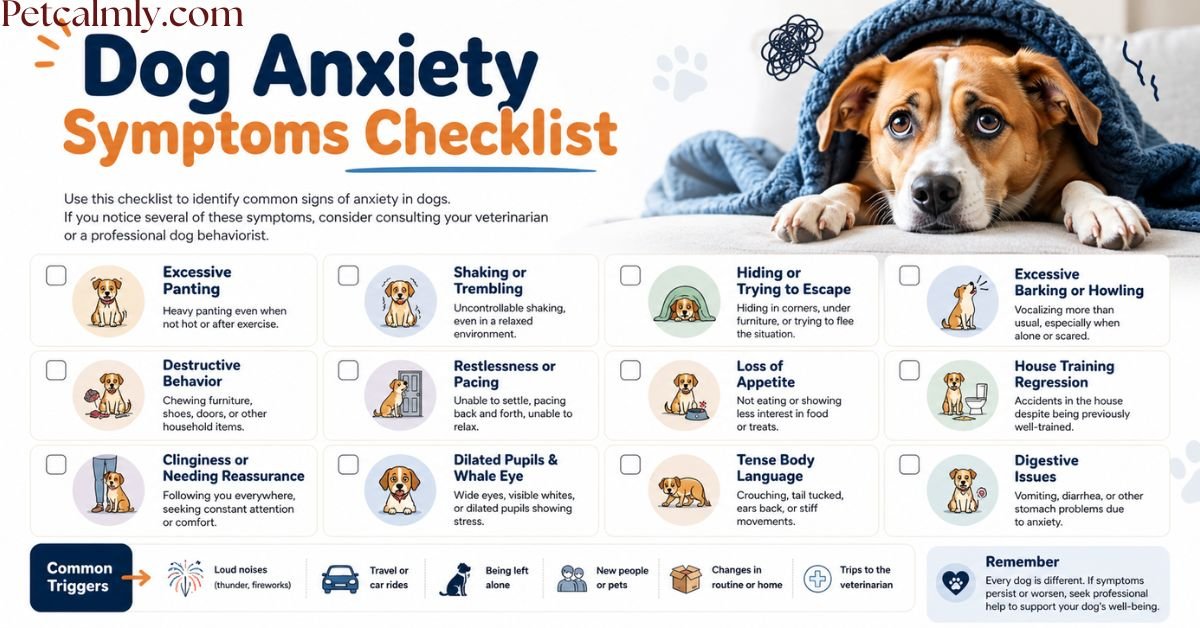
A dog anxiety symptoms checklist includes signs like excessive panting, pacing, whining, destructive behavior, trembling, hiding, and changes in appetite or sleep. If your dog shows several of these signs especially in specific situations like being alone or hearing loud noises it likely indicates anxiety that needs attention and proper care.
Why Dog Anxiety Is a Serious Issue for Pet Owners
Many dog owners don’t realize how common anxiety is in dogs. It’s not just a rare condition it affects a large number of pets in different ways.
At first, the signs can be subtle. Maybe your dog paces a little more than usual or whines when you leave the house. It’s easy to ignore or assume it’s normal.
But over time, untreated anxiety can lead to bigger problems like aggression, destructive behavior, or even health issues.
Imagine feeling nervous all the time, without understanding why. That’s how many anxious dogs feel. They rely on you to notice the signs and help them feel safe again.
Understanding the symptoms early can make a huge difference in your dog’s happiness and overall well-being.
Complete Dog Anxiety Symptoms Checklist (Easy to Follow)
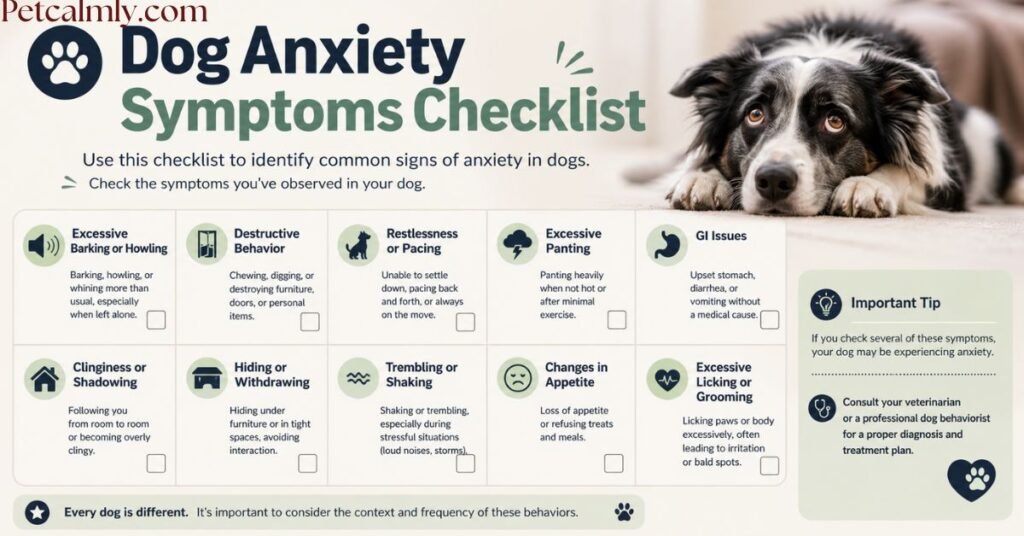
This checklist will help you quickly identify whether your dog may be experiencing anxiety. Not every dog shows the same signs, so look for patterns instead of one-time behaviors.
Physical Signs of Dog Anxiety
These symptoms are often visible and happen when your dog’s body reacts to stress.
- Excessive panting (without heat or exercise)
- Trembling or shaking
- Drooling more than usual
- Dilated pupils (wide, alert eyes)
- Rapid breathing or heartbeat
- Ears pinned back
- Tail tucked tightly
- Sweaty paws (sometimes noticeable on floors)
Example:
If your dog starts shaking during a thunderstorm, even indoors, it’s a clear physical response to fear and anxiety.
Behavioral Symptoms You Should Not Ignore
Behavioral changes are often the strongest indicators of anxiety.
- Pacing back and forth repeatedly
- Inability to relax or settle down
- Hiding under furniture or in corners
- Becoming overly clingy or dependent
- Sudden aggression (growling, snapping)
- Destructive actions like chewing furniture or scratching doors
Mini example:
A calm dog suddenly starts destroying cushions when left alone. This isn’t “bad behavior” it’s a stress response.
Vocal Signs of Anxiety in Dogs
Dogs use sound to express stress and discomfort.
- Constant whining
- Repeated barking
- Howling, especially when alone
These sounds are often persistent and harder to stop than normal barking.
Separation Anxiety Checklist
Separation anxiety is one of the most common forms of dog anxiety.
Look for these signs:
- Panic as soon as you prepare to leave
- Following you everywhere in the house
- Scratching or damaging doors and windows
- Urinating or defecating indoors when alone
- Excessive excitement when you return
Important note:
Dogs with separation anxiety are not being stubborn. They genuinely feel scared when left alone.
Eating and Sleeping Changes
Anxiety doesn’t just affect behavior it impacts basic habits too.
- Loss of appetite
- Eating too quickly or too little
- Trouble falling asleep
- Restlessness at night
- Frequent waking
A dog that once ate eagerly but suddenly avoids food may be experiencing stress.
Repetitive and Compulsive Behaviors
Some dogs develop habits that seem strange but are actually coping mechanisms.
- Excessive licking (especially paws)
- Tail chasing
- Spinning in circles
- Fixation on shadows or reflections
These behaviors may start small but can become constant if not addressed.
The Root Causes of Dog Anxiety
Knowing the symptoms is important but understanding the cause helps you fix the issue.
1. Separation from Owners
Dogs are naturally social. Being alone for long periods can make them feel unsafe.
Dogs that are very attached to their owners are more likely to develop separation anxiety.
2. Loud Noises and Sudden Sounds
Thunderstorms, fireworks, and even construction noise can trigger fear.
Some dogs are extremely sensitive to sound, making this a common trigger.
3. Environmental Changes
Dogs thrive on routine. Changes can be stressful.
- Moving to a new home
- New family members or pets
- Rearranging furniture
Even small changes can feel overwhelming to your dog.
4. Past Trauma or Negative Experiences
Rescue dogs or previously abused dogs may carry emotional scars.
Triggers may include certain people, objects, or situations that remind them of past experiences.
5. Lack of Socialization
Dogs that haven’t been exposed to different environments, people, and animals may struggle with fear.
This is especially common in dogs that were not socialized as puppies.
6. Medical Issues
Sometimes anxiety-like symptoms are linked to health problems.
Pain, illness, or hormonal changes can make a dog act anxious.
Always rule out medical causes if symptoms appear suddenly.
Real-Life Scenarios That Show Dog Anxiety
Let’s look at some everyday situations.
Scenario 1: The Storm Panic
Your dog hears thunder and immediately hides under the bed, shaking and panting.
This is classic noise-related anxiety.
Scenario 2: The Workday Destruction
You leave for work, and when you return, the sofa is torn apart.
This is a strong sign of separation anxiety.
Scenario 3: The Vet Visit Fear
At the clinic, your dog trembles, drools, and tries to escape.
This is situational anxiety triggered by unfamiliar environments.
Scenario 4: The New Home Adjustment
After moving, your dog becomes restless, stops eating, and follows you constantly.
This is anxiety caused by environmental change.
When Should You Be Concerned?
It’s normal for dogs to feel scared occasionally. But anxiety becomes a problem when it affects daily life.
You should take action if:
- Symptoms happen frequently
- Anxiety worsens over time
- Your dog damages property or hurts itself
- Eating and sleeping habits change
- Your dog cannot relax even in safe spaces
Simple rule:
If your dog’s behavior interferes with normal life, it’s time to step in.
What Should Pet Owners Do? (Simple Action Plan)
Helping an anxious dog doesn’t have to be complicated. Small, consistent steps work best.
1: Identify the Trigger
Pay attention to when anxiety occurs.
Ask yourself:
- What happened before the behavior?
- Is there a pattern?
Understanding the cause is the first step to solving it.
2: Create a Calm, Safe Space
Every dog needs a place where they feel secure.
- Quiet room or corner
- Comfortable bedding
- Familiar toys
This gives your dog a place to relax during stressful moments.
3: Stick to a Routine
Dogs feel safer when life is predictable.
- Feed at the same time daily
- Walk regularly
- Keep a consistent schedule
Routine reduces uncertainty and builds confidence.
4: Provide Exercise and Mental Stimulation
Energy that isn’t released turns into stress.
- Daily walks
- Playtime
- Puzzle toys
- Basic training sessions
A mentally and physically active dog is less anxious.
5: Use Positive Reinforcement
Reward calm behavior instead of punishing stress.
- Treats for relaxed behavior
- Praise when your dog stays calm
This helps your dog learn what “safe” feels like.
6: Avoid Punishment Completely
Punishing an anxious dog increases fear.
It can make the problem worse and damage trust.
Instead, stay calm and supportive.
7: Try Gradual Desensitization
Expose your dog slowly to triggers.
Example:
- Play low-volume thunder sounds
- Gradually increase volume over time
This helps your dog build tolerance safely.
8: Consider Calming Aids
Some dogs benefit from:
- Anxiety wraps
- Calming diffusers
- Soothing music
For severe cases, consult a vet about medication.
9: Get Professional Help
If anxiety is severe or persistent, don’t wait.
- Veterinarians
- Dog trainers
- Behavior specialists
Early intervention prevents long-term problems.
4 Common Mistakes Pet Owners Should Avoid
Even well-meaning owners can make errors.
Ignoring Early Warning Signs
Small symptoms often grow into bigger issues.
Assuming It’s Just Bad Behavior
Dogs don’t act out without reason.
There is always a cause behind the behavior.
Over-Reassuring the Dog
Too much attention during anxiety can reinforce it.
Stay calm instead of overly emotional.
Inconsistent Routine
Unpredictable schedules increase stress.
Consistency is key.
Daily Tips to Reduce Dog Anxiety
Simple habits can make a big difference.
- Keep greetings calm and relaxed
- Introduce new experiences slowly
- Spend quality time daily
- Use chew toys for stress relief
- Avoid sudden changes in routine
Over time, these small steps build confidence in your dog.
Long-Term Effects of Untreated Anxiety
Ignoring anxiety can lead to serious consequences.
- Chronic stress
- Aggression
- Health issues
- Weakened immune system
- Behavioral problems
Early action prevents long-term damage.
How to Build Confidence in an Anxious Dog
Confidence reduces anxiety.
You can help by:
- Teaching basic commands
- Rewarding brave behavior
- Introducing new experiences gradually
- Keeping training sessions short and positive
Confidence training is one of the most effective long-term solutions.
Conclusion
A dog anxiety symptoms checklist helps you understand what your dog is going through.
By recognizing physical signs, behavioral changes, and emotional triggers, you can take action early.
Remember, your dog depends on you for safety and comfort. With patience, consistency, and the right approach, most anxiety issues can be managed successfully.
Helping your dog feel safe isn’t just good care it strengthens your bond and creates a happier life for both of you.
More Information About Pets, Please Visit Our Website: How to Know If Dog Is Stressed
Frequently Asked Questions
1. How can I tell if my dog is anxious or just energetic?
Energetic dogs settle down after activity. Anxious dogs remain restless, pant, or show stress signs even without stimulation.
2. Can dog anxiety be cured completely?
Some dogs fully recover, while others need ongoing management. With proper care, most dogs improve significantly.
3. Is it okay to ignore mild anxiety?
No. Mild anxiety can grow into serious behavioral problems if left untreated.
4. What is the most common sign of anxiety in dogs?
Pacing and excessive panting are among the most common early signs.
5. Can diet affect dog anxiety?
Yes. Poor nutrition or sudden diet changes can impact mood and behavior.
6. Should I use medication for my dog’s anxiety?
Only if recommended by a veterinarian, especially in severe cases.