Short direct answer
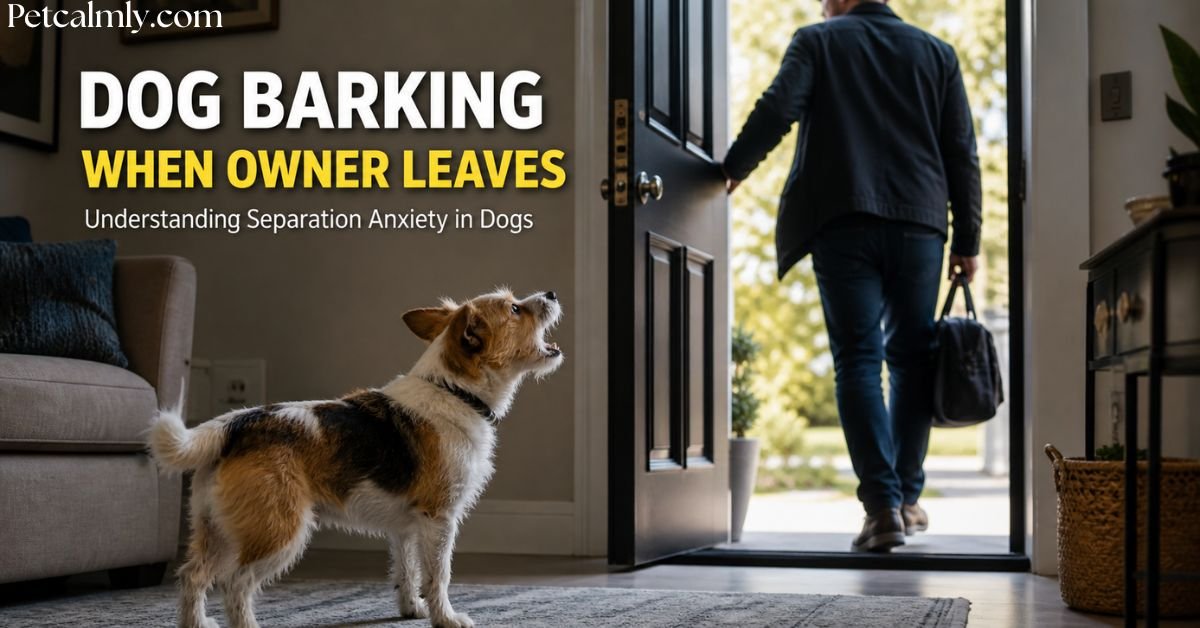
Dog barking when the owner leaves is usually a sign of separation anxiety. Your dog feels stressed, scared, or lonely when left alone. The barking is their way of calling you back. The good news: with the right training and a calm routine, most dogs can learn to feel safe and settle down on their own.
Why Does This Happen And Why It Matters
Picture this: you grab your keys, slip on your shoes, and head out the door. Thirty seconds later, your neighbors are texting you about the noise. Your dog is barking, howling, or whining and won’t stop until you come back.
Sound familiar?
This is one of the most common problems dog owners face. It’s frustrating for you, stressful for your dog, and sometimes a real problem with neighbors or landlords.
Understanding why your dog barks when you leave is the first step to fixing it. And the answer almost always comes down to one thing: your dog doesn’t know how to feel okay without you.
Why Do Dogs Bark When Their Owner Leaves?
1. Separation Anxiety
This is the most common cause. Dogs with separation anxiety feel genuine panic when left alone. They aren’t being “bad” they’re scared.
Think of it like leaving a young child alone in a dark room. They cry because they genuinely don’t know if you’re coming back. Dogs can feel the same way.
Signs of separation anxiety include:
- Barking or howling that starts immediately when you leave
- Pacing, drooling, or trembling near the door
- Destructive behavior (chewing furniture, scratching walls)
- Accidents indoors, even when house-trained
- Refusing to eat when alone
2. Boredom and Under-Stimulation
Not every dog that barks alone has anxiety. Some dogs bark simply because they have nothing better to do.
A young Labrador left alone for 8 hours with zero toys or activity will often bark out of sheer boredom. It’s like scrolling your phone mindlessly but louder.
High-energy breeds like Border Collies, Huskies, and Jack Russell Terriers are especially prone to this. They need mental and physical exercise. Without it, they’ll find their own entertainment and barking is an easy one.
3. Learned Behavior (Accidental Training)
Here’s a mistake many owners don’t realize they’re making.
Your dog barks. You come back inside to check on them. Your dog learns: “Barking = owner returns.” So they bark more.
Even if you come back to scold them, the attention itself can reinforce the habit. Dogs don’t always distinguish between positive and negative attention any response from you is a response.
4. Fear of Specific Triggers
Sometimes it’s not about you leaving at all. Your dog might be reacting to something outside a passing car, a loud neighbor, another animal.
If the barking only happens occasionally (not every single time you leave), a specific sound or sight trigger is more likely than pure separation anxiety.
5. Age and Health Changes
Older dogs can develop a condition called Canine Cognitive Dysfunction (similar to dementia in humans). Confusion and disorientation can cause increased barking, especially when alone.
Puppies also bark more because they haven’t learned to self-soothe. It’s completely normal for a young pup to struggle at first they’re used to being with their mother and littermates.
Signs Your Dog’s Barking Is Serious
Not all barking is equal. Here’s how to tell if you need to take this more seriously:
Low concern:
- Your dog barks briefly (5–10 minutes), then settles
- They eat, drink, and rest normally when alone
- No destruction or accidents indoors
Moderate concern:
- Barking lasts more than 20–30 minutes
- You notice panting, pacing, or signs of stress before you even leave
- Occasional accidents or minor chewing
High concern see a vet or behaviorist:
- Non-stop barking or howling the entire time you’re gone
- Self-harm behaviors (biting paws, licking raw spots)
- Extreme panic before departure (trembling, refusing to eat)
- Sudden change in behavior after a stressful event (moving house, loss of another pet)
A vet can rule out any medical reasons and, if needed, refer you to a certified animal behaviorist. In severe cases, medication combined with training can make a big difference.
What Should You Do? Step-by-Step Solutions
Start With a Vet Visit
Before you try any training, make sure your dog is physically healthy. Pain, thyroid issues, and hearing loss can all contribute to anxiety or unusual barking. Rule these out first.
Desensitize Your Departure Cues
Your dog doesn’t just react when you leave they react the moment you pick up your keys.
Practice “false departures.” Put your shoes on, then sit back down. Pick up your keys, then stay home. Do this repeatedly throughout the day until your dog stops reacting.
This breaks the association between your routine and panic.
Practice Short Absences First
If your dog can’t handle 5 minutes alone, don’t start by leaving for 4 hours. Build up gradually.
Leave for 30 seconds. Come back calmly. Then 2 minutes. Then 5. Then 10. Over days and weeks, slowly extend the time.
The goal is to never let your dog reach their “breaking point” during training. Stay just below the threshold where the barking starts.
Create a Safe, Comfortable Space
Give your dog a consistent “home base” when you’re gone. This might be a crate (if they’re crate-trained), a specific room, or a cozy corner with their bed and toys.
Add something that smells like you an old t-shirt or blanket. This can genuinely calm an anxious dog.
Use Puzzle Toys and Long-Lasting Chews
A dog that is mentally busy is a quieter dog.
Fill a Kong toy with peanut butter and freeze it. Give it to your dog right before you leave. Hide treats in a snuffle mat. These tools give your dog something to focus on instead of your absence.
Try to make the toy or treat only available when you leave it becomes something to look forward to.
Exercise Before You Go
A tired dog is a calmer dog. If possible, give your dog a good walk or play session before leaving. This won’t solve deep anxiety on its own, but it takes the edge off for many dogs.
Even 20 minutes of active play can make a noticeable difference.
Avoid Big Goodbyes and Hellos
It feels natural to hug your dog and say “Goodbye, baby, I’ll be back soon!” But this actually increases their arousal level.
Leave calmly and quietly. When you return, don’t make a huge fuss until your dog has settled. This teaches them that arrivals and departures are not big emotional events.
Consider Background Noise
Many dogs feel less alone when there’s sound in the background. Try leaving the TV on a calm channel, or a specific playlist designed for dogs (yes, these exist classical music and reggae have been studied and shown to calm dogs).
Avoid anything too stimulating loud action movies or news programs can have the opposite effect.
Use Calming Aids If Needed
For mild to moderate anxiety, some dogs respond well to:
- Adaptil diffusers (synthetic dog-calming pheromones)
- Thundershirts (gentle pressure wraps)
- Calming supplements (L-theanine, melatonin check with your vet first)
These aren’t magic solutions, but they can take the edge off while you work on training.
Get Professional Help
If you’ve tried all of the above and your dog is still in distress, don’t feel defeated. A certified dog trainer or veterinary behaviorist can create a custom plan.
For severe separation anxiety, a vet may also prescribe medication like fluoxetine or trazodone especially in the early stages of training, to reduce the panic enough that learning can actually happen.
4 Common Mistakes Owners Make (And How to Avoid Them)
Punishing the dog after returning home. Your dog won’t connect the punishment to something that happened an hour ago. It just creates more anxiety.
Getting another dog immediately. Sometimes this helps, but often the anxious dog transfers their worry to the new dog. Address the root cause first.
Giving in every time. If you always return when the barking starts, the barking works. Be consistent once you begin training.
Skipping the gradual buildup. Jumping from 5 minutes to 8 hours too fast can set you back weeks. Patience and consistency matter more than speed.
Conclusion
Dog barking when the owner leaves is a solvable problem it just takes time, patience, and the right approach.
Start by understanding the root cause: is it anxiety, boredom, or a learned habit? Then work on gradual desensitization, building positive associations with alone time, and giving your dog the mental and physical exercise they need.
Most dogs can make remarkable progress within a few weeks of consistent training. And if things feel overwhelming, reaching out to a professional trainer or vet is always the right call.
Your dog trusts you. With the right support, you can help them feel safe even when you’re not there.
More Information About Pets, Please Visit Our Website: How to Stop a Dog From Crying When Left Alone?
Frequently Asked Questions
1: Why does my dog only bark when I leave and not when others do?
Your dog has formed the strongest bond with you, so your absence triggers the most stress. Dogs often have a “primary attachment figure,” and when that person leaves, the anxiety is more intense. Working specifically on building independence from you (not just any person) is key.
2: How long does it take to stop a dog from barking when left alone?
It depends on the severity. Mild cases can improve in 2–4 weeks with consistent training. Severe separation anxiety can take months, especially if professional help and medication are involved. There are no shortcuts, but gradual desensitization genuinely works.
3: Is it cruel to crate a dog when you leave?
Not if the dog is properly crate-trained and the crate is a positive space. Many dogs actually feel safer in a crate because it’s their den. The key is to never force a dog into a crate or use it as punishment. Introduce it slowly, with treats and praise.
4: Should I ignore my dog’s barking when I leave?
During training, yes you should not return just because your dog is barking. However, “ignoring” doesn’t mean doing nothing. The goal is structured training: controlled departures, gradual increases in alone time, and rewarding calm behavior. Ignoring without a plan won’t help.
5: Can a dog grow out of separation anxiety on its own?
Puppies sometimes improve naturally as they mature and build confidence. But adult dogs with established separation anxiety rarely improve without intervention. The sooner you address it, the easier it is to change.
6: What breeds are most prone to barking when left alone?
Breeds bred for close human companionship or work tend to struggle more: Labrador Retrievers, German Shepherds, Border Collies, Vizslas, and Toy breeds like Chihuahuas and Maltese. That said, any dog regardless of breed can develop separation anxiety given the right (or wrong) circumstances.