Short direct answer
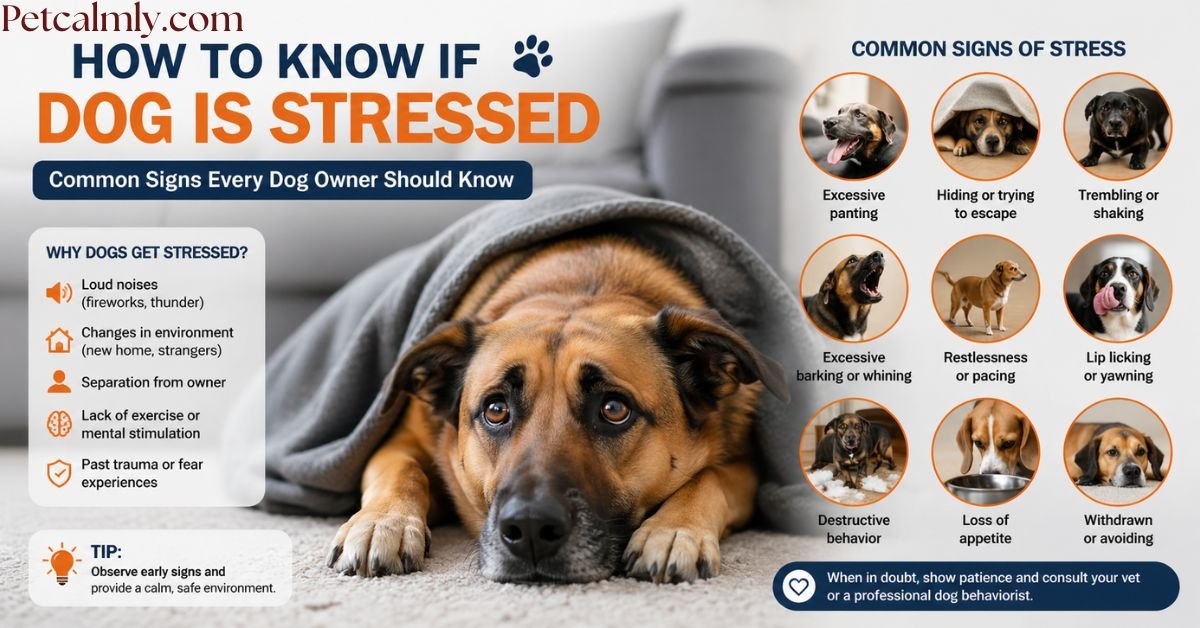
A stressed dog shows changes in behavior, body language, and daily habits. Common signs include excessive panting, trembling, pacing, hiding, barking more than usual, loss of appetite, or destructive behavior. Stress can be caused by fear, routine changes, loneliness, or health problems, and early recognition helps prevent long-term anxiety.
Why Every Dog Owner Should Understand Stress in Dogs
If you are searching for how to know if dog is stressed, it means you care about your pet’s emotional health and that is already a great start.
Dogs cannot tell us when something is wrong. Instead, they “speak” through behavior, posture, and small changes in routine. The problem is that many owners misunderstand these signals and assume the dog is being stubborn, naughty, or untrained.
In reality, most “bad behavior” is actually stress behavior.
Just like humans, dogs feel pressure, fear, anxiety, and confusion. A loud sound, a new environment, or even being alone too long can trigger emotional stress.
This guide will help you:
- Recognize early and advanced signs of stress
- Understand why it happens
- Learn how different dogs show stress differently
- Take practical steps to calm your dog
- Prevent long-term anxiety issues
By the end, you will be able to confidently understand your dog’s emotional state without guessing.
What Is Stress in Dogs? (Simple Explanation)
Dog stress is the body and mind’s reaction to something uncomfortable or overwhelming.
Think of it like this:
When humans feel stressed, they may:
- Lose appetite
- Get restless
- Feel anxious or irritated
Dogs experience the same feelings but express them differently.
Stress can be:
- Short-term stress (fireworks, vet visits)
- Ongoing stress (loneliness, boredom)
- Chronic stress (trauma, abuse, untreated anxiety)
The longer stress continues, the more it affects behavior and health.
Why Dogs Get Stressed: Main Causes Explained
Before learning how to know if dog is stressed, it’s important to understand what triggers it.
Sudden Environmental Changes
Dogs are creatures of habit. Even small changes can confuse them.
Examples:
- Moving to a new home
- Changing furniture layout
- New family members or pets
Even something as simple as rearranging furniture can make a dog uneasy.
Loud Noises and Fear Triggers
Dogs have much sharper hearing than humans.
Common stress triggers:
- Fireworks
- Thunderstorms
- Construction noise
- Vacuum cleaners
A sound that feels “normal” to us may feel overwhelming to a dog.
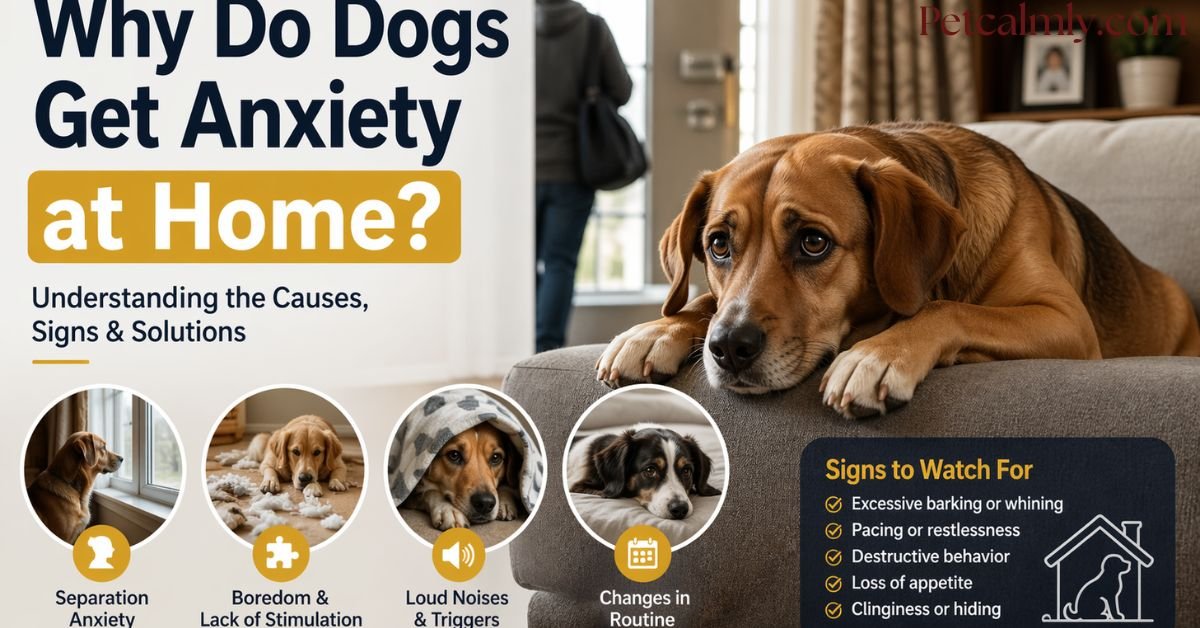
Separation Anxiety
Many dogs feel stressed when left alone.
Signs often start when the owner:
- Leaves for work
- Goes out suddenly
- Changes routine
Dogs may think they are being abandoned, even if it’s temporary.
Lack of Exercise or Mental Stimulation
A bored dog is often a stressed dog.
Without enough activity, dogs may:
- Build up nervous energy
- Become destructive
- Bark excessively
Past Trauma or Rescue Background
Rescue dogs or dogs with past abuse may show stronger stress reactions.
They may fear:
- Sudden movements
- Loud voices
- Strangers
Health Issues or Pain
Sometimes stress-like behavior is actually pain.
Dogs cannot say “I am hurt,” so they show it through:
- Irritability
- Hiding
- Loss of appetite
How to Know If Dog Is Stressed: Full Behavioral Signs
Now let’s go deep into real, observable signs of stress in dogs.
Body Language Changes (Most Reliable Indicator)
Dogs communicate heavily through posture.
Signs include:
- Tail tucked under body
- Ears pulled back
- Stiff body posture
- Avoiding eye contact
- Frozen or “stuck” position
A relaxed dog looks loose and natural. A stressed dog looks tense and controlled.
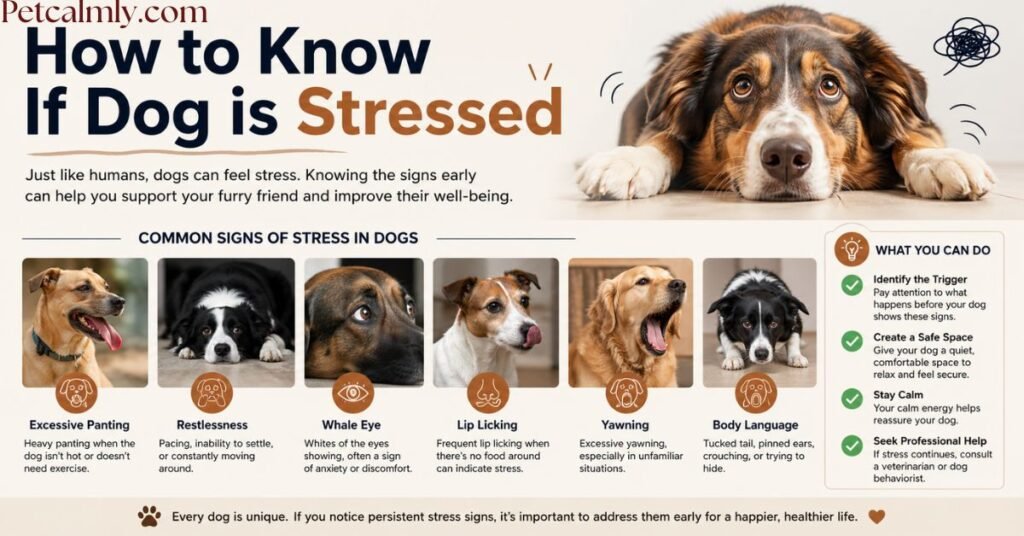
Panting Without Physical Activity
Panting is normal after exercise but not when the dog is resting.
Stress panting often includes:
- Fast breathing
- Tongue hanging out longer than usual
- Restlessness while panting
This is often seen during anxiety episodes.
Pacing and Restless Movement
A stressed dog cannot settle down.
You may notice:
- Walking back and forth repeatedly
- Circling rooms
- Sitting and standing repeatedly
It’s similar to human nervous pacing.
Hiding or Avoiding Contact
Some dogs cope with stress by disappearing.
Common behaviors:
- Hiding under beds
- Going behind furniture
- Avoiding eye contact or touch
This is a “withdrawal response.”
Excessive Barking, Whining, or Howling
Stress often leads to vocalization.
Examples:
- Barking at nothing
- Crying when alone
- Whining constantly near doors or windows
This is especially common in separation anxiety.
Destructive Behavior
One of the most misunderstood signs of stress.
Dogs may:
- Chew furniture
- Scratch doors
- Tear pillows or clothes
They are not being “naughty” they are releasing emotional tension.
Appetite Changes
Stress affects eating habits significantly.
You may see:
- Refusing food
- Eating very slowly
- Sudden overeating
Excessive Licking or Grooming
Dogs often self-soothe through licking.
Warning signs:
- Constant paw licking
- Belly licking
- Hair thinning in repeated areas
Trembling or Shaking
This is a strong fear response.
Common in:
- Loud environments
- Vet visits
- Fireworks or storms
Subtle Stress Signals (Most Owners Miss These)
Early stress signs include:
- Frequent yawning (not tiredness)
- Lip licking repeatedly
- Turning head away
- Slow blinking
- “Whale eye” (showing whites of eyes)
These are silent warnings before stress becomes serious.
Stress in Puppies vs Adult Dogs vs Senior Dogs
Different life stages show stress differently.
Puppies:
- Crying
- Chewing everything
- Clinging to owner
Adult Dogs:
- Barking
- Destructive behavior
- Restlessness
Senior Dogs:
- Confusion
- Withdrawal
- Increased sensitivity to noise
When Should You Be Concerned?
You should take action if:
- Stress signs last more than 48–72 hours
- Behavior suddenly changes without reason
- Your dog refuses food or water
- Aggression appears unexpectedly
- Panic behavior becomes frequent
Chronic stress can lead to:
- Digestive issues
- Weak immune system
- Long-term anxiety disorders
What Should Pet Owners Do? (Practical Solutions)
Understanding how to know if dog is stressed is only step one. The real improvement comes from action.
Find the Root Cause
Observe carefully:
- When does stress happen?
- What triggers it?
- Is it time, sound, or environment-related?
Create a Safe Space
Every dog needs a calm zone.
Provide:
- Quiet corner
- Soft bedding
- Low light environment
Never force a stressed dog out of hiding.
Maintain a Stable Routine
Dogs feel safe with predictability.
Keep:
- Fixed feeding times
- Regular walks
- Consistent sleep schedule
Increase Physical Activity
Exercise reduces stress hormones.
Try:
- Walks twice daily
- Fetch games
- Outdoor exploration
Provide Mental Enrichment
Mental boredom leads to anxiety.
Use:
- Puzzle toys
- Training games
- Scent activities
Stay Calm Yourself
Dogs mirror human emotions.
If you are calm:
- Dog feels safe
- Stress reduces faster
If you panic:
- Dog becomes more anxious
Avoid Punishment
Never punish stress behavior.
It increases fear and worsens the problem.
Seek Veterinary Help if Needed
If symptoms are severe or long-lasting:
- Visit a vet
- Consider behavior therapy
4 Common Mistakes Dog Owners Make
1: Ignoring Early Warning Signs
Small signals grow into bigger problems.
2: Assuming “Bad Behavior”
Most destructive behavior is emotional, not intentional.
3: Inconsistent Routine
Changing schedules confuses dogs.
4: Leaving Dogs Alone Too Long
Loneliness is a major stress trigger.
Real-Life Example: Understanding Stress in Action
Let’s take an example of a dog named Bella.
Bella was friendly and playful until her owner changed work schedules. Suddenly:
- She started barking at night
- Refused food in the morning
- Hid under the sofa during the day
At first, the owner thought she was misbehaving.
But after observing carefully, they realized Bella was stressed due to loneliness and routine disruption.
After:
- Setting a fixed routine
- Adding toys for mental stimulation
- Spending more evening time together
Bella returned to normal within two weeks.
How Long Does Dog Stress Last?
It depends on the cause:
- Mild stress: minutes to hours
- Moderate stress: a few days
- Severe stress: weeks or longer
Early intervention speeds up recovery.
Prevention Tips for Long-Term Emotional Health
To reduce stress in the future:
- Socialize your dog early
- Keep consistent routines
- Avoid sudden exposure to loud environments
- Train basic commands
- Spend quality bonding time daily
Conclusion
Understanding how to know if dog is stressed is essential for every responsible pet owner.
Dogs express stress through behavior, body language, and subtle emotional signals. From panting and pacing to hiding and barking, every action is a form of communication.
The most important thing is early recognition and calm response. With patience, structure, and care, most dogs recover quickly and return to a happy, balanced life.
Your dog depends on you not only for food and safety but also for emotional comfort and stability.
More Information About Pets, Please Visit Our Website: Early Signs of Dog Anxiety
Why Do Dogs Get Anxiety at Home?
Frequently Asked Questions
1. How can I tell if my dog is stressed quickly?
Look for sudden changes like panting, hiding, barking, or pacing. These are the fastest warning signs.
2. Can dog stress go away naturally?
Mild stress may disappear on its own, but ongoing stress usually needs routine correction and care.
3. Do stressed dogs sleep more or less?
Most stressed dogs sleep less due to restlessness, but some may sleep more from exhaustion.
4. Is panting always a stress sign?
No. Panting is normal after exercise, but unexplained panting can indicate stress.
5. What is the strongest sign of stress in dogs?
Behavioral change especially hiding, pacing, or excessive barking is the most noticeable sign.
6. Can training reduce stress in dogs?
Yes. Proper training, routine, and positive reinforcement significantly reduce stress levels.