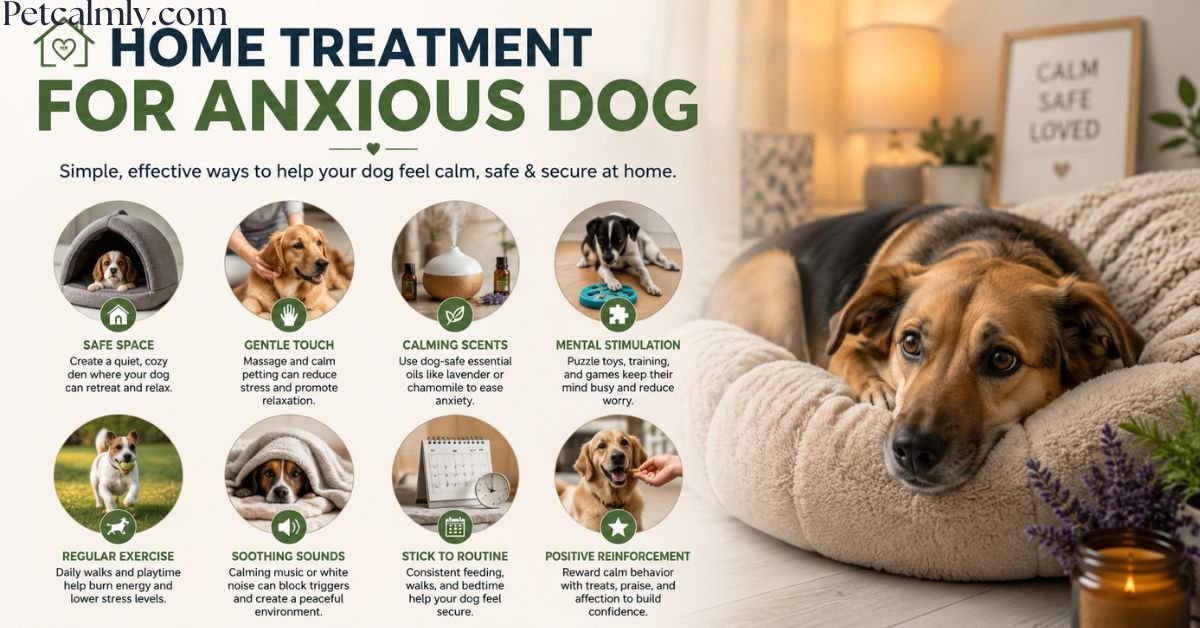
Short direct answer
You can treat an anxious dog at home by creating a calm environment, using consistent routines, trying calming aids like lavender or CBD, and practicing desensitization exercises. Most mild to moderate dog anxiety responds well to home care. However, severe anxiety or sudden behavioral changes should always be evaluated by a vet.
Why Dog Anxiety Is a Bigger Problem Than Most Owners Realize
Imagine coming home to find your sofa torn apart, your dog shaking in the corner, and scratch marks all over the front door. You might think your dog was naughty. But in most cases, this is anxiety not bad behavior.
Dog anxiety is one of the most common reasons pet owners visit the vet. It affects dogs of all breeds, ages, and sizes. And the frustrating part? Many owners don’t realize their dog is anxious until the signs become impossible to ignore.
The good news is that there are real, proven home treatments for anxious dogs that can make a significant difference often without medication.
This guide covers everything you need to know: causes, signs, home remedies, calming techniques, and when it’s time to call the vet.
What Causes Anxiety in Dogs?
Understanding the root cause helps you choose the right home treatment for your anxious dog.
Separation anxiety
is the most common type. Your dog panics when left alone even for a short time. This is especially common in dogs that were adopted during lockdowns or who bonded very deeply with one person.
Noise anxiety
is triggered by thunderstorms, fireworks, construction sounds, or even loud music. Some dogs tremble, hide, or refuse to eat during these events.
Social anxiety
happens when a dog is fearful of strangers, other dogs, or new places. Dogs that weren’t properly socialized as puppies are most at risk.
Past trauma
plays a big role too. Rescue dogs or dogs that experienced abuse, neglect, or abandonment often carry anxiety with them long after they’ve found a safe home.
Medical issues
can also mimic or worsen anxiety. Thyroid problems, chronic pain, and cognitive decline in older dogs can all lead to anxious behavior. This is why a vet check is always a smart first step.
How to Tell If Your Dog Is Anxious: Signs to Watch For
Dogs can’t say “I’m stressed.” Instead, they show it through body language and behavior. Here are the most common signs of anxiety in dogs:
Physical signs:
- Trembling or shaking
- Excessive panting (not related to heat or exercise)
- Drooling more than usual
- Dilated pupils or whale eye (showing the whites of the eyes)
- Ears pinned back flat against the head
- Tail tucked between the legs
Behavioral signs:
- Destructive chewing furniture, shoes, door frames
- Constant barking, whining, or howling
- Attempting to escape the house or yard
- Pacing back and forth
- Refusing to eat
- Aggression that seems out of character
- Excessive licking or chewing on their own body
A real-world example: Luna, a three-year-old Labrador, started chewing through her owner’s bedroom door every time he left for work. He assumed it was boredom. After a vet visit, the diagnosis was separation anxiety not disobedience. Luna improved significantly once her owner started a structured home treatment plan.
If your dog shows several of these signs regularly, home treatment for anxiety is worth starting right away.
10 Effective Home Treatments for an Anxious Dog
Here are the most reliable, vet-approved strategies you can start using today.
1. Create a Safe Space (The Dog Den Method)
Every anxious dog needs a place that feels completely safe. Think of it like a personal retreat a corner of the house that belongs entirely to your dog.
Use a crate, a dog bed in a quiet room, or even a closet with soft bedding. Add their favorite blanket, a worn t-shirt with your scent on it, and a few toys.
Don’t force them into it. Instead, encourage them to explore it on their own. Once they associate it with comfort, they’ll go there voluntarily during stressful moments.
2. Stick to a Consistent Daily Routine
Dogs are creatures of habit. Unpredictable schedules meals at different times, irregular walks, sudden changes in the household all trigger anxiety.
Feed your dog at the same time every day. Walk them at consistent times. Even your goodbyes and hellos should follow a pattern.
One simple trick: don’t make your departures dramatic. No long hugs, no sad voices. A calm, matter-of-fact exit sends the message that leaving is normal and safe.
3. Use Calming Wraps and Anxiety Vests
Products like the ThunderShirt work by applying gentle, constant pressure around the dog’s torso. This mimics the sensation of being held and has a measurable calming effect for many dogs.
Studies suggest that pressure wraps reduce anxiety symptoms in roughly 80% of dogs. They’re drug-free, reusable, and easy to put on.
Start using the wrap before a known trigger (like a thunderstorm) rather than during it. This helps your dog form a positive association with wearing it.
4. Try Calming Scents and Aromatherapy
Lavender and chamomile are well-known for their calming properties and they work on dogs too, when used correctly.
You can use a pet-safe diffuser in the room where your dog spends most of their time. Never apply essential oils directly to your dog’s skin or let them ingest them. Certain oils are toxic to dogs, so always check before using anything new.
Dog Appeasing Pheromone (DAP) products, sold as sprays, collars, and diffusers, mimic the calming pheromones produced by mother dogs. Many owners report noticeable improvement within a few weeks.
5. Increase Physical Exercise
A tired dog is a calmer dog. Anxiety often builds up when dogs have too much unused energy.
Increase your dog’s daily exercise longer walks, fetch sessions, swimming, or agility play. For high-energy breeds like Border Collies or Huskies, two solid exercise sessions a day can dramatically reduce anxious behavior.
Mental exercise matters just as much. Puzzle feeders, sniff walks (where you let your dog stop and smell everything), and training sessions all tire the brain in a healthy way.
6. Practice Desensitization and Counterconditioning
This is one of the most powerful home treatment methods for anxious dogs and it’s something any owner can learn.
Desensitization means gradually exposing your dog to whatever triggers their anxiety at a very low intensity, so they learn it isn’t threatening.
For example, if your dog panics when you pick up your car keys, start by simply picking up your keys and putting them down over and over without leaving. Your dog learns that keys don’t always mean you’re going away.
Counterconditioning means pairing the scary thing with something your dog loves, like a high-value treat or a favorite toy. The goal is to change the emotional response from fear to anticipation.
This takes patience and consistency, but the results can be remarkable.
7. Use Calming Chews and Natural Supplements
Many pet brands offer calming chews formulated with ingredients like L-theanine, melatonin, valerian root, and passionflower. These can take the edge off mild to moderate anxiety without sedating your dog.
CBD oil for dogs has also gained attention in recent years. Early research and many owner reports suggest it can reduce anxiety, particularly for noise phobias. Always choose a product specifically formulated for dogs and consult your vet before starting.
Important note: not all supplements work the same for every dog. It may take a few tries to find the right one.
8. Play Calming Music or White Noise
Sound therapy is a surprisingly effective home remedy for anxious dogs. Research from the Scottish SPCA found that dogs in shelters showed lower stress levels when classical music was played.
Spotify even has playlists designed specifically for dogs. White noise machines are another great option, especially for dogs with noise anxiety they can mask the sounds of thunder or fireworks.
During fireworks season, try playing music before the fireworks start to establish a calm baseline.
9. Teach Basic Obedience Commands
Training isn’t just about manners it builds confidence. A dog that knows “sit,” “stay,” and “leave it” feels more secure because they understand what’s expected of them.
Short daily training sessions (5–10 minutes) using positive reinforcement give anxious dogs a sense of structure and accomplishment. Over time, this confidence spills over into their everyday behavior.
Avoid punishment-based training entirely. It amplifies anxiety and destroys trust.
10. Give Focused Attention and Calm Affection
Sometimes the best home treatment for an anxious dog is simply your presence. Calm, quiet time together a gentle massage, slow stroking, or just sitting nearby releases oxytocin in both of you.
A dog massage technique called TTouch (Tellington Touch) uses gentle circular motions over the dog’s body and is specifically designed to reduce anxiety and tension. You can learn the basics from YouTube tutorials.
Avoid overexcited or frantic energy when your dog is anxious. Your calm is contagious in the best possible way.
When Should You Be Concerned?
Home treatments work wonderfully for mild to moderate anxiety, but there are situations where professional help is essential.
See a vet if your dog:
- Is injuring themselves (chewing paws raw, banging their head against surfaces)
- Becomes aggressive without warning
- Stops eating for more than 24–48 hours
- Has sudden-onset anxiety with no obvious cause (this can signal pain or a medical condition)
- Shows no improvement after 4–6 weeks of consistent home treatment
Severe anxiety sometimes requires prescription medication antidepressants or anti-anxiety drugs like fluoxetine or trazodone. These aren’t a failure. They’re tools that make behavioral training possible for dogs who are too overwhelmed to learn otherwise.
A veterinary behaviorist is the highest level of specialist for this issue and can create a customized behavior modification plan for your dog.
What Should Pet Owners Do Right Now?
If you think your dog is anxious, here’s a simple action plan to start today:
Step 1: Observe your dog carefully for two to three days. Note when anxiety happens, what triggers it, and how long it lasts. A short video on your phone can help the vet see what you’re seeing.
Step 2: Rule out medical causes. Book a vet appointment for a basic health check, especially if anxiety appeared suddenly or your dog is older.
Step 3: Set up a safe space today. This costs nothing and helps immediately.
Step 4: Start a consistent routine. Lock in meal times, walk times, and bedtime.
Step 5: Choose one or two calming strategies from this list and give them at least two to four weeks. Don’t try everything at once that creates more unpredictability, not less.
Step 6: If there’s no improvement, consult a vet or certified dog trainer who specializes in anxiety and behavior.
Progress takes time. Even small improvements your dog sleeping through a thunderstorm for the first time, or waiting calmly by the door instead of howling are wins worth celebrating.
4 Common Mistakes to Avoid When Treating Dog Anxiety at Home
Even well-meaning owners sometimes make things worse. Here are a few traps to avoid:
Accidentally rewarding anxiety.
If you rush over and smother your dog with affection every time they tremble, they learn that trembling gets them attention. Instead, stay calm and offer quiet comfort.
Punishing fearful behavior.
Scolding a scared dog doesn’t teach them to be less scared. It teaches them that fear leads to punishment, which deepens anxiety.
Skipping consistency.
Doing the right things only sometimes doesn’t work. Dogs need repetition to rewire their nervous systems.
Giving up too soon.
Behavioral change in dogs takes weeks, sometimes months. One bad day doesn’t mean the treatment isn’t working.
Conclusion
Dog anxiety is frustrating to live with for both of you. But it is treatable, and home treatment for an anxious dog can be incredibly effective when done consistently.
Start with the basics: a safe space, a predictable routine, more exercise, and gentle calming techniques. Layer in supplements, pressure wraps, or sound therapy as needed. Track your dog’s progress, and don’t hesitate to involve a vet if things aren’t improving.
Your dog doesn’t need to live in fear. With patience, consistency, and the right approach, most anxious dogs can learn to feel safe and that’s one of the greatest gifts you can give them.
More Information About Pets, Please Visit Our Website: How to Calm a Dog Down Instantly at Home
Frequently Asked Questions
1: What is the fastest way to calm an anxious dog at home?
The quickest methods include putting on a calming wrap like a ThunderShirt, moving your dog to their safe space, and sitting calmly with them without over-fussing. Playing soft classical music or white noise can also help within minutes. These won’t cure anxiety long-term, but they can reduce symptoms quickly in the moment.
2: Can I give my dog anything natural to reduce anxiety?
Yes. Natural options include melatonin, L-theanine, valerian root, and chamomile all available in dog-specific calming chews. Lavender-based diffusers and DAP (Dog Appeasing Pheromone) sprays are also widely used. Always check the dosage and confirm with your vet before starting any supplement, as the right amount varies by dog size and health status.
3: Does exercise really help with dog anxiety?
Absolutely. Physical exercise burns off nervous energy and triggers the release of feel-good hormones in your dog’s brain. A daily walk isn’t enough for many breeds aim for at least 30–60 minutes of active movement depending on your dog’s breed and age. Mental stimulation through puzzle feeders and training also plays a significant role in reducing anxiety levels.
4: How long does it take for home treatment to work on an anxious dog?
It depends on the severity of the anxiety and the consistency of your approach. For mild anxiety, you may see improvements within one to two weeks. For moderate to severe cases, behavioral changes typically take four to twelve weeks of consistent work. Supplements may show effects sooner, but lasting change comes from behavioral conditioning combined with a calm, structured environment.
5: Should I comfort my dog when they are anxious?
Yes but calmly. Gentle, quiet affection will not reinforce fear. What reinforces anxiety is frantic, over-the-top responses from you, or giving treats specifically at the peak of a fear reaction. Sit near your dog, speak softly, and model the calm behavior you want them to feel. Your energy matters more than many owners realize.
6: When should I take my anxious dog to the vet instead of treating at home?
You should see a vet if your dog’s anxiety is severe, if they’re hurting themselves, if they’ve become aggressive, or if anxiety appeared suddenly without an obvious cause. Also seek help if home treatment hasn’t improved things after four to six weeks of consistent effort. A vet can rule out medical causes and may recommend medication or a referral to a veterinary behaviorist.