
Short Direct Answer
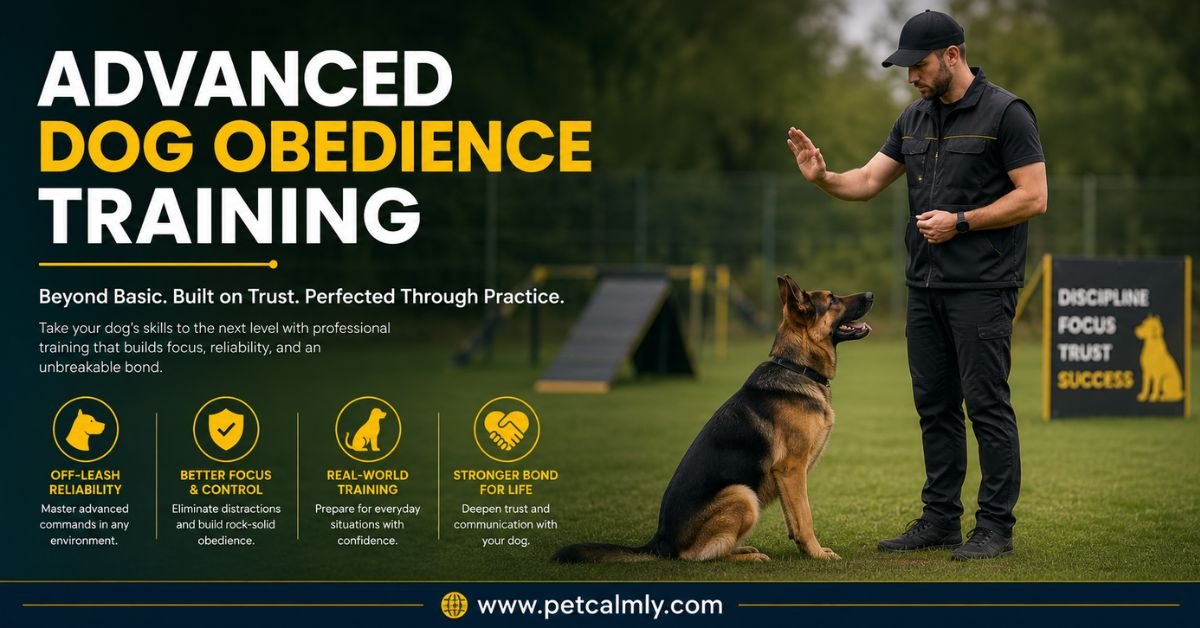
Advanced dog obedience training teaches dogs to reliably follow commands in real-world situations, even around distractions, excitement, or stress. It goes beyond basic cues like “sit” and “stay” by improving impulse control, focus, off-leash reliability, and communication between dog and owner. The best advanced training uses consistent routines, positive reinforcement, patience, and gradual exposure to difficult situations. With the right approach, advanced obedience can help dogs become calmer, safer, and easier to manage at home and in public.
Why Advanced Dog Obedience Training Matters
Many dog owners reach a point where basic training no longer feels enough.
Maybe your dog listens perfectly in the living room but ignores you outside. Perhaps they become overexcited around visitors, pull hard during walks, bark at distractions, or refuse commands at the dog park. These situations are incredibly common, even in loving homes.
Advanced dog obedience training helps bridge the gap between “knows commands” and “responds reliably in real life.”
It is not about turning dogs into robots. Good training improves communication, confidence, safety, and trust. A well-trained dog usually feels calmer because they understand expectations clearly.
For many owners, advanced training also strengthens the emotional bond they share with their dog. Daily life becomes smoother, walks feel enjoyable again, and stressful situations become easier to manage.
In this guide, you will learn:
- What advanced obedience training actually includes
- How to improve reliability around distractions
- Common mistakes owners accidentally make
- Step-by-step training methods
- Helpful routines and exercises
- Signs your dog may need professional help
- Safe, realistic ways to train without frustration
What Is Advanced Dog Obedience Training?
Advanced dog obedience training focuses on reliable behavior under challenging conditions.
Instead of only teaching commands, it teaches dogs how to respond consistently despite distractions, excitement, distance, or stress.
Skills Commonly Included in Advanced Training
Advanced obedience often includes:
- Long-duration stays
- Reliable recall (“come” command)
- Heel walking without pulling
- Off-leash responsiveness
- Place training
- Impulse control exercises
- Ignoring distractions
- Calm greetings with people
- Focus around other dogs
- Distance commands
- Emergency stop commands
Some owners also train for:
- Therapy dog preparation
- Service dog foundations
- Canine sports
- Public behavior skills
- Urban obedience
The goal is not perfection. The goal is dependable behavior and improved communication.
Signs Your Dog Is Ready for Advanced Training
Not every dog should jump directly into advanced obedience.
Dogs usually do best when they already understand basic commands such as:
- Sit
- Down
- Stay
- Come
- Leave it
- Loose-leash walking
Your dog may be ready for advanced work if they:
- Respond consistently indoors
- Understand marker words or clicker training
- Can focus for short periods
- Enjoy training sessions
- Recover reasonably well from distractions
Even energetic or stubborn dogs can succeed. They may simply need slower progression and shorter sessions.
The Biggest Misunderstanding About Obedience Training
A common misconception is that dogs disobey because they are “dominant” or trying to challenge authority.
In reality, most obedience problems happen because:
- Training was not generalized
- Distractions became too difficult too quickly
- The dog was confused
- Rewards were not motivating enough
- Sessions were inconsistent
- Stress or fear affected behavior
For example, a dog that ignores “come” at the park may fully understand the command. The environment simply became more rewarding than the owner.
This is why advanced training focuses heavily on proofing behaviors gradually.
Core Principles of Effective Advanced Training
1. Consistency Matters More Than Intensity
Short, regular sessions usually work better than long exhausting ones.
Ten focused minutes daily can outperform one frustrating hour every weekend.
Dogs learn through repetition and predictable outcomes.
2. Train in Different Environments
Dogs do not automatically apply commands everywhere.
A dog that performs perfectly at home may struggle:
- On sidewalks
- Around children
- Near other dogs
- In parks
- During car rides
- At pet stores
This is normal.
Advanced obedience requires gradual exposure to new environments.
3. Reward Timing Is Critical
Rewards should happen immediately after the correct behavior.
Fast timing helps dogs understand exactly what earned the reward.
Useful rewards include:
- Treats
- Praise
- Toys
- Play sessions
- Sniff breaks
- Tug games
Some dogs work harder for a tennis ball than food. Others prefer praise and affection.
4. Avoid Repeating Commands
Many owners accidentally teach dogs to ignore cues by repeating them.
For example:
“Come… come… COME… please come…”
Instead:
- Give the command once
- Help the dog succeed
- Reward heavily when they respond
Repeated commands often weaken reliability.
Advanced Recall Training: Building a Reliable “Come”
Reliable recall may be the most important advanced obedience skill.
A strong recall can prevent accidents, dangerous encounters, and lost dogs.
Step-by-Step Recall Practice
Step 1: Start Indoors
Use a happy voice and reward generously.
Example:
“Bella, come!”
Reward immediately when your dog reaches you.
Step 2: Add Mild Distractions
Practice in:
- The backyard
- Quiet sidewalks
- Calm parks
Keep success rates high.
Step 3: Use Long Leads
A long training leash allows freedom while maintaining safety.
This helps dogs practice distance recalls without true off-leash risk.
Step 4: Make Recall Rewarding
Never punish a dog after they come to you.
Even if they were misbehaving beforehand, coming back should always feel safe and rewarding.
Many dogs stop responding because owners unknowingly connect recall with negative experiences like:
- Leaving the park
- Ending playtime
- Scolding
- Nail trimming
- Baths
Mix recall with positive outcomes frequently.
Teaching Better Impulse Control
Impulse control helps dogs stay calm despite excitement.
This skill improves:
- Jumping problems
- Door rushing
- Barking
- Pulling
- Reactivity
- Overexcitement
Helpful Impulse Control Exercises
Wait at Doors
Ask your dog to sit before exiting.
Open the door slowly.
If they rush forward, close it calmly and reset.
Food Bowl Patience
Have your dog wait calmly before eating.
Release them with a cue like:
- “Okay”
- “Free”
- “Go ahead”
Place Training
Teach your dog to relax on a bed or mat.
This becomes extremely useful during:
- Visitor arrivals
- Family meals
- Deliveries
- Busy household moments
Many owners find “place” training life-changing once practiced consistently.
Advanced Loose-Leash Walking
Pulling often continues because dogs accidentally get rewarded for it.
When pulling works, dogs repeat it.
Better Loose-Leash Walking Strategies
Reward Check-Ins
Reward your dog whenever they voluntarily look at you during walks.
This encourages engagement.
Stop Moving When Pulling Starts
If your dog pulls:
- Stop walking
- Wait for leash relaxation
- Continue once calm
Consistency matters here.
Change Directions Unexpectedly
Gentle direction changes encourage dogs to pay attention instead of moving on autopilot.
Off-Leash Training: When Is It Safe?
Off-leash obedience requires strong reliability first.
Not every dog should be off-leash in every environment.
Even highly trained dogs can struggle around:
- Wildlife
- Fast-moving animals
- Loud noises
- Crowded areas
- Fear triggers
Before Attempting Off-Leash Work
Your dog should reliably:
- Recall immediately
- Ignore distractions
- Stay engaged with you
- Respond under stress
- Follow commands at distance
Start in secure fenced areas whenever possible.
Safety always comes first.
Common Mistakes in Advanced Dog Training
Moving Too Fast
Owners often increase difficulty too quickly.
Dogs need gradual progression.
If your dog fails repeatedly, training may simply be advancing too fast.
Training Only When Problems Happen
Many people only practice commands during chaos.
But dogs learn best in calm, controlled environments first.
Accidentally Rewarding Bad Behavior
Examples include:
- Petting jumping dogs
- Giving attention during barking
- Allowing pulling to continue
- Releasing dogs while excited
Dogs repeat behaviors that succeed.
Long Frustrating Sessions
Mental fatigue reduces learning quality.
Most dogs learn better through:
- Short sessions
- Clear goals
- Frequent breaks
- Positive endings
A Simple Daily Advanced Training Routine
Here is a realistic routine many owners can manage.
| Time | Activity | Goal |
|---|---|---|
| Morning | 5-minute recall practice | Engagement |
| Walk | Loose-leash exercises | Focus outdoors |
| Afternoon | Place training | Calmness |
| Evening | Impulse control games | Patience |
| Before bed | Short review session | Reinforcement |
Consistency matters more than perfection.
Even small daily practice sessions create noticeable improvement over time.
Mental Stimulation Is Part of Obedience
Many behavior problems worsen because dogs are mentally under-stimulated.
Advanced obedience works best alongside healthy enrichment.
Helpful Enrichment Activities
- Puzzle feeders
- Sniff walks
- Scent games
- Hide-and-seek
- Tug with rules
- Structured fetch
- Obstacle courses
A mentally satisfied dog often learns faster and behaves more calmly.
How Different Dog Personalities Affect Training
Not all dogs learn the same way.
High-Energy Dogs
These dogs often need:
- More movement
- Shorter sessions
- Frequent rewards
- Structured exercise
Examples may include working breeds or young sporting dogs.
Sensitive Dogs
Sensitive dogs respond best to:
- Calm voices
- Gentle corrections
- Predictable routines
- Confidence-building exercises
Harsh handling can damage trust quickly.
Independent Dogs
Some breeds naturally enjoy making their own decisions.
These dogs often require:
- Higher-value rewards
- Extra patience
- Strong consistency
- Creative motivation
Training may progress slower, but steady improvement is still possible.
Comparison: Basic vs Advanced Obedience Training
| Basic Training | Advanced Training |
|---|---|
| Teaches simple commands | Builds reliability |
| Often indoors | Real-world environments |
| Minimal distractions | High distractions |
| Short behaviors | Longer duration control |
| Close-distance cues | Distance responsiveness |
| Beginner focus | Impulse control and precision |
Both levels matter.
Advanced obedience simply builds upon the foundation.
Real-Life Example: Why Proofing Matters
A dog may perform a perfect “stay” in the kitchen but break instantly at the park.
This does not mean the dog forgot training.
The environment became harder.
Experienced trainers often increase difficulty gradually:
- Quiet room
- Backyard
- Sidewalk
- Calm park
- Busy public area
This process is called proofing.
Dogs need practice in many settings before behaviors become dependable everywhere.
Helpful Training Tools and Equipment
Some tools can improve training safely when used properly.
Useful Training Items
Long Training Leash
Helpful for:
- Recall practice
- Distance commands
- Outdoor safety
Treat Pouch
Allows faster reward timing during walks and training.
Clicker
Useful for precise communication.
Some dogs learn faster with clear markers.
Front-Clip Harness
Can reduce pulling pressure safely.
Avoid Over-Reliance on Equipment
No tool replaces training consistency.
Equipment should support communication, not force obedience through fear or discomfort.
Can Older Dogs Learn Advanced Obedience?
Absolutely.
Older dogs may learn differently than puppies, but many respond very well to structured training.
In fact, mature dogs sometimes focus better because they are less impulsive.
Training benefits older dogs by:
- Providing mental stimulation
- Improving confidence
- Strengthening routines
- Supporting emotional wellbeing
Progress may simply happen more gradually.
When Should You Be Concerned?
Some obedience problems go beyond normal training challenges.
Consider professional help if your dog shows:
- Aggressive behavior
- Severe fearfulness
- Panic reactions
- Intense separation anxiety
- Resource guarding
- Dangerous lunging
- Bite history
- Extreme reactivity
In some cases, medical problems can also affect behavior.
Pain, hearing loss, neurological conditions, or chronic discomfort may reduce responsiveness or increase irritability.
If behavior changes suddenly, consult a veterinarian before assuming it is purely a training issue.
What Should Pet Owners Do?
If you want better obedience results, focus on realistic, consistent steps instead of quick fixes.
A Practical Action Plan
1. Strengthen Basic Commands First
Do not rush advanced work without reliable foundations.
2. Practice Around Mild Distractions
Gradually increase difficulty.
Success builds confidence.
3. Keep Sessions Short
Most dogs learn best in 5–15 minute sessions
4. Reward Behaviors You Want More Often
Calmness, eye contact, patience, and focus should all be reinforced.
5. Avoid Punishment-Based Training
Fear and harsh corrections can create stress, avoidance, or defensive behavior.
Positive reinforcement usually creates more reliable long-term learning.
6. Stay Patient During Setbacks
Regression happens.
Dogs can struggle during:
- Adolescence
- Environmental changes
- Stressful events
- Routine disruptions
Consistency helps dogs recover faster.
Beginner-Friendly Advanced Training Checklist
Do:
- Use high-value rewards
- Practice daily
- Train in different locations
- End sessions positively
- Be calm and clear
- Reward engagement
Don’t:
- Yell repeatedly
- Train only during problems
- Expect instant perfection
- Skip foundational skills
- Punish recall failures harshly
- Compare your dog to others
Every dog learns at a different pace.
How Long Does Advanced Obedience Training Take?
There is no universal timeline.
Some dogs show major improvement within weeks. Others require several months of consistent work.
Progress depends on:
- Age
- Breed tendencies
- Temperament
- Training history
- Consistency
- Environment
- Stress levels
Reliable obedience is usually built gradually, not overnight.
Small improvements matter more than chasing perfection.
The Emotional Side of Obedience Training
Training is not only about commands.
Dogs often feel safer when life becomes predictable and communication is clear.
Many owners notice:
- Less frustration during walks
- Better household routines
- Reduced stress
- Increased confidence in their dog
One calm, successful training session can completely change how an owner feels about daily life with their pet.
That emotional improvement matters too.
Conclusion
Advanced dog obedience training is really about reliability, trust, and communication.
It teaches dogs how to respond calmly and consistently in real-world situations instead of only controlled environments. With patience, structure, and positive reinforcement, most dogs can make impressive progress over time.
The key is staying realistic. Even well-trained dogs have difficult days, distractions, and moments of excitement. Consistency matters far more than perfection.
Focus on building confidence, rewarding good choices, and practicing regularly in everyday situations. Over time, those small sessions often lead to a calmer, safer, and more enjoyable relationship with your dog.
More Information About Pets, Please Visit Our Website: How to Crate Train Your Puppy in 3 Days?
Frequently Asked Questions
1: What age should dogs start advanced obedience training?
Most dogs can begin advanced skills after learning basic commands reliably. Some puppies start simple impulse control early, while mature dogs may begin later successfully.
2: Is advanced dog obedience training necessary?
Not every dog needs formal advanced training, but it can greatly improve safety, behavior, and communication in daily life.
3: How often should I practice advanced obedience?
Short daily sessions usually work best. Even 10–15 minutes of consistent practice can improve reliability over time.
4: Can reactive dogs learn advanced obedience?
Yes, but reactive dogs often need slower progression and professional guidance. Training should focus on safety, confidence, and controlled exposure.
5: What is the hardest obedience command for most dogs?
Reliable recall around distractions is often one of the most difficult skills because dogs must ignore highly rewarding environments.
6: Should I use treats forever during training?
Not necessarily. Over time, rewards can become less frequent, but occasional reinforcement still helps maintain strong behavior long term.