Short direct answer
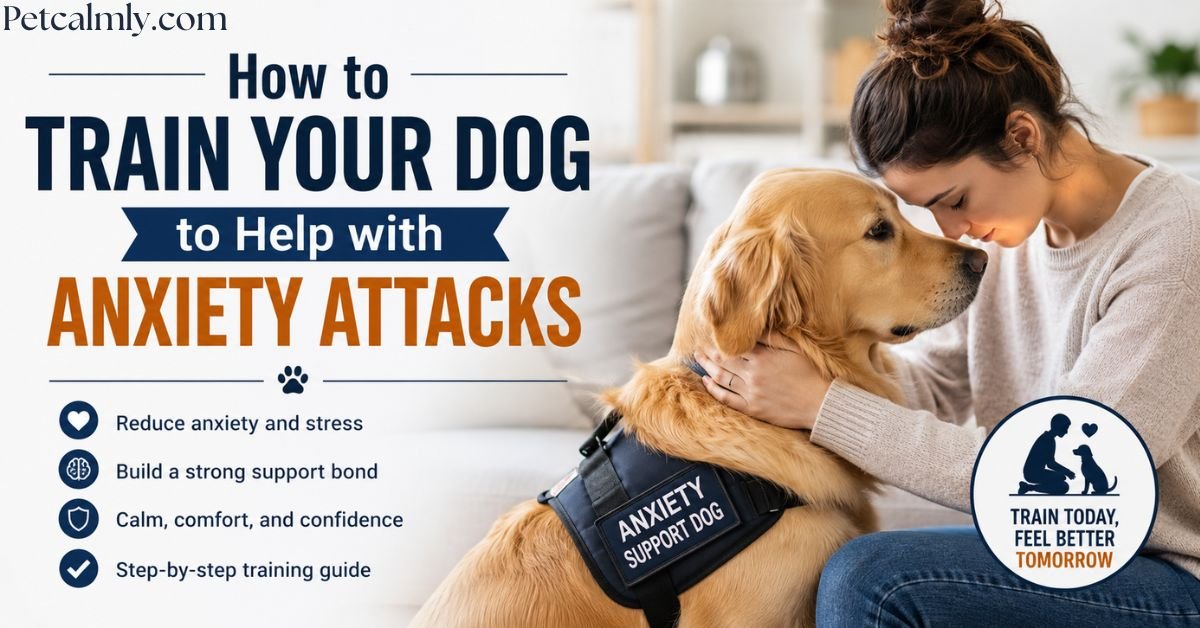
Training your dog to help with anxiety attacks involves teaching calm, reliable behaviors that provide comfort, grounding, and emotional support during stressful moments. Most owners start with basic obedience, then gradually teach specific tasks like deep pressure therapy, interrupting panic behaviors, bringing medication, or guiding the owner to a safe space. Positive reinforcement, consistency, and slow exposure are key. While many dogs can learn supportive behaviors at home, severe anxiety disorders or service dog training often require guidance from a professional trainer or mental health professional.
How to Train Your Dog to Help With Anxiety Attacks
Living with anxiety attacks can feel overwhelming, especially when symptoms appear suddenly. Many dog owners notice that their pets naturally respond during stressful moments. Some dogs lean against their owner, stay unusually close, lick their hands, or quietly sit nearby until the panic passes.
That emotional connection is one reason dogs are often trained to support people dealing with anxiety, panic attacks, PTSD, and emotional distress.
The good news is that many dogs can learn helpful support behaviors with patient, structured training. You do not necessarily need a highly specialized breed to begin. What matters most is your dog’s temperament, consistency, and willingness to work calmly around people and distractions.
In this guide, you will learn:
- How anxiety support dog training works
- Which behaviors are most useful during panic attacks
- Step-by-step training methods
- Common mistakes owners make
- Signs your dog may or may not be suited for this role
- When professional help is important
Can Dogs Really Help During Anxiety Attacks?
Yes, many dogs can provide meaningful emotional and behavioral support during anxiety episodes.
Dogs are highly observant animals. They often notice subtle changes in:
- Breathing
- Body language
- Movement patterns
- Voice tone
- Scent changes linked to stress hormones
Some dogs naturally respond by staying close or nudging their owner. With training, these natural behaviors can become reliable support tasks.
A trained anxiety support dog may help by:
- Interrupting repetitive panic behaviors
- Encouraging grounding through touch
- Providing physical pressure for comfort
- Creating personal space in crowded areas
- Leading the owner away from stressful environments
- Reminding the owner to take medication
- Fetching a phone or emergency contact item
Not every dog becomes a full psychiatric service dog, but many can still offer valuable emotional support at home.
What Makes a Dog Good for Anxiety Support Training?
Some dogs are naturally better suited for emotional support work than others.
Ideal Traits
A good anxiety support dog is usually:
- Calm under pressure
- Friendly but not overly excitable
- Comfortable around strangers
- Confident in new environments
- Focused on their owner
- Easy to motivate with treats or praise
- Able to recover quickly after surprises
Dogs that become fearful, reactive, or highly anxious themselves may struggle with this type of work.
Best Dog Types for Anxiety Support
Many breeds can succeed, but these are commonly chosen because of their temperament:
- Labrador Retrievers
- Golden Retrievers
- Standard Poodles
- Cavalier King Charles Spaniels
- Border Collies
- Mixed-breed dogs with stable personalities
That said, personality matters more than breed alone. Plenty of rescue dogs become excellent support companions.
Emotional Support Dog vs Psychiatric Service Dog
Many owners confuse these terms.
Here is a simple comparison:
| Type | Main Purpose | Special Training Needed? | Public Access Rights |
|---|---|---|---|
| Emotional Support Dog | Comfort and companionship | No specialized task training required | Limited |
| Psychiatric Service Dog | Performs trained tasks for mental health disability | Yes | Broader legal public access |
| Therapy Dog | Comforts multiple people in settings like hospitals | Yes | Limited |
A dog that comforts you naturally is helpful, but a psychiatric service dog is specifically trained to perform reliable tasks during mental health episodes.
Start With Foundational Obedience Training
Before teaching anxiety-response tasks, your dog needs strong basic obedience skills.
Without a reliable foundation, advanced training becomes frustrating and inconsistent.
Core Commands Your Dog Should Know
Teach these first:
- Sit
- Stay
- Down
- Come
- Leave it
- Heel
- Focus or “watch me”
Practice in different places, not just inside your home.
Dogs often perform perfectly in quiet rooms but struggle once distractions appear. Gradual exposure helps build reliability.
Keep Sessions Short
Many owners accidentally overtrain.
Aim for:
- 5–15 minute sessions
- 1–3 times daily
- Calm, positive repetition
Short sessions usually produce better long-term focus than long, exhausting drills.
Step-by-Step: How to Train Your Dog to Respond to Anxiety Attacks
Step 1: Teach Your Dog to Recognize a Cue
Some people train their dog to respond to visible signs of anxiety. Others use a verbal cue.
Examples include:
- “Help”
- “Pressure”
- “Nudge”
- “Calm”
Start in a relaxed environment.
Example Method
- Pretend to show mild anxiety signals
- Give the cue word
- Encourage the desired behavior
- Reward immediately with treats or praise
Over time, your dog begins connecting the cue and your emotional state with the task.
Step 2: Train Deep Pressure Therapy (DPT)
Deep pressure therapy is one of the most common anxiety support tasks.
The dog places part of its body across your lap or chest to provide calming pressure.
Many people describe this as grounding and comforting during panic symptoms.
How to Teach It
- Sit on the floor or couch
- Encourage your dog to place paws on your lap
- Reward immediately
- Gradually shape the behavior into lying across your legs or torso
- Add a command like:
- “Pressure”
- “Lap”
- “Comfort”
Keep sessions calm and gentle.
Never force the dog physically into position.
Step 3: Teach Interrupting Behaviors
Some anxiety attacks involve repetitive or harmful behaviors like:
- Nail picking
- Pacing
- Rocking
- Hyperventilating
- Dissociation
Dogs can learn to interrupt these patterns.
Useful Interruption Behaviors
- Pawing gently
- Nudging your hand
- Licking your wrist
- Resting their head on your knee
Training Example
- Pretend the repetitive behavior
- Cue the interruption action
- Reward instantly
- Repeat consistently
Eventually, many dogs begin offering the interruption naturally.
Step 4: Train Grounding Behaviors
Grounding helps bring attention back to the present moment.
Dogs can support grounding through physical interaction.
Examples
- Eye contact
- Touch targeting
- Bringing a favorite item
- Guiding you toward a chair or exit
One surprisingly effective exercise involves teaching the dog to place its nose into your palm on command.
This simple action redirects attention away from panic sensations.
Step 5: Practice in Different Environments
Dogs do not automatically generalize training.
A dog that performs well at home may completely ignore commands in a busy store or crowded sidewalk.
Practice gradually in:
- Quiet parks
- Parking lots
- Pet-friendly stores
- Friend’s homes
- Calm public areas
Increase distractions slowly.
Rushing this stage is one of the biggest reasons support training fails.
Helpful Tasks Anxiety Support Dogs Can Learn
Here are practical tasks many owners teach successfully.
| Task | Purpose |
|---|---|
| Deep pressure therapy | Grounding and calming |
| Panic interruption | Breaks escalating anxiety |
| Medication reminders | Supports routines |
| Item retrieval | Brings phone, water, medication |
| Room search | Helps reduce hypervigilance |
| Exit guidance | Leads owner from stressful area |
| Nightmare interruption | Wakes owner during distress |
| Personal space buffering | Creates distance in crowds |
Not every dog learns every task. Focus on the behaviors most helpful for your lifestyle.
4 Common Mistakes Owners Make
Expecting Too Much Too Fast
Training reliable support behaviors takes months, sometimes longer.
Progress usually comes in small steps.
Punishing Mistakes
Fear-based correction often damages confidence and trust.
Positive reinforcement works far better for emotional support training.
Ignoring the Dog’s Stress Signals
Some dogs become emotionally overloaded by constant anxiety exposure.
Watch for signs like:
- Lip licking
- Yawning
- Avoidance
- Shaking off repeatedly
- Tail tucked posture
- Refusing commands
Your dog also needs downtime and emotional balance.
Skipping Socialization
Anxiety support dogs must remain calm around:
- Noises
- Crowds
- Children
- Sudden movements
- Other animals
Poor socialization creates unreliable behavior later.
How Long Does Training Take?
This depends on:
- The dog’s age
- Temperament
- Consistency
- Training experience
- Complexity of tasks
Basic supportive behaviors may develop within several weeks.
Reliable public-access-level service work often takes 1–2 years of structured training.
Many owners underestimate how much repetition is required.
Dogs learn best through hundreds of successful repetitions over time.
Can You Train an Older Dog?
Yes, many older dogs learn anxiety support tasks successfully.
Adult dogs often have advantages:
- Longer attention spans
- More emotional stability
- Less impulsive behavior
However, severe fearfulness, aggression, or health problems may limit training potential.
Senior dogs can still provide excellent emotional companionship even if they never become full service dogs.
Daily Routine for Anxiety Support Training
Consistency matters more than marathon sessions.
Here is a beginner-friendly routine.
Simple Daily Structure
Morning
- 5-minute obedience review
- Calm walk
- Focus exercises
Afternoon
- Task practice
- Social exposure
- Reward calm behavior
Evening
- Relaxation training
- Deep pressure practice
- Quiet bonding time
Dogs trained for emotional support benefit from predictable routines.
Predictability helps reduce stress for both owner and dog.
Signs Your Dog Is Progressing Well
You may notice:
- Faster response to cues
- Calm focus during stressful moments
- Less distraction in public
- Automatic comforting behaviors
- Better emotional regulation overall
Many owners describe a moment where their dog begins responding before being asked.
That usually means the dog is starting to recognize emotional patterns consistently.
When Training May Not Be Appropriate
Not every dog is suited for anxiety-response work.
Some dogs struggle because of:
- Fear reactivity
- Aggression
- Severe separation anxiety
- Noise phobias
- Unpredictable temperament
Forcing unsuitable dogs into stressful situations can worsen their anxiety and yours.
A calm pet companion may still provide wonderful emotional support without formal task training.
When Should You Be Concerned?
You should seek professional guidance if:
- Your anxiety attacks are becoming severe or dangerous
- Your dog shows aggression during training
- The dog becomes fearful or withdrawn
- Your dog seems constantly stressed
- Panic episodes involve self-harm risk
- You rely on the dog as your only mental health support
A licensed mental health professional can help create a broader treatment plan.
A qualified dog trainer or veterinary behaviorist can also evaluate whether your dog is suitable for advanced support work.
If your dog suddenly changes behavior, a veterinary exam is important to rule out pain, illness, or neurological problems.
What Should Pet Owners Do?
If you want your dog to help with anxiety attacks, focus on calm, realistic progress.
Practical Steps to Start Today
1. Strengthen Basic Obedience
Reliable commands build the foundation for all advanced support behaviors.
2. Reward Calmness
Many owners accidentally reward excitement instead of calm behavior.
Quiet focus should earn praise.
3. Identify Helpful Tasks
Think about what truly helps during your anxiety episodes.
For example:
- Do you need grounding?
- Space from crowds?
- Interruption of panic spirals?
- Physical comfort?
Train only the most useful tasks first.
4. Keep Training Positive
Use:
- Treats
- Praise
- Toys
- Gentle repetition
Avoid punishment-based methods.
5. Build Confidence Gradually
Expose your dog to new environments slowly.
Confidence develops through successful experiences, not forced exposure.
6. Take Care of Your Dog’s Emotional Health
Support dogs are still dogs.
They need:
- Rest
- Play
- Exercise
- Predictable routines
- Stress-free downtime
Beginner Checklist for Anxiety Support Dog Training
Do
- Use positive reinforcement
- Practice daily
- Keep sessions short
- Train in multiple environments
- Reward calm behavior
- Watch for stress signals
- Be patient
Don’t
- Force interactions
- Punish fear responses
- Skip socialization
- Expect instant results
- Overwork your dog
- Ignore professional help when needed
Real-Life Example
Many owners notice subtle changes before anxiety attacks fully develop.
For example, someone may begin breathing faster while working at a computer. Their dog learns to recognize these early signs and gently nudges their arm before the panic escalates.
Another dog may automatically climb into their owner’s lap during nighttime panic episodes because the owner consistently rewarded calming pressure behaviors over time.
These small routines often become surprisingly meaningful in daily life.
Can Puppies Be Trained for Anxiety Support?
Yes, but expectations should stay realistic.
Young puppies are still developing:
- Emotional control
- Focus
- Confidence
- Social behavior
Puppyhood should focus heavily on:
- Socialization
- Confidence building
- Basic obedience
- Calm exposure training
Advanced anxiety-response tasks usually come later.
Are Professional Trainers Worth It?
For many owners, yes.
Professional trainers can help:
- Evaluate temperament
- Correct training mistakes
- Improve reliability
- Build public access skills
- Reduce stress during learning
Look for trainers experienced with:
- Service dogs
- Positive reinforcement
- Behavioral conditioning
- Anxiety support work
Avoid trainers who rely heavily on fear, intimidation, or punishment tools.
Conclusion
Training your dog to help with anxiety attacks can strengthen the bond between you and your pet while providing meaningful emotional support during difficult moments.
The most successful anxiety support dogs are not necessarily perfect or highly specialized. They are calm, well-trained, emotionally stable, and deeply connected to their owner’s routines and needs.
Start with basic obedience, focus on practical support tasks, and build slowly through positive reinforcement and consistency.
Most importantly, remember that your dog should support your wellbeing without sacrificing their own comfort or emotional health. A balanced approach creates a safer, healthier relationship for both of you.
More Information About Pets, Please Visit Our Website: How to Treat Dog Anxiety at Home
Frequently Asked Questions
1: Can any dog help with anxiety attacks?
Many dogs can provide emotional comfort, but not all dogs are suited for advanced support training. Calm temperament matters more than breed alone.
2: How long does it take to train an anxiety support dog?
Basic support behaviors may take weeks or months. Fully reliable psychiatric service dog training often takes 1–2 years.
3: What is deep pressure therapy for dogs?
Deep pressure therapy involves the dog applying gentle body pressure across the owner’s lap or chest to provide grounding and comfort.
4: Should I train my dog myself or hire a professional?
Many owners can teach basic support tasks at home. Professional trainers are helpful for advanced service work or public-access training.
5: Can a puppy become an anxiety support dog?
Yes, but early training should focus on socialization, confidence, and obedience before advanced emotional support tasks.
6: What if my dog gets stressed during training?
Stop and reduce the difficulty level. Some dogs become overwhelmed by emotional situations and may need shorter sessions or professional guidance.