Short direct answer
A good ball python care guide comes down to five essentials: a secure enclosure with a proper thermal gradient, humidity between 50–60% (higher during shedding), a consistent feeding schedule of appropriately sized prey, minimal but respectful handling, and quiet hide spots on both the warm and cool ends of the tank. Ball pythons are famously low-maintenance once their setup is dialed in, which is exactly why so many owners get the small details wrong not because the snake is difficult, but because the “easy” reputation makes people skip the setup work that actually keeps a ball python thriving for 20-plus years.
Why Ball Pythons Are Such Popular First Snakes
Ball pythons (Python regius) get recommended to first-time reptile owners constantly, and for good reason. They stay a manageable size usually 3 to 5 feet they’re not fast or aggressive, and their calm temperament makes them one of the more forgiving snakes to live with.
But “beginner-friendly” doesn’t mean “low-effort.” Ball pythons are native to the grasslands and open forests of West and Central Africa, where they spend most of their time in burrows and termite mounds, only coming out to hunt at dusk. That background matters more than most care sheets let on, because it explains almost every behavior owners misread as a problem: the hiding, the refused meals, the defensive curling into a ball that gives the species its name.
Understanding why a ball python does what it does is what separates a stressed snake from a settled one and it’s the difference this guide is built around.
Setting Up the Right Enclosure
What Size Tank Does a Ball Python Need?
A single adult ball python does well in a 40-gallon (36″ x 18″ tank footprint) or larger enclosure, while hatchlings and juveniles are generally safer in smaller, more contained spaces something closer to a 20-gallon long — until they’re confident feeders. This isn’t just about legroom. A young ball python placed in a large, open tank often feels exposed rather than comfortable, and that stress can show up as poor appetite or constant hiding.
Front-opening enclosures made specifically for reptiles tend to work better than converted fish tanks, mainly because they retain heat and humidity far more consistently, which is where most beginner setups quietly fail.
Hides, Substrate, and Enrichment
Every enclosure needs at least two hides one on the warm side, one on the cool side so the snake never has to choose between feeling secure and being at a comfortable temperature. A snake that only has one hide will often pick thermoregulation over security, which adds stress over time.
For substrate, good options include:
- Coconut husk (coco fiber) — holds humidity well, easy to spot-clean
- Cypress mulch — similar humidity retention, widely available
- Paper towels or newspaper — not ideal long-term, but useful for quarantine or sick-snake setups where cleanliness matters more than aesthetics
Avoid cedar and pine shavings entirely the aromatic oils in these woods are known respiratory irritants for reptiles.
A few branches, a background, or artificial plants aren’t just decoration. They give a naturally shy species more perceived cover, which noticeably reduces defensive behavior in most individuals.
Escape-Proofing the Enclosure
Ball pythons are strong, patient, and surprisingly good at finding the one loose seam in a lid or a gap around a wire pass-through. Before anything else goes into the tank, check that:
- Sliding doors lock or clip securely a snake can push a poorly fitted door open over hours of pressure
- Any wire or cable entry points (for heat cables, thermostat probes) are sealed with mesh or a snug grommet
- The enclosure sits somewhere out of direct sunlight and away from drafts, since both throw off your carefully set temperature gradient
This isn’t just about preventing an escaped snake an enclosure with drafts or inconsistent sealing also struggles to hold humidity, so escape-proofing and climate control end up being the same job.
Choosing a Ball Python: What to Look For
If you’re still selecting your snake, a few practical checks go a long way toward starting off on the right foot:
- Ask about feeding history. A snake with a documented history of eating frozen-thawed rodents on a regular schedule is a much easier start than one labeled a “picky eater.”
- Check body condition in person if possible. Look for a rounded body without a visible spine ridge, clear eyes (unless it’s actively in a shed cycle), and no visible mites — tiny black specks near the eyes or in water bowls are the usual giveaway.
- Ask where the snake was bred. Captive-bred snakes from a reputable breeder generally handle stress, feeding transitions, and rehoming far better than wild-caught or imported animals, which often carry parasite loads and settle in more slowly.
- Morphs are a cosmetic choice, not a care difference — a pastel, banana, or normal-pattern ball python all need the identical husbandry described in this guide. The exception is certain morphs (like spider-gene ball pythons) that have documented, genetically linked neurological wobble; it’s worth knowing this before choosing a snake with that specific morph in its lineage.
Ball Python Behavior Cheat Sheet
Reading behavior correctly saves a lot of unnecessary worry. Here’s a quick reference for what different postures and patterns usually mean:
| What You See | What It Usually Means |
|---|---|
| Curled tightly into a ball | Feeling threatened or insecure defensive, not aggressive |
| Resting half-in, half-out of a hide | Comfortable, likely thermoregulating |
| Cloudy blue eyes | Pre-shed cycle normal, temporary |
| Sitting in the water bowl for hours | Could mean humidity is too low, mites are present, or the snake is simply too warm |
| Tongue-flicking rapidly while exploring | Normal investigative behavior, especially after enclosure changes |
| Hissing with a raised, S-shaped neck | A stronger defensive signal — give the snake space |
Temperature and Humidity: The Two Things That Make or Break a Ball Python’s Health
This is the section most care sheets rush through, and it’s also where the majority of preventable health issues start.
Temperature Gradient
| Zone | Target Temperature |
|---|---|
| Warm side (basking spot) | 88–92°F (31–33°C) |
| Cool side | 75–80°F (24–27°C) |
| Nighttime drop | Down to ~72–75°F is acceptable |
A digital thermostat connected to the heat source is non-negotiable — not optional, not “nice to have.” Heat mats, ceramic heat emitters, or radiant heat panels without thermostatic control are one of the most common causes of thermal burns and heat stress in captive reptiles.
Humidity
Ball pythons need humidity in the 50–60% range day-to-day, rising to 60–70% during shedding cycles. Too dry, and you’ll see incomplete sheds patches of retained skin, especially around the eye caps and tail tip. Too consistently wet, and you’re inviting bacterial or fungal skin issues.
A digital hygrometer (not the cheap analog dial kind) gives you an accurate read. If humidity keeps dropping, a larger water bowl, partially covering the enclosure’s ventilation, or misting once daily are all reasonable fixes try the least invasive option first.
Feeding a Ball Python: A Practical, No-Guesswork Guide
Feeding is where most search queries around ball python care actually come from, so it’s worth breaking down properly.
What and How Often to Feed
| Age | Prey Size | Feeding Frequency |
|---|---|---|
| Hatchling (0–6 months) | Appropriately sized mouse or small rat pup | Every 5–7 days |
| Juvenile (6 months–2 years) | Medium rat or large mouse | Every 7–10 days |
| Adult (2+ years) | Adult rat, sized to snake’s girth | Every 14–21 days |
A simple rule of thumb: prey should be roughly the same width as the thickest part of the snake’s body — not longer, not fatter, just proportionate. Oversized prey doesn’t just risk regurgitation; it can genuinely stress a snake that already isn’t a confident eater.
Frozen-thawed rodents are strongly preferred over live prey by most reptile veterinarians, largely because live rodents can injure a snake — bites to the face and body are a real risk, especially if the snake isn’t immediately interested in eating.
Why Ball Pythons Refuse Food (And When It’s Actually Normal)
This is probably the single most common concern owners search for, and it’s usually not an emergency. Ball pythons are seasonal, instinct-driven eaters, and appetite naturally dips during:
- Shedding cycles — most snakes fast a few days before and during a shed
- Breeding season (roughly October through March) — even non-breeding males and females can go off food for weeks
- Environmental stress — recent rehoming, enclosure changes, or incorrect temperatures
- Brumation-like slowdowns — a natural seasonal response even in captivity, tied to temperature and light cycle shifts
A healthy adult ball python can safely fast for several weeks to a couple of months without medical concern, provided it isn’t losing significant body weight or showing other symptoms. This is genuinely one of the more misunderstood parts of ball python ownership the instinct to intervene is understandable, but repeatedly offering food to a fasting snake often just adds stress on top of stress.
When food refusal does need attention: if a snake is losing visible muscle mass along the spine, hasn’t eaten in over 3 months with no clear seasonal explanation, or shows lethargy alongside the fasting, that’s the point to involve a reptile veterinarian rather than keep troubleshooting at home.
Handling: How Much Is Too Much?
Ball pythons are generally tolerant of handling, but “tolerant” isn’t the same as “enjoys it.” A reasonable approach:
- Wait at least 48 hours after feeding before handling, to avoid regurgitation
- Keep initial sessions to 10–15 minutes, especially with a newly acquired snake
- Support the body rather than letting it dangle this is as much about the snake feeling secure as it is about safety
- Watch for tensing, hissing, or the classic defensive “ball” posture those are cues to end the session, not push through it
A snake that balls up defensively isn’t being difficult. It’s the exact behavior the species is named for, and in the wild it’s a genuinely effective predator-avoidance strategy. Reading it as a sign to back off, rather than a problem to fix, usually leads to a more confident snake over time.
Shedding: What’s Normal and What’s Not
A healthy shed cycle happens roughly every 4–6 weeks in younger, actively growing snakes, and less frequently in adults. In the days leading up to a shed, you’ll typically notice:
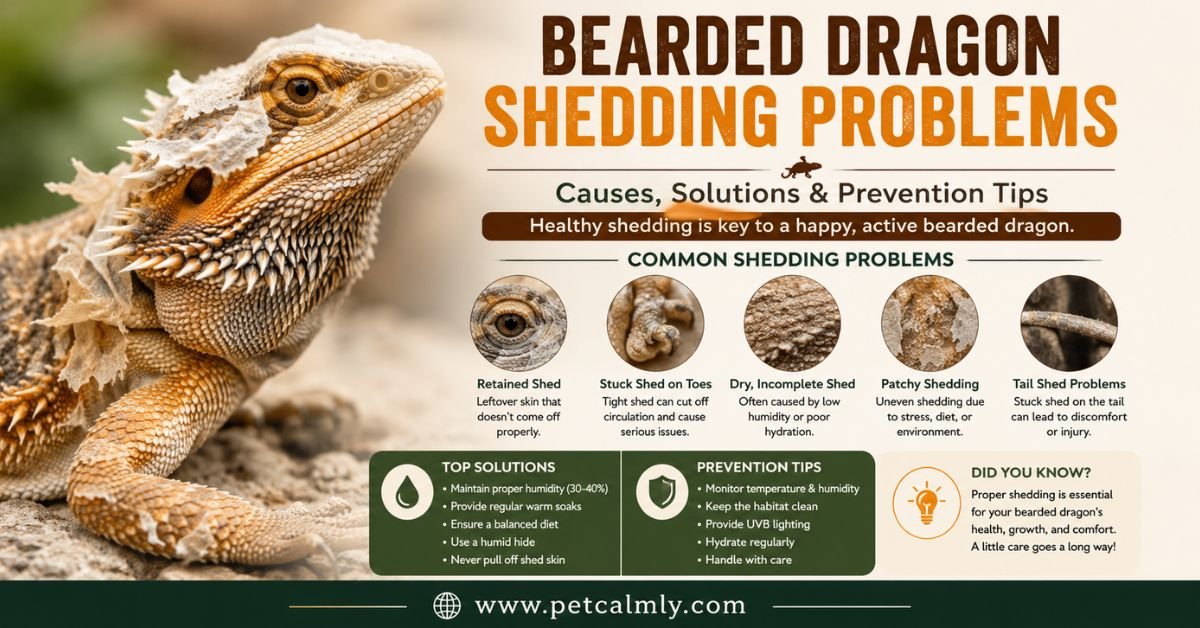
- Dulling of the skin’s color
- Eyes turning a cloudy, bluish tint (often called “in blue”)
- Reduced appetite and increased hiding
This is normal and doesn’t require intervention beyond making sure humidity is adequate. What does need attention is a retained shed — patches of old skin, particularly around the eye caps or tail — which usually points to humidity that was too low during the shed cycle. A warm, damp hide (sometimes called a humid hide, using damp sphagnum moss) can help the snake shed the remaining skin naturally on its next cycle. Retained eye caps that don’t resolve on their own are a reasonable reason to consult an exotics vet, since forcing them off incorrectly can damage the eye.
Lighting and Day-Night Cycle
Ball pythons don’t need UVB lighting to survive the way some diurnal reptiles do, since they’re primarily nocturnal and get most of their vitamin D through diet in the wild. That said, a growing number of reptile veterinarians now recommend low-level UVB exposure as a health-supportive extra rather than a strict requirement it appears to support natural behavior patterns and bone density over the long term, even in a species that doesn’t bask heavily.
What genuinely does matter is a consistent day-night light cycle, roughly 12 hours on and 12 hours off, ideally on a timer so it doesn’t depend on you remembering. Irregular lighting can quietly disrupt feeding response and shed timing, especially in younger snakes still settling into a routine.
Avoid using a light bulb as the primary heat source at night it disrupts the natural darkness a nocturnal animal needs, and it’s generally less reliable for temperature control than a dedicated heat element on a thermostat.
6 Common Mistakes First-Time Ball Python Owners Make
- Skipping the thermostat to save money, then dealing with burns or chronic stress from unregulated heat
- Panicking over normal fasting and offering food every few days, which can actually extend the refusal period
- Handling too soon after feeding, leading to regurgitation which is genuinely hard on a snake’s digestive system
- Using a single hide, forcing the snake to choose between security and temperature
- Misjudging humidity with an inaccurate analog gauge instead of a digital hygrometer
- Buying an oversized enclosure for a hatchling, which can make a young, insecure snake feel too exposed to eat or rest comfortably
None of these are dramatic failures they’re the kind of small, fixable gaps that show up in almost every new owner’s first few months, and fixing even one or two of them often resolves what looked like a “difficult snake” problem.
When Should You Worry? Signs That Need a Veterinarian
Most ball python quirks are behavioral, not medical. But certain signs cross the line into “call an exotics or reptile vet” territory:
- Open-mouth breathing, wheezing, or bubbling around the nose or mouth (possible respiratory infection)
- Visible mouth rot redness, swelling, or cheesy discharge along the gumline
- Sustained weight loss with a visible spine, especially outside a normal fasting period
- Lethargy combined with refusal to drink
- Retained eye caps after two consecutive sheds
- Any lumps, unusual swelling, or wounds that aren’t healing
General husbandry advice temperature, humidity, feeding schedules is something most owners can manage confidently at home. Anything that looks like an active illness or injury belongs with a licensed veterinarian experienced in reptiles, not a forum thread or a care sheet.
What Should Pet Owners Do Day to Day?
A realistic daily and weekly rhythm looks less intense than most new owners expect:
Daily:
- Check temperature and humidity readings
- Refresh the water bowl
- Spot-clean any waste
Weekly:
- Feed on schedule (adjusting for age)
- Do a full visual health check eyes, skin, vent area, body condition
Monthly:
- Deep-clean the enclosure and substrate
- Recalibrate thermostat and hygrometer if readings seem inconsistent
That’s genuinely most of it. Ball pythons don’t need daily interaction to thrive, and treating a quiet, food-refusing week as a crisis is usually more stressful for the owner than the snake.
Long-Term Ownership: What Changes as Your Ball Python Ages
Care doesn’t stay static over 20-plus years, and a few adjustments are worth planning for:
- Enclosure upgrades. A hatchling’s small, secure tub-style setup will need to scale up as the snake grows usually in one or two jumps rather than constant resizing.
- Feeding frequency drops. Adults eat far less often than juveniles, and owners sometimes mistake this natural slowdown for a health problem when it’s simply a metabolic change with age.
- Breeding-season behavior in adults. Even snakes never intended for breeding can show months-long appetite dips and increased restlessness during the same seasonal window wild ball pythons would be breeding in.
- Senior health monitoring. Older snakes benefit from an annual wellness check with a reptile-experienced vet, similar to how a senior dog or cat gets more frequent checkups not because something is expected to be wrong, but because catching issues early matters more as the animal ages.
Thinking about ball python ownership as a two-decade relationship, rather than a first-year project, tends to produce calmer, healthier snakes and far less owner anxiety along the way.
Conclusion
A ball python that seems “difficult” is almost always a ball python whose environment doesn’t quite match its instincts yet the wrong hide setup, an unreliable heat source, or a feeding schedule that’s fighting a natural seasonal dip. Once the thermal gradient, humidity, and hide placement are genuinely dialed in, most of the behaviors owners worry about hiding, food refusal, defensive balling settle into predictable, manageable patterns. Ball pythons are called beginner snakes for a reason; they just reward owners who take the setup seriously rather than assuming “low-maintenance” means “no maintenance.”
More Information About Pets, Please Visit Our Website: Ball Python Feeding Guide
Ball Python Tank Setup Ideas
Corn Snake Care
Frequently Asked Questions
1: How long do ball pythons live?
With consistent care, ball pythons commonly live 20 to 30 years in captivity, making them a genuine long-term commitment rather than a short-lived pet.
2: Do ball pythons need a heat lamp or a heat mat?
Either can work as long as it’s controlled by a thermostat. Ceramic heat emitters and radiant heat panels tend to hold temperature more evenly than basic heat mats, especially in larger enclosures.
3: Is it normal for my ball python to hide all day?
Yes. Ball pythons are naturally secretive, crepuscular animals, and extensive hiding especially in a new or young snake is typical behavior rather than a sign of distress.
4: Can I feed my ball python live mice instead of frozen-thawed?
You can, but frozen-thawed prey is generally recommended because it removes the risk of the rodent injuring the snake, which is a real possibility with live feeders.
5: Why does my ball python’s water bowl matter so much?
Beyond drinking, a large enough water bowl for soaking helps regulate humidity in the enclosure and gives the snake a way to self-manage shedding difficulties.
6: How do I know if my ball python is underweight?
A visible spine ridge, a noticeably thin tail base, and loose or wrinkled skin along the body are the main visual cues. If you’re unsure, a reptile veterinarian can assess body condition accurately during a checkup.